

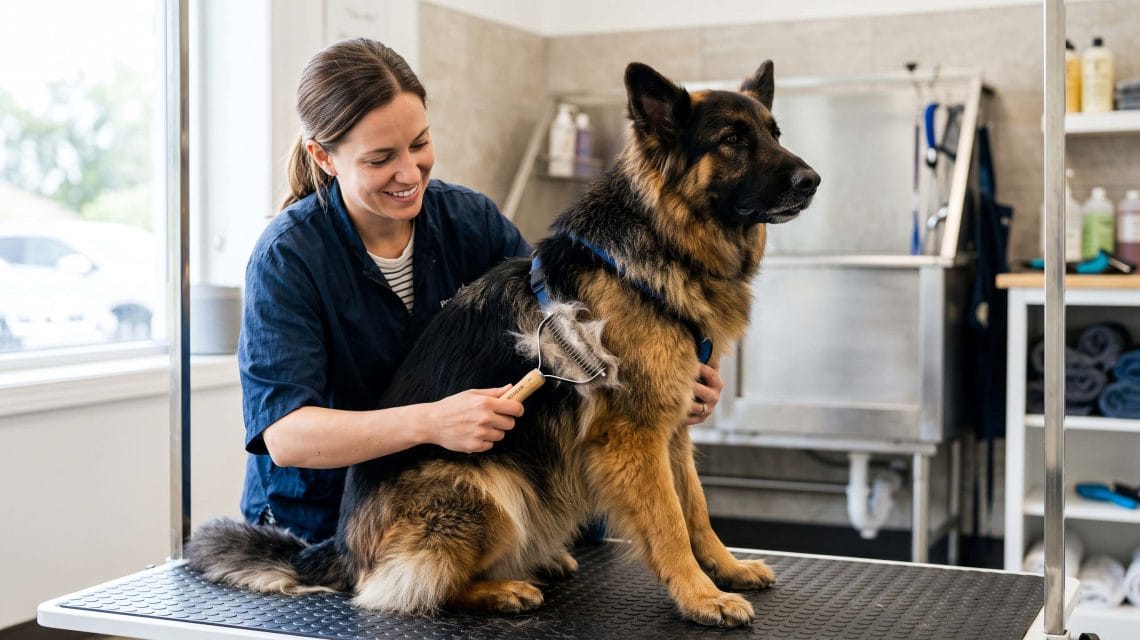
 Animal Zoid Editorial Team
 ⚡ Quick Answer
Why does my dog shed so much more right after a bath? Water and the physical act of massaging shampoo into the coat loosen hair that was already dead and ready to fall out, but hadn’t detached yet. Bathing doesn’t cause new shedding — it releases a backlog of loose hair all at once, which is why the drain, the towel, and the floor afterward can look alarming even though nothing abnormal is actually happening.
You towel off your dog after a bath, and the towel looks like it fought a losing battle with a pillow full of feathers. The tub drain is worse. If you’ve ever stood there wondering why does my dog shed so much more right after a bath, you’re not imagining a problem that isn’t there — it’s a real, well-documented pattern, and there’s a straightforward biological reason behind it.
We’ve fielded this question more times than we can count from pet owners convinced something’s gone wrong with their dog’s coat. Almost always, the answer is far less alarming than it looks in the moment. This guide walks through exactly why does my dog shed so much more right after a bath, what’s happening at the follicle level, when the extra shedding actually signals something worth watching, and how to bathe in a way that manages the mess without fighting biology you can’t really control anyway.
The Real Reason Why Does My Dog Shed So Much More Right After a Bath
Dogs shed continuously, all day, every day, whether they’re getting bathed or not. Hair grows in cycles — a growth phase, a resting phase, and a shedding phase — and at any given time, a percentage of your dog’s coat is sitting in that final phase, technically dead and just waiting for enough physical disturbance to fall out. Under normal daily conditions, that disturbance comes gradually: brushing against furniture, rolling on the floor, a light breeze, a nap on a warm windowsill.
A bath disrupts all of that loose hair at once instead of gradually. Water saturates the coat, shampoo gets worked in with direct hand pressure, and the towel-drying afterward adds another full round of friction. All of that combined releases days, sometimes weeks, of accumulated loose hair in a single twenty-minute session. That’s the actual answer to why does my dog shed so much more right after a bath — it’s not new shedding, it’s compressed shedding, released all at once instead of spread out.
If you’ve also noticed a similar burst of hair after using a rubber broom on your floors or during a deshedding session, you’re seeing the same basic principle at work — physical friction and moisture both release hair that was already loose and just waiting for the right disturbance.
Why It Looks Worse Than It Actually Is
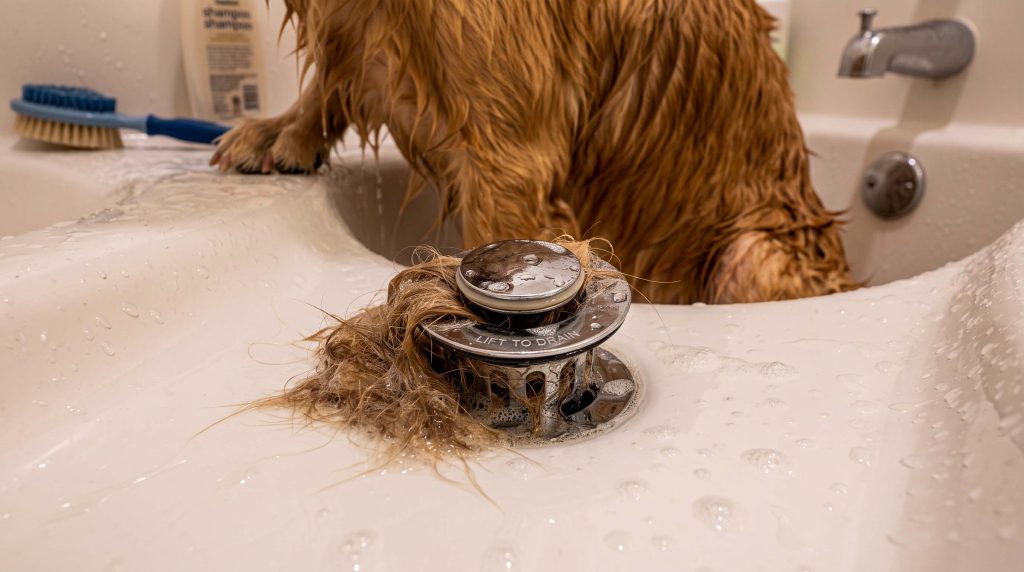
Here’s the part that trips people up. Because bath-related shedding happens in one concentrated burst, it’s visually dramatic in a way daily shedding never is. A week’s worth of loose undercoat sitting in a bathtub drain looks like a crisis. That same amount of hair, spread across seven days of normal activity, would barely register as noticeable. The volume isn’t actually different — the timing and concentration are what make it look so much worse.
Does Water Temperature Affect Why Does My Dog Shed So Much More Right After a Bath?
This is something that comes up constantly in conversations with groomers, and the answer is yes, though not in the way most people expect. Warm water opens the hair follicle slightly and relaxes the skin, which makes it easier for hair that’s already in the shedding phase to release. Cold water tends to tighten the skin and follicle, which can actually trap some of that loose hair rather than releasing it during the bath — meaning it comes out later instead, scattered across the house over the following day or two rather than concentrated in the tub.
This is part of why some owners notice heavy shedding immediately during the bath while others notice it more in the hours afterward, once the dog has dried off and started moving around normally again. Neither pattern is abnormal — it’s just a difference in when the loosened hair actually detaches. That delayed shedding is often exactly what ends up drifting across kitchen floors later in the day, especially in households with hard flooring and active HVAC systems.
Breed and Coat Type Change How Much Extra Shedding You’ll Notice
Not every dog sheds the same amount after a bath, and coat type explains most of that variation.
Double-coated breeds — Golden Retrievers, Huskies, German Shepherds, Corgis — carry a dense undercoat that holds an enormous volume of loose hair between grooming sessions. Bathing these breeds tends to produce the most dramatic post-bath shedding simply because there’s more loose hair sitting in reserve, waiting for the right amount of water and agitation to let go. Our guides on Husky shedding, Golden Retriever shedding, German Shepherd shedding, and Corgi shedding go into detail on exactly how much loose hair each of these breeds tends to carry between baths.
Single-coated, short-haired breeds — Boxers, Beagles, Dobermans, Pugs — shed less overall and produce a noticeably smaller post-bath burst, since there’s less accumulated loose hair to release in the first place. Even so, short hair from breeds like Pugs has its own quirks — it tends to embed into fabric and car seat upholstery rather than float the way undercoat fluff does, which is worth knowing if bath-day cleanup extends beyond just the tub.
Curly and wire-coated breeds — Poodles, some Terriers — often show the least noticeable post-bath shedding, since these coats shed less overall and tend to hold shed hair within the curl structure rather than releasing it freely.
If you’ve got a double-coated breed and you’re wondering why does my dog shed so much more right after a bath compared to a friend’s short-haired dog, coat density is almost always the answer. It’s not that something’s wrong with your dog — it’s that your dog is simply carrying more loose hair in storage at any given time.
How to Bathe Your Dog Without Triggering an Overwhelming Shed
Understanding why does my dog shed so much more right after a bath is useful, but most owners really want to know how to manage it. A few adjustments to bathing routine make a real difference.
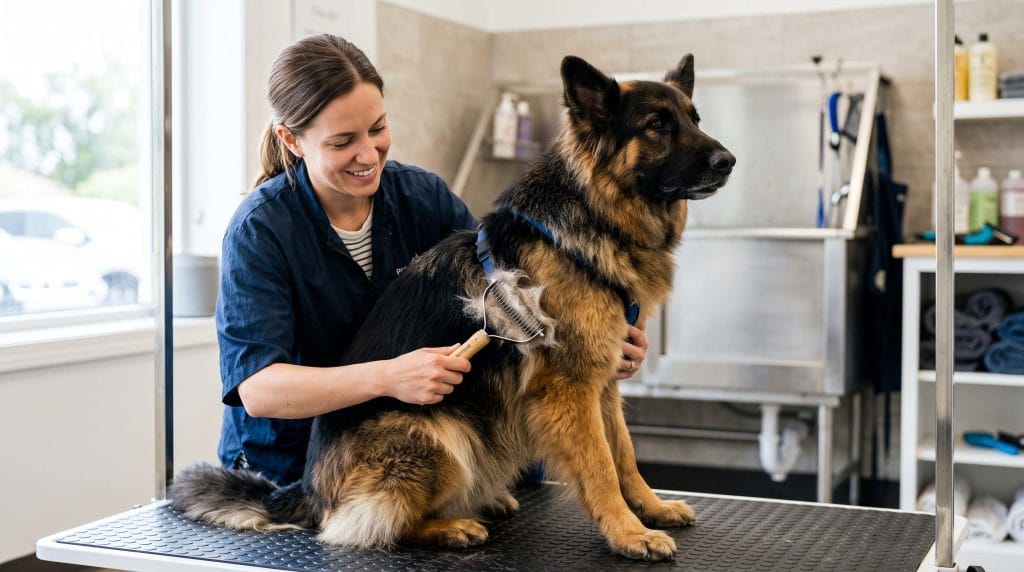
Brush thoroughly before the bath, not after. Removing as much loose hair as possible with an undercoat rake or slicker brush before water ever touches the coat means there’s simply less hair left to release during the bath itself. This single step probably does more to reduce the post-bath mess than anything else on this list.
Use lukewarm, not hot, water. Hot water can overstimulate the skin and occasionally trigger more hair release than necessary, while lukewarm water gets the same loosening effect without pushing it further than needed.
Bathe in a space that contains the mess. A walk-in shower with a drain catch, or an outdoor bath setup during warm weather, makes cleanup dramatically easier than a bathtub without a hair trap.
Towel-dry with long strokes in one direction, rather than vigorous back-and-forth rubbing, which tends to release even more loose hair than necessary and scatter it around the bathroom in the process.
Follow up with a second brushing session once fully dry. A lot of loosened hair doesn’t actually fall out during the bath itself — it stays temporarily caught in the coat until it dries and gets brushed out. Skipping this step just delays the shedding to later in the day, usually onto furniture and floors instead of the tub. And whatever you do, resist the urge to solve heavy shedding with a shave — as we cover in our guide on shaving double-coated dogs, removing the coat entirely creates far bigger problems than it solves.
Comparison Table: Bath-Related Shedding by Coat Type
| Coat Type | Post-Bath Shedding Level | Why | Best Prep Step |
|---|---|---|---|
| Double-coated (Husky, Golden, Shepherd) | High | Large undercoat reserve of loose hair | Thorough brush-out before bathing |
| Short single-coat (Boxer, Beagle, Pug) | Low to moderate | Less accumulated loose hair overall | Light brush before bathing |
| Curly/wire-coated (Poodle, Terrier) | Low | Shed hair often held within curl structure | Regular professional grooming |
| Long, silky-coated (Cocker Spaniel) | Moderate to high | Longer hair shafts more visible when released | Detangle and brush before wetting |
When Extra Shedding After a Bath Isn’t Just Normal Biology
Most post-bath shedding is completely harmless, but there are situations worth paying closer attention to.
Bald or thinning patches appearing after multiple baths. Occasional heavy shedding is normal. Visible skin showing through in specific spots is not, and it’s worth a vet visit to rule out skin conditions, allergies, or hormonal imbalances.
Shedding accompanied by red, flaky, or irritated skin. This points toward a possible allergic reaction to shampoo ingredients, or an underlying skin condition that bathing is simply making more noticeable rather than causing.
Dramatically increased shedding that doesn’t taper off within a day or two. Normal post-bath shedding settles back to baseline fairly quickly. Shedding that stays elevated for a week or more after a single bath deserves a conversation with a vet.
Using the wrong shampoo for coat type. Harsh, drying shampoos not formulated for dogs can strip natural oils and cause more hair to loosen than a properly balanced pet shampoo would. This is one of the more common, fixable causes behind shedding that seems excessive even accounting for the normal bath effect.
Jenna and Duke — A German Shepherd’s Bath Day Reality Check
One of the pet owners in our community, Jenna, has a German Shepherd named Duke and spent the better part of a year convinced something was wrong every time she bathed him. Duke’s shedding during and immediately after baths was dramatic enough that she started dreading bath day entirely, half expecting to find a bald patch somewhere on his coat each time.
A conversation with her vet cleared things up fairly quickly. Duke wasn’t shedding abnormally — he was a heavily double-coated breed whose undercoat simply held an enormous volume of loose hair between grooming sessions, and Jenna’s habit of only brushing him occasionally meant that reserve of dead hair kept building up between baths rather than getting released gradually through regular brushing.
Once Jenna started brushing Duke thoroughly the day before each bath, using an undercoat rake specifically designed for double coats, the difference was significant. Bath day still produced noticeable shedding, since that’s simply how Duke’s coat works, but the dramatic clumps she used to find in the drain and on the towel dropped considerably. The underlying biology hadn’t changed. She’d just stopped letting weeks of loose hair build up before finally releasing it all in one dramatic bath session. She’s since applied the same brush-first logic to her laundry routine too, since Duke’s bedding used to come out of the wash looking almost as furry as before — a problem our fabric softener and pet hair guide covers in more depth.
🐾 Something Most Owners Never Realize About Bath Timing and Shedding Cycles
Here’s a detail that rarely gets mentioned anywhere: bathing during the early days of a seasonal coat blow tends to produce a noticeably bigger shedding burst than bathing in the middle or toward the tail end of one. When a double-coated dog is just beginning to blow coat, the follicles are actively pushing out large amounts of undercoat all at once, and a huge percentage of that hair is sitting loosely in the coat, ready to release with minimal disturbance. A bath at this exact moment triggers what can look like an alarming, almost snowstorm-level shed.
If you can, timing baths for a few days into a seasonal shed, after some of that initial surge has already been managed through daily brushing, tends to produce a far more manageable bath-day result than bathing right at the very start of the season. It’s a small scheduling adjustment, but pet owners who’ve tried it consistently report a noticeably calmer bath experience.
Tools That Help Manage Bath-Related Shedding
- Undercoat rake — the single most effective pre-bath tool for double-coated breeds
- Rubber curry brush — works well during the bath itself to loosen hair while shampooing
- Deshedding shampoo — formulated to help release loose undercoat during the wash rather than leaving it to shed later
- Drain hair catcher — prevents clogged pipes from the volume of hair a bath can release at once
- High-velocity pet dryer — blows out remaining loose hair during drying rather than leaving it to shed gradually over the following days
What’s Changing in Bath-Related Shedding Management
Pet shampoo formulations have shifted noticeably over the past several years, with more brands specifically marketing “deshedding” formulas designed to loosen undercoat during the actual wash cycle rather than leaving that job entirely to brushing. Grooming salons have also expanded high-velocity dryer services, originally a professional-only tool, to at-home rental and purchase options, letting owners replicate the kind of thorough blow-out that removes loosened hair immediately after bathing instead of letting it shed gradually over the following days.
Veterinary dermatology research has also paid more attention to how bathing frequency interacts with natural shedding cycles, generally supporting what groomers have observed anecdotally for years — that pre-bath brushing meaningfully reduces the dramatic burst shedding that makes bath day feel so much messier than it needs to be.
Key Reminders for Managing Bath Day Shedding
- Brush thoroughly before bathing, not just after
- Use lukewarm water rather than hot for a gentler release of loose hair
- Choose a bathing space with good drainage and easy hair cleanup
- Towel-dry with long strokes in one direction, not vigorous rubbing
- Brush again once fully dry to catch hair loosened but not yet released
- Time baths a few days into a seasonal coat blow rather than right at the start
- Watch for bald patches, irritated skin, or shedding that doesn’t taper off — these warrant a vet visit
FAQ — Why Does My Dog Shed So Much More Right After a Bath?
Why does my dog shed so much more right after a bath than on a normal day?
Water and physical agitation release hair that was already dead and sitting in the shedding phase, all at once instead of gradually throughout the day. It’s concentrated shedding, not new or additional shedding.
Is it normal for double-coated breeds to shed more after baths than short-haired breeds?
Yes. Double-coated breeds carry a much larger reserve of loose undercoat between grooming sessions, so bathing releases a bigger volume all at once compared to short-coated breeds with less accumulated hair.
Does brushing before a bath actually reduce post-bath shedding?
Yes, significantly. Removing loose hair beforehand means there’s simply less hair left in the coat to release during the bath, which noticeably reduces the dramatic clumps many owners notice in the tub and on towels.
Should I be worried if my dog sheds a lot after every single bath?
Generally no, as long as the shedding tapers off within a day or two and there’s no visible skin, redness, or bald patches. Consistent, temporary post-bath shedding is a normal biological pattern, not a health concern.
Can the wrong shampoo cause more shedding than usual after a bath?
Yes. Harsh or poorly formulated shampoos can dry out skin and strip natural oils, which sometimes triggers more hair loosening than a gentle, dog-specific shampoo would cause under normal circumstances.
The Bottom Line on Post-Bath Shedding
Why does my dog shed so much more right after a bath really comes down to timing, not abnormal hair loss. Water and physical agitation release a backlog of already-dead hair all at once, which makes bath day look far messier than the same amount of shedding spread across a normal week ever would. Brushing thoroughly beforehand, using lukewarm water, and following up with a second brush-out once dry cuts down the drama significantly without fighting biology that’s working exactly the way it’s supposed to.
If shedding in general feels like a constant uphill battle beyond just bath day, our guides on Golden Retriever shedding, Husky shedding, German Shepherd shedding, Corgi shedding, and our complete shedding management guide cover the full routine for keeping loose hair under control between baths, not just during them. And if bath day hair ends up all over your car or laundry too, our guides on getting pug hair out of car seats and whether fabric softener actually removes pet hair round out the full cleanup picture. 🐾
This article provides general grooming guidance for informational purposes. If your dog shows signs of skin irritation, bald patches, or shedding that doesn’t subside within a few days of bathing, consult a veterinarian to rule out underlying health conditions.
