

 Animal Zoid Editorial Team
 ⚡ Quick Answer
Does liquid fabric softener help remove pet hair in laundry? Not really. It reduces static cling, which makes hair look less clingy after drying, but it doesn’t lift hair out of the fabric weave — and in some cases it can bond hair to synthetic fibers instead of releasing it. The combination that actually works is a pre-wash dry cycle, a vinegar rinse, and rubber dryer balls.
Does liquid fabric softener help remove pet hair in laundry, or is that just something people repeat without ever testing it themselves? We get asked this question constantly, and the honest answer surprises most pet owners — because fabric softener was never designed to pull hair out of clothing at all. It was built to soften fibers and cut down static, and pet hair removal is something it only appears to help with, in one narrow, specific way. If you’ve ever pulled a “clean” sweater out of the dryer still covered in dog fur, you already know something isn’t adding up.
This guide breaks down exactly what’s happening inside the wash cycle, why fabric softener seems to help in some situations and makes things worse in others, and what genuinely gets fur out of your laundry without wrecking your clothes, your dryer vent, or your patience.
Does Liquid Fabric Softener Help Remove Pet Hair in Laundry? The Real Mechanism
Here’s the honest chemistry behind it. Fabric softener works by coating fibers with a thin lubricating layer — that’s literally what makes towels feel fluffy and t-shirts feel less scratchy against your skin. That same coating also reduces the static charge that builds up during the dry cycle, and static charge happens to be the exact force that makes pet hair cling to fabric like it’s been glued there.
So when people ask does liquid fabric softener help remove pet hair in laundry, what they’re usually noticing is a static reduction, not an actual removal effect. Less static means hair isn’t gripping the fabric as tightly once the load comes out of the dryer, and that can look a lot like the softener did its job. But the hair hasn’t gone anywhere. It’s just sitting there with less electrical charge holding it in place.
The real complication happens earlier, during the wash cycle itself — and that’s where the story gets more interesting than most laundry blogs bother explaining.
Why It Seems to Work the First Few Times You Try It
If you’ve added softener to a load full of dog hair and noticed the clothes came out smoother, you’re not imagining things. Softener genuinely reduces fiber friction, and hair does slide off smoother surfaces more easily than rough ones. This is exactly why so many pet owners swear by it early on and assume they’ve found the fix.
But here’s the catch nobody mentions: that smoothing effect only really helps with hair sitting loosely on the surface of fabric. Hair that’s already worked its way into the weave of a fleece blanket, a wool sweater, or a plush dog bed cover doesn’t respond the same way. Softener tends to coat it right where it sits instead of loosening it, and after several wash cycles, that coating can build up and actually trap the hair more firmly than before you ever added the product.
The Chemistry Behind Static Cling and Why It Matters Here
Static cling happens because dryer heat strips electrons off fabric surfaces, creating a charge that attracts anything nearby — pet hair included. Liquid fabric softener deposits a thin, positively charged (cationic) layer onto fibers during the rinse, and that layer balances out the charge buildup that happens later in the dryer.
That part is genuinely useful. Less static means less hair clinging to your clothes when you’re getting dressed, and fewer little fur halos floating around every time you shake out a blanket. It’s just a different function than actually extracting embedded hair from fabric — which is the part most people are actually hoping to solve when they reach for the softener bottle in the first place.
Does Liquid Fabric Softener Help Remove Pet Hair in Laundry — Or Quietly Make It Worse?
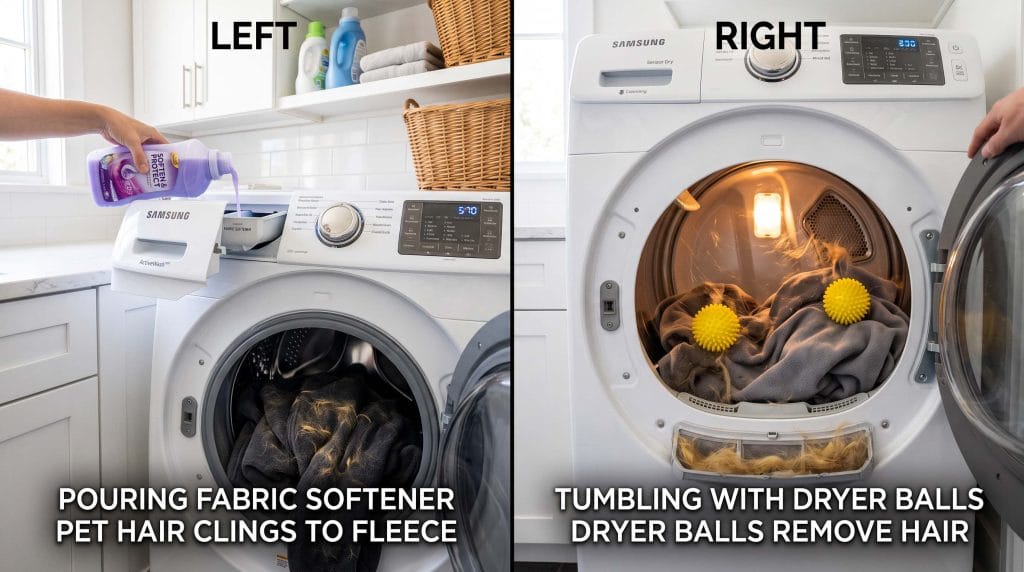
This is the part almost no one talks about, and it’s the reason we don’t recommend relying on softener as your main defense. When fabric softener coats fibers, it can also coat the pet hair mixed into the load right along with them. Instead of that hair sliding off during the wash cycle, it can end up laminated onto the surface of the fabric — especially with synthetic materials like fleece, microfiber, and polyester bedding, which already have a tighter weave that pet hair loves clinging to.
We’ve heard some version of this story from more pet owners than we can count. They start using fabric softener specifically to deal with shedding, and a few months later notice their pet’s favorite blanket looks more matted with fur straight out of the wash than it did before. That’s the buildup effect at work — not bad luck, and not a faulty washing machine.
Does Liquid Fabric Softener Help Remove Pet Hair in Laundry on Synthetic Fabrics Specifically?
This is worth separating out, because fabric type changes the entire outcome. On natural fibers like cotton, softener’s coating effect is milder, and the weave is loose enough that hair can still shake free during the dry cycle even with some product buildup. On synthetic fabrics — think fleece throws, athletic wear, polyester-blend dog bed covers — the fibers are finer and packed tighter, which means hair gets mechanically trapped between them far more easily. Add a softener coating on top, and you’ve essentially cemented the hair in place rather than releasing it.
If most of your pet-related laundry is fleece or synthetic bedding, softener is likely doing you more harm than good, no matter how many capfuls you’re using per load.
Sarah’s Laundry Routine — A Familiar Story
One of the pet parents in our community, Sarah, has a Golden Retriever named Biscuit and does laundry for a household of four, plus a dog bed cover that somehow needs washing every single week during shedding season. For over a year, she added a capful of liquid fabric softener to every load specifically because a friend swore it would handle Biscuit’s fur once and for all.
It didn’t. If anything, Sarah noticed her dryer’s lint trap was collecting noticeably less hair over time — which sounds like progress until you realize where all that hair was actually ending up. It wasn’t disappearing. It was staying bonded to the fabric surface instead of shaking loose into the trap the way it’s supposed to during a normal cycle.
Once Sarah changed her approach — brushing Biscuit’s bedding down before washing, adding half a cup of white vinegar to the rinse cycle instead of softener, and tossing in two rubber dryer balls — her lint trap started filling up again almost immediately, and the bedding came out visibly cleaner. That’s usually the moment it clicks for people: less hair in the lint trap doesn’t automatically mean less hair in your laundry. Sometimes it just means the hair never left the fabric to begin with.
What Actually Works Better Than Fabric Softener for Pet Hair
Since the honest answer to does liquid fabric softener help remove pet hair in laundry leans toward “not really,” it’s worth knowing what actually does the job. A handful of methods consistently outperform softener, and none of them require expensive specialty products.
Dry the load first, then wash it. This sounds backwards, but running a short, no-heat dryer cycle before the item ever touches water loosens embedded hair and tumbles a surprising amount of it straight into the lint trap before detergent gets involved at all.
Use rubber dryer balls or a damp rubber glove. Rubber creates friction against fabric that physically lifts hair away rather than coating it in place. Running a damp rubber glove over a blanket before tossing it into the machine pulls off far more fur than most people expect in just a few passes.
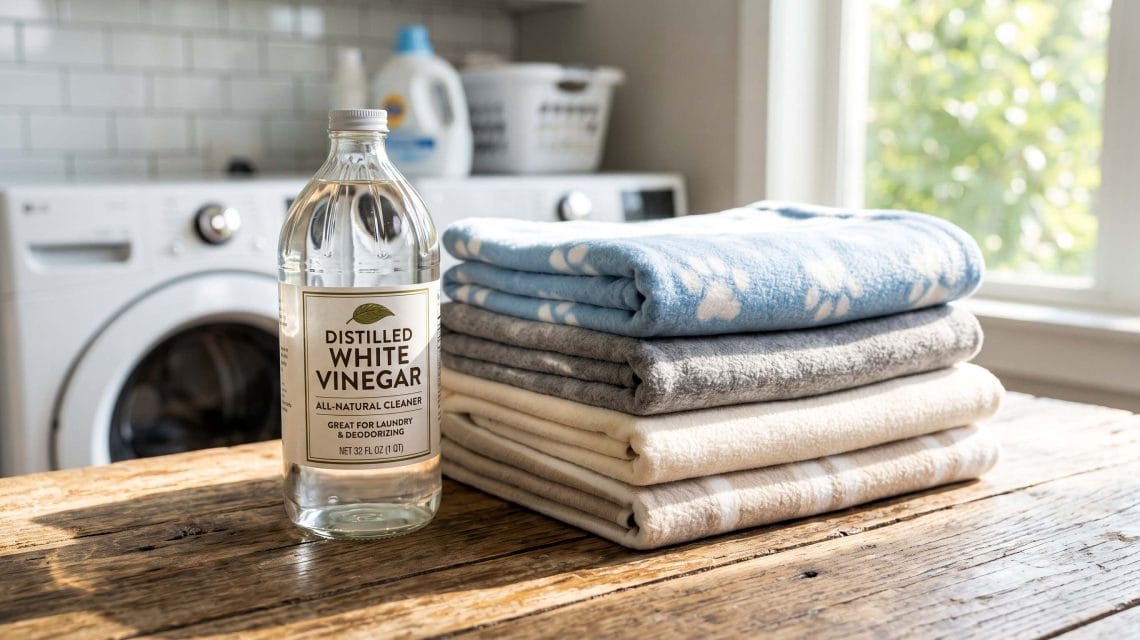
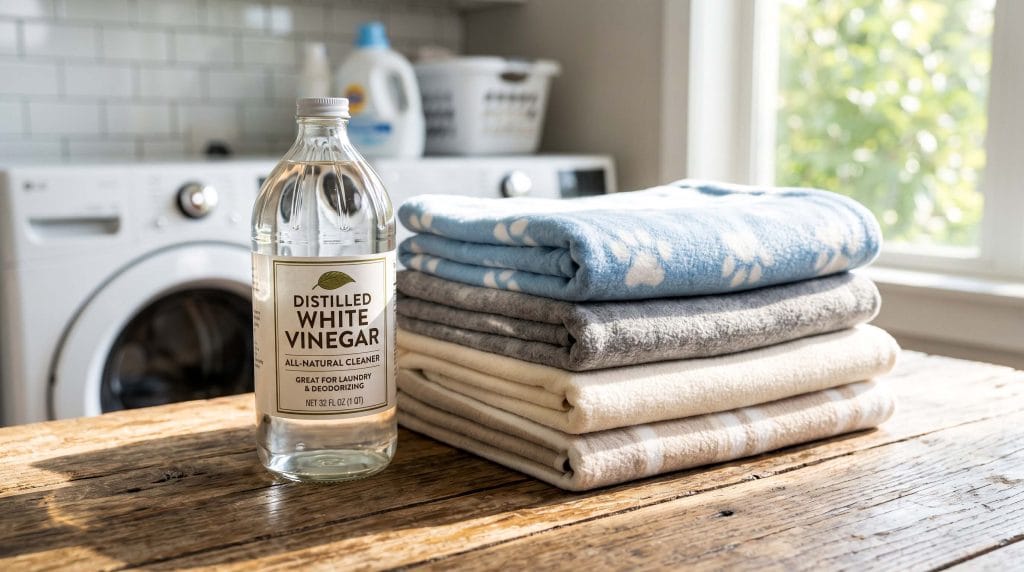
Add distilled white vinegar to the rinse cycle. Vinegar loosens the bond between hair and fabric without leaving behind the coating layer that softener does. It also helps neutralize odor, which is a welcome bonus for anyone dealing with bedding that smells distinctly like a wet dog even after washing.
Wash pet items separately from regular clothing. Mixing a heavily-furred blanket in with your everyday laundry just spreads the problem — now everything in that load has a light dusting of hair on it.
Clean your washing machine’s drum seal and filter regularly. Front-loading machines especially tend to accumulate hair inside the rubber gasket, which redeposits it onto future loads no matter which detergent or softener you’re using.
For households dealing with heavy shedding breeds, this laundry routine works even better when paired with a solid brushing schedule at the source. Our guides on Husky shedding, German Shepherd shedding, and Golden Retriever shedding cover exactly how to cut down the volume of loose hair reaching your laundry pile before it ever becomes a wash-day problem. Less hair on your dog usually means a lot less hair fighting your washing machine.
🧺 Behind-the-Scenes Insight: What Groomers Notice About Laundry Habits
Here’s something that comes up often in conversations with groomers who work with heavy-shedding breeds — they can often tell which owners rely on fabric softener versus vinegar just by looking at a dog bed cover. Softener-washed covers tend to develop a slightly waxy, dulled texture over time, along with a visible “fur shadow” that doesn’t fully disappear even after multiple washes. Vinegar-washed covers, by comparison, tend to stay brighter and shed their trapped hair more completely with each cycle.
This isn’t about brand loyalty or product marketing — it’s a pattern that shows up because of exactly what we covered earlier: the coating effect on synthetic fibers. If you want a quick gut-check on whether your current laundry routine is working, hold a washed item up to the light. If you can see a faint haze of fine hair across the surface even after it’s fully dry, that’s buildup talking, not a dirty load.
Common Mistakes Pet Owners Make With Pet Hair Laundry
Even well-intentioned pet owners fall into a few predictable traps:
- Overloading the washer. Cramming too many items in at once gives hair nowhere to go except back onto other fabrics in the same load.
- Using hot water for everything. Hot water can cause certain synthetic fibers to tighten slightly, trapping hair deeper rather than releasing it. Cool or warm water is often more effective for hair-heavy loads.
- Skipping the lint trap between loads. A full lint trap reduces airflow, which means less tumbling action and less hair actually making it out of the fabric during drying.
- Relying on scent boosters instead of actual hair removal. A load that smells clean isn’t necessarily hair-free — these are two separate problems with two separate solutions.
- Assuming all softeners behave the same way. Some liquid softeners have heavier silicone-based formulas that build up faster than lighter, plant-based versions. If you’re going to use softener at all, lighter formulas cause less fiber coating over time.
Comparison Table: Fabric Softener vs. Real Pet Hair Solutions
| Method | Removes Embedded Hair? | Cost | Effort | Best For |
|---|---|---|---|---|
| Liquid fabric softener | ❌ Minimal — reduces static only | Low | None | Reducing cling, not removal |
| Rubber dryer balls | ✅ Yes | Low (one-time) | Very low | Everyday loads |
| White vinegar rinse | ✅ Yes | Very low | Low | Bedding, blankets |
| Dry-before-wash method | ✅ Yes, significant | Free | Low | Heavily furred items |
| Pet hair laundry bag | ✅ Moderate | Low | Low | Delicate fabrics |
| Lint roller pre-treatment | ✅ Moderate | Low | Medium | Small loads |
Best Practices for Handling Pet Hair in Every Wash
A few habits make the biggest long-term difference once you’ve accepted that softener alone isn’t the answer:
- Brush your pet before wash day, not after. Removing loose hair from the coat directly means less of it ends up on bedding and blankets in the first place.
- Sort pet items into their own load category. Treat pet bedding the way you’d treat gym clothes — separate from your everyday wardrobe.
- Run an empty rinse cycle occasionally. This clears out any hair sitting in the drum or filter before it transfers onto your next clean load.
- Air-dry heavily furred items when possible. Air drying skips the static-generating heat cycle entirely, which means less clinging hair to deal with afterward.
- Replace dryer balls every six months or so. Worn-down rubber balls lose the texture that creates the friction needed to lift hair effectively.
Tools Worth Having on Hand
A short list of things that consistently make pet hair laundry easier, without needing a cabinet full of specialty products:
- Wool or rubber dryer balls — reusable, inexpensive, and effective for years
- A pet hair-specific laundry bag — useful for delicate items you don’t want tumbling loosely
- A rubber-bristled pet brush — doubles as a pre-wash de-fur tool for blankets
- Distilled white vinegar — a pantry staple that does more for pet laundry than most specialty detergents
Looking Ahead: What’s Changing in Pet Hair Laundry Care
Washing machine manufacturers have started responding to pet owner demand directly. Several newer front-loading models now include a dedicated “pet hair” or “pet plus” cycle, which uses extended agitation time and a modified spin pattern specifically designed to loosen embedded hair before the rinse. Filter technology is shifting too — some newer machines now include a secondary micro-filter that catches fine pet hair before it reaches the drain, reducing the amount that redeposits onto future loads.
None of this replaces good habits, though. Even the best machine still benefits from a quick pre-wash brush-down and a vinegar rinse. Technology is closing the gap, but the fundamentals — friction, timing, and avoiding coating agents — remain the same.
Key Takeaways Checklist
- Skip fabric softener as your main pet hair strategy — it reduces static, not embedded hair
- Run a 10-minute no-heat dry cycle before washing heavily furred items
- Add ½ cup white vinegar to the rinse cycle instead of softener
- Use rubber dryer balls in every load with pet bedding
- Wash pet blankets separately from regular clothing
- Avoid hot water on synthetic pet bedding — it can trap hair deeper
- Brush your dog regularly to reduce the volume of loose hair reaching laundry at all
- Clean your washing machine’s drum seal monthly if you wash pet items often
FAQ — Does Liquid Fabric Softener Help Remove Pet Hair in Laundry?
Does liquid fabric softener help remove pet hair in laundry completely?
No. It reduces static cling, which can make hair look less noticeable after drying, but it doesn’t lift embedded hair out of the fabric. Some materials actually hold onto hair more after repeated softener use.
Does liquid fabric softener help remove pet hair in laundry better than dryer sheets?
They work in almost the same way — both reduce static rather than physically removing hair. Dryer sheets are applied during the dry cycle, so they occasionally catch loose surface hair slightly better, but neither replaces pre-wash brushing or a vinegar rinse.
Can fabric softener make pet hair worse in the wash?
Yes, in certain cases. The coating effect can bond hair to synthetic fabrics like fleece or polyester, especially with repeated use across many wash cycles.
Does liquid fabric softener help remove pet hair in laundry if I use more than the recommended amount?
No — using extra softener doesn’t improve hair removal and typically makes buildup worse, leaving fabric with a waxy residue that traps hair even more effectively over time.
What removes pet hair from laundry the best?
A no-heat dry cycle before washing, followed by a vinegar rinse and rubber dryer balls during the actual dry cycle, consistently outperforms fabric softener and most specialty pet hair detergents.
Is vinegar safe to use in every wash cycle with pet items?
Yes, distilled white vinegar is safe for regular use in the rinse cycle and won’t damage most fabrics or your machine. It also helps neutralize pet odor, which is a common complaint with dog bedding specifically.
The Bottom Line
Does liquid fabric softener help remove pet hair in laundry? Not in any meaningful way — it softens fabric and reduces static, which can make hair less noticeable, but it isn’t built to lift hair out of the weave, and on synthetic fabrics it can actually make the problem worse over time. The dry-before-wash method, a vinegar rinse, and rubber dryer balls consistently do the job that fabric softener gets undeserved credit for.
If shedding is the real source of your laundry pile, tackling it at the coat level makes an even bigger difference than anything you do in the wash. Check out our guides on Husky shedding, German Shepherd shedding, Golden Retriever shedding, Labrador shedding, and our complete shedding management guide to cut the hair problem off before it ever reaches your washing machine. 🐾
This article provides general laundry and fabric care guidance for informational purposes. Always check your garment or bedding’s care label, and refer to your washing machine’s manual before adjusting cycle settings, water temperature, or using vinegar and other additives beyond standard detergent.
