

 Animal Zoid Editorial Team
 ⚡ Quick Answer
How to get pug hair out of car cloth seats: start with a rubber squeegee or damp rubber glove dragged in one direction across the fabric, follow up with a fabric-safe pet hair brush against the weave, then vacuum with a motorized pet hair attachment while the seat is still slightly damp. Dry hair alone rarely lifts out of cloth seats on its own — a little moisture combined with rubber friction does most of the actual work.
Anyone who’s owned a Pug knows the drill. You drive somewhere for twenty minutes, and by the time you park, your cloth seats look like they’ve been dusted in fawn-colored glitter. Figuring out how to get pug hair out of car cloth seats isn’t a mild inconvenience for most Pug owners — it’s practically a weekly ritual, because Pugs shed constantly, all year round, and their short, dense undercoat has a way of working itself into fabric weave in a way that longer-haired breeds simply don’t.
We’ve spent years helping pet owners deal with exactly this kind of stubborn, embedded shedding, and Pug hair in car seats comes up more often than almost any other cleaning question we get asked. This guide walks through how to get pug hair out of car cloth seats using methods that actually work on deeply embedded fur, not just the loose stuff sitting on top. We’ll cover the tools worth owning, the technique that makes the real difference, the mistakes that waste a perfectly good Saturday morning, and a few details about Pug coats specifically that explain why this problem feels worse than it does with other breeds.
Why Pug Hair Is So Hard to Remove From Car Cloth Seats
Before getting into how to get pug hair out of car cloth seats effectively, it helps to understand why Pugs specifically are such a tough case. Pugs carry a double coat — a soft undercoat paired with a short, coarse topcoat — packed into a coat length that barely reaches half an inch. That short length is exactly what makes this so frustrating. Longer hair tends to sit on top of fabric and lifts away easily during a normal vacuum pass. Short Pug hair, on the other hand, works sideways into individual fabric threads almost like a tiny fishhook, gripping the weave instead of resting on it.
Pugs also shed at a fairly constant rate all year. They don’t go through the dramatic seasonal “coat blow” that Huskies, German Shepherds, or Golden Retrievers experience twice a year. Instead, it’s a slow, steady accumulation that never really stops. Every car ride adds a little more hair. Every seat gets a touch worse than the week before, which is why so many owners feel like they’re constantly playing catch-up.
The Fabric Factor Nobody Mentions
Here’s something that rarely comes up in general pet hair advice, but it matters enormously for how to get pug hair out of car cloth seats specifically: the weave type of your seat fabric changes the entire equation. Tightly-woven factory cloth seats, common in most sedans and compact SUVs, trap short hair far worse than looser, more textured aftermarket seat covers or older woven upholstery. If you’ve ever noticed that a friend’s minivan seems to shed pet hair more easily than your sedan, that’s often not luck. It’s a genuine difference in thread density and weave tightness between the two fabrics.
Newer vehicles, oddly enough, sometimes make this worse. Many manufacturers have shifted toward finer, tighter-woven cloth blends for a more “premium” feel, and that tighter weave is exactly the structure that grabs short hair most aggressively. So if your new car seems to hold onto Pug hair worse than your old one did, you’re probably not imagining it.
The Best Method for How to Get Pug Hair Out of Car Cloth Seats
Let’s get into what actually works, step by step, because generic “just vacuum it” advice really doesn’t cut it with a coat this short and this embedded.
Step 1: Loosen the Hair With Rubber Friction
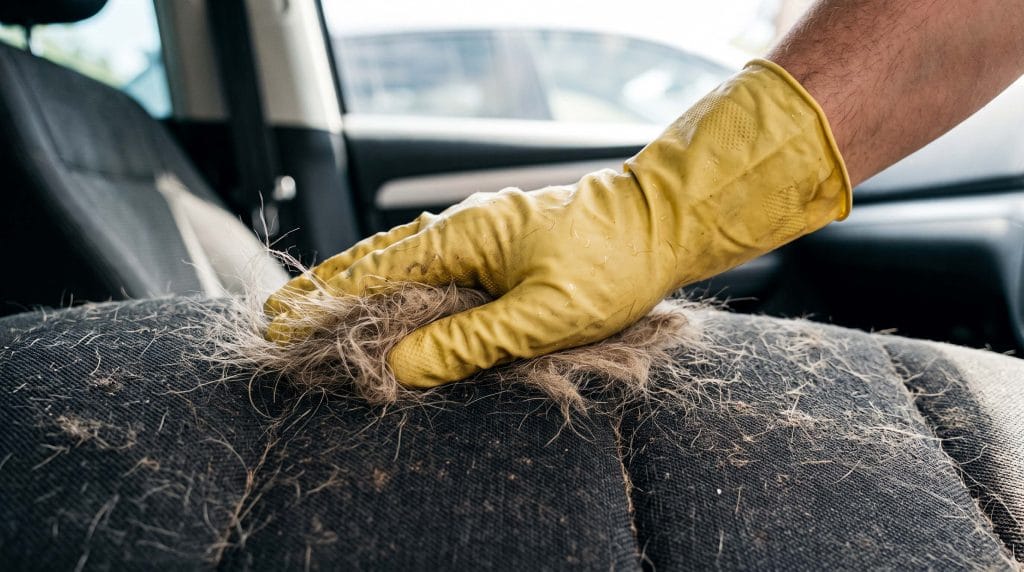
Rubber is, hands down, the most effective material for lifting short pet hair out of cloth. A damp rubber glove, a rubber squeegee, or even a balloon rubbed against fabric all work on the same basic principle — rubber creates a combination of static and friction that grabs hair in a way vacuums alone never quite manage.
Drag the rubber tool across the seat in one consistent direction, not back and forth. Going back and forth just redistributes hair and re-embeds some of it deeper into the weave. Working in one direction, in overlapping passes, pulls hair up and out where it can actually be collected instead of pushed around.
Step 2: Add a Little Moisture
This step surprises a lot of people, but it’s central to how to get pug hair out of car cloth seats efficiently. A lightly damp cloth, or a fine mist of water across the fabric (never a soaking), reduces static and causes hair to clump together instead of scattering when disturbed. Dry hair tends to fly around and resettle a few inches away from where you just cleaned. Slightly damp hair balls up and stays put until the vacuum picks it up.
Step 3: Vacuum With a Pet Hair Attachment, Not the Standard Nozzle
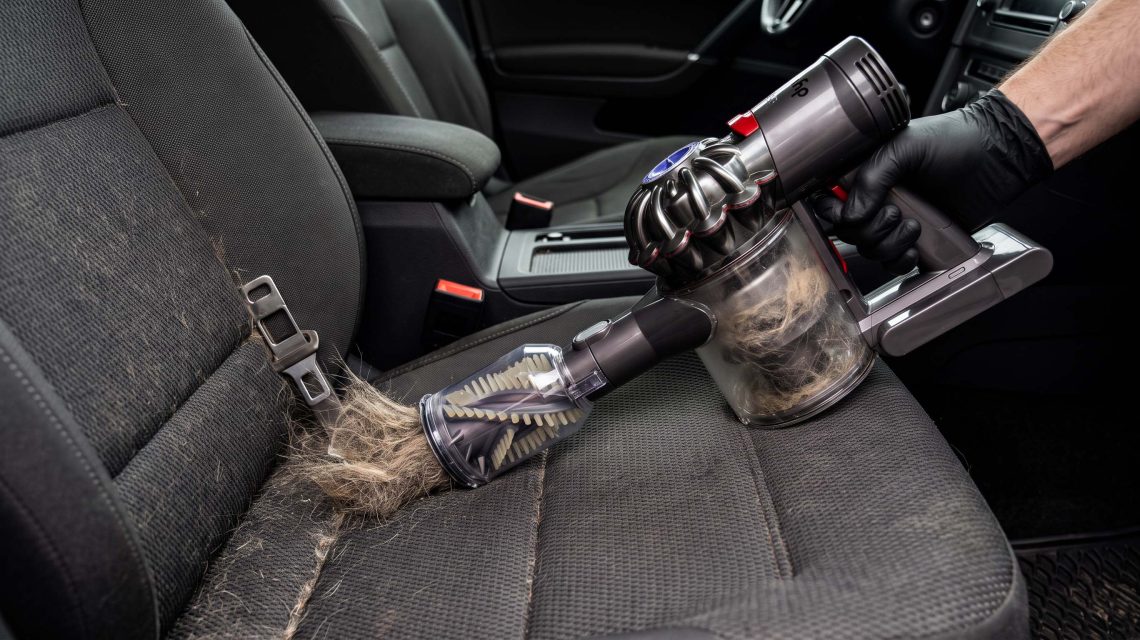
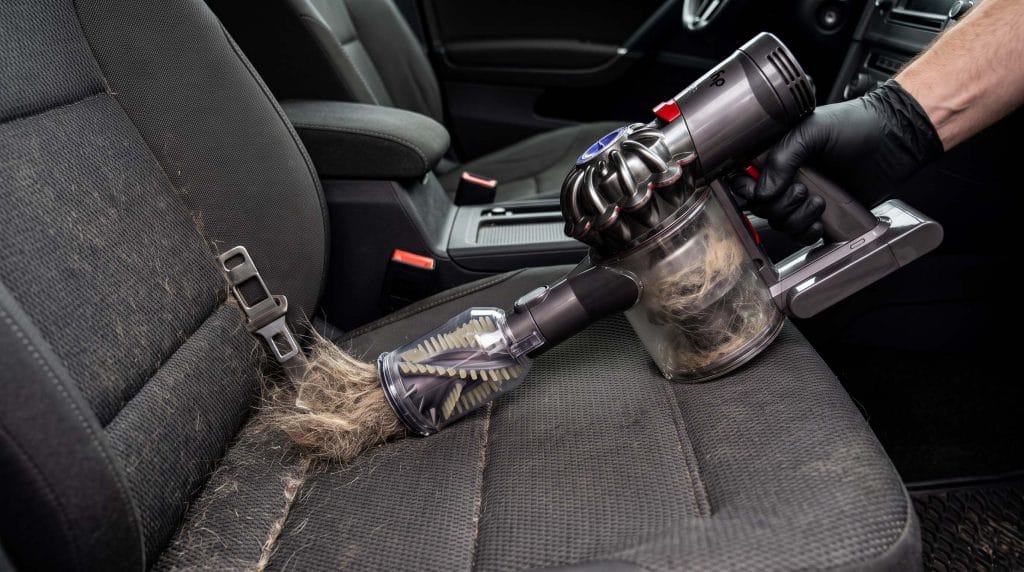
A standard vacuum nozzle glides right over embedded hair without grabbing much of it at all. A rubber-bristled pet hair attachment or a small motorized brush head physically agitates the fabric while suctioning, which is a completely different mechanism and noticeably more effective on short hair. If your vacuum came with a rotating upholstery brush attachment, that’s the one to reach for here — not the wide flat nozzle most people default to.
Step 4: Finish With a Lint Roller for Stragglers
After vacuuming, a few stubborn tufts almost always remain along seams, seat creases, and stitching lines. A heavy-duty lint roller, the kind with a genuinely thick adhesive layer rather than the flimsy drugstore sheets, picks up what the vacuum inevitably missed in those tighter spots.
Step 5: Treat the Seat Afterward to Slow Re-Embedding
Once the seat is clean, a light application of a fabric-safe anti-static spray helps slow down how quickly the next round of hair works its way back into the weave. This step gets skipped constantly, but it genuinely extends the time between deep cleans, especially for owners who drive with their Pug daily.
How to Get Pug Hair Out of Car Cloth Seats Without the Wrong Tools Getting in the Way
A lot of Pug owners make this harder on themselves than it needs to be. Here are the mistakes we see most often, and why each one backfires.
Using a stiff-bristled brush instead of rubber. Stiff bristles tend to push short hair deeper into the weave rather than lifting it out. Rubber grips and lifts; bristles mostly just scrub the hair further in.
Vacuuming a bone-dry seat first. Dry static causes hair to scatter and resettle across the seat mid-vacuum, which is exactly why the damp-cloth step matters more than people assume going in.
Skipping the seams and crevices. Hair collects heavily along stitching lines, seat creases, and the gap between the seat cushion and backrest — skipping these leaves visible fur even after a thorough vacuum pass everywhere else.
Using too much water. Cloth car seats can develop mildew, water rings, or a musty smell if soaked. A light dampness is the goal here, never anything close to wet.
Forgetting the headrest and door panels. Pugs love resting their heads against door panels or window ledges, and hair collects there just as heavily as it does on the seat cushion itself — an area most people never think to clean.
Cleaning only when it’s visibly bad. Waiting until hair is obviously piling up means it’s had weeks to settle deep into the fibers, which makes the whole job take three times as long as a quick weekly pass would.
Comparison Table: Tools for Getting Pug Hair Out of Cloth Car Seats
| Tool | Effectiveness on Short Hair | Cost | Best Use |
|---|---|---|---|
| Rubber squeegee | ✅✅✅ Excellent | Low | Loosening embedded hair |
| Damp rubber glove | ✅✅✅ Excellent | Very low | Detail work, seams |
| Standard vacuum nozzle | ✅ Weak | Already owned | Loose surface hair only |
| Motorized pet hair attachment | ✅✅✅ Excellent | Medium | Full seat cleaning |
| Heavy-duty lint roller | ✅✅ Good | Low | Final touch-up |
| Velcro strip or hair scraper | ✅✅ Good | Very low | Budget alternative to rubber |
| Fabric-safe anti-static spray | ✅✅ Good (preventive) | Low | Slowing re-embedding |
Maya’s Story — The Weekend She Finally Solved Her Car Seat Problem
One of the pet parents in our community, Maya, owns a fawn Pug named Otis who rides shotgun on every errand run, every school pickup, and every weekend trip to the dog park. For nearly two years, Maya vacuumed her cloth seats every weekend and still ended up with a faint golden haze across the fabric no matter how long she spent on it.
She tried lint rollers by the dozen. She tried a shop-vac with the standard nozzle attachment. She even sprayed static-guard spray on the seats before every drive, hoping it would stop hair from sticking to the fabric in the first place. None of it solved the problem fully — the hair kept resurfacing within a day or two of each cleaning session, and Maya was starting to wonder if it was just something she’d have to live with forever.
What actually changed things was almost embarrassingly simple. A friend suggested a rubber dish-washing glove, dampened slightly under the tap, dragged across the seat before vacuuming. Maya was skeptical going in, since she’d already tried so many “miracle” fixes that hadn’t worked out. But the difference was immediate and obvious — hair balled up in visible clumps she could physically pick up by hand before she’d even switched the vacuum on.
Maya now keeps a rubber glove permanently stashed in her glovebox for this exact purpose and does a two-minute pass after every drive with Otis instead of letting hair build up for a full week. What used to be an hour-long Saturday chore has turned into a five-minute habit spread across the week — and honestly, she says the car looks better now than it did when she was spending three times as long on it.
Does the Season Actually Affect How Much Pug Hair Ends Up in Car Seats?
It genuinely does, and this rarely gets mentioned in general car-cleaning advice. Pug hair actually becomes more embedded in cloth seats during hot weather, not less. Heat causes fabric fibers to expand slightly, which lets short hair work further into the weave during a hot drive. As the car cools back down, those fibers contract again, effectively locking the hair in place tighter than it would be in a cooler vehicle.
This is part of why summer feels so much more frustrating for Pug owners specifically when it comes to getting pug hair out of car cloth seats. If a garage or shaded parking spot is available, using it isn’t just about keeping the car more comfortable for a Pug riding along — it also means less hair gets permanently worked into the seat fibers in the first place. A cracked window and a windshield sunshade genuinely make a measurable difference here, not only for comfort but for how much effort the next cleaning session ends up taking.
Cold weather brings a different challenge. Dry winter air increases static buildup, which means loose hair scatters more readily and clings to surfaces beyond just the seats — dashboards, door panels, even the inside of windows. The damp-cloth technique described earlier becomes even more valuable during colder months for exactly this reason.
🐾 Team Pro-Tip: The Overlooked Spot Most Pug Owners Never Check
Here’s something we’ve noticed repeatedly that almost never gets mentioned anywhere else — the seatbelt buckle housing and the small gap where the seat cushion meets the backrest hinge collect a surprising amount of Pug hair that owners never think to check. Because Pugs are small enough to curl up directly against the seatbelt anchor or wedge themselves into that backrest gap during naps, hair accumulates in spots a standard vacuum nozzle physically can’t reach.
A narrow crevice attachment, or even a straightened wire coat hanger wrapped in a slightly damp microfiber cloth, works well for digging hair out of these tight gaps. It sounds like overkill for a car cleaning routine, but owners who’ve tried it are consistently surprised by how much hair comes out of a spot they assumed was already clean.
Best Long-Term Habits for Keeping Pug Hair Off Cloth Car Seats
Cleaning after the fact only solves half the problem. A few small habits cut down significantly on how much hair reaches the seats to begin with.
- Use a washable seat cover during high-shedding periods. Even a simple hammock-style or bench cover intercepts most hair before it ever touches the cloth underneath.
- Brush your Pug before car rides, not after. A quick two-minute brush-down before loading up removes a good portion of the loose hair that would otherwise transfer straight onto the seat.
- Keep a rubber glove or squeegee in the glovebox. Cleaning little and often beats one exhausting monthly deep-clean every single time.
- Crack a window or use a sunshade in hot weather. This reduces the heat-driven embedding effect covered earlier in this guide.
- Vacuum weekly rather than monthly. Fresh hair lifts out far more easily than hair that’s had weeks to settle deep into the fabric.
- Feed a balanced diet with adequate omega fatty acids. Coat health affects shedding volume overall, and a well-nourished coat sheds somewhat less aggressively than a dry, poorly maintained one.
Pug shedding in the car is really just an extension of Pug shedding at home, and tackling it at the source makes the car cleanup noticeably easier too. Our guides on dealing with dog shedding around the house and Labrador shedding management cover brushing routines that reduce loose hair volume overall, which naturally means less of it ends up riding along in the car in the first place. For households managing multiple shedding breeds, our German Shepherd shedding guide and Golden Retriever shedding guide offer comparable brushing frameworks worth adapting for a Pug’s shorter coat.
Tools and Resources Worth Keeping in the Car
A short list of what consistently makes the biggest difference for owners dealing with this problem regularly:
- Rubber dish gloves — inexpensive, reusable, and arguably the single most effective tool on this entire list
- A compact handheld vacuum with a motorized brush attachment — useful for quick between-wash touch-ups without dragging out a full shop-vac
- A heavy-duty pet hair lint roller — worth the slightly higher price over standard sheets, since they hold far more hair per sheet
- A washable hammock-style seat cover — genuinely reduces the amount of hair reaching the fabric underneath
- A narrow crevice vacuum attachment — solves the buckle-housing and backrest-gap problem covered in the Team Pro-Tip above
What’s Changing in Pet Hair Car Care
Car interior manufacturers have started responding to pet owner demand in small but noticeable ways. Several automakers now offer factory seat fabric options specifically marketed as “pet-resistant,” using a looser weave structure designed to release hair more easily during a standard vacuum pass rather than trapping it. Aftermarket seat cover companies have also shifted toward tighter-knit, static-resistant materials that shed pet hair back off far more readily than older cotton-blend covers did.
On the cleaning side, cordless handheld vacuums with dedicated “pet hair” suction settings and motorized brush heads have become widely available at price points that weren’t realistic a few years ago, which makes the kind of thorough weekly cleaning described in this guide far more practical for the average car owner than it used to be.
None of this replaces the fundamentals, though. Even the best pet-resistant fabric and the most advanced handheld vacuum still benefit from the same core approach — friction, a little moisture, and consistency over time.
Key Takeaways Checklist for Pug Owners Battling Car Seat Hair
- Use rubber, not bristles, to loosen embedded hair from cloth seats
- Lightly dampen the fabric before agitating — dry hair scatters, damp hair clumps
- Drag tools in one direction only, never back and forth
- Finish with a motorized pet hair vacuum attachment, not a standard nozzle
- Use a heavy-duty lint roller for seams and stitching lines
- Check the seatbelt buckle housing and backrest gap — commonly missed spots
- Clean weekly instead of monthly — fresh hair lifts out far more easily
- Use a washable seat cover during peak shedding periods
- Park in shade during hot weather to reduce heat-driven hair embedding
- Apply a fabric-safe anti-static spray after cleaning to slow re-embedding
FAQ — How to Get Pug Hair Out of Car Cloth Seats
What’s the fastest way to get pug hair out of car cloth seats?
A damp rubber glove or squeegee dragged in one direction, followed by a motorized pet hair vacuum attachment, clears most seats in under ten minutes once the technique becomes routine.
Does a regular vacuum work for pug hair on cloth seats?
Not particularly well on its own. Standard nozzles glide over short, embedded hair without agitating the fabric enough to lift it free. A rubber-bristled or motorized attachment makes a significant, noticeable difference.
Why does pug hair seem worse in car seats than on furniture at home?
Car seat fabric is often more tightly woven than typical home upholstery, and the heat cycling that happens inside a parked car causes fibers to expand and contract repeatedly, working hair deeper into the weave over time.
Can dryer sheets help get pug hair out of car cloth seats?
They help reduce static slightly, which can make hair less likely to scatter during cleaning, but they don’t remove embedded hair on their own. Pairing them with rubber tools produces far better results than using either method alone.
How often should I clean pug hair out of my car seats?
Weekly works best for most Pug owners. Hair left sitting for several weeks becomes noticeably harder to remove than hair cleaned within a few days of accumulating, since it has more time to work into the weave.
Are certain car seat fabrics worse for trapping pug hair than others?
Yes. Tightly-woven factory cloth traps short hair more aggressively than looser weaves or leather. If you’re shopping for a new vehicle or seat covers and shedding is a major concern, a looser-weave fabric or a wipeable material will save considerable cleaning time down the road.
Where This Leaves You
How to get pug hair out of car cloth seats really comes down to friction and moisture working together, not brute-force vacuuming alone. Rubber tools, a light dampness, and the right vacuum attachment handle even the most stubborn, deeply embedded short hair — the kind Pugs are famous for leaving behind on every single car ride, regardless of season.
Keep a rubber glove in the glovebox, brush your Pug before loading up for a drive, and clean little and often instead of letting hair pile up for weeks at a time. Combined with a solid at-home shedding routine, car seats stop feeling like a losing battle you fight every weekend. Check out our complete shedding management guide, our Labrador shedding guide, and our German Shepherd shedding guide for more ways to cut pet hair off at the source before it ever makes it into the car. 🐾
This article provides general cleaning guidance for informational purposes. Always check your vehicle’s upholstery care instructions, and test any cleaning method on a small, hidden area of the seat before applying it more broadly.
