

 Animal Zoid Editorial Team
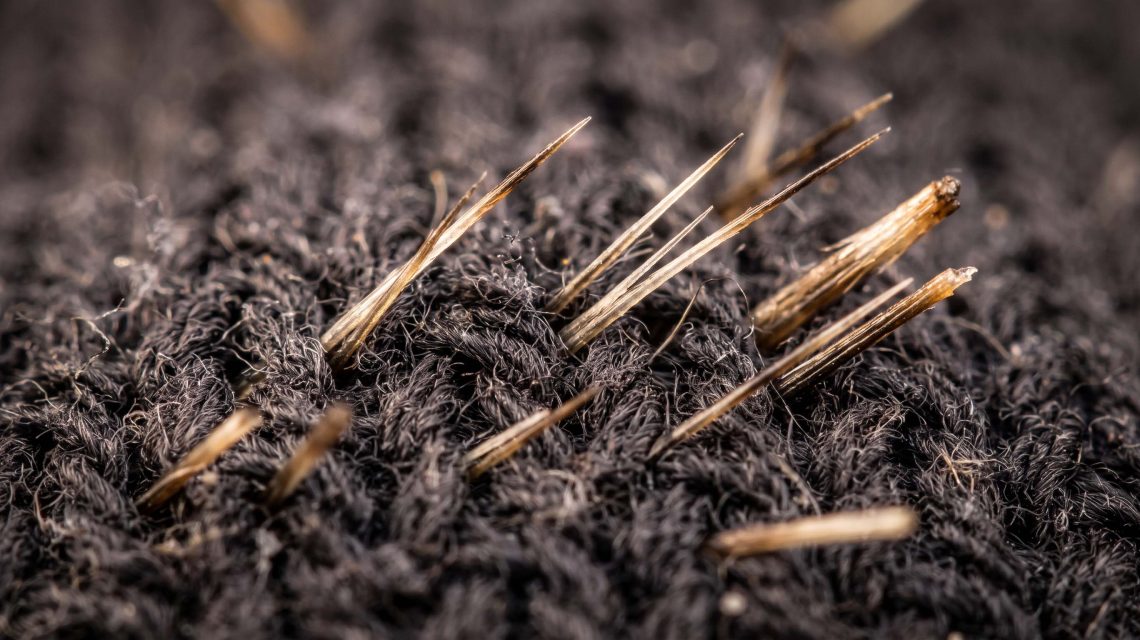
You pull a dark t-shirt out of the dryer and it looks like it survived a sandstorm of tiny needles. If you are asking why do short haired pitbulls shed so many tiny sharp hairs, the answer sits in the breed’s unique hair shaft geometry, a fragmented inner medulla structure, and an unusually fast growth cycle that pushes out stiff, short fibers faster than most other short-coated dogs. We have spent years working with pitbull owners who describe the exact same frustration — the fur is not just everywhere, it physically pricks through fabric and embeds in bare skin. This article breaks down the biology, the physics, and the practical fixes that actually reduce the sharp-hair takeover in your home.
Quick Answer
If you are wondering why do short haired pitbulls shed so many tiny sharp hairs, the reason is their single-layer coat produces short guard hairs with an oval cross-section, a fragmented medulla core, and high keratin density. These hairs reach full length in weeks rather than months, shed continuously year-round, and have blunt cut ends that act like microscopic splinters. The most effective management combines weekly rubber-bristle brushing, omega-3 supplementation, and a damp-microfiber wipe-down routine that grabs the fibers before they embed in your furniture.
The Biology Behind Why Do Short Haired Pitbulls Shed So Many Tiny Sharp Hairs
Most people assume short hair means less shedding. That assumption falls apart the moment you share a couch with a pitbull. The breed carries a single-layer coat — no fluffy undercoat like a Husky or a Shepherd — but the individual hairs are structurally different from other short-haired breeds in ways that make them far more irritating to live with.
Pitbull guard hairs measure roughly 0.5 to 1.5 centimeters in length. That sounds minimal. But the shortness is exactly what creates the sharpness problem. Longer dog hairs taper gradually to a fine, flexible point. Pitbull hairs are so short that they break or shed before the natural taper fully develops. The result is a blunt, stiff tip that feels like a tiny needle against your skin.
The Fragmented Medulla — A Hidden Reason Why Do Short Haired Pitbulls Shed So Many Tiny Sharp Hairs
Here is a detail you will not find in most grooming guides. Every dog hair has three layers: the outer cuticle, the middle cortex, and the inner medulla. In most breeds, the medulla runs as a continuous, air-filled column through the center of the hair shaft. This continuous core gives the hair a degree of internal cushioning, allowing it to bend and flex without snapping.
Pitbull guard hairs are different. Under microscopic examination, their medulla appears fragmented — broken into short, disconnected segments with gaps in between. This fragmented medulla removes the internal cushioning effect. The cortex has to bear all the structural load on its own, which makes the hair shaft significantly more rigid. A rigid hair does not bend when it contacts your skin or your clothing. It pokes. That rigidity is a major contributor to why do short haired pitbulls shed so many tiny sharp hairs and why those hairs feel so much more irritating than a Beagle’s or a Boxer’s fur of similar length.
Cuticle Scale Pattern and Fabric Grip
The outermost layer of a dog hair is the cuticle, which is covered in tiny overlapping scales. Most dog breeds have an “imbricate” scale pattern — flat, smooth, overlapping scales that lie close to the shaft. Pitbull hairs tend toward a “spinous” or petal-like scale pattern where the scales protrude slightly outward from the shaft surface.
This might sound like a minor detail. It is not. Those protruding scales act like microscopic barbs. When a pitbull hair lands on fabric, the spinous scales catch on individual textile fibers and lock the hair in place. This is the real reason lint rollers fail so spectacularly on pitbull fur. The hair is not resting on the fabric surface. It is mechanically anchored to it.
Hair Shaft Keratin Density and the Prickle Factor
Keratin is the protein that makes up dog hair. Pitbull guard hairs pack a higher keratin density per micron of diameter than most comparable breeds. This gives each individual hair a stiffness you can feel the moment it contacts bare skin. Think of it like the difference between a cooked spaghetti strand and an uncooked one — same material, completely different rigidity.
The high keratin density also makes pitbull hairs more resistant to breaking down in the wash. You can run your clothes through a full laundry cycle and still find prickly little strands clinging to the fabric when you pull them out. The hairs do not dissolve or soften. They just reposition themselves deeper into the weave.
For a broader look at managing short-haired shedding breeds, our guide on the best bath brush for heavy-shedding short hair dogs covers tools designed specifically for this type of coat.
The Growth Cycle Explaining Why Do Short Haired Pitbulls Shed So Many Tiny Sharp Hairs
Dog hair grows in three phases: anagen (active growth), catagen (transition), and telogen (resting and shedding). The length of the anagen phase determines how long a hair gets before it falls out. Long-haired breeds like Collies have anagen phases that last years. Pitbulls have anagen phases that last only a few weeks.
This rapid turnover means a pitbull’s coat is in a near-constant state of shedding and regrowing. At any given moment, roughly 30 to 40 percent of a pitbull’s hairs are in the telogen phase and ready to release. Compare that to a long-haired breed where only 10 to 15 percent of hairs sit in telogen at a time. The pitbull is essentially replacing its entire coat on a rolling basis throughout the year, which is why the shedding never really stops.
Follicle Density and Telogen Grip Strength
Here is another factor that rarely gets discussed. Pitbulls have a higher follicle density than many short-haired breeds despite carrying only a single coat layer. On the dorsal trunk, a typical pitbull has approximately 600 to 800 hair follicles per square centimeter. A Boxer of similar size sits closer to 400 to 500 follicles per square centimeter. More follicles means more individual hairs entering the shedding phase simultaneously.
On top of that, pitbull telogen hairs have a lower extraction force than those of double-coated breeds. In simple terms, the hairs release from the follicle with less mechanical friction. A pitbull rolling on your couch sheds more hairs per roll than a Labrador would, because the anchoring grip of each follicle is weaker during the resting phase. This combination of high follicle count and low telogen grip strength is a core reason why do short haired pitbulls shed so many tiny sharp hairs in such overwhelming volume.
Seasonal changes still influence the shedding rate. Spring and fall typically bring a noticeable uptick as the coat adjusts to temperature shifts. But unlike double-coated breeds that experience dramatic seasonal blows, pitbull shedding stays relatively steady with moderate peaks. Our article on the difference between normal shedding and a full coat blow explains how single-coat and double-coat shedding patterns compare.
The “Splinter Effect” — Why Pitbull Hairs Embed Everywhere
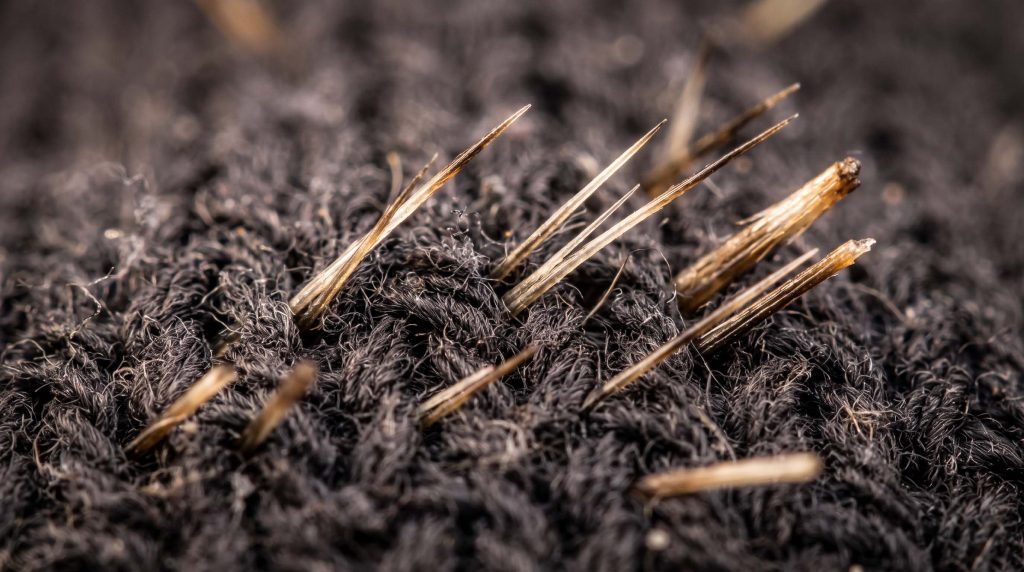
We call this the splinter effect because it behaves exactly like a wood splinter. Pitbull hairs are short, stiff, and pointed. When they land on fabric, they do not sit on the surface. They penetrate the weave and lodge point-first into the material. Once embedded, a lint roller cannot grab them because there is no exposed length for the adhesive to grip.
  Fabric Surface (cotton weave)
  ─────────────────────────────
   \    |    /      |     \
    \   |   /       |      \     ← Pitbull hairs
     \  |  /        |       \       embedded point-first
      \ | /         |        \
  ─────────────────────────────
  Fabric Underside
Hair Emergence Angle Amplifies the Problem
The angle at which pitbull hairs emerge from the skin also plays a role. Pitbull hairs grow out at a steeper angle — closer to 70 to 80 degrees relative to the skin surface — compared to breeds like Greyhounds or Whippets where hairs lie much flatter. This steep emergence angle means that when a pitbull hair sheds and lands on a flat surface, it tends to maintain a near-perpendicular orientation. A perpendicular hair is far more likely to penetrate a fabric weave point-first than a hair lying flat.
This is why your dark clothes look perpetually covered in tiny white dots no matter how many times you lint-roll them. The hairs are inside the fabric, not on top of it. The only reliable removal method is mechanical agitation — a rubber brush, a damp cloth, or a high-suction vacuum with a motorized brush attachment that physically dislodges the embedded fibers.
Understanding the splinter effect is a key part of figuring out why do short haired pitbulls shed so many tiny sharp hairs and, more importantly, how to get rid of the fibers once they have invaded your living space.
Real Story: One Owner’s Battle With Pitbull Shedding
Derek adopted Roxie, a two-year-old blue-nose pitbull, during the winter. For the first few months, the shedding seemed manageable. Then spring hit, and Derek started finding tiny sharp hairs embedded in his work shirts, his car seats, and even his lunch bag. “I would sit down at my desk and feel little pricks on my forearms,” he told us. “I thought I was getting a rash. It was just Roxie’s fur.”
Derek tried everything he could find online. He bought a high-end vacuum, ran his clothes through extra rinse cycles, and even tried wrapping his furniture in plastic sheeting — which Roxie promptly chewed through. Nothing made a meaningful difference because he was treating the symptom, the fur on surfaces, instead of the source.
When Derek connected with our team, we shifted his approach to source-level management. We had him brush Roxie outdoors three times a week with a rubber curry comb, add a fish oil supplement to her meals, and wipe down his couch with a damp microfiber cloth every evening. Within three weeks, the volume of embedded hairs on his clothes dropped dramatically. “I can actually wear a black shirt to work now,” he said. “That feels like a miracle.”
Derek’s experience mirrors what we see with most pitbull owners. The breakthrough comes when you stop trying to clean up the fur and start preventing it from embedding in the first place.
Practical Fixes for Why Do Short Haired Pitbulls Shed So Many Tiny Sharp Hairs
Knowing the biology is useful, but you need actionable steps. Here is what we have found works best after testing dozens of approaches with pitbull owners in apartments, condos, and houses.
Brushing Techniques That Actually Grab Tiny Pitbull Hairs
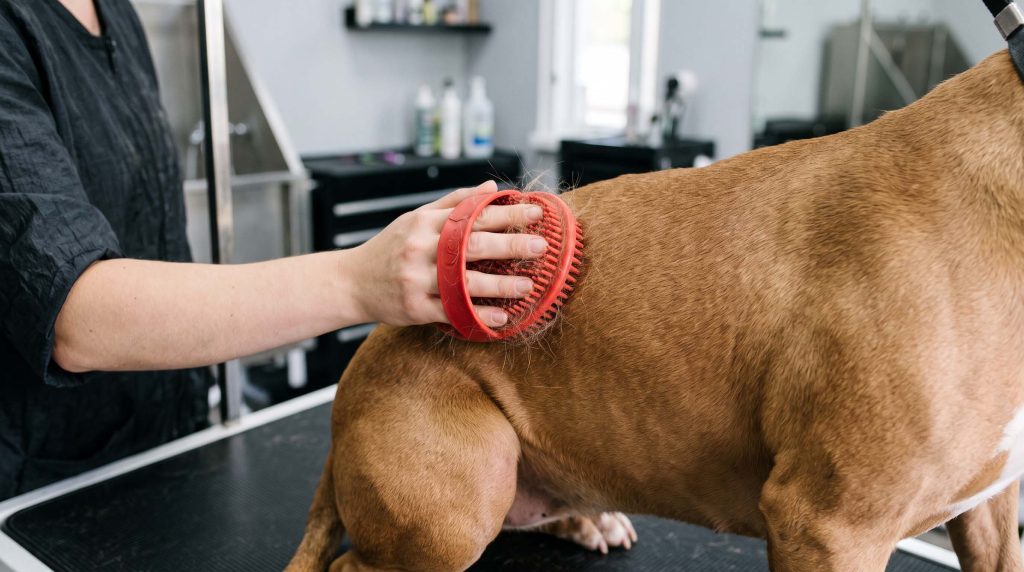
Standard bristle brushes glide right over a pitbull’s coat. The hairs are too short and too stiff for traditional bristles to catch. You need a tool that creates friction against the skin and pulls the loose telogen hairs out before they fall naturally.
A rubber curry comb with nubby teeth is the most effective tool we have tested for pitbull coats. The rubber grips the tiny hairs and pulls them from the follicle with gentle circular motions. Use it outdoors or over a tile floor where cleanup is easy. Spend 10 to 15 minutes, working in small circles across the back, sides, and chest.
Next, follow up with a damp chamois cloth wiped in the direction of hair growth. The moisture catches the remaining loose hairs that the brush missed. This two-step process removes far more fur than either method alone.
| Method | Effectiveness on Pitbull Hair | Effort Level | Cost |
|---|---|---|---|
| Rubber curry comb | ★★★★★ | Low | $5–$10 |
| Damp microfiber wipe | ★★★★☆ | Low | $8–$15 |
| Slicker brush | ★★☆☆☆ | Medium | $10–$20 |
| Deshedding blade | ★★★☆☆ | Medium | $8–$18 |
| Lint roller | ★☆☆☆☆ | High (repeated) | $3–$8 |
| High-suction vacuum | ★★★★☆ | Medium | $100+ |
The lint roller scores lowest because it only grabs surface hairs. The embedded splinter-effect fibers laugh at adhesive sheets. Save your money and invest in the rubber comb instead.
For bath-time deshedding, our guide on brushing a dog while the coat is soapy explains how to maximize fur removal during a wash.
Omega-3 Supplementation for Coat Health
A dry coat sheds more. Pitbulls are prone to skin dryness because their single-layer coat offers less natural oil distribution than a double coat. Adding an omega-3 fatty acid supplement — specifically EPA and DHA from fish oil — improves the skin’s moisture barrier and reduces excessive shedding within four to six weeks.
We recommend a dosage of roughly 20 to 30 mg of combined EPA and DHA per pound of body weight daily. For a 50-pound pitbull, that translates to about 1,000 to 1,500 mg per day. Check with your vet before starting any supplement, especially if your dog has food sensitivities.
Also, make sure your pitbull’s diet contains adequate zinc and biotin. Deficiencies in these micronutrients accelerate hair turnover and produce weaker, more brittle shafts that break and shed prematurely.
The Sebum Factor Most Guides Ignore
Here is a piece of the puzzle that almost no grooming website discusses. Pitbull skin produces sebum — the natural oil that coats hair shafts — with a different lipid composition than many other breeds. Specifically, pitbull sebum contains a higher ratio of squalene to wax esters.
Squalene is a lightweight, fast-evaporating lipid. Wax esters are heavier and longer-lasting. When the squalene-to-wax-ester ratio skews high, the sebum coating on each hair shaft evaporates more quickly, leaving the hair dry and rigid within hours of the skin producing it. This is why pitbull coats often feel rougher to the touch than a Boxer’s or a Bulldog’s coat, even when the dog is perfectly healthy and well-groomed.
The practical takeaway is that topical moisturizing sprays designed for dogs can help, but only if they contain lipid-rich ingredients like coconut-derived fatty acids or shea butter that mimic the wax esters pitbull skin naturally lacks. Water-based sprays just evaporate and do nothing for the underlying rigidity problem.
Common Mistakes That Make Pitbull Shedding Worse
Over-Bathing Strips Natural Oils
Bathing a pitbull more than once a month strips the natural sebum that keeps the skin hydrated and the hair shafts flexible. Dry, brittle hairs shed faster and feel sharper. If your pitbull gets dirty between baths, use a damp cloth spot-clean instead of a full shampoo.
When you do bathe, consider a deshedding shampoo formulated for short coats. Our article on safely diluting professional deshedding shampoo covers dilution ratios that prevent over-concentration, which can irritate sensitive pitbull skin.
Using the Wrong Vacuum Attachment
A bare-floor vacuum head will not pull embedded pitbull hairs out of carpet or upholstery. You need a motorized brush attachment that agitates the fabric and dislodges the splinter-effect fibers. Without agitation, the vacuum just sucks air over the surface while the tiny hairs stay locked in the weave.
Ignoring the Drying Phase After Baths
If your pitbull air-dries after a bath, the loosened hairs settle back into the coat and shed gradually over the next few days. A quick blow-dry on a cool setting blasts those loose hairs out in one session. Our guide on drying a thick undercoat fast without matting covers dryer techniques that also apply to single-coat breeds.
Shaving to “Stop” the Shedding
Let’s face it — this idea crosses every pitbull owner’s mind at some point. Do not do it. Shaving a pitbull does not reduce shedding. It just produces even shorter, even sharper hair stubble that embeds more aggressively in fabric and pricks your skin more painfully. The hair growth cycle continues at the same rate regardless of length. You will end up with a prickly, sunburned dog and the same amount of fur on your couch.
Your Pitbull Fur Defense Routine
Here is the weekly schedule that has worked best for the pitbull owners we have worked with:
- Monday and Thursday: 15-minute outdoor rubber comb session, followed by a damp chamois wipe
- Tuesday and Friday: Damp microfiber cloth wipe-down of all upholstered furniture
- Wednesday: Vacuum all carpets and rugs with a motorized brush attachment
- Saturday: Bath day (once a month) or spot-clean with a damp cloth
- Daily: Quick rubber glove pass over your clothes before leaving the house
- Ongoing: Omega-3 supplement with morning meal
Stick to this for three weeks and you will see a noticeable reduction in the tiny sharp hairs embedding in your belongings.
Our Grooming Team’s Anti-Static Trick for Embedded Pitbull Hairs
Here is something we rarely see mentioned in other guides. Run a slightly damp dryer sheet over your furniture and car seats before you use a lint roller. The anti-static coating on the dryer sheet neutralizes the static charge that holds pitbull hairs in the fabric weave. Once the static breaks, the hairs release to the surface where the lint roller can actually grab them.
It takes about 30 seconds per couch cushion and makes a dramatic difference. We stumbled onto this trick accidentally when a team member was doing laundry and noticed that the dryer sheet pulled embedded pitbull hairs off her sleeve. It works because the same anti-static compounds that prevent clothes from clinging in the dryer also break the electrostatic bond between pitbull hairs and fabric fibers. Honestly, it is the simplest trick in this entire article, and it outperforms tools that cost ten times as much.
Also, consider running a small humidifier in the room where your pitbull sleeps. Raising the relative humidity from 30 percent to around 45 percent reduces static cling on both the coat and your furniture. Dry air makes the splinter effect worse. Moist air softens it.
FAQ — Why Do Short Haired Pitbulls Shed So Many Tiny Sharp Hairs
Do pitbulls shed more than other short-haired breeds?
Pitbulls shed a similar total volume to other short-haired breeds, but the hairs feel far more noticeable because of their stiffness and sharp tips. The oval cross-section, fragmented medulla, and high keratin density make each individual hair more irritating to skin and more likely to embed in fabric, which creates the perception of heavier shedding.
Can I stop my pitbull from shedding completely?
No. Shedding is a natural biological process tied to the hair growth cycle. You can reduce the volume and manage where the hairs end up, but you cannot stop the cycle itself. Any product or supplement that claims to eliminate shedding entirely is misleading.
Why are pitbull hairs sharper in the winter?
Cold, dry air dehydrates the skin and makes hair shafts more brittle. Brittle hairs break at sharper angles, creating more prickly tips. The already high squalene-to-wax-ester ratio in pitbull sebum worsens in low humidity, leaving the hairs even more rigid. Running a humidifier in your home during winter months can soften the coat and reduce the sharpness of shed hairs.
Does spaying or neutering affect pitbull shedding?
Hormonal changes after spaying or neutering can temporarily alter the coat texture and shedding pattern. Some owners report a slight increase in shedding volume during the first few months after the procedure. The coat typically stabilizes within six months as hormone levels normalize.
Are pitbull hairs harmful to people with allergies?
Pitbull hairs themselves are not allergenic. The allergen is a protein called Can f 1 found in dog saliva and dander. However, the sharp hairs can cause micro-abrasions on sensitive skin, which may allow allergens to penetrate more easily and trigger a stronger reaction. If you notice increased skin irritation around embedded hairs, wash the area with cool water and consider wearing long sleeves at home during peak shedding periods.
Final Thoughts on Pitbull Shedding
Understanding why do short haired pitbulls shed so many tiny sharp hairs comes down to a combination of factors most guides overlook: the fragmented medulla that removes internal flexibility, the spinous cuticle scales that grip fabric like barbs, the steep hair emergence angle that drives fibers point-first into your clothes, and the rapid growth cycle that keeps a constant supply of short, stiff hairs cycling through your home. You cannot change the biology, but you can manage the fallout with the right tools and a consistent routine.
Start with the rubber curry comb and the damp microfiber wipe-down. Those two changes alone will cut the embedded hair problem roughly in half within the first two weeks. Add the omega-3 supplement for long-term coat improvement. And honestly, accept that a few tiny pricks are part of life with a pitbull. They are worth it.
If your pitbull’s skin looks irritated from all the brushing, our article on why dog skin looks pink after a deshedding bath explains what is normal and when to see a vet. For a complete overview of shedding management across all coat types, check out our general guide on how to deal with dog shedding.
Disclaimer: This article is for informational purposes only and does not replace professional veterinary advice. If your pitbull shows signs of excessive shedding, bald patches, skin redness, or persistent itching, consult a licensed veterinarian to rule out allergies, hormonal imbalances, or dermatological conditions.
