

 Animal Zoid Editorial Team
 If you’ve ever poured professional-strength deshedding shampoo straight onto your dog’s coat, you’ve probably wasted half the bottle and irritated their skin in the process. Learning how to safely dilute professional dog deshedding shampoo isn’t just about stretching a bottle further — it’s about getting the formula to actually work the way it was designed to.
⚡ Quick Answer
To safely dilute professional dog deshedding shampoo, follow the ratio printed on the bottle, typically between 4:1 and 16:1 (water to shampoo), and mix using lukewarm water in a labeled squeeze bottle. Pour the shampoo into the water, not the other way around, shake gently rather than aggressively, and use the diluted mixture within 30 to 60 days. If no ratio is listed, start at 8:1 for most heavy-shedding coats and adjust based on lather and rinse performance during your first bath.
Professional groomers rarely use these shampoos at full strength. They’re concentrated on purpose, built to be mixed down before they ever touch a coat. Skip that step, and you’re not getting a “stronger clean.” You’re just risking dry, flaky skin and a product that foams too aggressively to rinse out properly.
We’ve spent a lot of time working through bottles of these concentrates with different breeds, different coat types, and honestly, a few early mistakes of our own. This guide walks through exactly how to safely dilute professional dog deshedding shampoo, why the ratio matters more than most labels explain, and how to avoid the small errors that quietly ruin a bath session before it even starts.
What Diluting Professional Deshedding Shampoo Actually Means
Professional deshedding shampoos come concentrated, usually somewhere between 4 to 20 times stronger than the ready-to-use formulas sold in grocery store pet aisles. That concentration exists so groomers can buy one large bottle and mix smaller batches as needed, rather than shipping and storing gallons of pre-diluted product.
Diluting the shampoo means mixing a small amount of the concentrate with water, at a specific ratio, before it ever touches your dog. Done right, this process doesn’t weaken the shampoo’s deshedding power. It actually activates the surfactants properly, letting them spread evenly through the coat instead of sitting in concentrated pockets that can dry out skin or leave residue behind.
Here’s the part most bottle labels gloss over: correct dilution changes how the active ingredients behave. Concentrated surfactants need water to fully “unfold” and create the kind of lather that lifts loose undercoat away from the skin. Skip the dilution step, and you’re applying a product that’s chemically too dense to do its job properly, no matter how expensive it was.
Why You Need to Dilute Deshedding Shampoo the Right Way
Let’s be honest — a lot of pet owners assume more concentrated automatically means more effective. It’s an easy mistake to make, but it works against you here.
Full-strength application means the shampoo sits heavier on the skin surface for longer, since it doesn’t rinse out as easily. That extended contact time is exactly what causes the dryness and irritation so many owners blame on “sensitive skin,” when the real issue was the dilution ratio all along.
There’s also a cost angle worth mentioning, since professional deshedding shampoos aren’t cheap. A properly diluted bottle stretches significantly further than one used at full strength, sometimes lasting four to six times longer depending on the concentration level. Given that some professional-grade formulas run $20 to $40 per bottle, getting the dilution right isn’t just a skin-safety issue. It’s a genuine budget issue too.
And then there’s the practical side: shampoo that’s too thick doesn’t spread evenly through a coat, especially on breeds with dense undercoats. You end up missing patches, over-applying in others, and rinsing longer than necessary just to get the product out. If you’re already dealing with a heavy-shedding breed, pairing correct dilution with the right tools — like the techniques covered in our guide on the best bath brush for short-haired dogs that shed a lot — makes a noticeably bigger difference than either step alone.
Step-by-Step: How to Safely Dilute Professional Dog Deshedding Shampoo at Home
Here’s how we approach it, broken down so there’s no guesswork involved.
Step 1: Check the Concentration Ratio Printed on the Bottle
Every professional deshedding shampoo lists a suggested dilution ratio somewhere on the label, usually written as something like 8:1 or 16:1 (water to shampoo). If you can’t find it printed clearly, check the manufacturer’s website — reputable brands publish this information because misuse leads to returns and complaints.
As a general starting point, here’s how common concentration levels typically break down:
- 4:1 concentrate — mix 4 parts water to 1 part shampoo
- 8:1 concentrate — mix 8 parts water to 1 part shampoo
- 16:1 concentrate — mix 16 parts water to 1 part shampoo
Getting this number right is the single most important part of learning how to safely dilute professional dog deshedding shampoo, since everything else in the process depends on starting with the correct base ratio.
Step 2: Use a Measuring Tool, Not a Guess
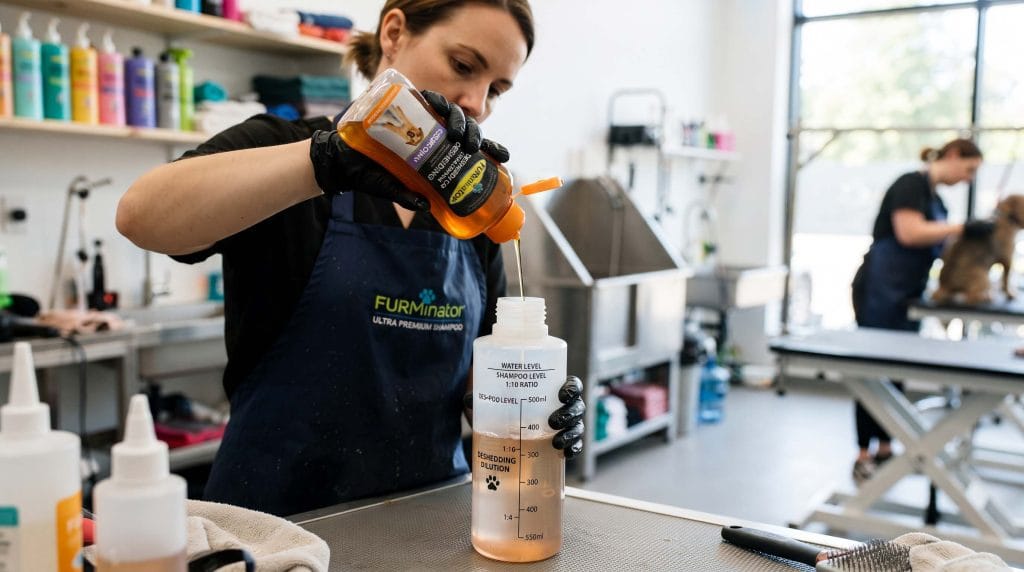
Eyeballing shampoo amounts is where most dilution mistakes happen. A kitchen measuring cup, a dedicated squeeze bottle with volume markings, or even a simple oral medicine syringe works far better than pouring shampoo “until it looks about right.”
We’ve found that owners who switch to a labeled squeeze bottle for mixing get noticeably more consistent results bath after bath, simply because they’re not relying on memory or guesswork each time.
Step 3: Mix Shampoo Into Water, Not Water Into Shampoo
This order actually matters. Adding water into concentrated shampoo tends to cause excessive foaming before the mixture is properly blended, which wastes product and makes accurate measuring harder. Pouring shampoo into water instead lets the concentrate disperse gradually and mix more evenly.
Step 4: Use Lukewarm Water for Mixing
Cold water doesn’t fully activate the surfactants in concentrated shampoo, leaving the mixture thicker and less evenly blended than it should be. Water in the 90–100°F range mixes more smoothly and helps the diluted shampoo spread through the coat more evenly once you’re actually bathing your dog. This lines up with what we’ve covered before regarding how water temperature affects shedding during baths — temperature isn’t just about comfort, it changes how the whole bath performs.
Step 5: Shake Gently, Don’t Shake Aggressively
Vigorous shaking creates excess foam and can actually break down some of the active surfactant compounds prematurely, reducing effectiveness before the shampoo ever reaches your dog. A gentle swirl or a few light inversions of the bottle mixes the solution just as thoroughly without that downside.
Step 6: Label and Use Within a Reasonable Window
Diluted shampoo doesn’t have the same shelf stability as the concentrate. Once mixed with water, most professional formulas should be used within 30 to 60 days, since dilution introduces the conditions bacteria need to grow, and preservatives in the original formula are now spread across a much larger volume of liquid. Labeling your mixed bottle with the date you diluted it takes ten seconds and prevents you from using shampoo well past its safe window.
Dilution Ratio Comparison Table
| Concentration Level | Water-to-Shampoo Ratio | Best For | Typical Bottle Life After Dilution |
|---|---|---|---|
| 4:1 | 4 parts water, 1 part shampoo | Heavily matted or very thick double coats | 30–45 days |
| 8:1 | 8 parts water, 1 part shampoo | Most short and medium-length shedding coats | 45–60 days |
| 16:1 | 16 parts water, 1 part shampoo | Light shedders, sensitive skin breeds | 45–60 days |
If your bottle doesn’t specify, starting at 8:1 is a reasonably safe middle ground for most heavy-shedding breeds, then adjusting slightly based on how well it lathers and rinses during your first bath.
Common Mistakes People Make Diluting Deshedding Shampoo
Assuming all professional shampoos use the same ratio. Concentration levels vary significantly between brands, and using one product’s ratio on a different bottle often leads to over-dilution or under-dilution.
Mixing an entire bottle at once. Large batches sitting around for weeks lose effectiveness faster and carry more contamination risk than smaller batches mixed closer to bath day.
Storing diluted shampoo in direct sunlight. UV exposure breaks down active ingredients faster in a diluted solution than it does in the original concentrated bottle, since there’s less protective density in the mixture.
Reusing old, unlabeled spray bottles. Residue from previous products can react unpredictably with a new shampoo concentrate, sometimes affecting pH balance or lather quality.
Diluting with hard water without adjustment. Homes with notably hard water sometimes need a slightly stronger ratio, since mineral content can interfere with how well surfactants lather and rinse clean.
Best Practices for Diluting Deshedding Shampoo Safely
A few habits separate people who get consistent results from people who are constantly troubleshooting bath day problems.
Keep a small notebook or note on your phone with the exact ratio that worked well for your specific dog’s coat and your specific water conditions. Coat density, water hardness, and even seasonal humidity all shift slightly what “ideal” dilution looks like, and having a reference saves you from re-testing every single bath.
Test a small diluted batch on one area of the coat before committing to a full bath, especially the first time you’re working with a new bottle or a new concentration ratio. This takes an extra two minutes and catches problems — excess foaming, poor rinse-out, skin reaction — before they affect your dog’s entire coat.
Pair correct dilution with proper post-bath care. Diluted shampoo still needs thorough rinsing, and skipping that step because “it’s already watered down” is a mistake we see fairly often. Residue left behind from an under-rinsed diluted formula can still cause the same dryness and flaking that full-strength product would.
A Real Example: Getting the Ratio Right for a Heavy-Coated Retriever
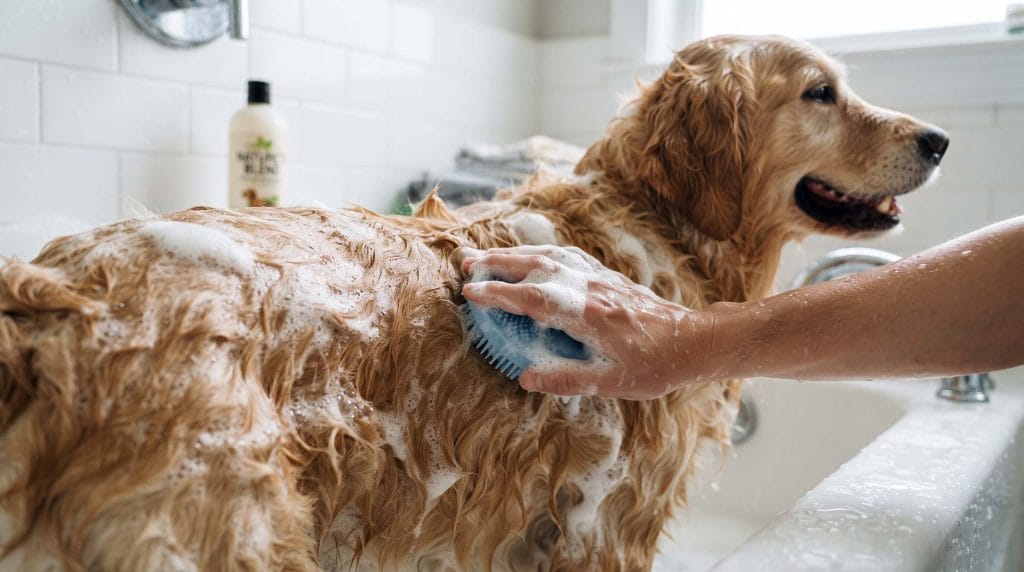
One owner in our community, Sarah, has a Golden Retriever named Bear with a coat dense enough that she’d been going through a bottle of professional deshedding shampoo almost every three weeks. She’d been applying it at close to full strength, assuming that was just what “professional grade” meant.
After switching to a proper 8:1 dilution using a labeled squeeze bottle and lukewarm water, two things changed almost immediately. First, the same bottle lasted her nearly five months instead of three weeks. Second, Bear’s skin, which had been slightly flaky around his shoulders for months, cleared up within a couple of bath cycles.
Sarah hadn’t connected the flaking to shampoo concentration at all — she’d assumed it was seasonal dryness. The dilution ratio was the actual variable the whole time, and it took switching her routine to realize it.
Tools That Make Diluting Deshedding Shampoo Easier
- A labeled squeeze bottle with volume markings — removes the guesswork from measuring ratios accurately
- An oral medicine syringe — useful for smaller, more precise concentrate measurements on lower-volume batches
- A pH testing strip — helps confirm your diluted mixture stays within a dog-safe range, typically 6.5 to 7.5
- A small dry-erase label or tape — for marking dilution date and ratio directly on your mixing bottle
- A dedicated mixing container kept separate from other cleaning or grooming products to avoid cross-contamination
Something Worth Testing: The Float Test
Here’s a detail that doesn’t come up in most grooming guides. Once you’ve diluted your shampoo, drop a small pH testing strip into the mixed solution rather than the concentrate itself. Concentrated shampoo often reads more acidic or alkaline than its actual working formula, since the preservative and buffering agents are designed to activate properly only once diluted to their intended ratio. Testing the diluted mixture, not the full-strength bottle, gives you a far more accurate read on whether the pH sits in a safe range for your dog’s skin, which typically runs slightly more neutral than human skin.
Where Deshedding Shampoo Dilution Is Heading
Manufacturers have started responding to how often dilution mistakes happen at home. A growing number of professional-grade shampoos now ship with built-in measuring caps calibrated to specific ratios, removing the need for separate measuring tools entirely. Some brands have also begun offering pre-portioned concentrate pods designed to be dropped into a set volume of water, similar to how laundry pod systems work, specifically to eliminate ratio guesswork for home users who don’t have a groomer’s experience with concentrated formulas.
Quick Reference: Getting Dilution Right Every Time
- Check the exact concentration ratio printed on your specific bottle
- Use a measuring tool instead of estimating by eye
- Pour shampoo into water, not water into shampoo
- Mix with lukewarm water for better surfactant activation
- Shake gently rather than aggressively
- Label your diluted bottle with the date it was mixed
- Use diluted shampoo within 30 to 60 days
- Test a small area before a full bath with any new ratio
- Rinse thoroughly, even though the shampoo is diluted
One Thing We Always Tell New Clients
A mistake we see constantly, even among owners who’ve done everything else right, is treating the dilution ratio as fixed forever once they find one that works. Coat density changes seasonally, and a ratio that worked well for a dog’s summer coat may need slight adjustment once a heavier winter undercoat comes in. We generally recommend rechecking your ratio at the start of each shedding season rather than assuming last year’s mix is still the right call. It takes one test bath to confirm, and it saves you from wondering why a formula that worked fine months ago suddenly seems less effective.
FAQ: How to Safely Dilute Professional Dog Deshedding Shampoo
How do I know the correct ratio if my bottle doesn’t list one?
Contact the manufacturer directly or check their website. As a general starting point, 8:1 water to shampoo works reasonably well for most heavy-shedding, medium-density coats.
Can I dilute deshedding shampoo with tap water?
Yes, in most cases. Homes with notably hard water may need a slightly stronger ratio, since mineral content can affect lather quality and rinse-out.
How long does diluted deshedding shampoo last once mixed?
Most diluted formulas stay effective and safe for 30 to 60 days when stored in a cool, dark place. Labeling the mixing date helps you track this accurately.
Does over-diluting deshedding shampoo make it ineffective?
Yes, over-dilution reduces the concentration of active surfactants below the level needed to properly loosen undercoat, leading to weaker lather and less noticeable deshedding results.
Is it safe to mix two different diluted shampoos together?
No, combining different formulas can cause unpredictable pH shifts or reduce the effectiveness of either product’s active ingredients. Use one diluted formula per bath session.
Getting the Ratio Right Changes Everything
Learning how to safely dilute professional dog deshedding shampoo comes down to a few consistent habits: checking your bottle’s specific ratio, measuring accurately instead of guessing, mixing with lukewarm water, and rechecking that ratio as your dog’s coat changes with the seasons. Get this right, and the same bottle lasts longer, your dog’s skin stays healthier, and the shampoo actually performs the way it was formulated to.
For a fuller approach to managing shedding beyond just the shampoo itself, our guides on Labrador shedding management, deshedding shampoo frequency, warm water and shedding, and our complete shedding management guide round out a routine worth building around this one small but important step.
This article provides general grooming guidance for informational purposes. Always check your specific shampoo manufacturer’s instructions before mixing, and consult your veterinarian or a professional groomer if your dog has existing skin conditions or shows signs of irritation after use.
