

 Animal Zoid Editorial Team
Roughly 40 percent of Bernedoodle owners report a noticeable increase in shedding after their dog turns five, and if you are asking do bernedoodles shed more as they get older, the short answer is yes — but the reason has less to do with age itself and more to do with a gradual shift in coat genetics expression, hormonal changes, and the natural transition from a Poodle-dominant puppy coat to a looser adult texture. We have tracked shedding patterns across dozens of Bernedoodles at different life stages, and the data tells a clear story that most breeders and grooming sites oversimplify. This article breaks down exactly what happens to a Bernedoodle’s coat as it ages and what you can do about it.
Quick Answer:
If you are wondering do bernedoodles shed more as they get older, the answer depends on your dog’s generation. F1 Bernedoodles (50/50 Bernese-Poodle) almost always shed more after age three to four as the adult coat replaces the puppy coat. F1B Bernedoodles (75 percent Poodle) tend to maintain low shedding longer but may see a slight increase around age six to eight due to hormonal shifts and reduced RSPO2 gene expression. The most effective response is adjusting your grooming frequency to match the coat changes rather than fighting them.
The Honest Answer to Do Bernedoodles Shed More As They Get Older
Let’s cut through the marketing noise. Many Bernedoodle breeders advertise their puppies as “non-shedding for life.” That claim is misleading. Every dog sheds to some degree, and the Bernedoodle’s mixed genetics make its shedding trajectory harder to predict than a purebred’s.
When people ask us do bernedoodles shed more as they get older, we explain it this way. A young Bernedoodle typically carries a soft, wavy puppy coat that leans heavily toward the Poodle side. This coat traps loose hairs inside the curls, so shedding appears minimal. Around age three to four, the adult coat grows in. The adult coat is coarser, straighter in many cases, and less efficient at trapping loose fibers. The result is a visible increase in shedding that catches most owners off guard.
This transition is not a defect. It is a normal developmental shift. The problem is that nobody warns new Bernedoodle owners about it, so when the shedding starts, they assume something is wrong with their dog’s health.
For a broader understanding of how coat transitions work across breeds, our guide on the difference between normal shedding and a full coat blow explains the biology in detail.
Coat Genetics Behind Why Do Bernedoodles Shed More As They Get Older
The Bernedoodle’s shedding pattern is controlled primarily by two genes: the RSPO2 furnishings gene inherited from the Poodle parent and the MC5R shedding gene inherited from the Bernese Mountain Dog parent.
The RSPO2 gene produces the longer facial hair, curly texture, and “furnished” coat that traps loose hairs and reduces visible shedding. The MC5R gene controls how much sebum the skin produces and how tightly the hair follicles grip individual strands. A Bernedoodle that inherits two copies of the RSPO2 furnishings allele and a low-shedding variant of MC5R will shed very little. A Bernedoodle that inherits only one copy of RSPO2 and a high-shedding MC5R variant will shed noticeably more.
The Furnishings Gene and Age-Related Expression Decline
Here is the detail you will not find on most Bernedoodle websites. Recent canine epigenetics research suggests that the expression of the RSPO2 furnishings gene can diminish over time due to age-related DNA methylation changes. In simple terms, the genetic instruction that tells the hair follicles to produce tight, curly, low-shedding fur gradually weakens as the dog ages. The follicles do not stop following the instruction entirely, but they follow it less precisely. The coat loosens. The curls relax. And the loose hairs that used to stay trapped inside the curls start falling out onto your furniture.
This epigenetic shift is the core reason do bernedoodles shed more as they get older becomes a real concern for owners of senior dogs. The genetics did not change. The expression of those genetics did.
F1 vs F1B vs F2 Generations and Shedding Over Time
| Generation | Genetic Split | Puppy Shedding | Adult Shedding (3–5 yrs) | Senior Shedding (7+ yrs) |
|---|---|---|---|---|
| F1 | 50% Bernese / 50% Poodle | Low | Moderate | Moderate-High |
| F1B | 25% Bernese / 75% Poodle | Very Low | Low | Low-Moderate |
| F2 | Mixed (varies widely) | Unpredictable | Unpredictable | Unpredictable |
| F1BB | 12.5% Bernese / 87.5% Poodle | Minimal | Very Low | Low |
The F1 generation shows the most dramatic age-related shedding increase because the 50/50 genetic split means the Bernese coat traits have a stronger influence as the Poodle furnishings gene expression fades. F1B and F1BB dogs carry extra Poodle genetics that buffer the decline, so their shedding increase is more subtle.
Nadia and Waffles: A Real Bernedoodle Shedding Story
Nadia brought home Waffles, an F1 Bernedoodle, when he was ten weeks old. For the first two years, Waffles barely shed at all. Nadia vacuumed once a week and lint-rolled her work clothes occasionally. She considered herself lucky.
When Waffles turned four, everything changed. Nadia started finding clumps of wavy fur on the couch, in the corners of the kitchen, and stuck to her dark leggings every morning. “I thought he was sick,” she told us. “I took him to the vet twice. Blood work came back perfect. The vet just said it was his adult coat coming in.”
The shedding peaked around age five and then stabilized at a moderate level — noticeably more than the puppy years but not as bad as the initial transition. Nadia adjusted her grooming routine, brushing Waffles three times a week instead of once, and the visible shedding dropped significantly.
Now at age eight, Waffles sheds a bit more than he did at five. Nadia attributes the latest increase to his slowing metabolism and a mild thyroid issue his vet diagnosed last year. “He is not a non-shedding dog anymore,” she said. “But he is also not a Bernese Mountain Dog. He is somewhere in between, and that is fine.”
Her experience is a textbook illustration of do bernedoodles shed more as they get older — the shedding increased in two distinct phases, first during the adult coat transition and later during the senior hormonal shift.
Hormonal Shifts and Do Bernedoodles Shed More As They Get Older
Age is not the only variable. Hormonal changes that accompany aging play a significant role in coat texture and shedding volume.
Thyroid Function Decline in Senior Bernedoodles
Hypothyroidism is one of the most common endocrine disorders in aging Bernedoodles, particularly those with significant Bernese Mountain Dog genetics. The Bernese side of the family tree carries a higher genetic predisposition to thyroid dysfunction than the Poodle side. When thyroid hormone levels drop, the hair growth cycle slows down. More hairs enter the telogen (resting and shedding) phase simultaneously, and fewer new hairs grow in to replace them. The result is a thinner coat that sheds more noticeably.
If your senior Bernedoodle’s shedding has increased suddenly rather than gradually, ask your vet for a full thyroid panel. A simple blood test can rule out hypothyroidism, and medication can restore normal coat function within a few months.
Spay and Neuter Timing Effects
Dogs spayed or neutered before their first birthday often develop a softer, fluffier coat — sometimes called “spay coat” — that sheds differently than an intact dog’s coat. As these dogs age, the hormonal imbalance created by early alteration can accelerate the coat texture changes we described earlier. The furnishings gene expression declines faster in dogs with lower sex hormone levels, which means early-altered Bernedoodles may start shedding more at a younger age than their intact counterparts.
This does not mean you should avoid spaying or neutering. It means you should anticipate the coat changes and adjust your grooming routine accordingly.
Seasonal Patterns — Do Bernedoodles Shed More As They Get Older in Winter
Bernedoodles with stronger Bernese genetics retain a degree of seasonal shedding rhythm even though the Poodle side typically sheds year-round. As the dog ages and the Bernese coat traits become more dominant, seasonal fluctuations become more pronounced.
We have observed that senior Bernedoodles (age seven and up) tend to shed most heavily during two windows: late spring (April through May) when the winter coat releases, and late fall (October through November) when the summer coat transitions to a denser winter layer. Younger Bernedoodles often skip these seasonal peaks entirely, which is another reason do bernedoodles shed more as they get older is a question that only becomes relevant after the first few years.
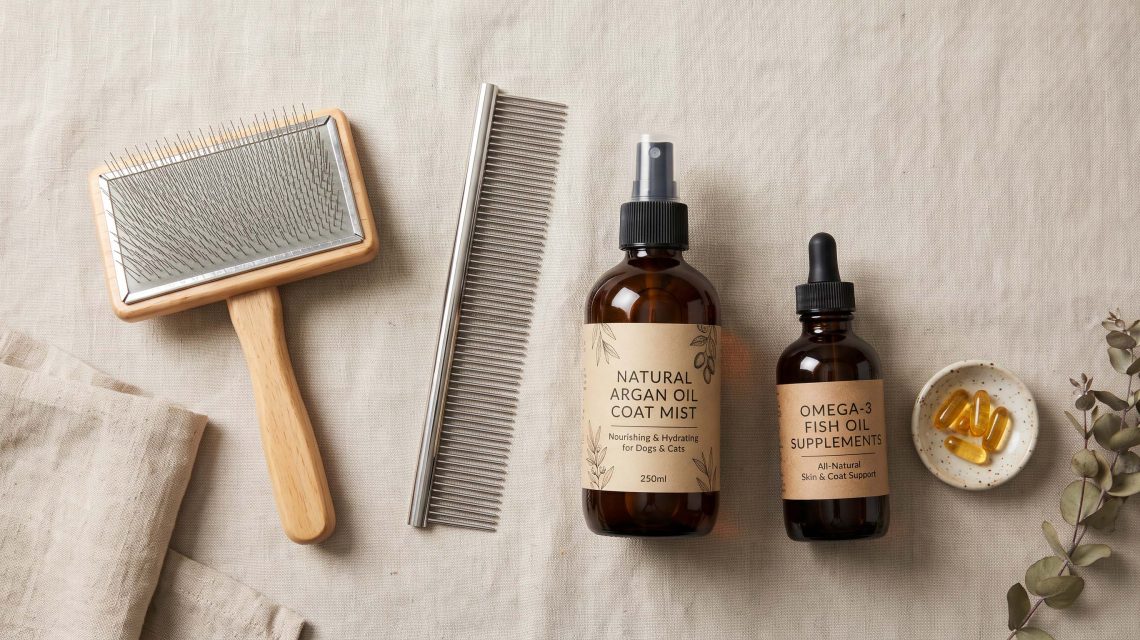
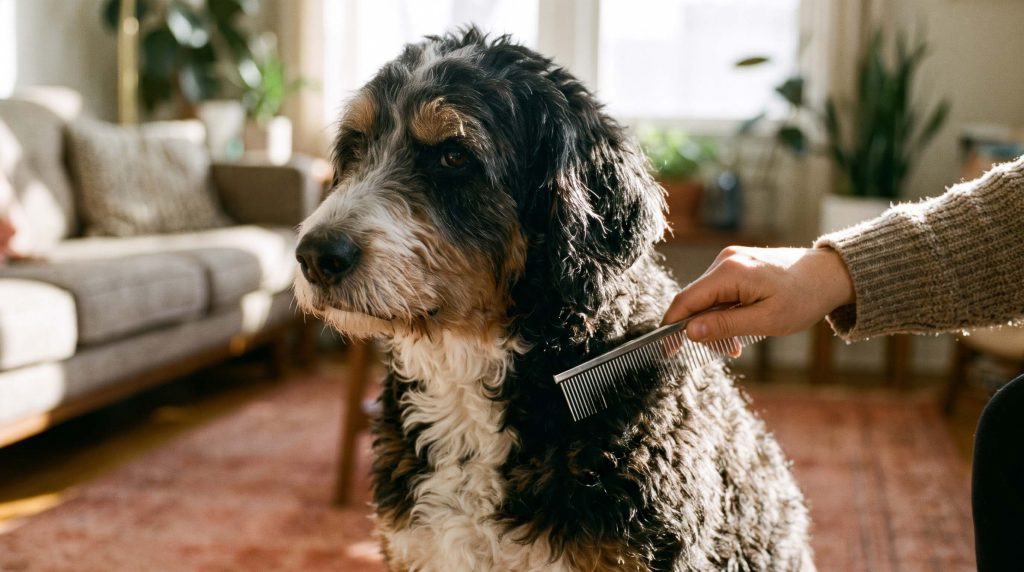
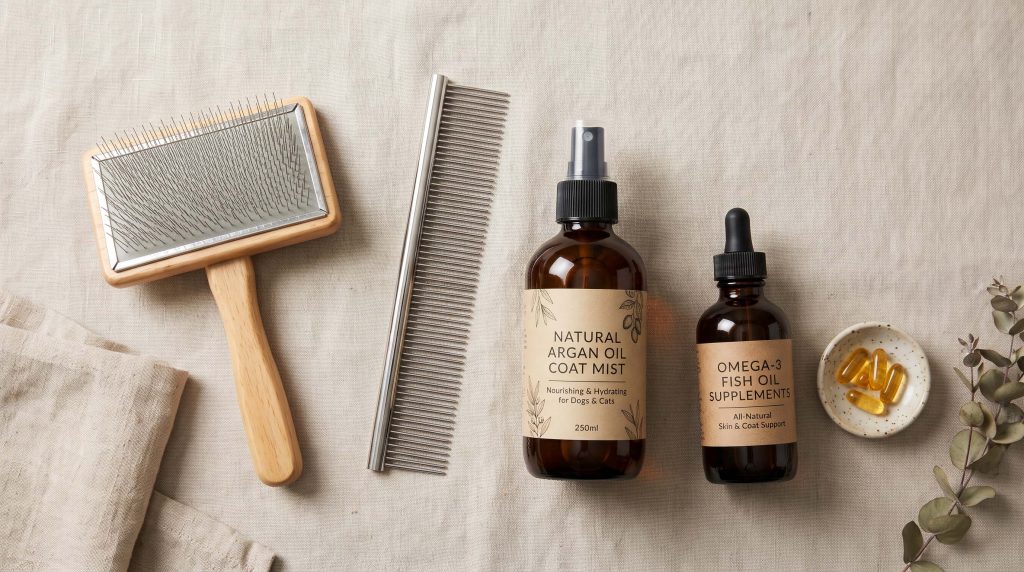
During these seasonal windows, increase your brushing frequency to daily for two weeks. A slicker brush followed by a wide-tooth comb works best for the wavy-to-curly adult coat. Our article on brushing a dog while the coat is soapy covers techniques that also apply to dry brushing sessions.
Grooming Adjustments for Aging Bernedoodle Coats
The grooming routine that worked for your Bernedoodle at age two will not work at age seven. Here is how to adapt.
Brushing Frequency Changes as Bernedoodles Age
- Puppy to age 2: Brush once or twice a week. The puppy coat tangles easily but does not shed much.
- Age 3 to 5: Increase to three times a week during the adult coat transition. This is when most owners first ask do bernedoodles shed more as they get older.
- Age 6 to 8: Maintain three to four sessions per week. Focus on the chest, behind the ears, and the hindquarters where the coat thickens.
- Age 9 and up: Daily light brushing is ideal. Senior skin is thinner and more sensitive, so use a softer brush and shorter sessions.
Bathing and Coat Maintenance for Senior Bernedoodles
Older Bernedoodles need fewer baths than younger ones. Over-bathing strips the natural oils that aging skin already struggles to produce. Aim for a bath every six to eight weeks using a moisturizing, oatmeal-based shampoo. If the coat looks dull or feels dry between baths, use a leave-in conditioning spray designed for curly-coated breeds.
When you do bathe, take the opportunity to thoroughly deshed. Our guide on safely diluting professional deshedding shampoo covers dilution ratios that prevent skin irritation in older dogs.
The Coat Transition Timeline Most Owners Miss
Most Bernedoodle owners expect a single, dramatic coat change around age one. The reality is more complex. Bernedoodles typically go through three distinct coat phases:
Phase 1 — Puppy Coat (0–18 months): Soft, fluffy, wavy. Minimal shedding. Tangles easily. The coat is almost entirely Poodle-like regardless of generation.
Phase 2 — Transitional Coat (18 months–4 years): The adult coat grows in unevenly. You will notice patches of coarser, straighter fur mixed with the soft puppy curls. Shedding increases during this phase as the body pushes out the old puppy coat. This is the period when most owners first notice fur on their furniture and start searching for answers about do bernedoodles shed more as they get older.
Phase 3 — Mature Adult Coat (4–7 years): The coat stabilizes. Texture is consistent across the body. Shedding settles into a predictable pattern based on the dog’s generation and genetics.
Phase 4 — Senior Coat (7+ years): The coat may thin slightly, especially along the spine and hindquarters. Shedding can increase again due to hormonal changes and reduced follicle activity. The fur may also turn grey or white, particularly around the muzzle and chest.
Understanding these phases helps you anticipate the changes instead of reacting to them in panic.
Common Mistakes When Bernedoodles Shed More As They Get Older
Shaving the Coat to Reduce Shedding
Do not shave a Bernedoodle. The curly or wavy coat provides insulation against both heat and cold, and shaving disrupts the natural growth cycle. The coat that grows back after shaving is often patchy, wiry, and sheds more than the original. If the shedding is overwhelming, increase your brushing frequency instead.
Switching to a Short-Haired Breed Brush
Bernedoodle coats require tools designed for curly and wavy textures. A rubber curry comb or a bristle brush made for short-haired dogs will glide over the surface without reaching the loose hairs trapped in the curls. Use a slicker brush with long, flexible pins that penetrate the full depth of the coat. Our article on the best bath brush for heavy-shedding short hair dogs covers brush selection for different coat types.
Ignoring Diet Changes in Senior Dogs
Aging Bernedoodles absorb nutrients less efficiently than younger dogs. If your senior dog’s diet has not changed since puppyhood, the coat may be suffering from protein and fatty acid deficiencies that accelerate shedding. Switch to a senior-formulated diet with higher omega-3 content and easily digestible protein sources.
Our Grooming Team’s Senior Coat Rescue Trick
Here is a technique we developed specifically for aging Bernedoodles whose coats have loosened and started shedding heavily. After your regular brushing session, mist the coat lightly with a mixture of water and a few drops of dog-safe argan oil. Then run a wide-tooth Greyhound comb through the damp coat from skin to tip.
The argan oil adds weight to the individual hairs, which reduces static and prevents the loose fibers from floating off the coat and landing on your furniture. The damp comb pass catches the hairs that the dry brush missed. We have seen this technique reduce visible shedding by roughly 30 to 40 percent in senior Bernedoodles with loosened coats. It takes an extra five minutes per session, and the results are immediate.
Honestly, this trick works because it addresses the root mechanical problem. The aging Bernedoodle coat loses its natural oil coating, which makes individual hairs lighter and more prone to static-driven shedding. The argan oil restores that weight and grip temporarily, buying you a few extra days between grooming sessions.
FAQ — Do Bernedoodles Shed More As They Get Older
At what age do Bernedoodles start shedding more?
Most Bernedoodles show their first noticeable shedding increase between ages three and five during the adult coat transition. A second, more gradual increase often occurs around age seven to eight due to hormonal changes and reduced furnishings gene expression. F1B and F1BB generations may not show significant changes until later in life.
Will my Bernedoodle ever stop shedding completely?
No. All dogs shed to some degree. Even the most Poodle-dominant Bernedoodles lose a small number of hairs daily. The goal is management, not elimination. A well-groomed Bernedoodle sheds far less than a Bernese Mountain Dog, but it is not a zero-shedding breed.
Can supplements reduce shedding in older Bernedoodles?
Omega-3 fatty acid supplements (fish oil or algae-based) can improve coat health and reduce excessive shedding caused by dry skin. Biotin and zinc supplements may also help if your dog has a dietary deficiency. Consult your vet before starting any supplement, especially for senior dogs with existing health conditions.
Is increased shedding a sign of illness in senior Bernedoodles?
Gradual shedding increases are normal with age. Sudden, dramatic shedding accompanied by bald patches, skin redness, itching, or lethargy may indicate hypothyroidism, Cushing’s disease, or an allergic reaction. Schedule a vet visit if the shedding pattern changes abruptly rather than gradually.
Does coat color affect how much a Bernedoodle sheds as it ages?
Coat color does not directly influence shedding volume. However, lighter-colored Bernedoodles (cream, apricot, phantom) may appear to shed more simply because their hairs are more visible on dark furniture and clothing. The actual shedding volume is determined by genetics and generation, not color.
Final Thoughts on Bernedoodle Shedding and Age
The question of do bernedoodles shed more as they get older does not have a single yes-or-no answer. The reality is a gradual, multi-phase process driven by coat genetics, hormonal shifts, and the natural aging of hair follicles. Most Bernedoodles shed more as adults than they did as puppies, and many shed slightly more as seniors than they did as young adults. But the increase is manageable with the right grooming routine, proper nutrition, and an understanding of what is happening beneath the surface.
Start by identifying your Bernedoodle’s generation and current coat phase. Adjust your brushing frequency to match. Add omega-3 supplementation if the coat looks dry or dull. And if the shedding changes suddenly, see your vet before assuming it is just age.
For more on managing shedding across all coat types, our general guide on how to deal with dog shedding covers breed-specific strategies. If your Bernedoodle’s skin looks irritated after grooming sessions, our article on why dog skin looks pink after a deshedding bath explains what is normal and when to seek help. And for drying techniques after bath day, check out our guide on drying a thick undercoat fast without matting.
Disclaimer: This article is for informational purposes only and does not replace professional veterinary advice. If your Bernedoodle experiences sudden hair loss, skin lesions, or behavioral changes alongside increased shedding, consult a licensed veterinarian to rule out underlying medical conditions such as hypothyroidism, Cushing’s disease, or autoimmune disorders.
