

 Animal Zoid Editorial Team
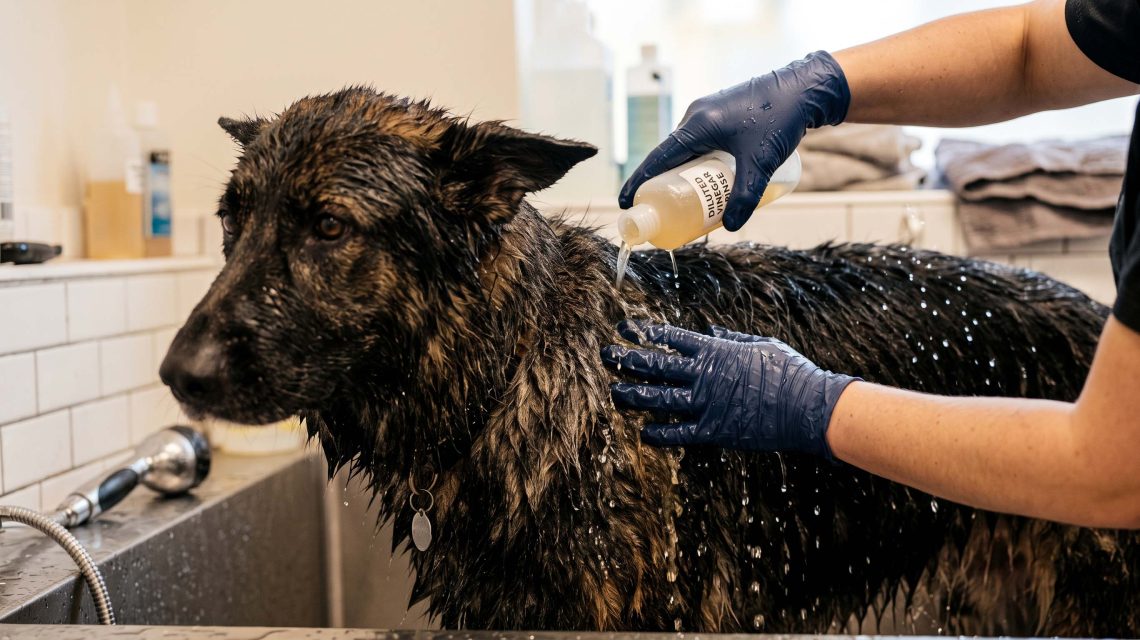
 Apple cider vinegar shows up in every corner of the internet as a fix for practically everything, so it’s no surprise pet owners started wondering if it works on shedding too. Does apple cider vinegar rinse reduce dog shedding after bath in any measurable way, or is this just another kitchen-cabinet remedy riding on hype? The honest answer sits somewhere in the middle, and it’s worth unpacking properly instead of giving you a flat yes or no.
⚡ Quick Answer
Apple cider vinegar rinse doesn’t directly stop hair from shedding, but it can indirectly reduce how much loose hair ends up around your house. Diluted ACV helps balance skin pH, cuts through leftover shampoo residue, and can calm minor skin irritation, all of which support a healthier coat that releases dead hair more cleanly during brushing. It won’t shrink your dog’s actual shedding rate, but it can make your post-bath brushing sessions noticeably more effective.
We’ve fielded this question more times than we can count from owners hoping for a miracle rinse that magically stops the hair tumbleweeds rolling across their kitchen floor. Here’s what we’ve actually found after testing it across different coat types, and what the science behind vinegar and skin health really says.
What Apple Cider Vinegar Rinse Actually Does to a Dog’s Coat
Let’s clear something up first. Apple cider vinegar isn’t a deshedding treatment in the way a proper undercoat rake or a rubber curry brush is. It doesn’t physically pull hair out or block the biological shedding cycle. Dogs shed because of hormone shifts, seasonal daylight changes, and hair growth cycles, not because their skin is out of balance.
But here’s the thing — a rinse doesn’t need to stop shedding at the root to make a real difference. Diluted ACV works on the surface level, adjusting skin pH slightly after a bath, cutting residual soap film, and giving the coat a smoother, less brittle feel. A coat that feels smoother and healthier tends to release already-loose hair more easily during brushing, which is really the outcome most owners are actually chasing when they ask this question.
So does apple cider vinegar rinse reduce dog shedding after bath directly? No. Does it support conditions that make shedding easier to manage? Yes, and that distinction matters more than it sounds.
Why Apple Cider Vinegar Rinse Gets Credit for Reducing Shedding
Honestly, a lot of the buzz around this remedy comes from a slight misunderstanding of cause and effect. Dogs with dry, flaky, or irritated skin tend to shed more visibly, not because their shedding rate increases, but because irritated skin often holds onto dead hair longer before releasing it in uneven clumps rather than a steady, manageable rate.
Vinegar’s mild acidity, once diluted properly, helps restore the skin’s natural pH after a bath. Dog skin normally sits around 6.2 to 7.4 pH, and some shampoos, especially human ones or poorly formulated pet products, push the skin barrier out of that range temporarily. When the skin bounces back to a healthy pH faster, using something like an ACV rinse, it stops being irritated, stops flaking, and stops holding onto hair unevenly.
That’s really where the “shedding reduction” reputation comes from. It’s not vinegar stopping hair growth cycles. It’s vinegar helping skin recover fast enough that hair releases more predictably during your regular brushing routine.
The Story Behind Why This Question Keeps Coming Up
One of our readers, Danielle, has a Shepherd mix named Otis who sheds heavily every spring. She’d tried nearly everything by the time she messaged us — different shampoos, different brushes, even a fish oil supplement her vet recommended. A friend mentioned rinsing Otis with diluted apple cider vinegar after his bath, and Danielle figured it couldn’t hurt.
After a few weeks of using it consistently, she noticed Otis’s coat looked shinier and felt less coarse to the touch. The shedding itself didn’t disappear — Otis is still very much a shedding machine every spring — but Danielle noticed the loose hair came out more easily during brushing, and less of it seemed to be sticking to his coat between baths.
What Danielle experienced lines up with what we’ve seen across other dogs too. The vinegar rinse didn’t cure shedding. It made the existing shedding easier to manage and remove, which for most owners is really the practical win they were looking for in the first place.
How Apple Cider Vinegar Rinse Reduces Shedding-Related Coat Problems
There are a few specific mechanisms worth breaking down here, since “it balances pH” only tells part of the story.
It Removes Shampoo Residue That Traps Loose Hair
Shampoo residue left behind after an incomplete rinse can act almost like a light glue, holding loosened hair against the coat instead of letting it release naturally. Apple cider vinegar’s mild acidity helps cut through that residue more effectively than water alone, since it counteracts the alkaline nature of most shampoo formulas. Less residue means less hair getting trapped against the skin after the bath ends.
It Calms Minor Skin Irritation That Worsens Visible Shedding
Dogs with slightly irritated or inflamed skin often show heavier, patchier shedding, not because they’re producing more hair, but because irritated follicles release hair unevenly. A properly diluted ACV rinse has mild antimicrobial and anti-inflammatory properties that can calm minor surface irritation, which in turn supports more even, predictable hair release rather than the clumpy, patchy shedding irritated skin tends to produce.
It Improves Coat Texture, Which Makes Brushing More Effective
A coat that feels smoother and less staticky responds better to brushing. Static cling, something we’ve covered in detail in our guide on the best bath brush for short-haired dogs that shed a lot, causes loose hair to stick to the coat rather than fall away during brushing. ACV’s slightly acidic nature helps neutralize this static buildup, letting your brush actually catch and remove hair instead of just pushing it around.
How to Use an Apple Cider Vinegar Rinse Properly After a Bath
Getting this right matters, since using vinegar incorrectly can do more harm than good on a dog’s skin.
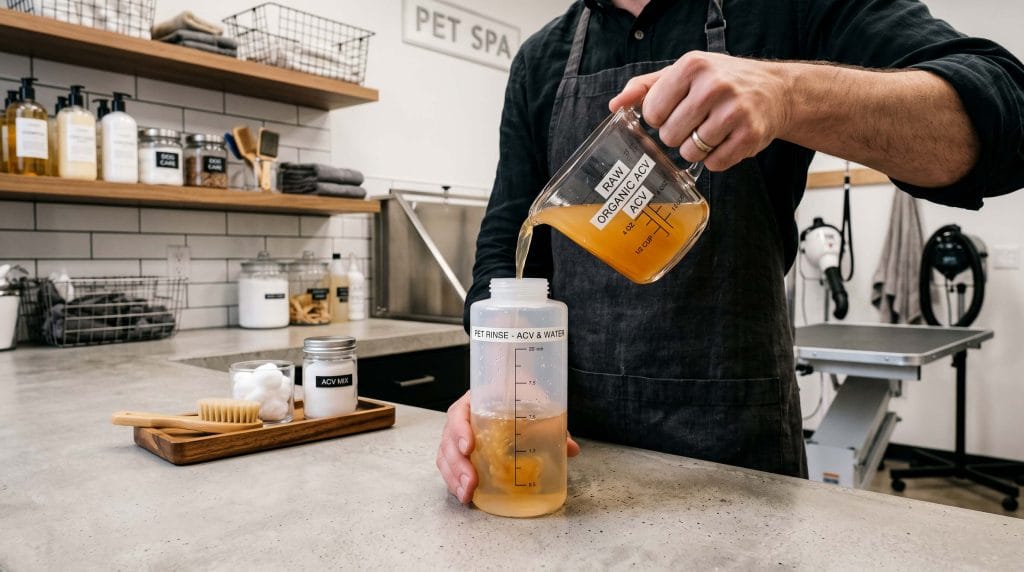
Step 1 — Dilute properly. Mix one part apple cider vinegar with three to four parts water. Undiluted vinegar is too acidic and can actually irritate the skin you’re trying to help, which defeats the entire purpose.
Step 2 — Apply after shampooing and rinsing. The rinse works best as the final step, after all shampoo has already been thoroughly rinsed out. Applying it too early just means it gets rinsed away before it has a chance to work.
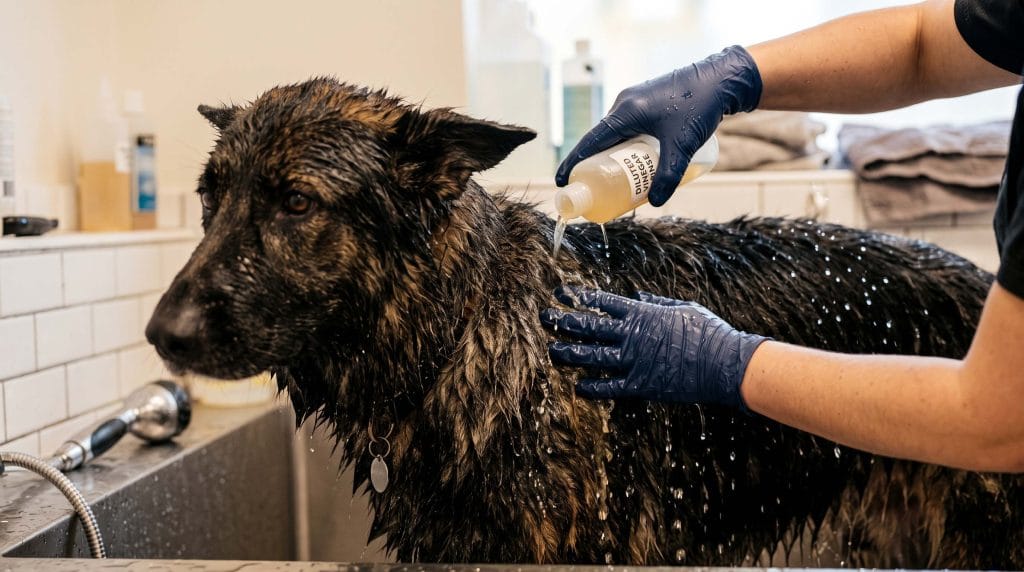
Step 3 — Pour it over the coat, avoiding eyes and ears. Use a cup or a squeeze bottle to apply the diluted mixture evenly, focusing on areas with the densest undercoat, similar to the technique we outline in our post on how to safely dilute professional dog deshedding shampoo.
Step 4 — Let it sit for two to three minutes. This gives the vinegar time to work on the skin’s pH balance before final rinsing.
Step 5 — Rinse lightly, or leave a very light residue. A light rinse removes the vinegar smell while leaving enough residual benefit on the coat. Some owners skip the final rinse entirely and simply towel dry, since the smell fades within an hour or two once dry.
Apple Cider Vinegar Rinse Comparison: What It Does and Doesn’t Do
| Effect | Does ACV Rinse Help? | Why |
|---|---|---|
| Stops hair from shedding at the root | No | Shedding is hormonal and cyclical, not skin-surface related |
| Reduces visible loose hair after brushing | Yes | Smoother coat, less static, easier hair release |
| Removes shampoo residue | Yes | Mild acidity cuts through alkaline soap buildup |
| Calms minor skin irritation | Yes, mildly | Antimicrobial and pH-balancing properties |
| Fixes underlying skin conditions | No | Requires veterinary diagnosis and treatment |
| Improves coat shine and softness | Yes | Balanced pH supports healthier hair cuticle |
Common Mistakes When Using an Apple Cider Vinegar Rinse for Shedding
Using it undiluted. Straight vinegar is too harsh and can dry out or irritate skin, actually worsening the shedding-related symptoms it’s meant to help with.
Applying it before shampooing. The rinse works best as a final step. Using it earlier means it gets washed away before doing anything useful.
Expecting it to replace brushing. An ACV rinse supports easier hair removal during brushing — it doesn’t replace the mechanical process of actually pulling loose hair free. Pairing it with proper tools, like the brushes covered in our bath brush guide for heavy-shedding short-haired dogs, gets far better results than the rinse alone.
Using it on broken or irritated skin. Vinegar on open wounds or significantly inflamed skin causes stinging and can worsen the problem. Skip it if your dog has active hot spots or cuts.
Overusing it. Using an ACV rinse after every single bath, especially for dogs bathed frequently, can gradually dry out skin over time. Once every few baths is usually enough to see benefits without overdoing it.
Does Apple Cider Vinegar Rinse Work Differently on Different Coat Types?
Here’s something that doesn’t get discussed enough. Short-haired, heavy-shedding breeds like Labs and Boxers tend to see less dramatic results from an ACV rinse than double-coated or longer-haired breeds, simply because short coats hold less residue and static buildup to begin with. Double-coated breeds like Huskies and Shepherds, which trap more shampoo residue and static within their dense undercoat, tend to show more noticeable improvement in coat texture and ease of brushing after using a diluted vinegar rinse.
This lines up with feedback we’ve collected from owners across different breeds. Short-haired dog owners often report a mild improvement, mostly in shine and softness. Double-coated dog owners more frequently report a noticeable difference in how much easier post-bath brushing becomes.
A Detail Most Articles on This Topic Miss
Something rarely mentioned: the ratio of vinegar to water should actually shift slightly based on your local water hardness. Homes with hard water, common across a lot of the country, leave more mineral residue on a dog’s coat after rinsing, which can interfere with how well the vinegar rinse neutralizes shampoo film. In hard water areas, a slightly stronger dilution, closer to one part vinegar to three parts water rather than one to four, tends to cut through that mineral buildup more effectively. Soft water areas can stick with the gentler one-to-four ratio without losing any benefit.
A Tip We Give Owners Who Are Skeptical It’ll Work
A lot of owners try an ACV rinse once, don’t see instant results, and give up on it. Here’s what we’d actually suggest instead: track results over three to four consecutive baths, not just one. Coat and skin changes from a mild rinse like this build gradually rather than showing up after a single use. Take a quick photo of your brush after your usual post-bath brushing session each time, and compare after a few weeks. Most owners who stick with it notice the difference shows up more in how easily hair comes free during brushing than in how the coat looks right out of the bath.
FAQ: Does Apple Cider Vinegar Rinse Reduce Dog Shedding After Bath?
Does apple cider vinegar rinse reduce dog shedding after bath completely?
No, it doesn’t stop shedding entirely, since shedding is driven by hormonal cycles and seasonal changes. It can make the coat healthier and easier to brush, which reduces how much loose hair sticks around after bathing.
How often should I use an apple cider vinegar rinse for shedding?
Once every two to three baths works well for most dogs. Using it after every single bath can dry out skin over time, especially for dogs bathed frequently.
Can apple cider vinegar rinse cause skin irritation?
Yes, if used undiluted or applied to broken or already irritated skin. Always dilute properly and avoid using it on hot spots or open wounds.
Does the type of apple cider vinegar matter?
Raw, unfiltered apple cider vinegar with the “mother” is generally preferred, since it retains more of the beneficial acids compared to heavily processed, filtered versions.
Will an apple cider vinegar rinse work better with a deshedding shampoo?
Yes, pairing the two tends to produce better results, since the shampoo loosens hair during washing and the vinegar rinse helps the coat release that loosened hair more easily afterward.
The Real Verdict on Apple Cider Vinegar and Shedding
So, does apple cider vinegar rinse reduce dog shedding after bath in any meaningful way? Not directly, and anyone promising it’ll stop shedding outright is overselling it. What it actually does is support healthier skin and a smoother coat, which makes your existing brushing routine noticeably more effective at catching and removing loose hair. Pair it with proper dilution, consistent use over several baths, and the right brushing tools, and you’ll likely notice less hair sticking around than before, even if the underlying shedding rate stays exactly the same.
For a complete approach to managing shedding beyond just a post-bath rinse, check out our guides on the best bath brush for short-haired, heavy-shedding dogs, how to safely dilute professional deshedding shampoo, managing Labrador shedding around the house, and our complete shedding management guide to build a routine that actually works with your dog’s coat instead of against it.
This article provides general grooming guidance for informational purposes. Consult your veterinarian before introducing apple cider vinegar rinses if your dog has sensitive skin, allergies, or an existing skin condition.
