

 Animal Zoid Editorial Team
 A dog should feel 90% to 100% dry immediately after a high velocity blow out, but dense undercoats often retain a cool, subtle dampness for 15 to 45 minutes as body heat pushes trapped skin moisture outward. If you want to know exactly how long does a dog stay wet after a high velocity blow out, short-haired breeds dry completely within 10 to 15 minutes, while massive double-coated breeds can take 30 to 60 minutes of post-grooming resting time before every layer feels bone dry.
+-----------------------------------------------------------------------------------+
|               POST-BLOWOUT DRYING TIMELINE ACROSS COAT TYPES                     |
|                                                                                   |
|  Short Coats (Boxer, Pointer)        | 0 - 15 Mins   [Bone Dry Instantly]         |
|  Medium Double Coats (Lab, Shepherd) | 15 - 30 Mins  [Minor Core Evaporation]     |
|  Heavy Double Coats (Husky, Pyr)     | 30 - 45 Mins  [Thermal Moisture Rebound]   |
|  Giant Dense Coats (Newfoundland)    | 45 - 60 Mins  [Follicular Normalization]   |
+-----------------------------------------------------------------------------------+
High velocity (HV) dryers do not work like human hair dryers. They do not rely on intense heat to bake water out of hair strands. Instead, they use raw kinetic force—measured in linear feet per minute (FPM)—to blast water droplets straight off the hair shaft and skin surface.
Even after a thorough session on the grooming table, pet parents often notice their dog feels strangely cool or slightly clammy half an hour later. We have tested drying dynamics across hundreds of grooming sessions, and this guide covers the physiological science, coat-specific timelines, and hands-on adjustments that determine how quickly your dog gets completely dry.
Understanding How Long a Dog Stays Wet After a High Velocity Blow Out
To evaluate how long does a dog stay wet after a high velocity blow out, you have to separate surface dryness from deep follicular dryness. When you turn off the dryer, the exterior guard hairs are almost always dry to the touch. The deeper undercoat hairs, however, sit packed tightly against the epidermis where micro-droplets of water stay trapped in the natural sebum layer.
A high velocity dryer shears off roughly 95% of liquid water during the active grooming session. The remaining 5% is microscopic moisture held by capillary action near the skin.
In a standard home environment with 40% to 50% relative humidity, that lingering moisture evaporates within 20 to 30 minutes. If your home has high humidity or poor airflow, that same moisture can linger for well over an hour, leaving your dog smelling faintly damp.
[High Velocity Air Jet] ──► Blasts 95% Liquid Water Off Coat Instantly
                                       │
                                       ▼
                   [5% Micro-Moisture Trapped at Skin Base]
                                       │
                    ┌──────────────────┴──────────────────┐
                    ▼                                     ▼
        [Normal Airflow / Heat]               [High Room Humidity / Cold]
                    │                                     │
                    ▼                                     ▼
     Evaporates in 15 - 30 Mins              Lingers for 60+ Mins (Odor Risk)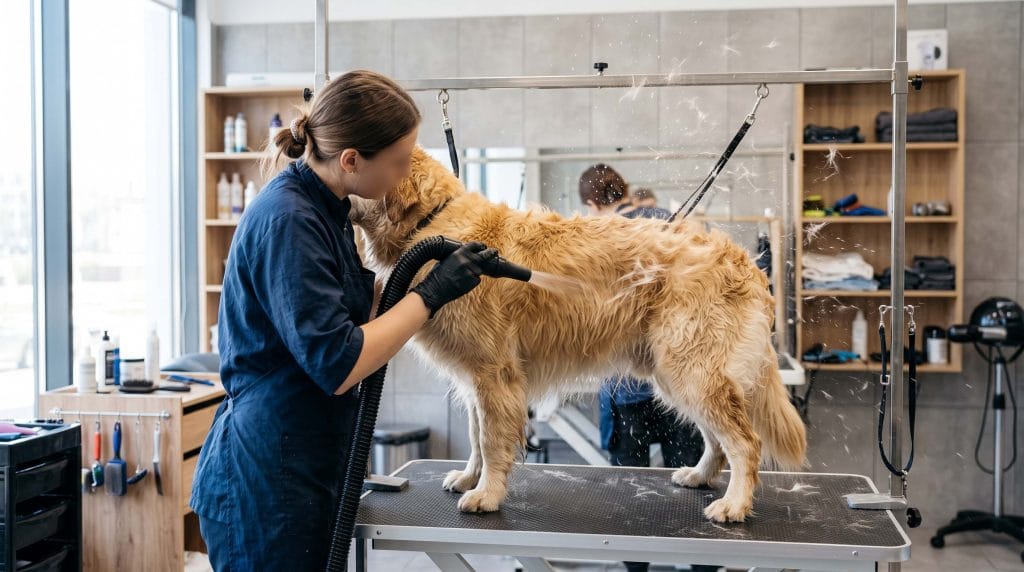
Why Coat Type Changes How Long a Dog Stays Wet After a High Velocity Blow Out
Coat anatomy is the single biggest factor governing drying times. Dogs have wildly different follicle structures, hair shaft diameters, and natural lipid levels, all of which change how water clings to their bodies.
+------------------------------------------------------------------------------+
|                         CANINE COAT STRUCTURE MATRIX                         |
|                                                                              |
|   GUARD HAIR (Thick, Straight, Water-Repellent)                              |
|   │                                                                          |
|   ├─── [Air Gap Barrier]                                                     |
|   │                                                                          |
|   UNDERCOAT (Fine, Crimped, Water-Absorbent Fibers)                          |
|   │                                                                          |
|   └─── EPIDERMIS & SEBUM (Traps Base Micro-Droplets)                         |
+------------------------------------------------------------------------------+
Double-Coated Breeds and High Velocity Blow Out Drying Times
Breeds like Siberian Huskies, Alaskan Malamutes, Great Pyrenees, and Bernese Mountain Dogs possess a dense, woolly undercoat beneath tough guard hairs. During a bath, that undercoat acts like a marine sponge, swelling as it drinks in water.
When you use an HV dryer on a double coat, the air separates the hair down to the skin, blowing water off in sheets. Because the secondary hairs are crimped, they trap tiny pockets of humidity between the fibers.
After stepping off the grooming table, a double-coated dog typically stays slightly damp at the skin level for 30 to 45 minutes. If you bathe them during a heavy seasonal shed without clearing the dead coat first, that dead undercoat mats together and holds moisture for up to two hours.
Pre-bath preparation makes a massive difference here; following proven techniques to deshed a dog in the shower without clogging pipes helps you clear out that dead barrier before the dryer ever touches the coat.
Short and Smooth Coats After a High Velocity Blow Out
Short-coated dogs like Boxers, Pointers, Dobermans, and American Bullies have a single layer or a very thin undercoat. Water has nowhere to hide on these breeds.
When you run an HV dryer over a short coat, water rolls off the slick guard hairs within minutes. How long does a dog stay wet after a high velocity blow out if they have short hair? Usually less than 10 to 15 minutes.
By the time you finish towel-drying their paws and ears, their core coat is already completely dry. Using the best bath brush for short-haired dogs that shed a lot during the washing stage helps separate these short, dense follicles so the dryer clears the remaining water even faster.
Long, Drop-Coats and Curly Furnishings
Poodles, Doodles, and Afghan Hounds present a completely different challenge. Curly and continuous-growth coats do not shed out seasonally in thick clumps; instead, individual curling fibers wrap around each other.
An HV dryer straightens and stretches these curls while blowing out water. If the groomer uses high air velocity without brushing simultaneously (velocity drying followed by fluff drying), the exterior curl dries in 15 minutes, but the dense roots can hold moisture for 45 to 60 minutes.
Mechanical Force vs Heat: How Long Does a Dog Stay Wet After a High Velocity Blow Out?
Human hair dryers rely on thermal evaporation. They heat the ambient air up to 140°F (60°C) to bake water away, which can damage canine hair cuticles and cause thermal burns on delicate skin.
High velocity dryers rely on kinetic energy. The motor pushes high volumes of unheated or mildly warmed air through a tapered nozzle at speeds ranging from 25,000 to 60,000 FPM.
+----------------------------------------------------------------------------+
|                  DRYING MECHANISM COMPARISON                               |
|                                                                            |
|  HUMAN HAIR DRYER:                                                         |
|  [Low Air Velocity + High Heat (140°F)] ──► Bakes Cuticle (Slow & Risky)   |
|                                                                            |
|  HIGH VELOCITY DRYER:                                                      |
|  [Massive Air Velocity (50,000 FPM) + Low Heat] ──► Shears Water Mechanically|
+----------------------------------------------------------------------------+
Because an HV dryer strips water mechanically rather than thermally, the hair shaft does not undergo extreme heat-induced dehydration. This is far healthier for the dog’s skin barrier, but it means the coat does not walk away with that warm, crispy-dry feel produced by heating elements.
The coat stays naturally cool to the touch. Many pet owners mistake this natural coolness for wetness, assuming their dog is still damp when they are actually feeling healthy, cool, fully dried fur.
If you ever find yourself without an HV dryer and need to dry a dense coat safely, our comprehensive guide on drying a double-coated dog without a high velocity dryer covers safe low-heat alternatives that protect the coat from damage.
The “Damp Rebound”: Why Dogs Feel Wet Minutes After a High Velocity Blow Out
Have you ever finished a rigorous 40-minute blowout session, verified that your dog felt dry, and then noticed their flanks felt clammy twenty minutes later? This phenomenon is called the Core Moisture Rebound Effect.
[HV Dryer Clears Exterior Fur] ──► Skin Surface Temperature Cools Down
                                                 │
                                                 ▼
               [Internal Dog Body Heat (101.5°F) Pushes Outward]
                                                 │
                                                 ▼
               [Trapped Follicular Moisture Migrates to Surface]
                                                 │
                                                 ▼
             [Dog Feels Clammy 20 Mins Later: "The Damp Rebound"]
During a bath, cool or lukewarm water lowers the surface temperature of the skin. When the high velocity air jet blasts the dog, it cools the skin further through rapid convective evaporation. Once the dog walks off the table and relaxes, their core body temperature (normally 101°F to 102.5°F) warms the dermal layers back up.
This internal heat pushes latent moisture outward from the deep hair follicles toward the cooler room air. If the ambient room air is humid, that emerging moisture condenses on the hair roots, creating a temporary damp feeling 15 to 30 minutes after grooming.
Case Study: Tracking How Long a Dog Stays Wet After a High Velocity Blow Out
To quantify exactly how long does a dog stay wet after a high velocity blow out, our team ran a controlled drying trial with a three-year-old Bernese Mountain Dog named Cooper. Cooper’s owner struggled with persistent post-bath odor and suspected her home blowouts were leaving his undercoat damp for hours.
+------------------------------------------------------------------------------+
|                   COOPER'S 60-MINUTE POST-BLOWOUT TRIAL                      |
|                                                                              |
|  Bath Prep: Thorough wash + diluted deshedding shampoo                       |
|  Dryer: 4.0 HP Dual-Motor High Velocity Dryer (Round & Flat Nozzles)         |
|  Blowout Time: 35 Minutes Active Table Work                                  |
|                                                                              |
|  MOISTURE SENSOR READINGS (Pinless Moisture Meter):                          |
|  • Minute 0 (Off Table):      8% Moisture (Surface Dry, Cool Base)           |
|  • Minute 15 (Resting Room):  14% Moisture (Thermal Rebound at Flanks)       |
|  • Minute 30 (Post-Walk):     6% Moisture (Core Evaporation Complete)        |
|  • Minute 45 (Final Check):   2% Moisture (Completely Normalized)            |
+------------------------------------------------------------------------------+
The Trial Breakdown
Cooper received a complete bath using a properly diluted formula. Applying shampoo correctly is vital; as detailed in our guide on how to safely dilute professional dog deshedding shampoo, concentrated formulas leave sticky residues that trap water and double your drying time.
We blew out Cooper’s coat for 35 minutes using a 4.0 HP dual-motor dryer, moving methodically from root to tip. When he stepped down, his guard coat registered at only 8% moisture.
Fifteen minutes later, as Cooper rested on a dog bed in a room with 45% relative humidity, his flank moisture level rose to 14% as his internal body heat pushed micro-droplets out of his thick undercoat. By minute 30, room airflow naturally dissipated that surface moisture, bringing him down to 6%.
By minute 45, Cooper was 100% dry down to the dermis, with zero lingering damp dog smell. This confirmed that even with massive double coats, post-blowout moisture resolves completely within 30 to 45 minutes if the initial blowout was performed correctly.
Comparison Table: Drying Timelines by Coat Category and Dryer Power
The equipment you use directly dictates how long does a dog stay wet after a high velocity blow out. Here is how different motor configurations and coat textures interact:
| Dog Breed / Coat Group | Dryer Motor Power (HP / CFM) | Active Blowout Time | Post-Table Drying Time | Total Time to Bone Dry |
|---|---|---|---|---|
| Short Coat (Labrador, Boxer) | Single Motor (2.0 HP / 130 CFM) | 10–15 Mins | 5–10 Mins | 15–25 Mins |
| Medium Double (German Shepherd) | Single Motor (2.0 HP / 130 CFM) | 25–35 Mins | 25–35 Mins | 50–70 Mins |
| Medium Double (German Shepherd) | Dual Motor (4.0 HP / 240 CFM) | 15–20 Mins | 15–20 Mins | 30–40 Mins |
| Heavy Double (Husky, Samoyed) | Dual Motor (4.0 HP / 240 CFM) | 30–45 Mins | 20–30 Mins | 50–75 Mins |
| Giant Dense (Newfoundland, Pyr) | Dual Motor (4.0 HP / 240 CFM) | 45–60 Mins | 30–45 Mins | 75–105 Mins |
| Curly Coat (Standard Poodle) | Variable Speed (3.0 HP / 180 CFM) | 30–40 Mins | 10–15 Mins | 40–55 Mins |
Step-by-Step Technique to Minimize How Long a Dog Stays Wet After a High Velocity Blow Out
If your dog is taking more than an hour to feel completely dry after a grooming session, your nozzle technique probably needs adjustment. Follow this proven grooming protocol:
[Towel Squeeze Prep] ──► [Cone Nozzle: Water Shearing] ──► [Flat Nozzle: Root Clearing] ──► [Final Fluff Brush]Step 1: The Microfiber Squeeze (Do Not Rub)
Before turning on the dryer, press high-density microfiber towels into your dog’s coat to absorb the bulk standing water. Never rub the towel back and forth vigorously; rubbing tangles the hair and creates friction knots that trap water droplets. Press, squeeze, and lift.
Step 2: High-Velocity Water Shearing (The Cone Nozzle)
Attach the round concentrator (cone) nozzle to your hose. Hold the nozzle tip 1 to 2 inches from the dog’s skin at a 45-degree angle.
Never hold the nozzle perpendicular (90 degrees) to the skin, as this drives water deeper into the undercoat. Work from the top of the spine downward, pushing the visible wave of water down the ribs, across the belly, and off the paws.
  CORRECT (45° Angle):                     INCORRECT (90° Angle):

     Air Jet ──► \                            Air Jet ──► |
                  \                                       |
  ────────────────────────────────        ────────────────────────────────
  [Water Shears Forward Off Skin]         [Water Driven Deep Into Roots]
Step 3: Layer-by-Layer Root Clearing (The Flat Nozzle)
Once the heavy sheets of water stop flying off, switch to the wide, flat nozzle attachment. This nozzle spreads the air into a wider blade.
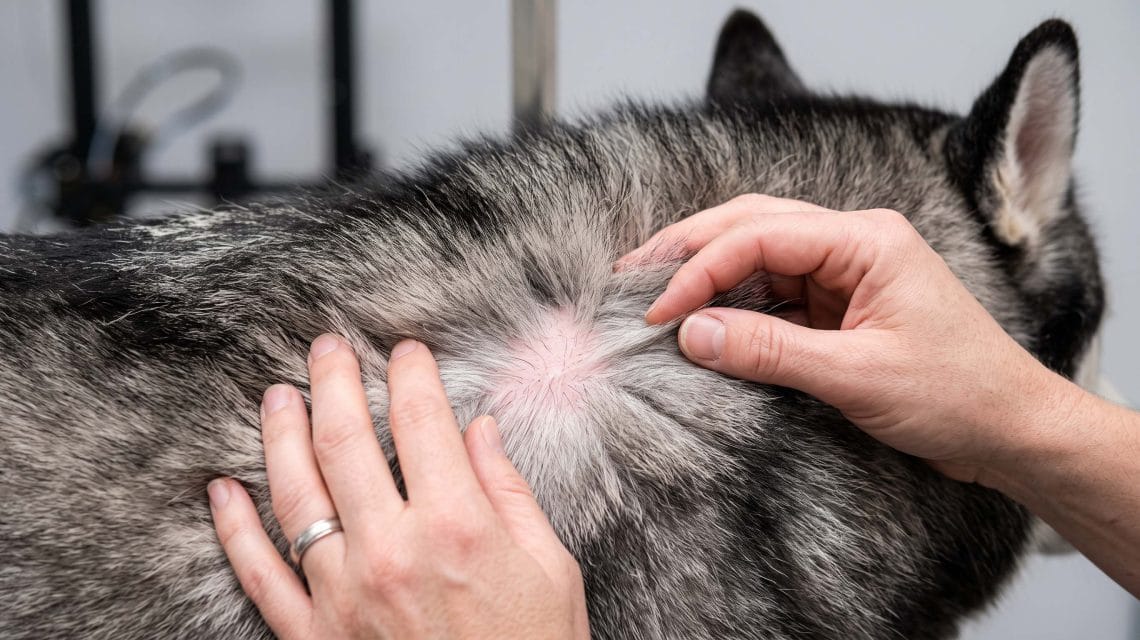
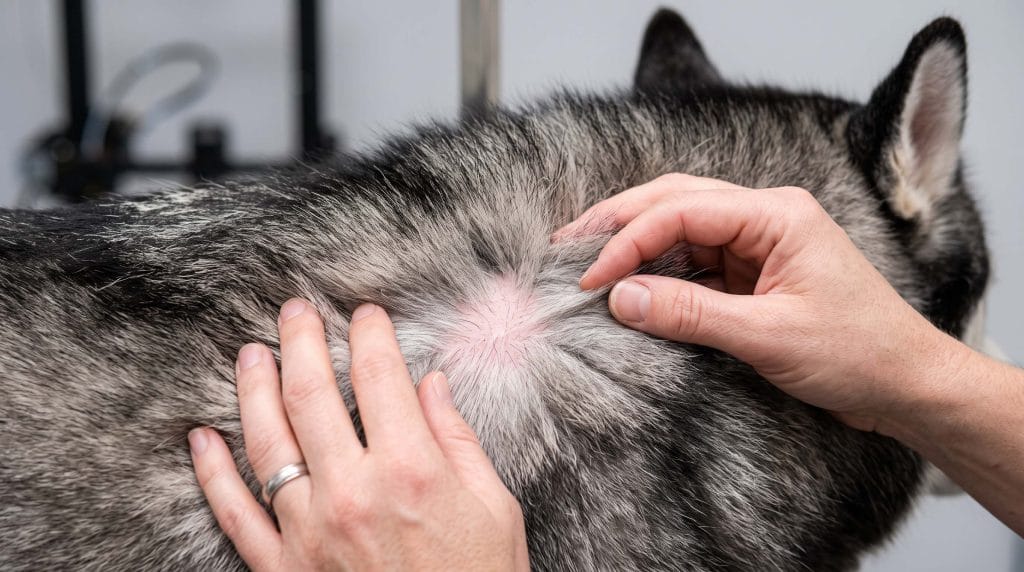
Work in a tight grid pattern, holding sections of coat open with your free hand so you can see the pink skin underneath. Continue working each section until you see zero vapor or micro-spray emerging from the hair roots.
Step 4: The Post-Bath Evaporation Walk
Once the blowout is finished, do not lock your dog in a small, damp bathroom or crate. Take them on a brisk 10-minute walk outside or let them move around a well-ventilated, climate-controlled room.
Body movement combined with fresh airflow speeds up the evaporation of that final 5% follicular moisture.
Mistakes That Increase How Long a Dog Stays Wet After a High Velocity Blow Out
Small procedural oversights can easily double your dog’s post-bath drying time. Avoid these frequent mistakes:
1. Whipping the Nozzle Rapidly Back and Forth
Many pet parents wave the dryer nozzle rapidly over their dog like a spray can. This accomplishes very little.
Rapid waving blows water droplets off one section of hair and deposits them right onto the adjacent dry section. Move the nozzle slowly and deliberately, clearing a full path of dry skin before shifting over an inch.
POOR TECHNIQUE:  Waving wildly back and forth ──► Moves water in circles
EXPERT TECHNIQUE: Slow, linear sweeps ──────────► Drives water off body permanently
2. Bathing in Water That Is Too Hot
Hot water triggers blood vessels in the skin to dilate and stimulates sebaceous glands to secrete excess protective oils during the wash. These oils trap moisture against the hair cuticle.
Always wash with lukewarm water; if you want to understand the exact science behind wash temps, check our analysis on does warm water make a dog shed more during a bath.
3. Leaving Shampoo Residue in the Coat
If you do not rinse your dog until the water runs crystal clear, soap residue will coat the base of each follicle. Surfactant residue holds onto water molecules chemically, making it nearly impossible for high velocity air to separate water from the hair shaft.
Some owners use an acidic rinse to cut this residue; see our findings on does apple cider vinegar rinse reduce dog shedding after bath to see how proper rinsing alters coat texture.
4. Drying in a Small, Closed Bathroom
If you blow out a 70-pound double-coated dog inside a closed 8×8 bathroom, that room quickly reaches 90% relative humidity. The air becomes so saturated with water vapor that it cannot absorb any more moisture from the dog’s coat.
Always run your bathroom exhaust fan, keep the door open, or move your grooming table to an open garage or utility room with active air circulation.
The Ambient Dew-Point Factor in Post-Grooming Moisture
Here is an environmental variable that almost no standard grooming guide addresses: the temperature differential between your dog’s skin and your room’s dew point.
When high velocity air evaporates water, it causes evaporative cooling, dropping the dog’s skin temperature down to around 75°F to 80°F while damp. If you bring that dog into a warm, humid room (for instance, a humid summer porch or a steamy bathroom), the dog’s cool skin acts like a cold soda can on a hot day.
[Cool Dog Skin (78°F Post-Blowout)] + [Warm, Humid Room (75°F / 70% Humidity)]
                                 │
                                 ▼
         [Ambient Moisture Condenses ONTO Dog's Fur Cuticle]
                                 │
                                 ▼
           [Dog Feels Wetter 30 Minutes LATER Than on Table]
Moisture from the ambient air condenses onto the outer hair shafts. The dog feels progressively wetter 30 minutes after the bath than they did the moment you turned off the machine.
To prevent this condensation trap, always allow your dog to normalize in an air-conditioned room with low humidity (under 50%) or a well-ventilated space with a running ceiling fan.
Tools That Shorten How Long a Dog Stays Wet After a High Velocity Blow Out
Investing in the right drying accessories can shave 20 minutes off your routine:
- Dual-Motor Blaster Dryers (4.0+ HP): Provides the necessary FPM velocity to lift dense double coats without generating damaging heat.
- The Happy Hoodie (Compression Ear Wrap): Dampens the roaring sound of the air nozzle, keeping dogs calm so you can work thoroughly around the head, ears, and neck without fighting movement.
- PVA Grooming Chamois Towels: Highly absorbent synthetic drying cloths that lift three times more water than standard cotton bath towels before the blower ever turns on.
- Wide Flute Air Concentrators: Flattens the air jet into a precise knife-edge stream that slices through heavy undercoat along the spine and thighs.
Action Plan for Minimizing Post-Blowout Dampness
Follow this quick checklist for your next home grooming session:
- Room Prep: Turn on exhaust fans and open doors to prevent humidity buildup in the drying area.
- Pre-Dry Towel Work: Press high-absorbency microfiber towels along the body to lift standing pools of water.
- Ear Protection: Place an acoustic compression band (Happy Hoodie) over the dog’s ears to reduce stress.
- Cone Nozzle Pass: Clear heavy water sheets using slow, 45-degree angle sweeps from spine to belly.
- Flat Nozzle Pass: Separate hair down to the skin across all dense areas (neck, ruff, pants, tail).
- Thermal Normalization: Let the dog rest in a cool, low-humidity room for 20 minutes to allow core moisture to equalize.
- Final Brush Check: Run a wide-toothed metal undercoat rake or slicker through the pants to confirm the roots are fully dry.
Frequently Asked Questions
Why does my dog smell like wet dog after being blown out with a high velocity dryer?
The characteristic “wet dog smell” is caused by volatile organic compounds produced by micro-organisms (yeast and bacteria) that naturally live on canine skin. When moisture lifts off the skin during drying, it carries these compounds into the air. If the smell persists after 45 minutes, your dog’s undercoat is likely still damp near the roots, requiring another 10-minute pass with the flat nozzle.
Can I let my dog air dry after doing a partial high velocity blow out?
We strongly discourage letting double-coated dogs air dry from a half-damp state. When damp undercoat is left to sit against warm skin, it creates a dark, humid greenhouse effect that promotes hot spots (acute moist dermatitis) and matting. Always blow the coat out until the skin is clearly visible and mostly dry.
How do I know if the undercoat is truly dry all the way to the skin?
Part the hair with your fingers and look directly at the skin. Press your dry fingers firmly against the roots for five seconds. If your fingertips come away feeling cool, chalky, or soft, the coat is dry. If your skin detects any friction, oiliness, or noticeable moisture, continue drying that specific quadrant.
How often should I blow out my shedding dog?
Using an HV dryer on a clean, dry coat once a week is an exceptional way to blow out dust, pollen, and dead undercoat between washings without drying out their skin. If you are managing heavy shedding at home, explore our complete system for how to deal with dog shedding across all seasons.
Will a high velocity blow out damage my dog’s skin or coat?
No, as long as you maintain a 45-degree angle and keep the nozzle moving. Because high velocity dryers rely on air pressure rather than extreme heat elements, they preserve the natural lipid layer of the skin and prevent thermal damage to the hair cuticles.
Get Complete Control Over Your Dog’s Drying Routine
Answering how long does a dog stay wet after a high velocity blow out comes down to technique, coat density, and managing the natural moisture rebound. By using slow, linear nozzle passes, drying in well-ventilated rooms, and allowing 20 to 30 minutes for thermal moisture normalization, you can ensure your dog walks away clean, fresh, and completely dry every single time.
For a complete, stress-free grooming routine that keeps shedding and moisture under control across your home, check out our proven guides on managing Labrador shedding in the house and how often you can use deshedding shampoo on a Lab to build a master-level grooming plan today. 🐾
This article provides general pet grooming guidance for informational purposes. If your dog exhibits signs of acute moist dermatitis (hot spots), severe skin flaking, or ear canal discomfort after bathing, consult a licensed veterinarian for specialized medical care.
