

 Animal Zoid Editorial Team
 You can easily deshed your dog in your home shower without ruining your plumbing by using a multi-layer drain screen and brushing out loose undercoat before turning on the water. Knowing how to deshed a dog in the shower without clogging pipes saves you hundreds of dollars in emergency plumber visits while keeping your bathroom clean and operational.
⚡ Quick Answer
To safely deshed a dog in the shower without clogging your pipes, set up a two-stage physical drain barrier (a silicone mushroom catcher inside the drain plus a fine mesh screen over the top) and brush out at least 60% of dead hair while the coat is completely dry. During the bath, use a rubber curry brush to gather loosened fur into manual piles on the shower wall rather than letting it wash toward the drain, and always clear the tub floor with a paper towel before pulling any drain stoppers.
We have all stood in ankle-deep, murky water watching thick clumps of golden or black fur swirl directly toward an open shower drain. It is a stressful, messy moment that every pet parent dreads. Breeds with thick double coats or dense short coats drop an unbelievable volume of hair once warm water hits their skin.
Without a clear system, that wet fur combines with soap scum, binds inside your P-trap, and creates stubborn blockages that chemical drain openers cannot dissolve. We have spent years fine-tuning bath routines with heavy shedders of all sizes, and this complete guide covers the exact methods, tools, and mechanical habits that keep your pipes clear every single time.
Why Learning How to Deshed a Dog in the Shower Without Clogging Pipes Matters
Standard human shower drains are built to handle liquid waste and occasional fine human hairs. They are not engineered to swallow three cups of dense, waterlogged canine undercoat in a ten-minute window. When you understand how to deshed a dog in the shower without clogging pipes, you protect both your dog’s skin hygiene and your home’s infrastructure.
A single heavy deshedding bath can deposit enough fibrous hair into a residential drainage line to catch on existing pipe scale. Once that fur snags on a rough joint or pipe imperfection, it acts as a net. It collects soap residue, skin flakes, and minerals until the water flow slows to a dead stop. Fixing that mistake usually means pulling apart pipe fittings or running an expensive mechanical snake through your plumbing.
Beyond the plumbing disaster, washing a shedding dog without a containment plan creates an exhausting cleanup routine. Fur sticks to wet tile, clings to shower curtains, and tracks through your hallway. Setting up the right shower workflow turns a chaotic, hour-long chore into a quick, manageable job.
The Plumbing Science: Why Dog Fur Destroys Bathroom Drains
Dog hair differs fundamentally from human hair in its texture, volume, and biological makeup. Most dogs possess a dual-layer coat made up of stiff primary guard hairs and soft, crimped secondary undercoat fibers.
When you get a dog wet, those crimped undercoat hairs expand, soften, and interlock. They felt together inside the pipe just like wool fibers do in a washing machine.
[Loose Fur Shed from Follicle]
               +
[Warm Water & Surfactants]
               ↓
[Interlocking Fibers Felt Together]
               +
[Shampoo Fatty Acids & Pipe Scale]
               ↓
[Dense, Water-Impervious P-Trap Clog]
How Shampoo Acts as a Binder for Loose Hair in Your Pipes
Shampoo does not simply wash hair away; it actively contributes to pipe blockages if you do not handle the wash properly. Deshedding shampoos rely on natural fatty acids, conditioning polymers, and heavy surfactants to soften the coat and release dead follicles. When these ingredients mix with cold standing water further down your drainage line, they cool down, solidify, and coat the interior walls of your pipes.
As wet dog hair flows down the pipe, it meets this sticky, waxy film. Instead of sliding smoothly out to the municipal sewer or septic line, the fur sticks to the grease layer. Within weeks, you end up with a solid mass that resists ordinary plunging.
Learning how to safely dilute professional dog deshedding shampoo plays a major role here. Properly diluted formulas rinse away cleaner, create less chemical buildup, and make it easier to isolate and collect loose fur before it ever reaches your plumbing.
Essential Gear: How to Deshed a Dog in the Shower Without Clogging Pipes
You do not need industrial grooming tubs to get professional results at home. You only need a few inexpensive, purpose-built tools that catch hair at different stages of the wash.
+-----------------------------------------------------------------------+
|                    THE DUAL-BARRIER SHOWER SETUP                      |
|                                                                       |
|   [ Shower Floor Surface ]                                            |
|              │                                                        |
|              ▼                                                        |
|   ┌────────────────────────────────────────┐                          |
|   │ 1. Surface Mesh Screen (Catches 85%)   │ ◄── Top Layer            |
|   └──────────────────┬─────────────────────┘                          |
|                      ▼                                                |
|   ┌────────────────────────────────────────┐                          |
|   │ 2. In-Drain Silicone Plug (Catches 15%)│ ◄── Secondary Core       |
|   └──────────────────┬─────────────────────┘                          |
|                      ▼                                                |
|        [ Clear Water to P-Trap ]                                      |
+-----------------------------------------------------------------------+
1. The In-Drain Core Collector (Silicone Mushroom Style)
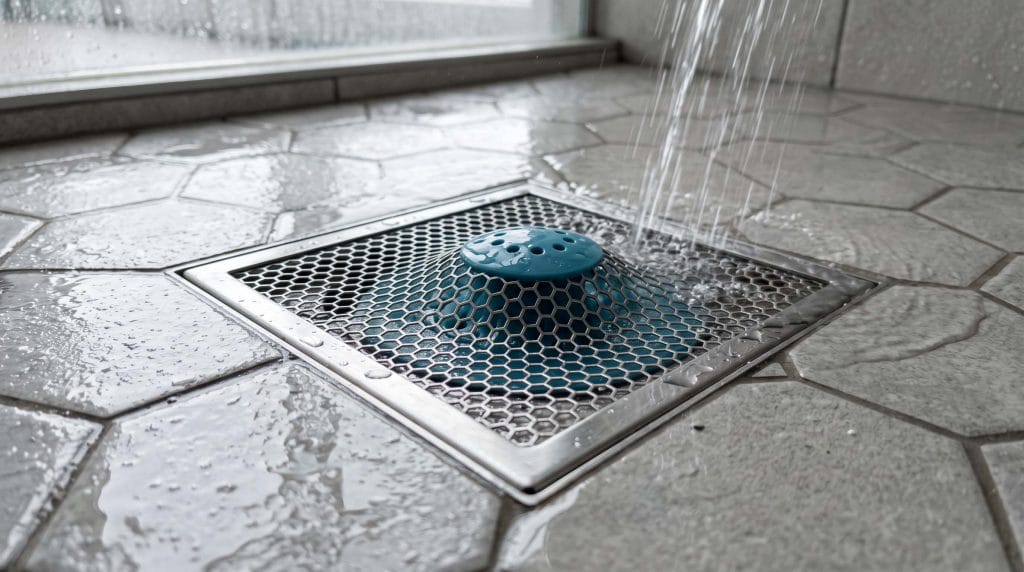
Standard flat drain strainers fail quickly because wet fur forms a flat mat over the holes, stopping water drainage entirely within two minutes. A cylindrical silicone collector sits down inside the drain pipe itself.
It features vertical perforations along its entire column. Even when the base fills with hair, water continues to drain freely through the upper holes, preventing that dreaded standing-water puddle.
2. The Over-the-Drain Disposable Catch Screen
Do not rely on a single barrier. Place a disposable, fine-mesh adhesive ring or a weighted stainless-steel mesh rim directly over the top of the drain opening. This catches coarse guard hairs before they even touch the internal silicone cylinder.
Having two physical filters means that even if your dog knocks the top screen loose with their paw, the lower core collector stops the hair from entering your plumbing.
3. Rubber Curry Brushes and Grooming Mitts
Avoid wire slicker brushes in the shower stall. A flexible rubber curry brush with conical nubs is the ultimate wet-grooming tool for short-to-medium coats.
Rubber generates natural friction against wet hair, gathering it into neat, rolling clumps on the tool rather than scattering loose strands into the water stream. If you own a short-coated breed, using the best bath brush for short-haired dogs that shed a lot keeps the shedding contained to the brush surface throughout the wash.
4. High-Absorption Microfiber Towels and a Tub Squeegee
Keep a dedicated silicone squeegee and a few dry microfiber rags within arm’s reach of the shower. You will use these to wipe down the shower enclosure and floor before you ever lift your drain guards for cleanup.
Step-by-Step Guide on How to Deshed a Dog in the Shower Without Clogging Pipes
Follow this exact sequence to ensure minimal hair reaches your drain while maximizing the amount of dead coat you pull out during the bath.
Step 1: Dry Deshedding (Remove ~60% of loose undercoat outside the tub)
   │
   ▼
Step 2: Install Dual Drain Protectors (In-drain core + surface mesh)
   │
   ▼
Step 3: Saturated Wash & Wall-Wiping (Collect fur directly onto shower walls)
   │
   ▼
Step 4: Controlled Rinse-Down (Brush while rinsing; clear surface screen)
   │
   ▼
Step 5: Pre-Drain Dry Sweep (Squeegee the tub floor before pulling filters)
Step 1: The Pre-Shower Dry Deshedding Session
Never put a shedding dog into the shower without brushing them dry first. Dry hair is lightweight, easy to vacuum, and simple to pull out with an undercoat rake or slicker brush. Once that same hair gets wet, it gains water weight, sticks to your dog’s skin, and becomes ten times harder to manage.
Spend ten to fifteen minutes brushing your dog in an open room or outside. Work in sections, starting from the neck and moving down through the shoulders, back, and hindquarters.
If you are caring for a high-shedding breed like a retriever, following our proven methods for managing Labrador shedding in the house will cut down your pre-bath brushing time significantly. You should aim to remove at least half of the loose coat before your dog’s paws touch the shower floor.
Step 2: The Double Drain Barrier Strategy
Set your plumbing defense in place before you turn on the water valves:
- Clean the drain rim with a dry rag to remove any lingering soap scum.
- Insert your silicone cylindrical hair catcher directly into the drain pipe.
- Place your outer weighted stainless steel or silicone mesh cap over the top opening.
- Run the shower on low pressure for twenty seconds to verify that water passes through smoothly without backing up.
Step 3: Wet Massaging and Controlled Lathering
Bring your dog into the shower stall and saturate the coat thoroughly using lukewarm water. Keep the spray nozzle close to the skin rather than blasting from a distance; this prevents loosened hairs from flying onto the ceiling and walls.
Apply your diluted deshedding shampoo along the spine and hips. Work the lather deep into the undercoat using your rubber curry brush in small, circular motions.
As the lather builds, you will feel large masses of hair releasing from the follicles. Do not rinse this hair down onto the floor.
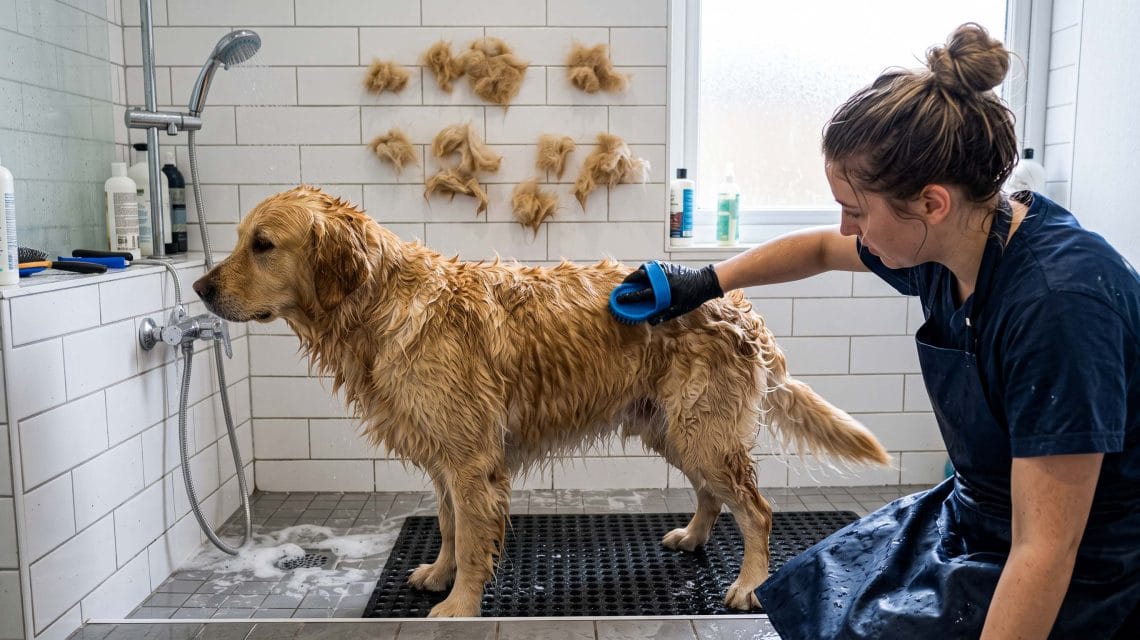
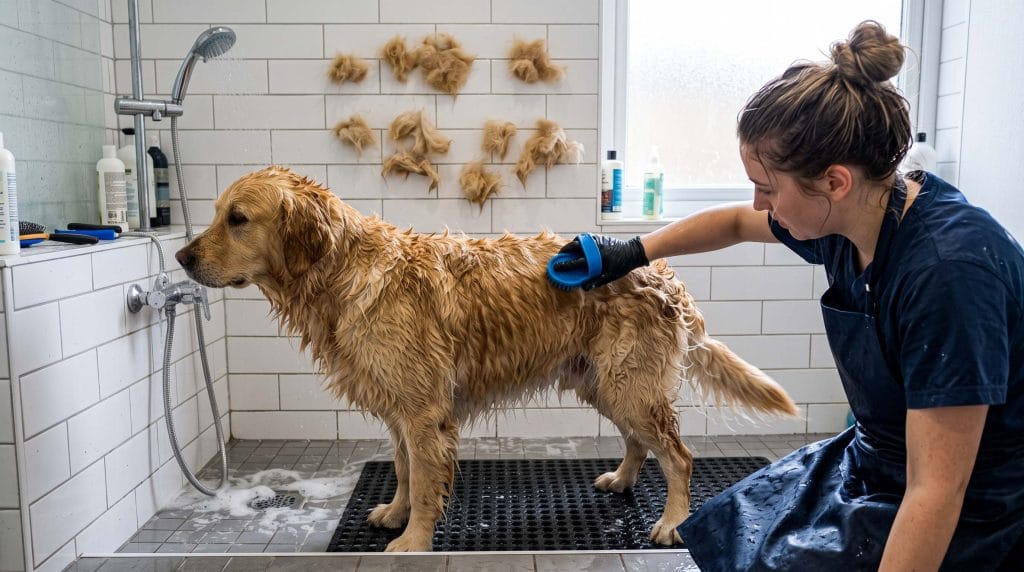
Instead, scrape the loaded rubber brush against the smooth shower wall. Wet, soapy dog hair sticks instantly to tile or fiberglass walls. By plastering the loose clumps onto the shower wall as you work, you keep hundreds of hair strands safely away from the floor and drain.
+-------------------------------------------------------------+
|               THE WALL-WIPING CONTAINMENT HACK              |
|                                                             |
|   ┌─────────────────────────────────────────────────────┐   |
|   │ [Tile / Acrylic Wall]                               │   |
|   │                                                     │   |
|   │    (Fur Clump 1)      (Fur Clump 2)                 │   |
|   │      [Stuck]             [Stuck]                    │   |
|   │                                                     │   |
|   │                                                     │   |
|   │           (Dog in Center of Tub)                    │   |
|   │                     ▼                               │   |
|   │      [Drain Guard Collects Stray Strands]           │   |
|   └─────────────────────────────────────────────────────┘   |
+-------------------------------------------------------------+
Step 4: The Rinse-Cycle Catch Method
Rinsing is when the highest volume of hair washes down, as the rushing water carries away everything the shampoo loosened. Keep your handheld showerhead set to a gentle, steady flow.
Rinse from the top of the head downward, running a clean rubber grooming glove through the coat as the water flows. This catches the trailing undercoat before it drops.
Keep an eye on your outer drain screen. When you see a ring of fur gathering around the perimeter, pause the water for five seconds, swipe the ring of hair away with a piece of toilet paper or a paper towel, drop it into your trash bin, and continue rinsing.
If you are wondering whether water temperature changes how much hair releases at this stage, check out our breakdown on does warm water make a dog shed more during a bath to optimize your rinse settings.
Step 5: Post-Wash Tub Clearing Before Pulling Plugs
Once your dog is fully rinsed, towel them off completely inside the shower enclosure before letting them step out onto your bath mats. Squeeze excess water from their legs and underbelly with a super-absorbent towel.
After your dog exits the stall:
- Do not remove the drain screens yet.
- Grab your dry paper towels or your squeegee.
- Peel all the hair clumps off the shower walls and toss them directly into the trash.
- Sweep the wet hair sitting on the shower floor into one pile at the opposite end of the drain.
- Scoop that pile up and throw it away.
- Only after the floor is free of loose hair should you lift the outer screen and remove the inner silicone cylinder to empty out whatever small particles were caught.
Real Story: How Jason Saved His Plumbing From a Double-Coated Husky
Jason, a member of our dog care community, shares his home with an energetic four-year-old Siberian Husky named Shadow. Every spring, Shadow undergoes a massive seasonal coat blow, dropping dense, cloud-like clumps of silver-and-white undercoat.
During Shadow’s first major seasonal shed, Jason attempted a quick bath in his master bathroom shower without any special drain protection or dry prep.
The result was an absolute disaster. Halfway through the bath, the shower floor flooded with four inches of soapy, hair-filled water.
The water eventually overflowed the shower curb, soaking the bathroom baseboards. When Jason called an emergency plumbing service the next morning, the technician pulled out an eight-foot rope of matted dog fur glued together with dried shampoo tallow and mineral scale. The repair cost him over $380.
+--------------------------------------------------------------------------+
|                       JASON'S BATH ROUTINE MAKEOVER                      |
|                                                                          |
|  BEFORE (The Disaster):                                                  |
|  • Zero pre-brushing → Dumped 100% of coat in tub                        |
|  • Standard crossbar drain → Immediate surface blockage                  |
|  • Washed fur down drain → $380 emergency plumbing bill                  |
|                                                                          |
|  AFTER (The Zero-Clog System):                                           |
|  • 15-minute dry rake session outside beforehand                         |
|  • Dual-stage silicone core + stainless steel mesh screen                |
|  • Wall-wiping technique for wet fur collection                          |
|  • Total plumbing expenses over the last 3 years: $0.00                  |
+--------------------------------------------------------------------------+
Jason switched entirely to our dual-barrier method and wall-wiping technique. During Shadow’s most recent spring shed, Jason removed two full grocery bags of dry fur on the back patio before even turning on the bathroom faucets.
In the shower, he used a cylinder drain trap and stuck all lather-loosened hair directly to the shower acrylic walls. The entire bath took twenty-five minutes, the shower drained perfectly throughout the rinse, and his pipes stayed clean.
Comparison Table: Drain Defense Methods for Shower Deshedding
Different tools offer wildly different levels of protection and maintenance needs. Here is how the most common shower setups compare when handling heavy dog shedding:
| Drain Protection Type | Fur Capture Rate | Water Flow Maintenance | Ease of Cleaning | Best Suited For |
|---|---|---|---|---|
| Dual-Stage System (Cylinder + Mesh) | 98% | High (Zero pooling) | Very Easy (Wipe & dump) | Heavy shedders, double coats, long hair |
| Single Flat Silicone Screen | 75% | Low (Clogs quickly) | Easy | Single-coat, low-shedding breeds |
| Standard Metal Crossbar (Built-in) | 20% | Very Low (Hair passes through) | Difficult (Requires snaking) | Not recommended for pet bathing |
| Adhesive Disposable Mesh Rings | 90% | Medium | Single-use (Toss after bath) | Travel, occasional home washes |
| Fine Cloth Drain Sock | 99% | Very Low (Restricts flow) | Messy | Emergency washes only |
Common Mistakes When Trying to Deshed a Dog in the Shower Without Clogging Pipes
Even experienced dog owners fall into a few easy traps that put their plumbing at risk. Avoid these common mistakes:
1. Using Chemical Drain Openers on Dog Hair
Chemical drain cleaners rely on caustic sodium hydroxide or sulfuric acid to generate heat and dissolve organic materials. While they can eat through human hair over time, dog undercoat is remarkably resilient due to its dense, keratinized structure.
The chemicals often turn the soap-and-fur mass into a rubbery gel that sits deeper in your pipes, while the extreme heat risks softening or warping your PVC drain lines. Mechanical removal is always safer and more reliable.
2. Letting the Dog Shake Off Mid-Shower
When a dog shakes off inside a wet shower stall, centrifugal force throws loose hairs across every square inch of your walls, ceiling, and shower curtain.
When you rinse down the walls afterward, all that hair rushes toward the drain at once, instantly overwhelming your surface screen. Place one hand gently on your dog’s shoulders or the base of their neck while turning off the water; this suppresses their natural urge to shake until you can place a towel over their back.
3. Washing Dogs Too Frequently to Fight Shedding
Some owners assume that bathing their dog every week will eliminate shedding in the house. In reality, over-washing strips the skin of protective sebum, triggering dry, flaky skin and reactive shedding.
If you are unsure about safe wash schedules, read our guide on how often you can use deshedding shampoo on a Lab or similar breeds to protect the skin barrier while managing coat turnover.
4. Pulling Drain Filters While the Tub Is Full of Water
If water backs up during the bath, never pull the drain protector out to let the tub drain faster. Doing this pulls the entire floating mass of loose fur straight down into your open P-trap.
Instead, keep the drain guard in place, use a plastic cup to bail excess water into the toilet if necessary, and use a paper towel to scoop away the hair mat blocking the filter surface until drainage resumes naturally.
Strategic Fur Containment: The Static Wall Technique
Here is a practical grooming trick you will rarely find in standard home-care manuals: use surface tension to your advantage.
Fiberglass, acrylic, and glazed ceramic tiles hold a mild electrostatic and capillary bond with wet animal fibers. When you work shampoo through your dog’s coat, keep your hands moving in a rhythm from dog to wall.
+-------------------------------------------------------------------------+
|                  THE STATIC WALL COLLECTION CYCLE                       |
|                                                                         |
|   1. Brush/Lather Dog  ──►  2. Gather Fur on Glove                      |
|                                    │                                    |
|                                    ▼                                    |
|   4. Clean Rinse Floor ◄──  3. Slap/Wipe Fur onto Dry Wall Section      |
+-------------------------------------------------------------------------+- Run your gloved hand down your dog’s flank to gather a dense layer of loose undercoat.
- Wipe your palm firmly against an upper, dry section of the shower wall.
- The fur will stick flat to the wall surface and stay there throughout the bath.
- Continue this process, creating separate “fur pads” across the wall.
- When the bath is over, peel the pads off the wall in dry, solid sheets.
This single technique keeps up to 70% of shed hair from ever touching the shower floor.
What to Do If Fur Slips Past Your Drain Guards
Even with careful planning, a small amount of fur might slip down the pipe over months of regular home grooming. Taking preventative maintenance steps keeps your lines flowing freely without calling a plumber:
[Small Fur Traces Enter Drain Over Time]
                 │
                 ▼
[Monthly Enzymatic Drain Treatment (Biological Digestion)]
                 │
                 ▼
[Quarterly Manual Drain Snake (Mechanical Retrieval)]
                 │
                 ▼
[Pipes Remain 100% Clear - No Caustic Chemicals Needed]
1. The Monthly Enzymatic Cleaner Flush
Once a month, pour an enzyme-based drain cleaner down your bathroom shower drain before going to bed. Enzymatic cleaners contain live bacteria cultures that feed on organic matter, hair grease, and soap scum. Unlike harsh caustic chemicals, biological cleaners sit safely in your P-trap overnight, slowly digesting the biofilm that traps dog fur.
2. The Manual Zip-It Tool
Keep an inexpensive, barbed plastic drain snake under your bathroom sink. Every three to four months, slide the flexible barbed strip twelve inches down into the shower drain opening and pull it back out.
The barbs catch any small hair clusters resting at the mouth of the P-trap before they can fuse into an impassable blockage.
Shower Deshedding Protocol Checklist
Use this quick checklist before and during every home grooming session:
- Pre-Bath: Complete a 10-minute dry brushing session using an undercoat rake or slicker.
- Plumbing Check: Verify the in-drain silicone cylinder is seated securely inside the pipe.
- Surface Defense: Place a fine-mesh catcher over the drain opening.
- Supplies at Hand: Place a squeegee, paper towels, and a trash can within arm’s reach.
- Lather Phase: Use a rubber curry brush; wipe all gathered hair clumps onto the shower wall.
- Rinse Phase: Clear the outer drain screen periodically during the rinse cycle.
- Post-Bath: Towel-dry the dog inside the stall; suppress shaking by holding the shoulders.
- Floor Sweep: Squeegee and wipe the shower floor clean before removing any drain guards.
- Disposal: Throw all collected hair into the trash bin—never rinse floor hair down the line.
Frequently Asked Questions
Can I wash my dog in a standard bathtub instead of a walk-in shower?
Yes, the exact same principles apply. Use a cylinder-style drain protector designed for standard pop-up tub drains, or unscrew the overflow drain plate and use a fine mesh screen over the tub basin drain. The wall-sticking technique works just as effectively on bathtub porcelain or acrylic surrounds.
How do I dry my dog after the shower without blowing hair everywhere?
If you do not own a professional grooming dryer, use high-absorbency microfiber towels inside the bathroom with the door closed. For a full walkthrough on managing thick coats post-wash, explore our guide on drying a double-coated dog without a high velocity dryer.
Will vinegar help dissolve hair clogs in my shower drain?
Vinegar will not dissolve dog hair. However, an acidic rinse does help clear mineral deposits and alkaline shampoo scum that glue hair clumps to the interior walls of your pipes.
Using an apple cider vinegar rinse on your dog’s coat also delivers distinct skin benefits; see our analysis on does apple cider vinegar rinse reduce dog shedding after bath to see how it fits into your routine.
How much hair is normal to lose during a deshedding bath?
For large double-coated breeds like German Shepherds, Newfoundlands, or Huskies, removing two to four cups of wet undercoat during a seasonal blow is entirely normal. Short-coated breeds like Boxers or Pointers typically shed half a cup to one full cup of dense, fine hair.
What should I do if my shower starts backing up while my dog is covered in soap?
Turn off the water immediately. Do not pull your drain filter out.
Put on a pair of rubber gloves, swipe your fingers across the top of the drain screen to lift the solid layer of wet hair, and throw it into your trash bucket. Water will usually drain away within ten seconds once that surface seal is broken.
Keep Your Dog Clean and Your Drains Clear
Learning how to deshed a dog in the shower without clogging pipes comes down to physical barriers, smart dry prep, and managing hair while it is still on the dog. When you combine dry brushing, dual-stage drain guards, and the wall-wiping technique, you can bathe even the heaviest-shedding breeds in your home bathroom with total peace of mind.
For a complete, whole-home shedding strategy, explore our complete shedding management guide to keep your furniture, floors, and clothing completely hair-free throughout the year. 🐾
This article provides general pet grooming and home maintenance guidance for informational purposes. If your plumbing system shows signs of deep structural blockages or chronic slow drainage, consult a licensed plumbing professional. Always check with your veterinarian if your dog experiences sudden, unexplained hair loss or chronic skin inflammation.
