

 Animal Zoid Editorial Team
 ⚡ Quick Answer
How to clean dog hair out of bathtub drain without chemical Drano: remove the drain cover, pull out visible hair clumps by hand or with a bent wire hanger, then flush the drain with a baking soda and vinegar mixture followed by hot (not boiling) water. For deeper clogs, a plastic drain snake designed for hair removal clears blockages Drano can’t reach anyway, since chemical cleaners often just dissolve the surface layer while leaving compacted hair further down the pipe.
Bathing a shedding dog turns your bathtub drain into a battlefield, and reaching for a bottle of Drano feels like the obvious move — until you remember what that stuff actually does to pipes, skin, and the environment over repeated use. Figuring out how to clean dog hair out of bathtub drain without chemical Drano isn’t just a matter of preference for a lot of pet owners. It’s often a genuine necessity, especially for households with older plumbing, septic systems, or simply a desire to avoid pouring caustic chemicals down the drain every time bath day rolls around.
We’ve walked plenty of pet owners through exactly this problem, and the good news is that natural, non-chemical methods work just as well, sometimes better, than commercial drain cleaners for hair-based clogs specifically. This guide covers how to clean dog hair out of bathtub drain without chemical Drano using tools and methods that are safer for pipes, safer for the people using them, and genuinely more effective against the dense, tangled clumps pet hair tends to form.
Why Dog Hair Clogs Drains Differently Than Regular Hair
Before getting into how to clean dog hair out of bathtub drain without chemical Drano, it helps to understand why pet hair causes such stubborn blockages in the first place. Human hair tends to clog drains in relatively loose strands that chemical cleaners can dissolve or loosen fairly effectively. Dog hair, especially from double-coated breeds, behaves differently — it clumps densely, tangles with soap residue and skin oils, and forms a mat-like structure that sits stubbornly against the drain trap.
This is exactly why chemical cleaners often underperform against pet hair clogs specifically. Drano and similar products work primarily through a chemical reaction that generates heat and breaks down organic material through dissolution. Dense, tangled hair mats resist that dissolution far more effectively than loose human hair does, which means a lot of pet owners pour an entire bottle down the drain only to find the clog barely improved.
The Pipe Damage Risk Nobody Talks About Enough
Here’s something worth understanding clearly: repeated use of chemical drain cleaners on the same drain, which is common in households with regularly shedding dogs, gradually degrades certain types of piping, particularly older metal pipes and some PVC connections. The same heat-generating reaction that’s supposed to dissolve clogs also stresses pipe joints and seals over time. For a drain that gets hit with dog hair clogs weekly or biweekly, this repeated chemical exposure adds up in a way it wouldn’t for a bathroom drain that only clogs occasionally.
How to Clean Dog Hair Out of Bathtub Drain Without Chemical Drano — Step by Step
Here’s the actual process, broken into stages that handle both the visible clog and the hair sitting further down the pipe.
Step 1: Remove the Drain Cover and Pull Visible Hair by Hand
Most bathtub drains have either a screw-in strainer, a pop-up stopper, or a trip-lever mechanism, and all three types come apart with a screwdriver or simple twist. Once removed, a surprising amount of hair usually sits right at the surface, tangled around the stopper mechanism itself. Pulling this out by hand, ideally wearing a glove, handles a large percentage of most clogs before any tools or chemicals ever get involved.
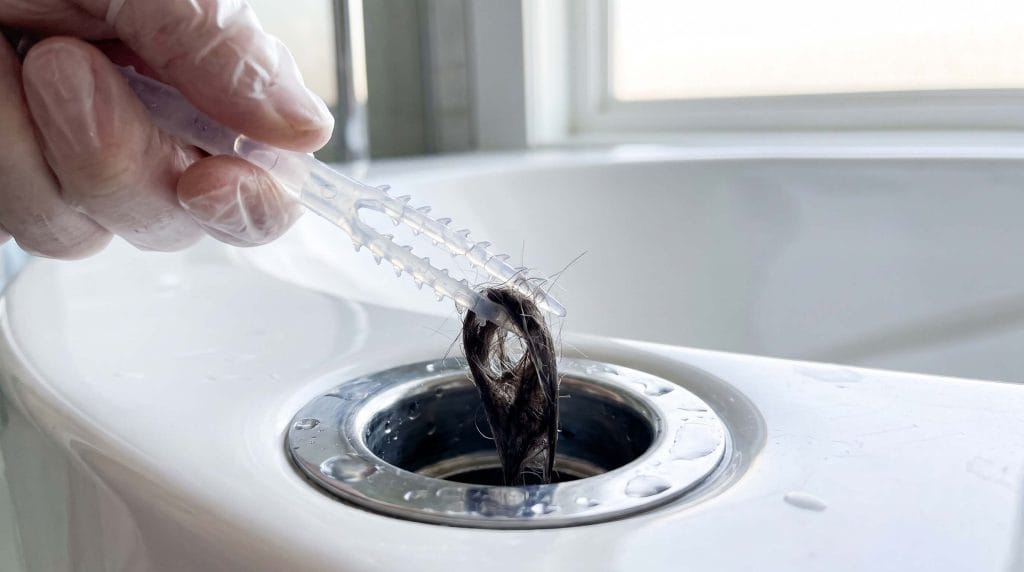
Step 2: Use a Bent Wire Hanger or Plastic Drain Snake
For hair sitting slightly deeper than hand-reach allows, a straightened wire hanger with a small hook bent into the end works remarkably well. Insert it into the drain, twist gently, and pull out in a slow, steady motion — the hook catches onto hair clumps and pulls them up rather than pushing them further down, which is the mistake many people make when using tools too aggressively.
A dedicated plastic drain snake, sold specifically for hair removal and widely available for just a few dollars, performs this same job more effectively than a wire hanger, with small barbs along its length designed to grab hair as it’s pulled back out.
Step 3: Flush With Baking Soda and Vinegar
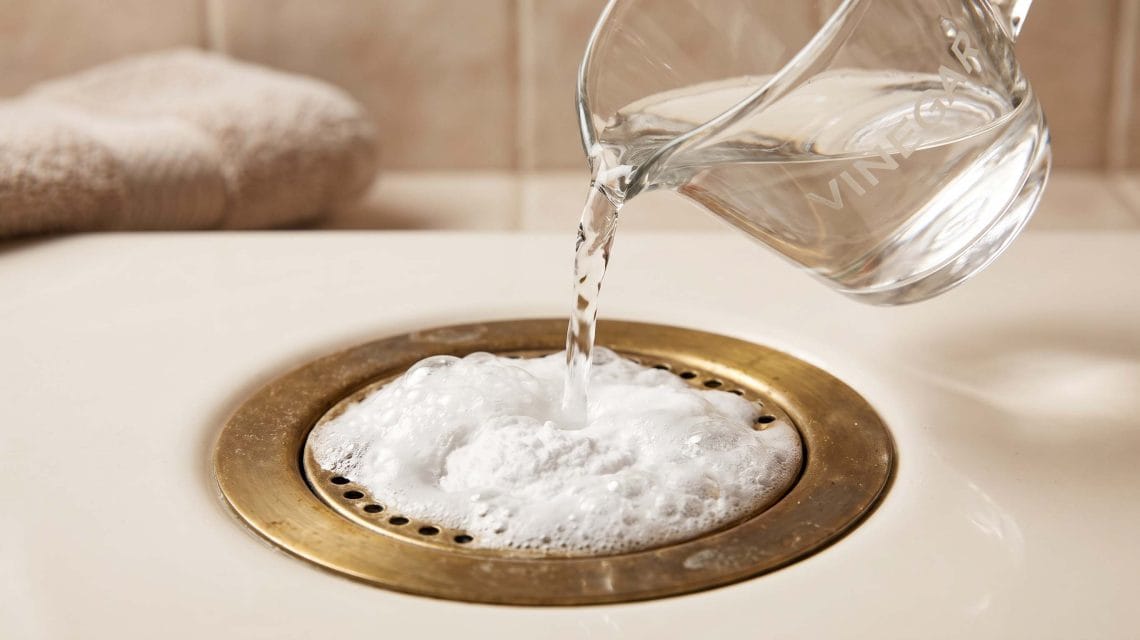
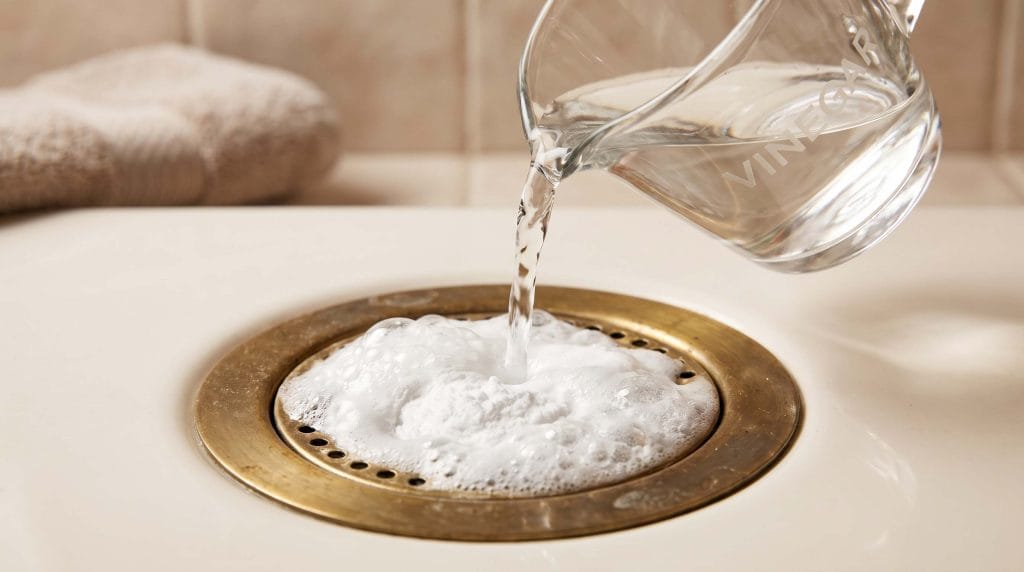
Once the majority of visible and reachable hair is removed, pour roughly half a cup of baking soda directly into the drain, followed by a cup of white vinegar. The resulting fizzing reaction helps loosen residual hair, soap scum, and grime clinging to the inside of the pipe. Let this sit for 15 to 20 minutes before proceeding to the next step.
Step 4: Rinse With Hot (Not Boiling) Water
Finish by running hot tap water down the drain for a minute or two. This flushes out the loosened debris from the baking soda and vinegar reaction. Avoid actual boiling water on PVC pipes specifically, since extreme heat can warp or weaken plastic piping over repeated use — hot tap water provides plenty of flushing power without that risk.
Step 5: Repeat Monthly as Preventive Maintenance
Rather than waiting for a full clog to develop, running this same baking soda and vinegar flush monthly, even without visible buildup, keeps hair and residue from accumulating to the point of a real blockage. This preventive approach solves the how to clean dog hair out of bathtub drain without chemical Drano question before it ever becomes an urgent problem.
Comparison Table: Natural Methods vs. Chemical Drain Cleaners
| Method | Effectiveness on Hair Clogs | Pipe Safety | Cost | Environmental Impact |
|---|---|---|---|---|
| Chemical Drano | Moderate (struggles with dense mats) | Risky with repeated use | Moderate | High (toxic runoff) |
| Wire hanger/drain snake | High (physically removes hair) | Very safe | Very low | None |
| Baking soda + vinegar flush | Good (loosens residue and buildup) | Very safe | Very low | None |
| Boiling water alone | Low to moderate | Risky on PVC | Free | None |
| Enzyme drain cleaner | Moderate (breaks down organic matter slowly) | Safe | Moderate | Low |
How to Prevent Dog Hair From Clogging the Bathtub Drain in the First Place
Understanding how to clean dog hair out of bathtub drain without chemical Drano matters, but preventing the clog from forming in the first place saves considerably more time and effort.
Install a fine-mesh drain cover before bathing. A simple, inexpensive mesh cover sits over the existing drain and catches hair before it ever enters the pipe. These cost only a few dollars and can be lifted out and cleaned after each bath, taking the bulk of hair with them.
Brush your dog thoroughly before bathing. Removing loose undercoat before the bath even starts means significantly less hair enters the water and drain to begin with. Our guide on drying a double-coated dog without a high velocity dryer covers the same pre-bath brushing principle in more depth, since it reduces both drain clogs and drying time.
Bathe in a location with better hair-catching setup when possible. A walk-in shower with a removable drain trap is often easier to keep clear than a traditional tub, since the trap can be lifted and cleaned in seconds without disassembling anything.
Use warm water strategically. Since warm water genuinely increases how much loose hair releases during a bath, knowing this in advance means being extra prepared with a drain cover and post-bath cleanup, rather than being caught off guard by an unexpectedly heavy shed.
Common Mistakes People Make When Clearing Dog Hair From Drains
Pouring boiling water directly into PVC pipes. This can warp or weaken plastic piping over time, especially with repeated use after multiple pet baths.
Using a metal snake or hook too aggressively. Pushing tools down too forcefully can compact hair further into the pipe rather than pulling it out, turning a manageable clog into a deeper, harder-to-reach one.
Skipping the drain cover entirely and dealing with clogs reactively. Preventing hair from entering the pipe in the first place is dramatically easier than removing it after the fact.
Mixing chemical drain cleaner with the baking soda and vinegar method. These should never be combined. Chemical residue left in a drain can react unpredictably with the vinegar and baking soda mixture, creating irritating fumes.
Ignoring slow drainage until it becomes a full clog. Slow draining is usually an early sign of a partial hair blockage forming. Addressing it with the wire hanger or drain snake method at this stage prevents a full clog from developing later.
Tasha’s Story — Breaking the Chemical Cleaner Cycle
One of the pet owners in our community, Tasha, has two Golden Retrievers and had been using chemical drain cleaner in her bathtub roughly every three weeks for over a year, convinced it was simply the price of bathing two heavy-shedding dogs regularly. The clogs kept coming back faster each time, and Tasha noticed the drain started making an odd gurgling sound that hadn’t been there originally.
A plumber she called out for an unrelated issue mentioned, almost as an aside, that the repeated chemical cleaner use was likely contributing to the gurgling — a sign of minor pipe joint stress from the heat generated by frequent chemical reactions in the same section of pipe. He suggested switching to mechanical removal methods paired with the baking soda and vinegar flush, specifically because dog hair clogs respond better to physical removal than chemical dissolution anyway.
Tasha started using a mesh drain cover during every bath, followed by a monthly baking soda and vinegar flush as maintenance rather than waiting for a full clog. Within two months, the gurgling stopped, and she hasn’t needed a full drain-clearing session since, since the mesh cover catches nearly all the hair before it becomes a problem in the first place. She also mentioned that bath day stopped feeling like the start of a plumbing emergency countdown, which honestly made the whole routine less stressful for everyone involved.
🐾 An Angle Most Drain-Cleaning Guides Never Mention
Here’s something worth knowing that rarely gets covered: the type of soap or shampoo residue mixed with dog hair changes how stubborn a clog becomes. Heavier, oil-based conditioning shampoos, while great for coat health, tend to bind with hair strands more aggressively than lighter, non-conditioning formulas, creating a denser, more cement-like clog structure that’s harder to remove even with mechanical tools.
If drain clogs are a recurring frustration, switching to a lighter, less oil-heavy shampoo specifically for bath days, or doing a final clean water rinse thoroughly enough to flush residual product before it reaches the drain, measurably reduces how dense and stubborn hair clogs become over time. It’s a small adjustment on the grooming side that pays off directly on the plumbing side, and it’s not something either grooming guides or plumbing guides tend to connect together.
Best Practices for Long-Term Drain Maintenance
- Use a mesh drain cover during every single bath, not just during heavy shedding season, since it’s a habit that prevents the problem consistently rather than reactively.
- Do a monthly baking soda and vinegar flush even without visible signs of a clog, as ongoing preventive maintenance rather than emergency intervention.
- Keep a plastic drain snake on hand permanently rather than buying one only when a clog has already formed — it’s inexpensive and handles minor buildup before it becomes serious.
- Brush your dog thoroughly before every bath, reducing the raw volume of hair entering the water and drain system from the start.
- Watch for early warning signs like slow drainage or gurgling, addressing them immediately rather than waiting for a complete blockage.
For a full picture of managing shedding at every stage, from the coat itself through bath time, our guides on Golden Retriever shedding, Husky shedding, and our complete shedding management guide tie the whole routine together, reducing not just drain clogs but the overall hair burden throughout the house.
Tools Worth Keeping for Hair-Related Drain Maintenance
- Fine-mesh drain cover — the single most effective prevention tool, inexpensive and reusable
- Plastic drain snake with barbs — designed specifically for hair removal, gentler on pipes than metal alternatives
- Baking soda and white vinegar — pantry staples that double as a genuinely effective, chemical-free flush
- Rubber gloves — makes hand-removal of visible hair clumps far less unpleasant
- A bent wire hanger — a free, always-available backup tool for reaching slightly deeper clogs
What’s Changing in Pet-Friendly Drain Care
Plumbing fixture manufacturers have started responding directly to pet owner demand, with several newer bathtub drain designs now including built-in hair-catching baskets as a standard feature rather than an aftermarket accessory. These integrated designs sit just below the drain cover and can be removed and cleaned in seconds, addressing the exact problem this guide covers before hair ever has a chance to travel further into the pipe.
On the product side, enzyme-based drain treatments have also gained ground as a middle-ground option between harsh chemical cleaners and pure mechanical removal. These use biological enzymes to break down organic material, including hair, gradually over time without the pipe-stressing heat reaction that traditional chemical cleaners rely on. They work more slowly than mechanical removal, but they’ve become a popular monthly maintenance addition for households that want a hands-off option between manual cleanings.
Key Takeaways Checklist for Chemical-Free Drain Care
- Remove the drain cover and pull visible hair out by hand first
- Use a wire hanger or plastic drain snake for hair sitting deeper in the pipe
- Flush with baking soda and vinegar, followed by hot (not boiling) water
- Install a mesh drain cover before every bath to prevent hair from entering the pipe
- Brush your dog thoroughly before bathing to reduce hair volume at the source
- Do a monthly preventive flush even without visible clogs
- Watch for slow drainage or gurgling as early warning signs
- Avoid combining chemical cleaners with the vinegar and baking soda method
FAQ — How to Clean Dog Hair Out of Bathtub Drain Without Chemical Drano
What’s the fastest way to clean dog hair out of bathtub drain without chemical Drano?
Removing the drain cover and pulling visible hair out by hand, followed by a plastic drain snake for anything deeper, clears most clogs in under ten minutes without any chemicals at all.
Does the baking soda and vinegar method actually work on dog hair clogs?
Yes, particularly for loosening residue and buildup around hair that’s already been partially removed mechanically. It works best as a follow-up step after physical hair removal, not as a standalone solution for a fully blocked drain.
Is chemical Drano actually bad for pipes when used on pet hair clogs regularly?
Repeated use can stress pipe joints and seals over time due to the heat-generating chemical reaction, which matters more for households dealing with frequent pet hair clogs than for occasional use.
How can I prevent dog hair from clogging my bathtub drain in the first place?
A fine-mesh drain cover used during every bath catches the vast majority of hair before it enters the pipe, and it’s the single most effective prevention method available.
Are enzyme drain cleaners a good chemical-free alternative for pet hair clogs?
Yes, as a gradual, low-maintenance option. They work more slowly than mechanical removal but avoid both the harsh chemicals of traditional cleaners and the hands-on effort of manual clog removal.
Keeping the Drain Clear Without the Chemicals
How to clean dog hair out of bathtub drain without chemical Drano really comes down to physical removal first, natural flushing second, and prevention as the real long-term solution. A mesh drain cover, a plastic drain snake, and a monthly baking soda and vinegar flush handle what chemical cleaners often struggle with anyway, since dense, tangled pet hair responds far better to mechanical removal than chemical dissolution.
Pair this routine with thorough pre-bath brushing and smart water temperature use, and drain clogs become a rare inconvenience instead of a recurring bath-day battle. Check out our guides on drying a double-coated dog without a high velocity dryer, does warm water increase shedding during baths, Golden Retriever shedding, Husky shedding, and our complete shedding management guide to handle pet hair at every stage, from the coat to the drain. 🐾
This article provides general cleaning and maintenance guidance for informational purposes. For persistent clogs, unusual pipe noises, or suspected plumbing damage, consult a licensed plumber before attempting further DIY solutions.
