
 Animal Zoid Editorial Team
You reach behind your Golden’s ear and your fingers hit a dense, felt-like clump that was not there three days ago. If you are searching for how to stop a golden retriever from getting mats behind the ears, the problem traces back to a specific anatomical friction zone where the ear flap meets the neck ruff — a spot that traps moisture, wax, and loose undercoat in a perfect matting storm. We have worked with hundreds of Golden Retriever owners who discover these mats only after they have tightened against the skin, and the fix is simpler than most people expect once you understand the mechanics.
Quick Answer:
The fastest way to handle how to stop a golden retriever from getting mats behind the ears is a daily 60-second finger-comb behind each ear flap, a weekly slicker brush pass through the neck ruff, and a light dusting of cornstarch-based detangling powder at the ear base after every bath. This three-step routine prevents the friction-zone tangles from tightening into painful mats.
The Anatomy Behind Golden Retriever Ear Mats
Golden Retrievers have long, heavy ear flaps — technically called pinnae — that fold forward and press against the neck. This fold creates a warm, humid microclimate between the inner ear leather and the thick neck ruff. The trapped heat and moisture soften the hair cuticle, making individual strands stickier and more prone to tangling.
But the real culprit is something most grooming guides never mention. At the base of each ear, right where the pinna attaches to the skull, Golden Retrievers have a hair growth whorl — a point where the hair direction changes abruptly. Hairs growing forward from the neck collide with hairs growing backward from the ear flap. These opposing growth directions cause the strands to cross over each other with every head movement, creating a natural tangle point that tightens with friction.
Add in the cerumen, or ear wax, that migrates down the ear canal and coats the hair at the base, and you get a sticky anchor that locks those crossing hairs together. The wax acts like glue. Once a few strands bond, they catch more loose undercoat, and within days you have a dense mat pressing against sensitive skin.
Understanding this anatomy is the foundation of how to stop a golden retriever from getting mats behind the ears. You are not fighting random tangles. You are fighting a specific mechanical problem at a specific location, and the solution needs to target that location directly.
The Friction Zone Behind the Ears That Causes Mats
Here is a concept we developed after observing matting patterns across dozens of Golden Retrievers in our care. The “friction zone” is the roughly two-inch strip of fur directly behind the ear base where the ear leather rubs against the neck ruff every time your dog shakes its head, scratches, or lies down.
        [Ear Flap / Pinna]
       ╱═══════════════════╲
      ║   Inner ear leather  ║
       ╲═══════════════════╱
            ↓↓↓↓↓↓↓↓↓
      ← FRICTION ZONE →  (2-inch strip)
            ↑↑↑↑↑↑↑↑↑
       [Neck Ruff Fur]
Every head shake generates roughly 4 to 6 rubs in this zone. A Golden Retriever shakes its head an average of 15 to 25 times per day — more if the ears are dirty or if the dog has seasonal allergies. That is up to 150 friction passes daily in a two-inch area. The mechanical agitation felts the hairs together the same way a washing machine felts wool.
This is why mats behind the ears form faster than mats anywhere else on the body. The back, the legs, and the tail do not experience this level of concentrated, repetitive friction. The ear base does. Recognizing this friction zone is essential when learning how to stop a golden retriever from getting mats behind the ears because it tells you exactly where to focus your grooming effort.
How to Stop a Golden Retriever From Getting Mats Behind the Ears: The Daily Routine
Now that you understand the mechanics, here is the practical routine. Learning how to stop a golden retriever from getting mats behind the ears does not require hour-long grooming sessions. It requires targeted, consistent attention to the friction zone.
Daily Finger-Comb Check Behind the Ears
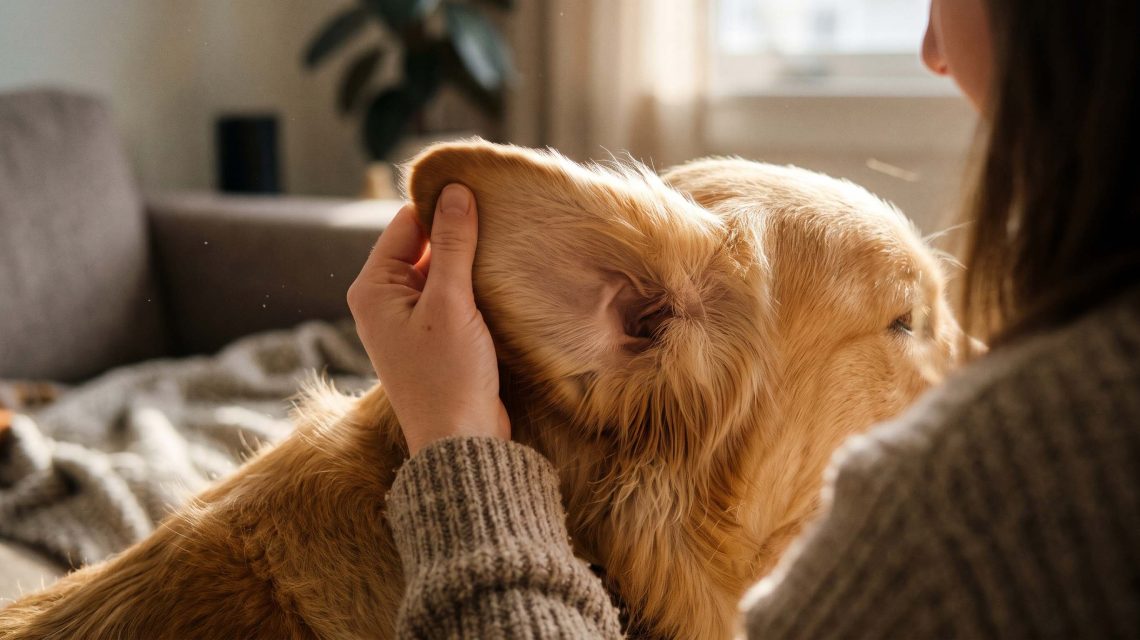
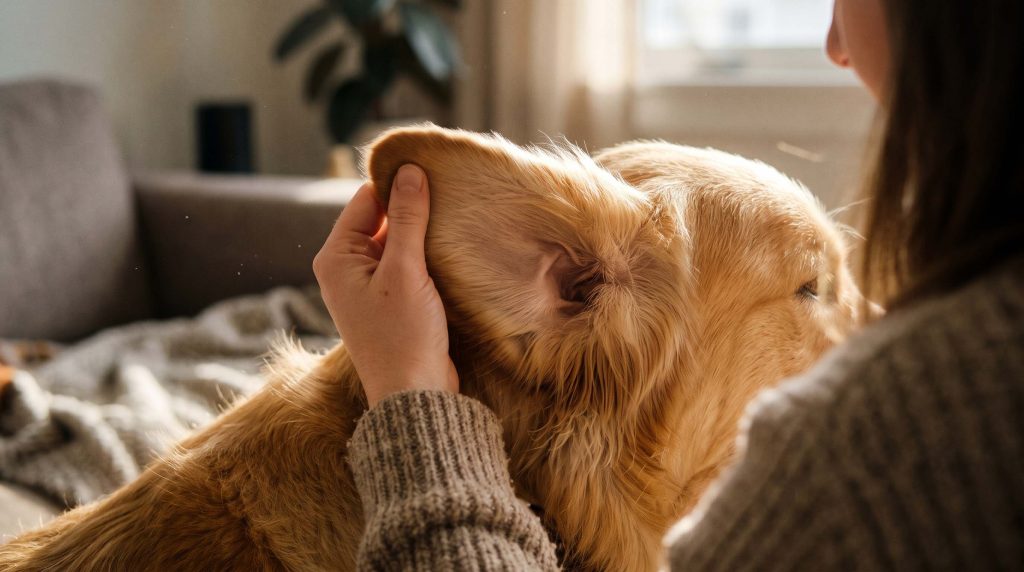
Every evening, lift each ear flap and run your fingers through the fur at the base. Feel for any small snags or thickening. If the fur feels smooth and separates easily, you are clear. If you feel a slight catch, gently work it apart with your fingertips before it tightens overnight.
This takes about 30 seconds per ear. Do it while your dog is relaxed on the couch. Most Goldens enjoy the attention behind the ears, so it doubles as bonding time. The key is consistency. A tangle you catch on day one takes five seconds to separate. The same tangle left for a week becomes a mat that takes twenty minutes and a lot of patience.
Weekly Brush Pass to Prevent Ear Mats
Once a week, use a medium-pin slicker brush to work through the neck ruff directly behind the ears. Brush in the direction of hair growth first, then gently against it to lift any developing tangles. Pay special attention to the whorl point where the hair direction changes.
Do not drag the brush through resistance. If you hit a snag, hold the hair above the tangle with one hand to prevent pulling on the skin, then work the brush through the mat from the tips inward. Our guide on drying a thick undercoat fast without matting covers detangling techniques that apply to ear mats as well.
Post-Bath Cornstarch Dusting at the Ear Base
After every bath, moisture lingers at the ear base longer than anywhere else on the body because the ear flap traps it against the skin. This lingering moisture is the single biggest matting trigger. Once your Golden is mostly dry, lightly dust the friction zone with a cornstarch-based dog detangling powder. The cornstarch absorbs residual moisture and coats the hair shafts, reducing friction between strands.
Avoid talc-based powders. Talc can irritate the sensitive skin behind the ears and is not safe if inhaled. Cornstarch is inert, safe, and effective.
Real Story: Liam and Winnie’s Ear Mat Nightmare
Liam adopted Winnie, a four-year-old Golden Retriever, from a rescue organization last spring. Winnie had a gorgeous, flowing coat but a history of neglected grooming. Within two weeks of bringing her home, Liam discovered a mat the size of a golf ball behind her left ear.
“I tried to brush it out and she yelped,” Liam told us. “The mat was pulled so tight against her skin that I could not even see the skin underneath. I felt terrible.”
Liam booked an emergency grooming appointment. The groomer had to shave the mat out, leaving a bald patch behind Winnie’s ear that took three months to regrow. The groomer also pointed out three smaller mats forming behind the right ear that Liam had not noticed.
After that experience, Liam reached out to our team for a prevention plan. We walked him through the 60-second finger-comb check and the weekly slicker brush routine. We also suggested he check Winnie’s ears after every swim — she loved the lake, and the lake water was accelerating the matting by roughening the hair cuticle and depositing mineral residue at the ear base.
Six months later, Liam reported zero new mats. “The finger check takes almost no time,” he said. “I do it while we watch TV. Winnie leans into my hand like she loves it.” His experience is a clear example of how to stop a golden retriever from getting mats behind the ears with minimal daily effort.
Ear Mat Severity Scale for Golden Retrievers
Not all mats are equal. We use a four-level scale to help owners assess what they are dealing with and whether they can handle it at home.
| Level | Description | Feel | Home Fix? |
|---|---|---|---|
| Level 1 — Loose Tangle | A few hairs caught together | Soft, pulls apart easily | Yes — finger-comb |
| Level 2 — Early Mat | Small clump, dime-sized | Slightly dense, some resistance | Yes — slicker brush + detangler |
| Level 3 — Tight Mat | Quarter-sized or larger, close to skin | Hard, felt-like, skin not visible | Maybe — detangling spray + comb, patience required |
| Level 4 — Pelted Mat | Large, flat against skin, may cover entire ear base | Solid, immovable | No — professional groomer or vet required |
If you find a Level 3 or Level 4 mat, do not try to cut it out with scissors. The skin behind a Golden’s ear is extremely thin, and mats pull the skin up into the fur. Scissors are the fastest route to an emergency vet visit. Use blunt-tipped grooming shears only if you can clearly see skin between the mat and the body, and even then, proceed slowly.
Tools That Prevent Golden Retriever Ear Mats
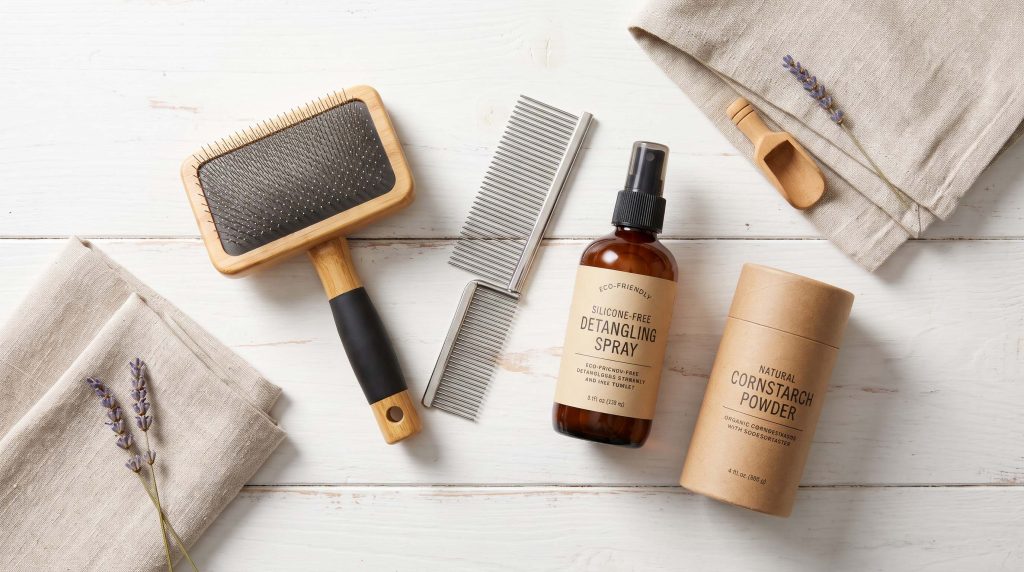
Choosing the right tools makes a significant difference when you are figuring out how to stop a golden retriever from getting mats behind the ears. The wrong brush either misses the tangles entirely or damages the coat.
| Tool | Best Use | Ear Mat Prevention Rating | Price |
|---|---|---|---|
| Medium-pin slicker brush | Weekly neck ruff maintenance | ★★★★★ | $12–$22 |
| Greyhound comb (wide/fine) | Finishing pass after slicker | ★★★★☆ | $8–$15 |
| Rubber curry comb | Bath-time loose fur removal | ★★★☆☆ | $5–$10 |
| Detangling spray (silicone-free) | Pre-brush softening | ★★★★☆ | $10–$18 |
| Cornstarch detangling powder | Post-bath moisture control | ★★★★★ | $6–$12 |
| Blunt-tipped grooming shears | Emergency mat splitting only | ★★★☆☆ | $8–$14 |
The slicker brush and the cornstarch powder are the two tools we recommend most often. The slicker brush catches the early tangles before they tighten, and the powder prevents the moisture buildup that accelerates matting.
For bath-time brushing techniques, our article on brushing a dog while the coat is soapy explains how to use a rubber curry comb during the shampoo phase to remove loose undercoat before it migrates to the ear base.
Common Mistakes That Make Ear Mats Worse
Bathing Before Brushing Creates More Mats
This is the most common error we see. If you bathe a Golden Retriever with existing tangles behind the ears, the water tightens every single tangle into a mat. Wet hair shrinks and contracts as it dries, pulling loose tangles into dense, felted clumps. Always brush behind the ears thoroughly before the bath, not after.
If your Golden already has mats and you need to bathe them, apply a silicone-free detangling spray to the mats before wetting the coat. Let it sit for five minutes, then gently work the mats apart with a wide-tooth comb before the water touches them. Our guide on safely diluting professional deshedding shampoo covers product handling that applies to detangling products as well.
Ignoring the Ear Canal Connection
Ear mats and ear infections feed each other. A Golden with a mild ear infection produces excess cerumen and moisture in the ear canal. That excess wax migrates to the hair at the ear base, creating the sticky anchor we mentioned earlier. If your Golden keeps developing mats behind the ears despite regular brushing, check the ear canals for redness, odor, or discharge. The mats may be a symptom, not the primary problem.
Using the Wrong Detangler on Golden Retriever Ears
Many commercial detangling sprays contain heavy silicones that coat the hair and create a temporary smooth feel. The problem is that silicone buildup attracts dirt and debris, which creates new tangles within days. Look for silicone-free detanglers that use plant-based conditioning agents like marshmallow root extract or slippery elm. These provide slip without the residue.
Skipping the Drying Step After Swimming
Goldens love water. But lake water, pool chlorine, and even ocean salt all roughen the hair cuticle and strip natural oils. If your Golden swims and then air-dries with the ear flap pressed against the neck, the trapped moisture and chemical residue create a matting hotspot within hours. Rinse the ear base with fresh water after every swim, towel-dry the area thoroughly, and apply cornstarch powder once the fur is mostly dry. Our article on stopping a dog from shaking water everywhere after a bath has containment tricks that also help manage post-swim moisture.
Your Ear Mat Prevention Calendar
Rather than a generic checklist, here is a seasonal calendar that accounts for the fact that Golden Retriever matting risk changes throughout the year.
Spring (March–May): Highest risk period. The winter undercoat sheds and migrates to the friction zone. Increase finger-comb checks to twice daily during peak shed. Schedule a professional deshedding bath if the undercoat is heavy.
Summer (June–August): Swim season. Chlorine and lake water strip natural oils and roughen the hair cuticle, making tangles more likely. Rinse the ear base with fresh water after every swim and apply cornstarch powder once the area dries.
Fall (September–November): Moderate risk. The fall coat transition brings a secondary shed. Resume weekly slicker brush passes if you relaxed during summer.
Winter (December–February): Lower risk but not zero. Indoor heating dries the coat, which can increase static and tangling. Run a humidifier in the room where your Golden sleeps and maintain the weekly brush routine.
Ear Mat Prevention Trick From Our Grooming Team
Here is a trick we developed for Goldens who are particularly prone to ear mats — the ones with extra-long, heavy ear flaps that press tightly against the neck. After brushing and drying the ear base, gently fold the ear flap backward over the top of the head for about 10 to 15 minutes while the dog rests. This exposes the friction zone to air, allowing any residual moisture to evaporate completely.
We call it “ear airing.” It sounds odd, but it works. The 15 minutes of airflow after a bath or a swim dries the friction zone faster than any towel can. Most Goldens tolerate it well, especially if you give them a chew toy to keep them occupied. You do not need to pin the ear in place — just fold it back gently and let gravity hold it.
This simple step has eliminated post-bath matting for several of the Goldens in our care. It is the kind of small adjustment that makes a big difference when you are learning how to stop a golden retriever from getting mats behind the ears.
FAQ — Golden Retriever Ear Mats
How often should I check my Golden Retriever’s ears for mats?
Check behind the ears daily with a quick finger-comb. A full visual and brush inspection once a week is the minimum. During heavy shedding seasons or after swimming, check twice daily. Consistency matters more than duration.
Can I use coconut oil to prevent ear mats?
Coconut oil can soften existing tangles, but we do not recommend it as a preventive. The oil attracts dirt and dust, which creates new tangles within days. It also traps moisture at the ear base, which accelerates matting. Use a dry cornstarch powder instead.
Should I trim the fur behind my Golden’s ears?
A light sanitary trim around the ear base can reduce matting risk by removing the longest hairs in the friction zone. However, avoid shaving the area completely. The fur protects the thin skin from sun exposure and insect bites. Ask your groomer for a “blended ear trim” that shortens the fur without removing it entirely.
Why does my Golden get mats behind one ear more than the other?
Most Golden Retrievers have a dominant scratching side. If your dog consistently scratches behind the left ear with its hind leg, the mechanical friction on that side will be higher, leading to more frequent matting. Allergies or a mild ear infection on one side can also cause increased head shaking and scratching on that side.
Is it safe to use a detangling spray on a puppy?
Yes, as long as the spray is silicone-free and formulated for dogs. Puppy skin is more sensitive, so test the product on a small patch of fur first and wait 24 hours for any reaction. Avoid sprays with alcohol, which dries the skin and coat.
Final Thoughts on Golden Retriever Ear Mats
Figuring out how to stop a golden retriever from getting mats behind the ears comes down to understanding the friction zone, the hair whorl, and the moisture trap created by the ear flap. Once you know where and why the mats form, prevention becomes a matter of quick daily checks and smart post-bath habits rather than painful emergency grooming sessions.
Start with the 60-second finger-comb tonight. Lift the ear flap, feel the base, and separate any snags before they tighten. Add the weekly slicker brush pass this weekend. If your Golden swims regularly, make the cornstarch dusting a non-negotiable part of your post-swim routine. These small steps compound quickly, and within a few weeks you will notice the mats stop forming altogether.
For more on managing your Golden’s overall coat health, our guide on how to deal with dog shedding covers breed-specific strategies. And if your Golden’s skin looks irritated after a grooming session, our article on why dog skin looks pink after a deshedding bath explains what is normal and when to call your vet.
Disclaimer: This article is for informational purposes only and does not replace professional veterinary or grooming advice. If your Golden Retriever has severe mats pulled tight against the skin, signs of ear infection, or skin sores beneath matted fur, consult a licensed veterinarian or professional groomer before attempting home removal.
