

 Animal Zoid Editorial Team
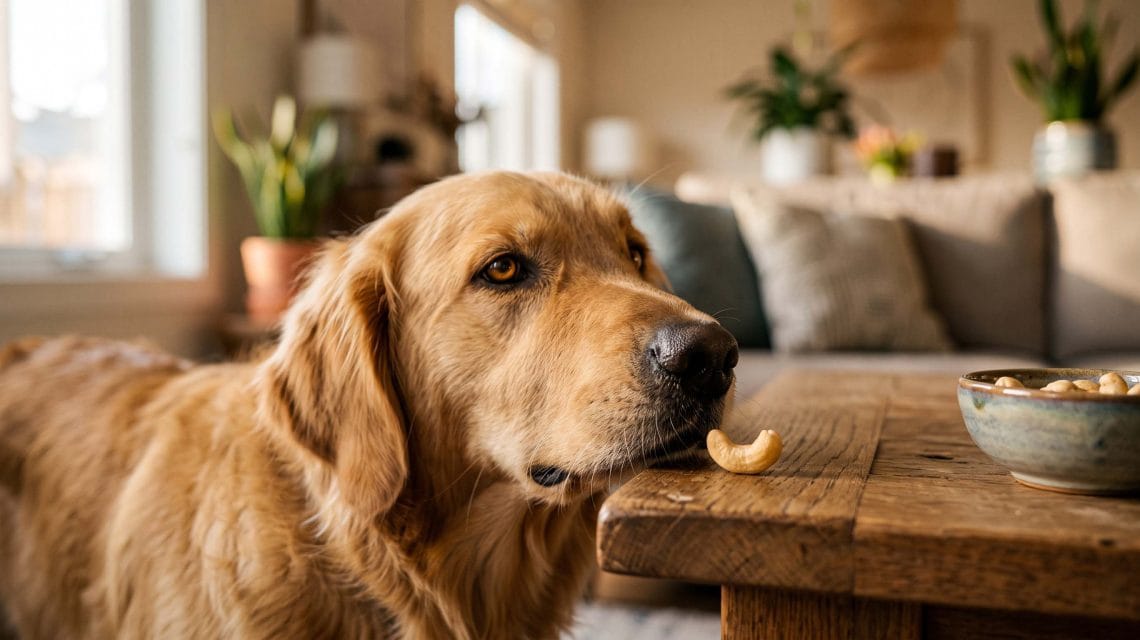
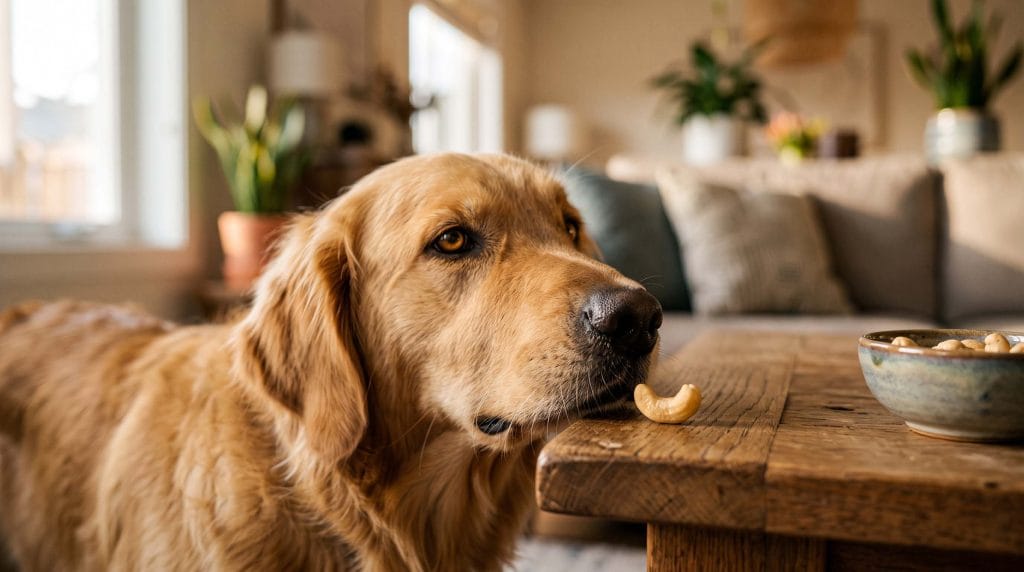
 Your dog just snagged a cashew off the coffee table and you’re already reaching for your phone to search are cashews bad for dogs — that instinct is exactly right, and this guide gives you the complete, honest answer rather than the oversimplified yes-or-no that most pet food articles default to. Cashews occupy an unusual middle ground in the dog nutrition conversation: they’re not toxic the way macadamia nuts are, but they’re not safe in the way that plain carrots or blueberries are either. The real answer depends on quantity, preparation, your dog’s individual health profile, and a few factors that most articles skip entirely.
This guide covers the exact nutritional composition of cashews and what it does in a dog’s system, the specific risk factors that make cashews problematic for certain dogs even in small amounts, what symptoms to watch for if your dog ate cashews without your knowledge, and — most practically — where cashews sit on the risk scale compared to other nuts your dog might encounter.
⚡ Quick Answer
Are cashews bad for dogs?
Cashews are not toxic to dogs, but they’re not a safe or recommended snack either. Plain, unsalted cashews in very small amounts — one or two for a large dog — are unlikely to cause immediate harm. But their high fat content creates real risks for dogs prone to pancreatitis, and their phosphorus and sodium levels can stress dogs with kidney or heart conditions. Salted, seasoned, or mixed-nut varieties are significantly more dangerous. When in doubt, avoid them entirely.
This article focuses on a specific food question, but dog health involves many interconnected factors. If you’re managing your dog’s health alongside a shedding or coat condition concern, our complete dog shedding management guide covers nutrition’s role in coat health. Breed-specific resources for Huskies, German Shepherds, Golden Retrievers, Labradors, and Corgis include nutritional notes relevant to each breed’s health profile.
Are Cashews Bad for Dogs — What Cashews Actually Contain
The Nutritional Profile That Explains the Risk
Answering are cashews bad for dogs properly requires looking at what cashews actually contain — because the risk isn’t one single compound but rather a combination of nutritional factors that interact with canine physiology in specific ways.
A single ounce of cashews (approximately 18 nuts) contains roughly 157 calories, 12 grams of fat, 9 grams of carbohydrates, 5 grams of protein, 168 milligrams of phosphorus, and — in salted varieties — up to 180 milligrams of sodium. For a human, that’s a reasonable snack. For a 25-pound dog, that single ounce represents a significant caloric and fat load relative to their total daily requirements.
Fat content — the primary concern.
The high fat content in cashews is what makes them problematic for dogs rather than any single toxic compound. Dogs process dietary fat differently than humans do, and a sudden high-fat intake — particularly from a food source outside their normal diet — triggers an inflammatory response in the pancreas in dogs predisposed to pancreatitis. Pancreatitis in dogs ranges from mild and self-resolving to severe and life-threatening, and certain breeds carry significantly higher predisposition than others.
Phosphorus — the kidney concern.
Cashews contain a meaningful amount of phosphorus per serving. For healthy dogs, dietary phosphorus is processed without issue. But dogs with existing kidney disease or reduced kidney function have limited ability to filter excess phosphorus, and repeated cashew exposure can accelerate kidney stress in these animals. This is a concern that most are cashews bad for dogs articles don’t address — because it’s not a toxicity issue, it’s a cumulative health management issue.
Sodium — in salted varieties especially.
Plain unsalted cashews carry some natural sodium. Salted cashews carry substantially more. Dogs have a much lower sodium tolerance than humans — a level of salt that’s unremarkable in a human portion can cause increased thirst, urination, and in significant amounts, sodium ion poisoning symptoms in dogs. Salted cashews represent a meaningfully higher risk level than plain unsalted cashews.
Aflatoxin risk — the factor nobody mentions.
Cashews, like all tree nuts, are susceptible to aflatoxin contamination — a naturally occurring mycotoxin produced by Aspergillus mold that can develop in improperly stored nuts. Dogs are more sensitive to aflatoxin than humans, and aflatoxin poisoning produces symptoms including lethargy, vomiting, jaundice, and liver damage. Commercially produced and properly stored cashews carry low aflatoxin risk, but old, stale, or improperly stored cashews carry meaningful risk — and this is a factor that applies regardless of the cashew’s salt content.
Are Cashews Bad for Dogs — Which Dogs Face the Highest Risk
The Specific Health Profiles That Make Cashews Genuinely Dangerous
The answer to are cashews bad for dogs isn’t uniform across all dogs — and this is the nuance most articles flatten into a single answer. Here’s where the real risk concentrates.
Dogs with a history of pancreatitis.
Any dog that has previously experienced a pancreatitis episode — even a mild one — is at elevated risk from high-fat food exposures. Cashews fall directly into the high-fat food category. Even a small number of cashews can trigger a pancreatitis flare in susceptible dogs, with symptoms appearing within 24–48 hours of ingestion. If your dog has a pancreatitis history, are cashews bad for dogs has a clear answer: yes, avoid entirely.
Breeds predisposed to pancreatitis.
Miniature Schnauzers, Cocker Spaniels, Yorkshire Terriers, and some Poodle lines carry documented higher pancreatitis predisposition. For these breeds, the risk profile of cashews is elevated even in dogs without a prior pancreatitis episode. The breed-specific risk factor is worth understanding before offering any high-fat food as a treat.
Dogs with kidney disease.
Any dog under veterinary management for chronic kidney disease (CKD) or reduced kidney function should avoid cashews due to the phosphorus content. Dogs on phosphorus-restricted diets — a common management approach for CKD — can have their dietary phosphorus control disrupted by even modest cashew exposure. If your dog has kidney disease, discuss any dietary additions — including treats — with your veterinarian before offering them.
Overweight or obese dogs.
Overweight dogs already face elevated fat metabolism stress, and cashews’ caloric density adds unnecessary fat intake without nutritional benefit that justifies the load. If your dog is on a weight management plan, cashews actively work against that plan. There are significantly better low-calorie treat options available.
Small breeds generally.
A single cashew represents a much larger proportion of a small dog’s daily caloric and fat intake than it does for a large breed. One cashew for a 5-pound Chihuahua is proportionally equivalent to several cashews for a 60-pound Labrador. The size of the dog directly scales the risk of any single cashew exposure.
Are Cashews Bad for Dogs — The Real-World Scenario Most Owners Face
What Actually Happens When a Dog Eats Cashews
Most owners who search are cashews bad for dogs aren’t doing so as an academic exercise — their dog just ate some. Here’s the realistic outcome breakdown based on the most common scenarios.
Scenario 1 — One or two plain, unsalted cashews, healthy large-breed dog.
Most likely outcome: nothing notable. The fat and caloric load from one or two cashews in a healthy large dog is within normal processing range. Watch for any gastrointestinal upset over the next 24 hours — soft stool or mild vomiting is possible but not expected. No veterinary contact is typically needed.
Scenario 2 — A small handful of salted cashews, medium-breed dog.
This is where concern rises. The sodium load from salted cashews in a handful quantity for a medium-sized dog warrants monitoring. Provide fresh water access, watch for excessive thirst, urination, vomiting, diarrhea, or lethargy over the next 24 hours. Contact your vet if symptoms appear.
Scenario 3 — Mixed nuts containing cashews, any size dog.
Mixed nut products frequently contain macadamia nuts — one of the genuinely toxic nuts for dogs. If your dog consumed a mixed nut product and you can’t confirm macadamia nuts weren’t present, contact your veterinarian or an animal poison control line immediately. Don’t wait for symptoms. Macadamia nut toxicity in dogs is real and requires prompt attention.
Scenario 4 — Cashews with added flavoring (onion powder, garlic powder, spice blends).
Flavored cashews — particularly those seasoned with onion or garlic powder — are significantly more dangerous than plain cashews. Both onion and garlic are toxic to dogs, causing oxidative damage to red blood cells that leads to hemolytic anemia. If your dog consumed flavored cashews, contact your vet promptly with the ingredient list from the packaging.
Scenario 5 — Dog with known pancreatitis history ate cashews.
Contact your veterinarian the same day regardless of quantity. Don’t wait for symptoms to appear — pancreatitis treatment outcomes improve significantly with early intervention. Tell the vet exactly how many cashews, the salt level, and any other ingredients in the product.
Marcus and Max — When a Handful of Party Mix Changed Everything
Marcus owns a seven-year-old Miniature Schnauzer named Max. Miniature Schnauzers are one of the breeds with highest documented pancreatitis predisposition — a fact Marcus didn’t know at the time of the incident.
During a holiday gathering, Max managed to access a bowl of mixed nuts on a low table. The bowl contained cashews, macadamia nuts, and mixed salted nuts. Marcus noticed Max eating from the bowl but assumed a small amount of nuts wouldn’t cause a problem. Max ate approximately 8–10 mixed nuts over the course of 20–30 minutes before Marcus moved the bowl.
Within 18 hours, Max was showing signs of severe abdominal pain — hunched posture, loss of appetite, and one episode of vomiting. Marcus brought Max to an emergency veterinary clinic, where bloodwork confirmed acute pancreatitis. Max spent two days on IV fluids and required pain management before he was well enough to return home.
The veterinarian’s assessment: the combination of high-fat cashews, potential macadamia nut exposure, and Max’s breed-specific pancreatitis predisposition created a compounding risk that a single nut type in a non-predisposed breed might not have triggered.
Marcus’s direct words: “I looked up are cashews bad for dogs after I noticed him eating them and most of what I found said ‘a few are okay.’ Nobody told me that Schnauzers specifically are at high risk, and nobody mentioned that mixed nuts often have macadamia in them.”
Max recovered fully. But the two-day emergency hospitalization cost Marcus significantly more than the party mix — and the recovery period was genuinely difficult to watch. His experience is exactly why are cashews bad for dogs deserves a more nuanced answer than “technically not toxic.”
Cashews vs. Other Nuts — Risk Level Guide for Dog Owners
| Nut Type | Toxic to Dogs? | Fat Content | Risk Level | What to Do if Dog Eats Them |
|---|---|---|---|---|
| Macadamia nuts | ✅ Yes — documented toxicity | Very High | 🔴 High — call vet immediately | Contact vet or poison control now |
| Walnuts (black) | ✅ Yes — mold risk + toxin | High | 🔴 High | Contact vet promptly |
| Pecans | ⚠️ Mold/aflatoxin risk | Very High | 🔴 High | Contact vet if large amount |
| Cashews (salted/flavored) | ❌ Not directly toxic | High | 🟠 Moderate-High | Monitor closely — vet if symptoms |
| Cashews (plain, unsalted) | ❌ Not directly toxic | High | 🟡 Low-Moderate | Monitor — vet if predisposed breed |
| Almonds | ❌ Not toxic but hard to digest | High | 🟡 Moderate | Monitor — choking risk for small dogs |
| Peanuts (plain, unsalted) | ❌ Not toxic | Moderate-High | 🟢 Low for healthy dogs | Generally safe in small amounts |
| Pistachios | ❌ Not toxic | High | 🟡 Moderate | Monitor — fat load concern |
| Hazelnuts | ❌ Not toxic | High | 🟡 Moderate | Monitor — choking risk |
🐾 The Mixed Nuts Identification Check — What Vets Want You to Do First
Here’s something our team learned from conversations with veterinary professionals who regularly handle nut ingestion cases in dogs — and it’s a step that most pet owners skip in the panic of realizing their dog ate something they shouldn’t have.
Before calling the vet or poison control, flip the package over and photograph the full ingredient list. Then bring that photo to every conversation about the incident.
Here’s why this matters beyond the obvious. Many premium nut mix products list “natural flavors” without specifying whether those flavors include onion powder or garlic powder — both of which are significantly more dangerous than the nut content itself. Some “cashew” products are processed in facilities that blend macadamia nuts into the same roasting batches, and cross-contamination can be present even when macadamias aren’t listed as a primary ingredient.
The other thing the vet needs immediately: the approximate number of nuts consumed, the dog’s current weight, and whether the dog has any pre-existing health conditions. Having this information ready before the first call saves time during the most time-sensitive part of the process.
If you can’t identify the product ingredients — the bag is gone, the bowl was someone else’s, the label is unclear — tell the vet that explicitly. “I don’t know what was in the nut mix” is information they need to make triage decisions, and it’s more useful than a guess.
The calm, prepared call with product information gets better guidance faster than a panicked call without it.
Are Cashews Bad for Dogs — Safer Alternatives That Actually Work as Treats
What to Give Your Dog Instead of Cashews
Since are cashews bad for dogs lands firmly in “not worth the risk” territory for most households, knowing what actually makes a safe, satisfying treat is the practical next step.
Plain cooked chicken or turkey. High in protein, low in fat when skinless, and universally appealing to dogs. No processing, no added ingredients, no fat load concerns.
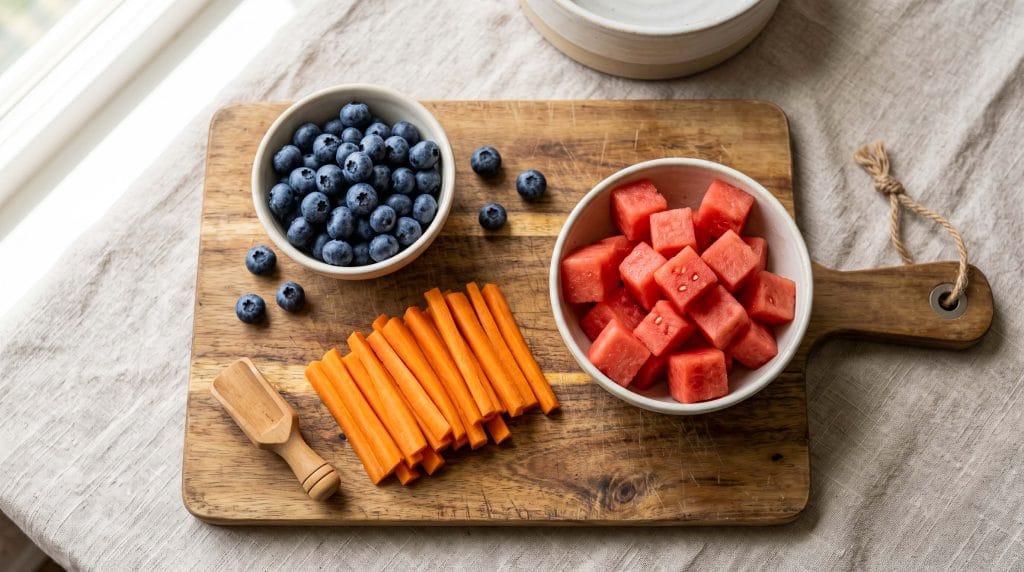
Blueberries. Antioxidant-rich, low calorie, and genuinely enjoyed by most dogs. Safe for nearly all dogs including those with weight management needs.
Carrot sticks. Low calorie, high fiber, and the crunching action provides mild dental benefit. Safe for all sizes and virtually all health profiles.
Watermelon (seedless, no rind). High water content, low calorie, naturally sweet. Dogs with tendency toward overheating or low water intake often respond particularly well.
Plain cooked sweet potato. Nutrient-dense, digestible, and appropriate even for dogs with some gastrointestinal sensitivities when offered in small amounts.
None of these carry the fat load, phosphorus concern, or sodium risk of cashews — and all of them deliver treat satisfaction without the health trade-offs.
Are Cashews Bad for Dogs — What to Watch for After Exposure
If your dog ate plain unsalted cashews — monitor for:
- Vomiting — within 2–24 hours
- Diarrhea or soft stool — within 24 hours
- Lethargy or decreased energy — within 24 hours
- Reduced appetite — within 12–24 hours
- Hunched posture or apparent abdominal discomfort
If your dog ate salted or flavored cashews — additionally watch for:
- Excessive thirst — sodium response
- Increased urination — sodium response
- Tremors or disorientation — high sodium toxicity signs
- Pale gums — possible anemia if onion/garlic flavoring present
Contact your vet immediately if:
- Your dog ate mixed nuts with unknown contents
- Macadamia nuts may have been present
- Your dog has a pancreatitis history
- Your dog has kidney disease or heart disease
- Your dog is a Miniature Schnauzer, Cocker Spaniel, or other high-pancreatitis-risk breed
- Any of the above monitoring symptoms appear
FAQ — Are Cashews Bad for Dogs?
Are cashews bad for dogs in small amounts?
One or two plain, unsalted cashews are unlikely to cause immediate harm in a healthy, medium-to-large breed dog with no pre-existing conditions. But “unlikely to cause immediate harm” is not the same as “safe.” The fat content creates pancreatitis risk in predisposed breeds and dogs with prior pancreatitis history, and even small amounts of salted cashews carry a sodium load disproportionate to a dog’s tolerance. The practical recommendation is to find a better treat option rather than calculating acceptable cashew doses for your specific dog.
What makes cashews more dangerous than peanuts for dogs?
Cashews contain higher fat per serving than peanuts and carry a higher phosphorus load — both of which create more significant risks for dogs with kidney or pancreatic vulnerabilities. Peanuts, while not fat-free, have a more established safety profile in canine nutrition and are used as flavoring in numerous commercial dog treats and foods. The other key difference is mixing risk — cashews are far more commonly found in mixed nut products that may contain macadamia nuts, which are genuinely toxic to dogs.
My dog ate cashews yesterday and seems fine. Do I still need to call a vet?
If your dog ate plain unsalted cashews, shows no symptoms, has no history of pancreatitis, and belongs to a low-risk breed — continued monitoring without a vet call is reasonable. However, pancreatitis symptoms can appear 24–48 hours after a high-fat food exposure, so “fine yesterday” doesn’t fully clear the concern yet. If symptoms develop, contact your vet promptly. If your dog ate salted, flavored, or mixed nuts, or belongs to a pancreatitis-risk breed, a proactive vet call is the right choice even without symptoms.
Are cashew butter or cashew milk safe for dogs?
Cashew butter and cashew milk carry the same fat content concerns as whole cashews — often in more concentrated form depending on processing. Cashew butter also frequently contains added salt, sugar, or sweeteners. Xylitol — an artificial sweetener that’s extremely toxic to dogs — occasionally appears in nut butters, making ingredient label checking essential before offering any nut butter product. Plain, unsweetened cashew products without xylitol are less immediately dangerous than xylitol-containing versions, but the fat load concern remains.
Are cashews bad for dogs with allergies?
Cashews are tree nuts and carry their own allergen profile. Dogs can develop food allergies or sensitivities to tree nuts, though this is less commonly documented than allergies to common protein sources like beef or chicken. Signs of a food allergic response in dogs include itching, skin redness, gastrointestinal upset, or ear inflammation following food exposure. If your dog shows any of these signs after cashew exposure, discuss the possibility of a tree nut sensitivity with your veterinarian.
The Honest Bottom Line on Are Cashews Bad for Dogs
Are cashews bad for dogs? The complete answer is: not acutely toxic in small amounts for healthy dogs, but genuinely risky for dogs with pancreatitis history, kidney disease, breed-specific predisposition, or when the cashews are salted, flavored, or part of a mixed nut product. The risk isn’t zero for any dog, and the risk is meaningfully high for specific dogs.
Max’s emergency hospitalization happened because the real answer to are cashews bad for dogs was buried under oversimplified “a few are okay” advice that didn’t account for breed predisposition or mixed-nut contamination risk. Marcus couldn’t have known what he didn’t know. Now you do.
The practical answer for most households: cashews aren’t worth the risk calculation. There are better treat options with straightforward safety profiles and no hidden risk factors. Give those instead.
For more on keeping your dog healthy year-round — including nutrition’s role in coat health and shedding management — our complete dog care guide covers the full picture. For breed-specific health and grooming resources, visit our guides for Huskies, German Shepherds, Golden Retrievers, Labradors, and Corgis. 🐾
This article provides general information based on current veterinary understanding and is not a substitute for professional veterinary advice. If your dog has consumed cashews or any nut product and you have concerns, contact your veterinarian or a pet poison control line immediately.
