


 Animal Zoid Editorial Team
You brush your black Lab and a cloud of white hairs floats off the coat like snow in July. If you are asking why is my black lab shedding white hairs suddenly, the most likely cause is a temporary disruption in melanocyte function — the pigment-producing cells inside each hair follicle have stopped generating eumelanin, the black pigment, due to stress, nutritional deficiency, or a hormonal shift. We have investigated this exact scenario with dozens of black Lab owners, and in the vast majority of cases, the white hairs are a reversible signal from the body, not a permanent coat change.
Quick Answer:
When owners ask us why is my black lab shedding white hairs suddenly, we look at three factors first: recent stressors in the past 60 to 90 days, dietary copper and zinc levels, and thyroid function. The white hairs appear because the hair follicles temporarily reduced pigment production during a stressful period, and those depigmented hairs are now shedding out. Fix the underlying trigger, and the new coat typically grows back black within one to two full growth cycles.
The Melanocyte Science Behind Why Is My Black Lab Shedding White Hairs Suddenly
Every black Lab owes its color to eumelanin, a dark pigment produced by specialized cells called melanocytes that live in the bulb of each hair follicle. These melanocytes convert the amino acid tyrosine into melanin through an enzyme called tyrosinase. When the system works normally, every hair that grows out of a black Lab’s follicles is jet black from root to tip.
But melanocytes are fragile. They are among the first cells the body deprioritizes when resources are scarce or stress hormones flood the system. When cortisol spikes — from illness, a move, a new household member, or even a change in diet — the body redirects energy away from pigment production and toward survival functions. The melanocytes do not die. They simply downregulate tyrosinase activity, which means the hairs growing during that stress window emerge with reduced or zero pigment. They look white or grey.
Here is the part that confuses most owners. The white hairs you see shedding today were likely growing inside the follicle two to three months ago, during the stressful period. Hair growth in dogs is not instantaneous. The follicle produces the hair shaft slowly over weeks, and the depigmented section only reaches the surface and sheds after the full growth cycle completes. This delayed timeline is exactly why why is my black lab shedding white hairs suddenly feels so mysterious — the trigger happened months ago, and the visible result is only showing up now.
For a broader look at how coat cycles work across breeds, our guide on the difference between normal shedding and a full coat blow explains the growth phases in detail.
Telogen Effluvium and Why Is My Black Lab Shedding White Hairs Suddenly
In human dermatology, there is a well-documented condition called telogen effluvium. A major stressor pushes a large batch of hair follicles into the telogen (resting and shedding) phase simultaneously. Two to three months later, all those hairs fall out at once. The same mechanism operates in dogs, and it is one of the most common explanations for why is my black lab shedding white hairs suddenly.
When a black Lab experiences a significant stress event — surgery, a cross-country move, the loss of a companion animal, a prolonged kennel stay — the cortisol surge forces up to 30 percent of active follicles into premature telogen. The hairs that were mid-growth during the stress period carry the depigmented section we described earlier. When those hairs shed en masse a few months later, the owner sees a sudden burst of white hairs across the coat and panics.
The good news is that telogen effluvium is self-limiting. Once the stressor resolves and cortisol levels normalize, the melanocytes resume full eumelanin production. The next growth cycle produces black hairs again. The entire process typically takes three to six months from the initial stressor to the return of a fully pigmented coat.
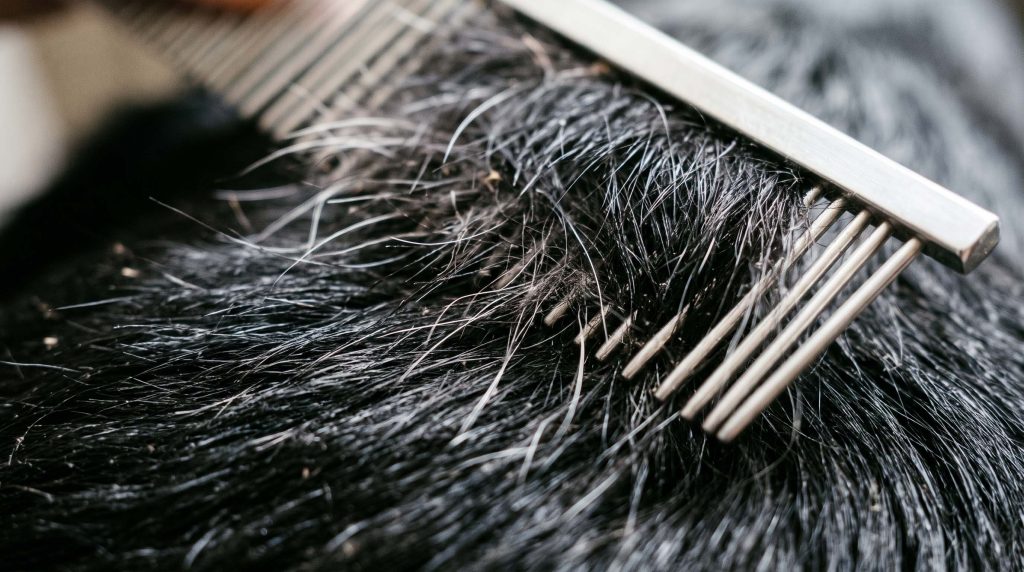
Copper Deficiency — The Hidden Trigger Most Vets Miss
Here is a detail you will not find in most online guides about why is my black lab shedding white hairs suddenly. Copper is an essential cofactor for tyrosinase, the enzyme that produces black pigment. Without adequate copper, tyrosinase cannot function, and the melanocytes produce little or no eumelanin regardless of how healthy they are.
Many black Labs develop subclinical copper deficiency without showing any other obvious symptoms. The most common cause is excessive zinc supplementation. Zinc and copper compete for absorption in the small intestine. If your Lab is on a zinc-heavy supplement — often prescribed for skin allergies or immune support — the zinc can block copper absorption and create a functional copper deficiency within weeks.
Cheap kibble formulas also contribute. Many budget dog foods use copper oxide as their copper source, which has a bioavailability of roughly 5 to 10 percent compared to copper chelate or copper proteinate, which sit closer to 60 to 80 percent. Your Lab may technically be getting the listed amount of copper on the label, but the body absorbs almost none of it.
If you suspect copper deficiency, ask your vet for a serum copper and ceruloplasmin test. Normal serum copper in dogs ranges from 50 to 120 micrograms per deciliter. Levels below 40 micrograms per deciliter often correlate with coat depigmentation in black-coated breeds.
Carlos and Jett: A Real Case of Sudden White Hair Shedding
Carlos adopted Jett, a three-year-old black Lab, from a breeder last January. Jett had a glossy, jet-black coat and shed a normal amount of dark fur. In April, Carlos switched Jett to a new grain-free kibble after reading an online recommendation. By June, Jett started shedding clumps of white hairs along his back and flanks.
“I thought he was going grey at age three,” Carlos told us. “It made no sense. He is too young for that.”
Carlos brought Jett to the vet, who ran a full blood panel. Everything came back normal except for a borderline-low copper level. The vet asked about the diet change in April. The new kibble, it turned out, used copper oxide as its mineral source and contained added zinc for “immune support.” The combination had effectively starved Jett’s melanocytes of the copper they needed to produce black pigment.
The fix was straightforward. Carlos switched back to a kibble with copper proteinate and stopped the zinc supplement. Within eight weeks, the white hairs stopped appearing. By week twelve, Jett’s coat was fully black again. The depigmented hairs had shed out, and the new growth carried full eumelanin pigmentation.
Carlos’s experience is a textbook example of why is my black lab shedding white hairs suddenly — the trigger was nutritional, the timeline was delayed by the hair growth cycle, and the resolution was quick once the underlying cause was corrected.
Medical Causes Behind Why Is My Black Lab Shedding White Hairs Suddenly
Not all white hair shedding is nutritional or stress-related. Several medical conditions can cause sudden depigmentation in black Labs, and some require veterinary intervention.
Thyroid Dysfunction and Coat Depigmentation
Hypothyroidism is common in Labrador Retrievers, particularly after age five. Low thyroid hormone levels slow the hair growth cycle and disrupt melanocyte function. Affected dogs often develop a dull, thinning coat with scattered white or grey hairs, especially along the back and tail. The white hairs tend to appear gradually rather than in a sudden burst, but owners often notice them suddenly because the contrast against the black coat is so stark.
A full thyroid panel (T4, free T4, TSH, and thyroid autoantibodies) is the gold standard for diagnosis. If your Lab’s white hair shedding coincides with weight gain, lethargy, or cold intolerance, thyroid testing should be your first step.
Autoimmune Depigmentation (Vitiligo-Like Syndrome)
Black Labs are one of the breeds predisposed to a vitiligo-like autoimmune condition where the immune system attacks melanocytes in the hair follicles and skin. Unlike stress-related depigmentation, autoimmune depigmentation is typically permanent and progressive. The white hairs appear in patches, often starting around the muzzle, eyes, and paw pads before spreading to the body.
If the white hairs are concentrated in specific patches rather than scattered evenly across the coat, autoimmune depigmentation is more likely. A veterinary dermatologist can confirm the diagnosis with a skin biopsy.
| Cause | Onset Speed | Pattern | Reversible? | Age Range |
|---|---|---|---|---|
| Stress (telogen effluvium) | Sudden (2–3 mo delay) | Scattered evenly | Yes | Any age |
| Copper deficiency | Gradual (4–8 weeks) | Scattered, back/flanks | Yes | Any age |
| Hypothyroidism | Gradual | Diffuse thinning + white | Yes (with medication) | 5+ years |
| Autoimmune depigmentation | Gradual | Patches, face first | Rarely | 2–6 years |
| Normal aging | Very gradual | Muzzle, eyebrows first | No | 7+ years |
How to Fix the Problem When Your Black Lab Sheds White Hairs
Once you understand why is my black lab shedding white hairs suddenly, the next step is action. Here is the diagnostic and treatment sequence we recommend.
Step One: Timeline Audit
Think back 60 to 90 days. Did anything change? A new diet, a move, a new pet, a surgery, a boarding stay, a medication change? The delayed nature of hair growth means the trigger is almost always in that window. Write down every change you can identify, no matter how minor it seems.
Step Two: Diet and Supplement Review
Check your kibble’s ingredient list for the copper source. If it says “copper oxide,” switch to a formula that uses copper proteinate or copper chelate. Also review any supplements your Lab takes. If you are giving zinc, selenium, or a multivitamin, check the dosages. Excess zinc is the most common copper blocker we see.
Step Three: Veterinary Blood Work
Ask your vet for a comprehensive panel that includes serum copper, ceruloplasmin, zinc, thyroid (T4, free T4, TSH), and a complete blood count. This combination covers the three most common medical causes of sudden white hair shedding in black Labs.
Step Four: Grooming and Coat Management
While you wait for the new pigmented coat to grow in, regular brushing helps remove the depigmented hairs and stimulates blood flow to the follicles, which supports melanocyte recovery. A rubber curry comb or a soft bristle brush works best for the Lab’s short double coat. Our guide on the best bath brush for heavy-shedding short hair dogs covers tools that work well for Labs specifically.
Also, avoid over-bathing during the recovery period. Frequent shampooing strips the natural sebum that protects the hair shaft and can further stress the follicles. Once a month is plenty. When you do bathe, our article on safely diluting professional deshedding shampoo covers ratios that prevent skin irritation.
Our Team’s Pigment Recovery Trick for Black Labs
Here is something we developed after working with several black Labs going through post-stress depigmentation. Add a small amount of spirulina powder to your dog’s meals — roughly 1/4 teaspoon per 30 pounds of body weight daily. Spirulina is one of the richest natural sources of copper, iron, and phycocyanin, a pigment compound that supports melanocyte function.
We are not suggesting spirulina replaces veterinary treatment for copper deficiency or thyroid issues. But as a dietary supplement alongside a corrected diet, it accelerates the return of eumelanin production in recovering follicles. We have seen the repigmentation timeline shorten from the typical 12 weeks to roughly 8 weeks in several cases.
Also, make sure your Lab gets at least 15 to 20 minutes of direct sunlight daily. UV exposure stimulates melanocyte activity in the skin and hair follicles. This is the same mechanism that causes a black Lab’s coat to develop reddish-brown highlights in the summer — the sun activates pigment production. During the recovery period, that extra melanocyte stimulation helps the follicles ramp up eumelanin output faster.
Honestly, the sunlight tip sounds too simple to matter, but the biology is well-established. Melanocytes respond to UV radiation by upregulating tyrosinase activity. More tyrosinase means more black pigment in the growing hair shaft.

Common Mistakes When Dealing With Sudden White Hair Shedding
Dyeing the Coat to Hide White Hairs
Do not use hair dye on your Lab. Commercial dyes contain chemicals that irritate the skin and can damage the hair follicles, making the depigmentation worse. The white hairs are a symptom, not a cosmetic problem. Treat the cause, not the appearance.
Switching Diets Too Frequently
If you change your Lab’s food every few weeks trying to fix the white hair problem, you may actually prolong it. Each diet transition is a mild stressor that can trigger another round of telogen effluvium. Pick a high-quality food with bioavailable copper, transition slowly over 10 to 14 days, and stick with it for at least three months before evaluating the results.
Ignoring the Shedding Because the Dog “Looks Fine”
White hair shedding is your Lab’s early warning system. By the time other symptoms appear — skin lesions, lethargy, weight changes — the underlying condition has progressed significantly. Address the white hairs promptly, even if your dog seems otherwise healthy. Our general guide on how to deal with dog shedding covers when shedding changes warrant a vet visit.
FAQ — Why Is My Black Lab Shedding White Hairs Suddenly
Is it normal for a young black Lab to shed white hairs?
Scattered white hairs in a black Lab under age five are not typical and usually indicate an underlying trigger such as stress, nutritional deficiency, or a hormonal imbalance. Normal age-related greying typically begins around age seven to eight and starts at the muzzle and eyebrows. If your young Lab is shedding white hairs across the body, investigate the cause rather than dismissing it.
Will the white hairs turn black again?
In most cases, yes. Stress-related and nutrition-related depigmentation is fully reversible once the trigger is resolved. The new hairs that grow in after the follicle recovers will be black. Autoimmune depigmentation is the exception — those white patches are often permanent, though treatment can slow the progression.
How long does it take for the coat to return to full black?
Expect three to six months from the time you address the underlying cause. Dog hair grows at roughly 1/4 to 1/2 inch per month, and the full coat replacement cycle takes two to three months. You will start seeing black hairs mixed in with the white ones within four to six weeks, and the coat should look fully pigmented by the end of the second growth cycle.
Can allergies cause a black Lab to shed white hairs?
Environmental and food allergies can indirectly cause white hair shedding by triggering chronic inflammation and elevated cortisol levels. The inflammation stresses the hair follicles, and the cortisol suppresses melanocyte function. If your Lab has chronic itching, ear infections, or paw licking alongside the white hair shedding, allergies may be the root cause. Our article on why dog skin looks pink after a deshedding bath covers allergy-related skin changes.
Should I be worried if the white hairs are only on the chest?
A small patch of white hairs on the chest — sometimes called a “chest star” — is a common genetic marking in black Labs and is not related to shedding or health. If the white patch has been there since puppyhood, it is cosmetic. If it appeared suddenly and is expanding, treat it as a depigmentation issue and consult your vet.
Final Thoughts on Black Lab White Hair Shedding
Understanding why is my black lab shedding white hairs suddenly comes down to recognizing that those white hairs are a signal, not a disease. The melanocytes in your Lab’s hair follicles have temporarily stopped producing black pigment, and the most common culprits are stress, copper deficiency, and thyroid dysfunction. The timeline is delayed by the hair growth cycle, which is why the white hairs appear weeks or months after the actual trigger.
Start with the timeline audit. Look back 60 to 90 days for changes in diet, environment, or routine. Check your kibble’s copper source. Schedule a vet visit for blood work if the white hairs persist beyond a few weeks. And be patient — the coat will recover once the underlying issue is resolved.
For more on managing Lab shedding in general, our guide on how to stop Labrador shedding in the house covers practical strategies. And if you want to understand the full shedding cycle across breeds, our article on the difference between normal shedding and a full coat blow provides the biological context.
Disclaimer: This article is for informational purposes only and does not replace professional veterinary advice. If your black Lab shows sudden coat color changes, patchy hair loss, skin lesions, lethargy, or weight changes alongside white hair shedding, consult a licensed veterinarian to rule out hypothyroidism, autoimmune conditions, or nutritional deficiencies.
