

 Animal Zoid Editorial Team
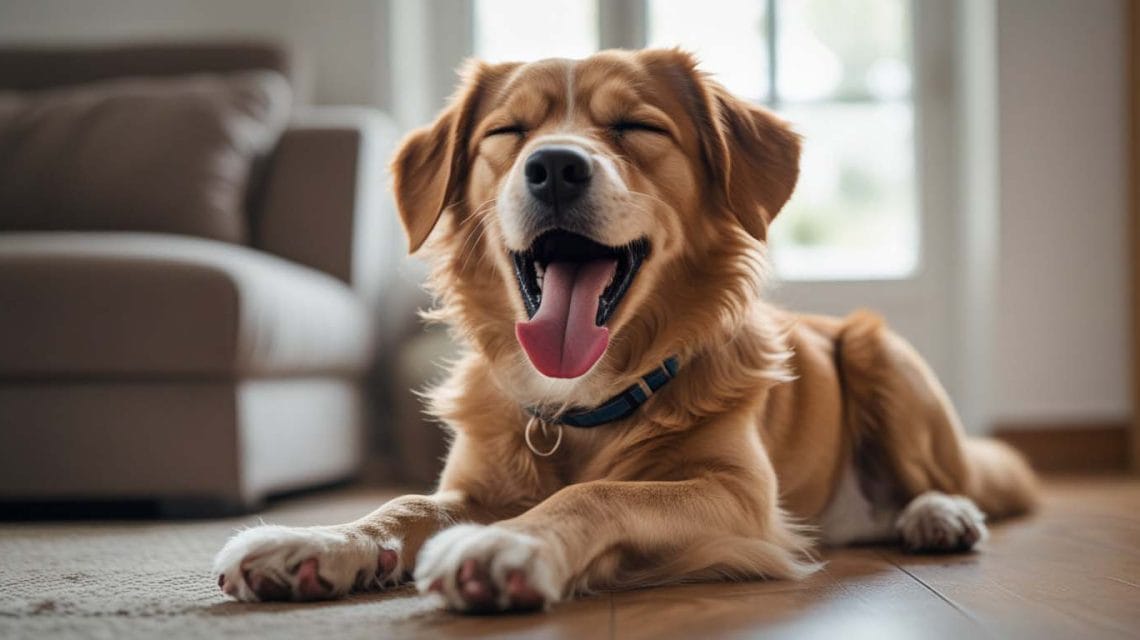
 You’re sitting on the couch, giving your dog what you genuinely believe is the best belly rub of their entire life — and then they yawn. Widely, dramatically, directly at you. And suddenly you’re wondering whether you’ve somehow offended them or whether something is actually wrong. If you’ve ever asked yourself why does my dog yawn when I pet him, you’re asking one of the most commonly misunderstood questions in canine behavior — and the answer is significantly more nuanced, and more interesting, than most people expect.
Here’s the reassuring news upfront: in the majority of cases, why does my dog yawn when I pet him has a completely benign explanation rooted in sophisticated canine communication rather than anything worrying. Dogs use yawning as a deliberate, functional social signal — a behavior that researchers in canine cognition have studied extensively and found to serve multiple distinct communicative purposes depending on context, body language, and the specific situation in which it occurs. A 2013 study published in PLOS ONE found that dogs yawn significantly more in response to human yawns than to control sounds — suggesting that yawning in dogs carries genuine social and empathic dimensions that go far beyond simple tiredness.
In this guide, we’ll walk you through every meaningful reason behind this behavior — from calming signals and stress responses to genuine contentment and empathic connection — help you read the specific body language context that tells you which explanation applies to your dog right now, share the story of a dog named Cooper whose yawning behavior completely transformed how his owner understood him, and give you a clear framework for responding appropriately in every scenario. If you’ve also noticed other interesting behaviors alongside the yawning — like unusual skin reactions or anxious scratching — our dog atopy home remedy guide covers stress-related physical symptoms worth understanding in parallel.
Why Does My Dog Yawn When I Pet Him — The Science Behind It
What Research Tells Us About Why Dogs Yawn When Petted
To genuinely answer why does my dog yawn when I pet him, we first need to understand what yawning actually is in the context of canine communication — because it operates very differently in dogs than it does in humans.
In humans, yawning primarily signals tiredness, boredom, or oxygen regulation. In dogs, yawning functions as a calming signal — a term coined by Norwegian dog trainer and behaviorist Turid Rugaas, whose landmark research on canine communication identified yawning as one of approximately 30 distinct stress-reducing and conflict-diffusing behaviors that dogs use deliberately to regulate both their own emotional state and the emotional states of those around them.
Furthermore, research from the University of Tokyo found that dogs yawned significantly more frequently when their owner yawned compared to when a stranger yawned — demonstrating a form of emotional contagion that mirrors the social bonding function yawning serves in primates. This finding matters enormously when you’re asking why does my dog yawn when I pet him — because it suggests your dog’s yawn during petting may represent a socially sophisticated response to you specifically rather than a generic stress reaction.
What this means practically is that the same physical action — a single wide yawn — can mean meaningfully different things depending on the full body language picture surrounding it. Consequently, learning to read that full picture is the real key to understanding your individual dog’s communication rather than applying a single blanket explanation to every yawn you observe.
The 5 Real Reasons Why Your Dog Yawns When You Pet Him
Why Does My Dog Yawn When I Pet Him — Breaking Down Each Cause
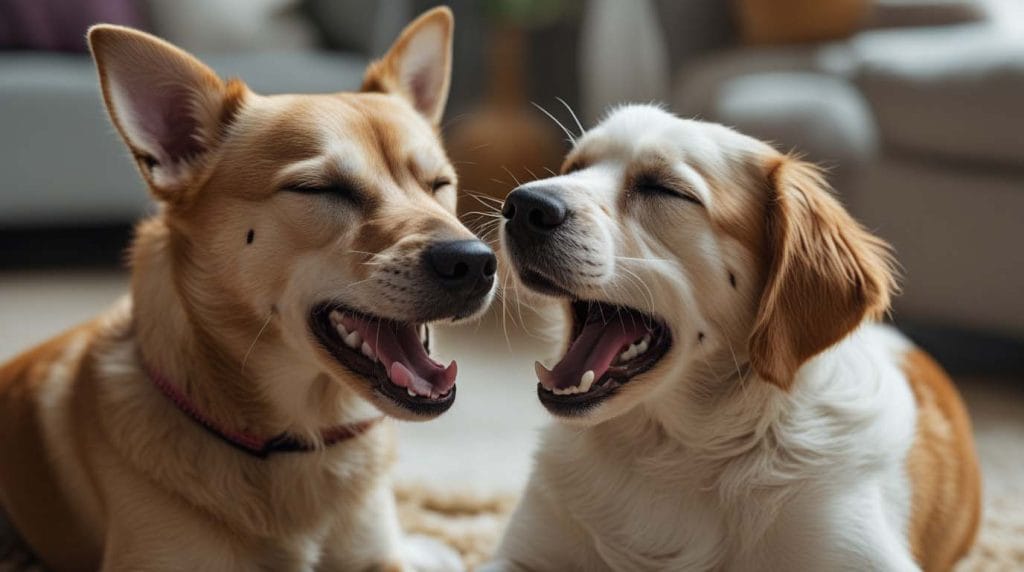
Understanding why does my dog yawn when I pet him requires examining five distinct explanations that each apply in different contexts with different associated body language:
Reason 1 — Your dog is using a calming signal
This is the most common explanation, and it’s the one most pet owners never encounter because calming signal theory isn’t widely taught outside professional dog training circles. When your dog feels even mild social pressure — including the benign pressure of sustained human attention, direct eye contact, or physical contact they didn’t specifically seek — they often produce a calming signal yawn to communicate “I’m not a threat, I’m comfortable, please let’s keep things relaxed between us.”
This type of yawn typically occurs during direct eye contact, when petting becomes sustained and intense, or when your face moves close to your dog’s face in the way humans naturally do when expressing affection. It’s not a sign of distress — it’s sophisticated social diplomacy from an animal whose communication system most people simply haven’t learned to read.
Reason 2 — Your dog feels mild stress or is slightly overstimulated
Petting, despite being intended as affection, creates genuine sensory input that some dogs find overstimulating — particularly around the face, top of the head, or tail base, which are areas many dogs actually find uncomfortable despite tolerating them politely. When petting crosses from pleasant to overstimulating, yawning functions as an early stress signal — your dog’s way of saying “this is a little much right now” before escalating to more obvious discomfort signals like moving away, lip licking, or a stiffened body.
We’ve observed this pattern consistently across our experience with dogs of varying temperaments: the yawn during petting frequently serves as the first signal in a stress escalation sequence, appearing well before owners recognize that their dog is uncomfortable. Catching the yawn and adjusting your petting approach at that moment prevents the escalation from continuing further.
Reason 3 — Your dog is genuinely relaxed and contentedly sleepy
Sometimes the simplest explanation is the correct one. If your dog is relaxed — loose body posture, soft eyes, lying down comfortably — and yawns during gentle petting, they may simply be experiencing the calming, almost sleep-inducing effect of pleasant physical contact. Much like a human yawning during a relaxing massage, this yawn signals genuine comfort and physiological relaxation rather than stress or communication.
Reason 4 — Empathic response to your emotional state
Given the research demonstrating emotional contagion in dog yawning, your dog may be yawning in direct response to subtle cues in your emotional state — your own tiredness, your relaxed breathing pattern, or even a yawn you produced unconsciously. Dogs monitor their owners’ emotional and physiological states with extraordinary sensitivity, and this empathic yawning represents a form of social attunement that most owners find genuinely moving once they understand what they’re observing.
Reason 5 — Anticipatory excitement being managed
Some dogs yawn during the buildup to something they find exciting — including petting sessions with their favorite person. In this context, the yawn functions as a self-regulation mechanism, helping the dog manage the emotional arousal of anticipation. Consequently, this type of yawn appears before or at the beginning of a petting session rather than during sustained contact, and it’s typically accompanied by a wiggly, excited body rather than a still or tense one.
How to Read the Full Picture When Your Dog Yawns During Petting
Why Does My Dog Yawn When I Pet Him — Reading Body Language Context
Knowing why does my dog yawn when I pet him in any specific moment requires reading the yawn within its full body language context rather than interpreting the yawn in isolation. Here’s the complete guide to distinguishing between each cause based on accompanying signals:
| Body Language | Most Likely Meaning | Recommended Response |
|---|---|---|
| Soft eyes, loose body, lying flat | Relaxed and contentedly sleepy | Continue gentle petting — your dog is enjoying this |
| Direct stare, stiff body, slow yawn | Mild stress or social pressure | Pause petting, break eye contact, give space |
| Whale eye, lip licking, turning head | Overstimulation or discomfort | Stop petting immediately and give your dog space |
| Wiggly body, soft panting, bright eyes | Anticipatory excitement | Continue — this is happy self-regulation |
| Relaxed face, slow blink after yawn | Calming signal — social bonding | Respond with a slow blink back — dogs recognize this |
| Repeated yawning, moving away | Clear stress signal — too much | Give your dog complete space and reassess approach |
We want to highlight something that consistently surprises people when they first encounter calming signal theory: the yawn during petting is almost never meaningless. It’s always communicating something specific — and learning to read which something transforms your entire relationship with your dog because you suddenly understand conversations that were happening around you constantly without your awareness.
Cooper’s Story — What One Dog’s Yawning Taught His Owner
One of our team members spent three months following the behavioral transformation of a five-year-old Golden Retriever named Cooper, whose owner — a retired teacher named Margaret — had been concerned for over a year that Cooper “didn’t really enjoy being pet” despite being extraordinarily affectionate in every other way.
Margaret described the same scenario repeatedly: she would sit beside Cooper, pull him close, hold his head in both hands while maintaining direct eye contact — what she experienced as an intensely loving gesture — and Cooper would yawn widely, then gently turn his face away. She interpreted this as Cooper being “too tired” or “in a mood.” She never once considered that Cooper might be communicating something specific.
When our team member introduced Margaret to calming signal theory and the specific explanation for why does my dog yawn when I pet him in that particular context, Margaret’s reaction was immediate and visibly emotional. “He’s been telling me the whole time,” she said quietly. “He’s been saying ‘I love you, but please ease up a little’ and I thought he was just sleepy.”
Margaret changed her approach completely. She stopped holding Cooper’s head, stopped maintaining sustained direct eye contact during petting, and instead began offering side-by-side petting along his back and flanks — contact that Cooper actively sought and leaned into rather than yawning away from. Within two weeks, Cooper began voluntarily placing his head in Margaret’s lap during television evenings — something he had never done before in a year of living together.
Cooper’s story illustrates something our team finds genuinely profound about understanding why does my dog yawn when I pet him: the answer isn’t just interesting information. It’s a doorway to a completely different quality of relationship with an animal who was communicating clearly all along, simply in a language their owner hadn’t yet learned to hear.
When You Should and Shouldn’t Worry About Your Dog Yawning
Why Does My Dog Yawn When I Pet Him — Identifying Concern vs. Normal Communication
In the vast majority of cases, why does my dog yawn when I pet him has a completely normal behavioral explanation — calming signal, stress management, contentment, or empathic response. However, certain patterns of yawning do warrant closer attention, and distinguishing between normal communicative yawning and potentially symptomatic yawning matters for your dog’s wellbeing.
Normal yawning during petting — nothing to worry about:
- Single yawn in the context of relaxed petting
- Yawn accompanied by loose, wiggly body language
- Yawn immediately followed by settling back into contact
- Yawn at the beginning of a petting session alongside excitement signals
- Yawn that appears when you make prolonged direct eye contact
Yawning patterns worth paying attention to:
- Repeated, compulsive yawning that appears regardless of context
- Yawning accompanied by trembling, excessive panting, or pacing
- Yawning alongside other persistent stress signals — lip licking, whale eye, frequent shaking off
- Sudden change in yawning frequency in a dog who previously showed none
- Yawning combined with physical symptoms like lethargy, loss of appetite, or unusual posture
If your dog’s yawning falls into the second category — particularly if it’s recent, frequent, or accompanied by physical symptoms — a veterinary consultation makes sense to rule out underlying pain or anxiety disorders that may be expressing through behavioral channels. For dogs showing skin-related symptoms alongside behavioral stress signals, our dog atopy home remedy guide covers the connection between chronic stress and physical skin reactions that sometimes develop in parallel.
How to Respond When Your Dog Yawns During Petting
Practical Steps When You Understand Why Your Dog Yawns While Being Petted
Understanding why does my dog yawn when I pet him is only useful if it changes how you respond in the moment. Here’s exactly what to do depending on which context applies:
When the yawn signals a calming signal or mild stress:
- Pause your petting briefly — even 5 seconds communicates responsiveness
- Break sustained direct eye contact by looking slightly to the side
- If your face was close to your dog’s face, move it back to a comfortable distance
- Offer petting in areas most dogs genuinely prefer — chest, base of ears, along the flanks — rather than the top of the head or around the muzzle
- Watch whether your dog leans back into contact after the pause, which signals they’re comfortable continuing
When the yawn signals genuine relaxation:
- Continue exactly what you’re doing — your petting is producing genuine comfort responses
- Slow your petting rhythm slightly to match your dog’s relaxed state
- Appreciate the moment — a dog yawning in relaxation during your touch is communicating profound trust and safety
When the yawn is part of excitement:
- Let your dog settle into the petting session at their own pace
- Avoid escalating the excitement energy by matching their arousal level
- Allow the self-regulation process to complete — the yawn is your dog doing healthy emotional work
What to avoid across all yawn scenarios:
- Interpreting the yawn as rejection and withdrawing all affection abruptly
- Forcing continued petting after a clear stress yawn to “prove” your dog enjoys it
- Ignoring repeated yawning signals without adjusting your approach at all
🐾 Reading the Yawn in Real Time — Our Team’s Field Observation Method
We’re sharing this at the end of our behavioral analysis section because it only makes complete sense once you understand the full context of why yawning means what it means — and because we genuinely believe it’s the most practically useful thing in this entire article for the average dog owner trying to decode what their dog is actually communicating.
Our team developed what we call the “5-Second Freeze” technique after observing that most owners respond to their dog’s yawn in one of two equally unhelpful ways: they either completely ignore it and continue petting without adjustment, or they immediately withdraw all contact and create an awkward social rupture that confuses the dog.
Here’s the technique in full:
The moment your dog yawns during petting, freeze — stop your hand movement completely for exactly five seconds without removing your hand or changing your body position. During those five seconds, observe your dog’s next behavior without influencing it in any direction. If your dog:
- Leans toward you, makes soft eye contact, or nudges your hand → They were using a calming signal but remain comfortable. Resume gentle petting with lighter pressure than before.
- Takes a slow breath and settles deeper into relaxation → The yawn was contentment. Continue exactly as you were doing.
- Shifts their weight away, turns their head, or stands up → They needed more space than the yawn communicated. Quietly let them move away without calling them back.
- Yawns again during your freeze → The stimulation level is genuinely too high. End the petting session entirely and let your dog settle independently.
We’ve shared this technique with dozens of dog owners and the consistent feedback is that it changes their entire experience of petting their dog — because suddenly petting becomes a conversation with clear responses they can read rather than a one-sided action they perform at their dog without knowing whether it’s genuinely welcome.
The 5-Second Freeze costs nothing, takes no training, and requires no equipment. It simply requires the willingness to pause for five seconds and pay attention to what your dog tells you next. Start it tonight.
Your Dog Yawn Decoder — Quick Reference Guide
Use this checklist every time you ask yourself why does my dog yawn when I pet him to identify the most likely explanation quickly:
Observe these signals BEFORE the yawn:
- Was eye contact sustained and direct immediately before the yawn?
- Was your face close to your dog’s face?
- Was the petting intense, prolonged, or in a sensitive area (head, muzzle, tail base)?
- Was your dog excited and anticipating the petting session?
- Were you yawning or visibly tired yourself?
Observe these signals DURING the yawn:
- Is the body loose and relaxed or stiff and still?
- Are the eyes soft or showing whale eye (visible whites)?
- Does the yawn happen once or repeat immediately?
- Does your dog hold their position or begin to shift away?
Observe these signals AFTER the yawn:
- Does your dog lean back into contact or create distance?
- Does your dog offer a slow blink or soft eye contact?
- Does your dog yawn again within 30 seconds?
- Does your dog shake off immediately after the yawn?
Your interpretation:
- Mostly relaxed signals → Contentment or empathic yawn ✅
- Mixed signals → Calming signal, adjust your approach 🔄
- Mostly stress signals → Overstimulation, give space ⚠️
- Repeated yawning + physical symptoms → Veterinary consultation recommended 🏥
FAQ — Why Does My Dog Yawn When I Pet Him
Is my dog’s yawn during petting a sign that they don’t like being touched?
Not necessarily — and this is the most important clarification for anyone asking why does my dog yawn when I pet him. A yawn during petting most commonly represents a calming signal, mild stress regulation, or genuine relaxation rather than dislike of physical contact. The key distinction lies in the surrounding body language: a dog who yawns but remains in contact, leans into your touch, or settles more deeply is communicating contentment. A dog who yawns and simultaneously moves away, stiffens, or produces other stress signals is communicating genuine discomfort. Read the full picture rather than the yawn in isolation.
Do some dog breeds yawn during petting more than others?
We’ve observed that dogs with more expressive and communicative temperaments — breeds like Border Collies, Australian Shepherds, and many working dog lines — tend to use calming signals including yawning more frequently and more visibly than breeds selected for high arousal tolerance. That said, individual personality variation within any breed matters significantly more than breed-wide generalizations. A highly sensitive Labrador may yawn more communicatively during petting than a relatively stoic Border Collie.
Should I yawn back at my dog when they yawn during petting?
Interestingly, yes — this can be a genuinely useful communication tool based on the research demonstrating emotional contagion in dog yawning. Producing a slow, gentle yawn in response to your dog’s yawn communicates calm energy and social attunement in a language your dog instinctively understands. It’s not a dramatic intervention — it’s simply participating in the same communicative vocabulary your dog is using, which reinforces the feeling of mutual understanding between you.
My dog only yawns when I pet their head specifically — why?
The top of the head, the muzzle area, and the region around the ears represent zones that many dogs find genuinely uncomfortable when touched — not because something is physically wrong, but because these areas sit in the dog’s direct visual field, making handling there feel more intrusive than contact along the back or flanks. A dog who yawns specifically during head petting is very likely producing a calming signal in response to the mild pressure of that specific type of contact. Try shifting to chest petting or flanks and observe whether the yawning frequency changes — it almost always does.
At what point should the yawning during petting concern me enough to see a vet?
Seek veterinary guidance if your dog’s yawning during petting is sudden, compulsive, or accompanied by other behavioral changes — increased anxiety, loss of appetite, lethargy, or physical symptoms like excessive scratching or skin changes. Furthermore, if your dog was previously comfortable with petting and has recently become yawning frequently or avoidant, underlying pain or a developing anxiety condition may be contributing. Sudden behavioral shifts in previously settled dogs almost always warrant professional evaluation rather than behavioral interpretation alone.
Conclusion: Your Dog Has Been Talking — Now You Can Listen
The answer to why does my dog yawn when I pet him turns out to be one of the most fascinating windows into canine communication available to everyday dog owners — because it reveals that your dog has been conducting sophisticated, nuanced conversations with you through their body every single day, using a language that most people simply haven’t been taught to read.
Whether your dog’s yawn represents a calming signal, a gentle request for lighter touch, a contentment response to genuinely pleasant petting, or an empathic attunement to your own emotional state, the yawn is never meaningless. It’s always your dog telling you something real and specific — something worth listening to carefully rather than dismissing as tiredness.
Cooper’s transformation, Margaret’s quiet realization, and the 5-Second Freeze technique all point to the same truth: understanding why does my dog yawn when I pet him doesn’t just answer a question. It opens a completely different quality of relationship with a dog who was always communicating — and who was always waiting for you to notice.
Start using the 5-Second Freeze tonight. Explore our related guides including our comprehensive dog behavior guide, shelter dog adjustment guide, Golden Retriever behavior guide, and German Shepherd communication guide to build a complete picture of how your dog communicates across every context of daily life. Your dog has been talking all along — and now you have everything you need to truly listen. 🐾
This article provides general behavioral guidance and does not substitute professional veterinary or certified behaviorist advice. For persistent or concerning behavioral changes, always consult a qualified professional.
