

 Animal Zoid Editorial Team
 ⚡ Quick Answer
Why does my dog run around crazy after a deshedding bath? It’s a combination of stress relief, a sudden temperature change, and a burst of pent-up energy from standing still during a longer-than-usual grooming session. Deshedding baths take more time and involve more physical handling than a quick rinse, and the “zoomies” afterward are your dog’s way of releasing that accumulated tension and returning to a normal, comfortable state. It’s completely normal and almost always harmless.
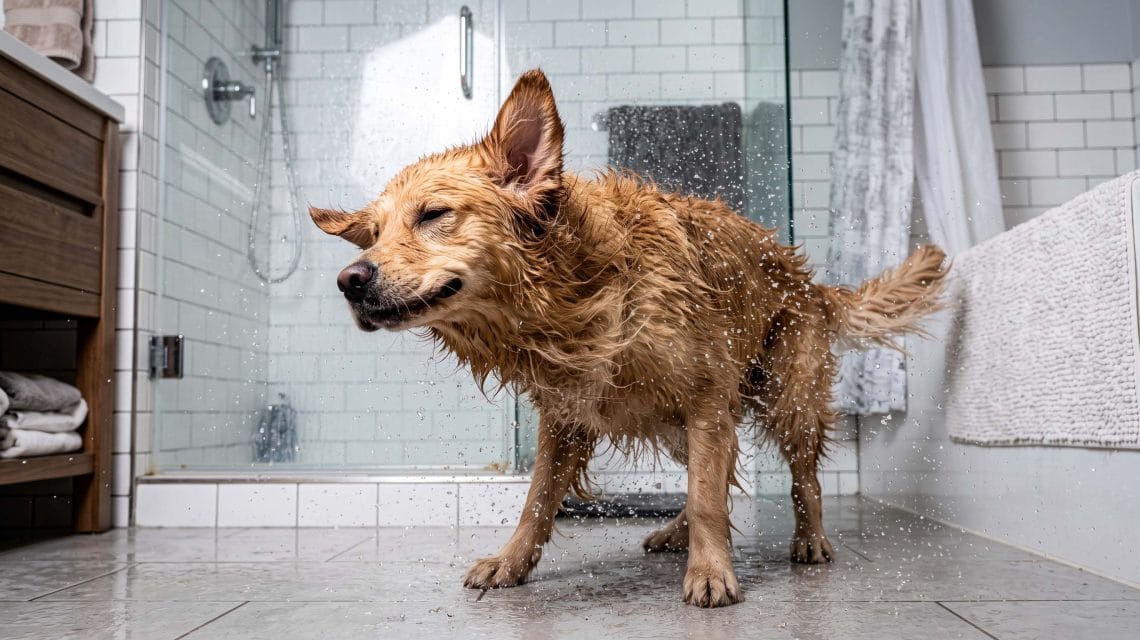
Your dog steps out of the tub, shakes off in a spray that somehow reaches every wall in the bathroom, and then takes off through the house like something set them on fire. Why does my dog run around crazy after a deshedding bath, especially compared to a regular quick rinse that doesn’t seem to trigger the same reaction? There’s a real explanation behind it, and understanding it makes those chaotic five minutes a lot less confusing.
We’ve heard this question from countless pet owners who assumed something was wrong the first time they witnessed a full-blown post-bath zoomie session. This guide covers why does my dog run around crazy after a deshedding bath specifically, what’s different about deshedding sessions compared to regular baths that makes this reaction more intense, the actual behavioral science behind it, and when the behavior might signal something worth watching more closely.
The Real Explanation for Why Does My Dog Run Around Crazy After a Deshedding Bath
Veterinary behaviorists commonly refer to this phenomenon as FRAP — Frenetic Random Activity Periods — and it’s not unique to bath time, though bathing is one of the most reliable triggers. FRAP episodes happen when a dog releases built-up energy or tension in a sudden, uncontrolled burst, and several factors specific to deshedding baths make them a particularly strong trigger compared to other everyday activities.
Deshedding baths typically take significantly longer than a quick rinse. Your dog stands still, gets handled extensively through brushing and massaging shampoo into thick undercoat, and experiences an extended period of restraint that’s genuinely more demanding than the average bath. Even a well-behaved, relaxed dog accumulates a certain amount of physical and mental tension simply from holding still for that long, and the zoomies afterward function as a release valve for exactly that tension.
Why Deshedding Baths Specifically Trigger More Intense Reactions
Here’s the piece that explains why does my dog run around crazy after a deshedding bath more dramatically than after other bath types: the physical sensation of a deshedding bath is more intense than a standard wash. Deshedding shampoos are massaged deeper into the coat to reach the undercoat, brushing often happens during the bath itself, and the whole process involves considerably more skin stimulation and handling than a quick soap-and-rinse session. That additional stimulation, combined with a longer overall duration, creates more accumulated sensory input for your dog’s nervous system to process — and running it off afterward is a genuinely normal way that process resolves.
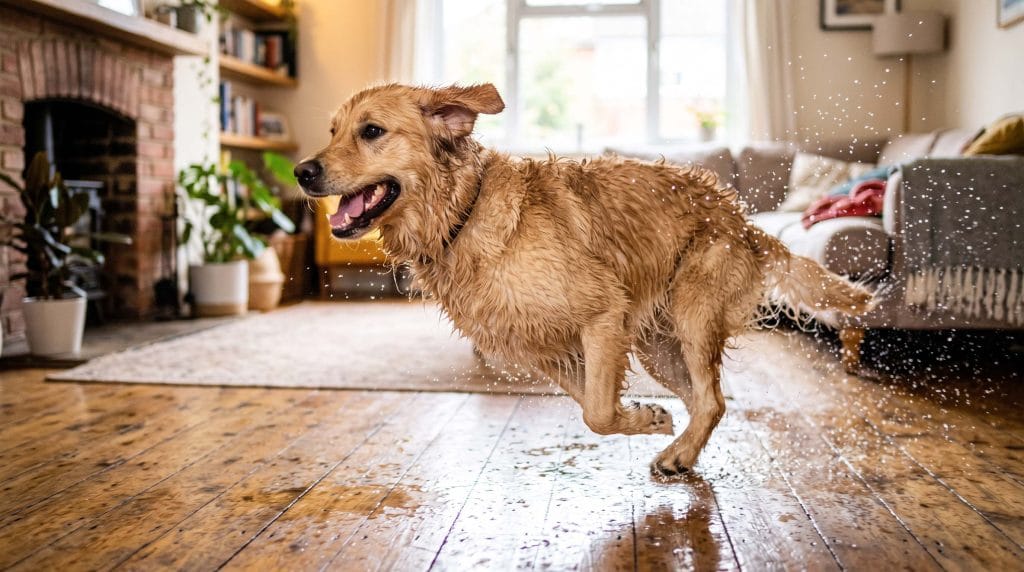
Does Temperature Change Explain Why Does My Dog Run Around Crazy After a Deshedding Bath?
Temperature plays a real role here too, and it’s worth understanding on its own. Warm bath water followed by exposure to room-temperature air creates a noticeable temperature shift, and many behaviorists believe this sudden change contributes to the burst of activity that follows, similar to how humans sometimes feel an urge to move around after stepping out of a hot shower into a cooler room.
This effect compounds with deshedding baths specifically because these sessions often run slightly longer in warm water, given that warm water improves shedding release, as covered in our guide on whether warm water increases shedding during baths. More time in warm water followed by the same temperature drop afterward means a more pronounced version of this same physiological trigger.
Breed and Temperament Differences in Post-Bath Zoomies
Not every dog reacts to a deshedding bath the same way, and a few factors influence how dramatic the response tends to be.
High-energy breeds — Border Collies, Retrievers, working breeds in general — tend to show more intense and prolonged zoomie episodes, simply because they have more baseline energy available to release once the restraint of bathing ends.
Anxious or nervous dogs sometimes show more dramatic post-bath reactions specifically because the bath itself was a higher-stress experience, and the zoomies represent a bigger release of accumulated tension compared to a dog who found the process relatively neutral.
Older or calmer dogs may show a much milder version of the same behavior, sometimes just a quick shake and a short trot around the house rather than a full sprinting episode, though the underlying mechanism is the same.
Double-coated breeds going through deshedding baths specifically tend to show more noticeable reactions than short-coated breeds, likely connected to the longer bath duration and more intensive handling these breeds require to properly work through a dense undercoat.
Comparison Table: Factors That Influence Post-Deshedding-Bath Zoomies
| Factor | Effect on Zoomie Intensity |
|---|---|
| Bath duration | Longer baths generally produce more intense zoomies |
| Water temperature | Warmer water tends to increase the temperature-shift trigger |
| Dog’s baseline energy level | Higher energy breeds show more prolonged episodes |
| Anxiety during bathing | More stress during the bath often means bigger release afterward |
| Amount of physical handling | More brushing and massaging during the bath increases sensory buildup |
| Coat type | Double-coated breeds with longer bath sessions show more noticeable reactions |
Is Running Around Crazy After a Deshedding Bath Ever a Problem?
For the overwhelming majority of dogs, the answer to why does my dog run around crazy after a deshedding bath points to something completely normal and harmless. That said, a few situations are worth paying attention to.
Zoomies that lead to your dog running into furniture or walls repeatedly could indicate the environment isn’t safe for this level of activity, particularly on slippery, freshly-mopped, or cluttered floors. Clearing a safe space before and immediately after baths reduces injury risk during these episodes.
Zoomies combined with signs of genuine distress, like excessive panting beyond what activity alone would cause, whining, or attempts to hide rather than run freely, may indicate the bath itself was more stressful than typical, which is worth addressing through gentler handling or a slower introduction to the bathing process.
Extremely prolonged episodes that don’t settle within a few minutes occasionally warrant a conversation with a vet, particularly if this represents a new or escalating pattern rather than a consistent, predictable post-bath response.
Zoomies in senior dogs with joint issues deserve some caution, since the sudden burst of activity can occasionally aggravate existing mobility problems. Gently redirecting this energy into a calmer walk shortly after bathing can help without eliminating the release entirely.
For the vast majority of healthy dogs showing typical, brief zoomie episodes, this is simply a normal behavioral release and doesn’t need intervention beyond ensuring the immediate environment is safe.
How to Manage the Chaos Without Trying to Stop It Entirely
Understanding why does my dog run around crazy after a deshedding bath doesn’t mean you need to eliminate the behavior — it’s a healthy release, after all. A few practical adjustments make the aftermath more manageable.
Clear a safe space before starting the bath. Knowing the zoomies are coming means you can proactively move breakable items, close doors to rooms with hazards, and generally prepare the space rather than scrambling reactively once your dog bolts.
Have towels ready and accessible. A significant part of post-bath chaos involves your dog trying to dry themselves through vigorous shaking and rolling. Having towels within reach lets you catch some of that moisture before it ends up on furniture and floors.
Consider bathing in a space with easy-to-clean flooring. If your dog’s zoomie route regularly passes through a specific area, bathing at a time when that space is clear of rugs or delicate items reduces cleanup afterward.
Let the energy run its course rather than trying to restrain it. Attempting to physically stop or calm a dog mid-zoomie often prolongs the episode or adds stress, since you’re now introducing additional restraint right after a bath that already involved plenty of it.
Follow up with a calm activity once the initial burst settles. A short walk or a calm chew session shortly after the zoomies naturally taper off helps transition your dog back to a settled state more smoothly.
Common Misunderstandings About Post-Bath Zoomies
Assuming the behavior means the bath was traumatic. In most cases, it’s the opposite — a release of built-up tension after a longer, more involved process, not necessarily evidence of a negative experience.
Trying to stop the zoomies entirely with training. Since this is a natural physiological release, attempting to eliminate it entirely isn’t necessary and can create more stress than it resolves. Managing the environment matters more than trying to suppress the behavior.
Assuming all dogs will show this reaction the same way. As covered above, breed, temperament, age, and the specific circumstances of the bath all influence how dramatic or mild this response looks.
Confusing zoomies with genuine distress signals. Recognizing the difference between exuberant, playful chaos and actual signs of anxiety or discomfort matters for knowing whether adjustment to your bathing routine is warranted.
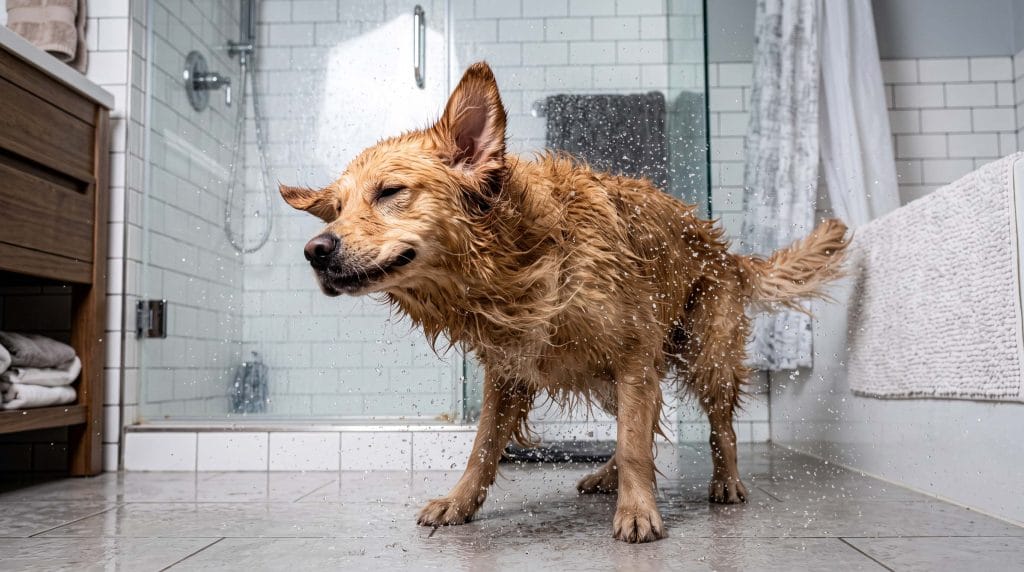
Kevin’s Story — Learning to Expect and Prepare for the Chaos
One of the pet owners in our community, Kevin, has a Golden Retriever named Otis and was genuinely alarmed the first time he witnessed Otis’s reaction to a full deshedding bath. Otis, normally a calm, easygoing dog, bolted out of the bathroom the moment the towel-drying finished and proceeded to do full laps around the living room at a speed Kevin hadn’t seen from him in years, ricocheting off the couch and nearly knocking over a side table in the process.
Kevin’s first instinct was concern — had something about the bath hurt Otis, or triggered some kind of panic response? A quick conversation with his vet clarified that this was, in fact, a textbook FRAP episode, made more intense than usual because Otis’s deshedding sessions ran noticeably longer than his regular baths, given how much undercoat needed to be worked through.
Once Kevin understood what was happening, he started preparing differently. He’d clear the living room of anything breakable before starting Otis’s bath, close the door to the kitchen where tile floors made for a slippery zoomie route, and simply let Otis run his laps without trying to intervene. The behavior never actually changed — Otis still does his post-bath sprint every time — but Kevin’s reaction to it shifted from alarm to something closer to mild amusement, since he now recognized it as a completely normal, even kind of endearing part of Otis’s bath routine rather than a warning sign.
🐾 Something Interesting About Timing and Zoomie Intensity
Here’s a detail that doesn’t come up often in behavioral discussions of this topic: the time of day a deshedding bath happens seems to influence how intense the resulting zoomies are. Dogs bathed in the morning, when baseline energy levels are naturally higher after a night of rest, tend to show more prolonged and energetic post-bath episodes than dogs bathed in the evening, when overall energy reserves are already somewhat depleted from a full day of activity.
This isn’t a formally studied phenomenon, but it’s a pattern that comes up repeatedly in conversations with groomers and dog trainers who’ve observed hundreds of post-bath reactions across different scheduling patterns. If managing the intensity of these episodes matters to you, particularly in homes with limited space or dogs prone to knocking things over, scheduling deshedding baths for later in the day, after your dog has already had a walk or some exercise, may produce a noticeably calmer aftermath than a first-thing-in-the-morning bath would.
Best Practices for Handling Post-Bath Energy Bursts
- Prepare the space beforehand, clearing breakables and hazards before starting a deshedding bath rather than reacting afterward.
- Schedule baths for times when your dog already has some exercise behind them, if managing zoomie intensity matters in your household.
- Keep towels accessible immediately after the bath to catch some of the shaking and rolling before it spreads moisture everywhere.
- Let the behavior run its natural course rather than attempting to restrain or stop it mid-episode.
- Watch for the difference between playful chaos and genuine distress, adjusting your bathing approach if signs point toward the latter.
- Follow up with a calm activity once the initial energy burst naturally tapers off, helping your dog settle back into a relaxed state.
Since deshedding baths themselves are often the trigger for this behavior, understanding the full bathing process helps put the zoomies in context. Our guides on how often to use deshedding shampoo, does warm water increase shedding during baths, and drying a double-coated dog without a high velocity dryer cover the mechanics of what makes these baths more involved than a quick rinse in the first place.
Tools and Approaches That Make Bath Time (and Aftermath) Smoother
- Highly absorbent towels — reduces how much moisture ends up flung across your home during the post-bath run
- A designated “zoomie zone” — clearing one open, safe area beforehand gives your dog somewhere to release energy without hazards
- Non-slip mats near the bath exit — reduces slipping risk on hard flooring during that first burst of movement
- A short pre-bath walk — can take the edge off overall energy levels, potentially reducing zoomie intensity afterward
- Treats and calm praise once the episode settles — reinforces a smooth transition back to a relaxed state
What Behavioral Research Says About FRAP Episodes
Veterinary behaviorists have increasingly documented FRAP episodes as a normal part of canine behavior, distinct from anxiety-driven hyperactivity, and generally view them as a healthy release mechanism rather than a concern requiring intervention. Growing public interest in canine behavior science has helped shift public perception away from viewing post-bath zoomies as unusual or worrying, toward recognizing them as one of many normal ways dogs process and release built-up energy and tension.
Some trainers have started incorporating structured post-bath play sessions specifically designed to give dogs an outlet for this energy in a more controlled, engaging way, rather than leaving it to happen unpredictably around the house. This approach, still relatively niche but growing in grooming and training circles, treats the zoomie response as an opportunity for structured bonding rather than something to simply endure and clean up after.
Key Takeaways on Post-Bath Zoomies
- Post-bath zoomies are a normal behavioral release called FRAP, not typically a sign of distress
- Deshedding baths trigger more intense reactions due to longer duration and more physical handling
- Temperature change from warm water to room-temperature air contributes to the trigger
- High-energy breeds and dogs bathed earlier in the day tend to show more prolonged episodes
- Prepare a safe, clear space before bathing rather than reacting to the chaos afterward
- Let the behavior run its course instead of trying to restrain or stop it
- Watch for genuine distress signals as distinct from normal, playful zoomie behavior
FAQ — Why Does My Dog Run Around Crazy After a Deshedding Bath?
Why does my dog run around crazy after a deshedding bath specifically, more than a regular bath?
Deshedding baths take longer and involve more intensive brushing and handling than a standard wash, which builds up more physical and sensory tension that gets released through the post-bath zoomies.
Is it normal for my dog to run around wildly after every single bath?
Yes, this is a well-documented behavior called FRAP (Frenetic Random Activity Periods), and it’s considered a normal, healthy release of built-up energy rather than a cause for concern in most dogs.
Should I try to stop my dog from running around after a bath?
Generally, no. Trying to restrain or stop the behavior can add stress right after a process that already involved plenty of handling. It’s better to clear a safe space beforehand and let the energy run its natural course.
Does the time of day I bathe my dog affect how intense the zoomies are?
It may. Dogs bathed earlier in the day, before expending energy through walks or play, sometimes show more prolonged and energetic zoomie episodes than dogs bathed later after some exercise.
When should I be concerned about my dog’s behavior after a bath?
If the zoomies involve running into objects repeatedly, show signs of genuine distress like whining or trying to hide, or don’t settle within a few minutes, it’s worth mentioning to your vet, though this is uncommon for most dogs.
Embracing the Post-Bath Chaos
Why does my dog run around crazy after a deshedding bath really comes down to a normal, healthy release of built-up tension from a longer, more involved grooming process, combined with a noticeable temperature shift once the bath ends. It’s not a sign something went wrong — if anything, it’s evidence that your dog is processing and releasing the experience exactly the way healthy dogs are built to do.
Prepare your space, keep the towels handy, and let the zoomies run their course without trying to intervene. For more on what makes deshedding baths more intensive than a quick rinse in the first place, check out our guides on how often to use deshedding shampoo, does warm water increase shedding during baths, drying a double-coated dog without a high velocity dryer, and our complete shedding management guide to build a bath routine that keeps both you and your dog comfortable through every stage. 🐾
This article provides general behavioral guidance for informational purposes. If your dog shows signs of genuine distress, injury risk, or unusual behavior changes after bathing, consult a veterinarian or certified dog behaviorist.
