

 Animal Zoid Editorial Team
 Dogs can breathe fast while resting for normal reasons like dreaming or cooling down, but sometimes it signals pain, heart or lung disease, or anxiety. When you ask “why does my dog breathe fast while resting,” the real answer comes from context, breathing rate, and your dog’s overall behavior.
You might notice it at night: your dog is lying quietly on the couch, not hot, not just back from a walk, yet their chest moves quickly and you can hear each breath. It’s unsettling, and it’s hard to know if you should wait or call the vet. In this article, we’ll break down what counts as normal, which patterns are worrying, practical steps you can take at home, and when to seek urgent care. Think of it as gentle health “engine optimization” for your dog’s breathing and safety.
Why Does My Dog Breathe Fast While Resting? The Short Answer
At a basic level, why does my dog breathe fast while resting usually comes down to one of three categories:
- Normal physiology – dreaming, mild heat, excitement
- Emotional causes – stress, fear, or anxiety
- Medical problems – pain, fever, heart or lung disease, anemia, or other illness
A healthy adult dog typically breathes about 15–30 breaths per minute at rest. Puppies and small breeds may be a bit faster. Persistent rates over 35–40 breaths per minute while truly resting can be a red flag, especially if you see other signs like coughing, pale gums, or lethargy.
What “Why Does My Dog Breathe Fast While Resting” Really Means
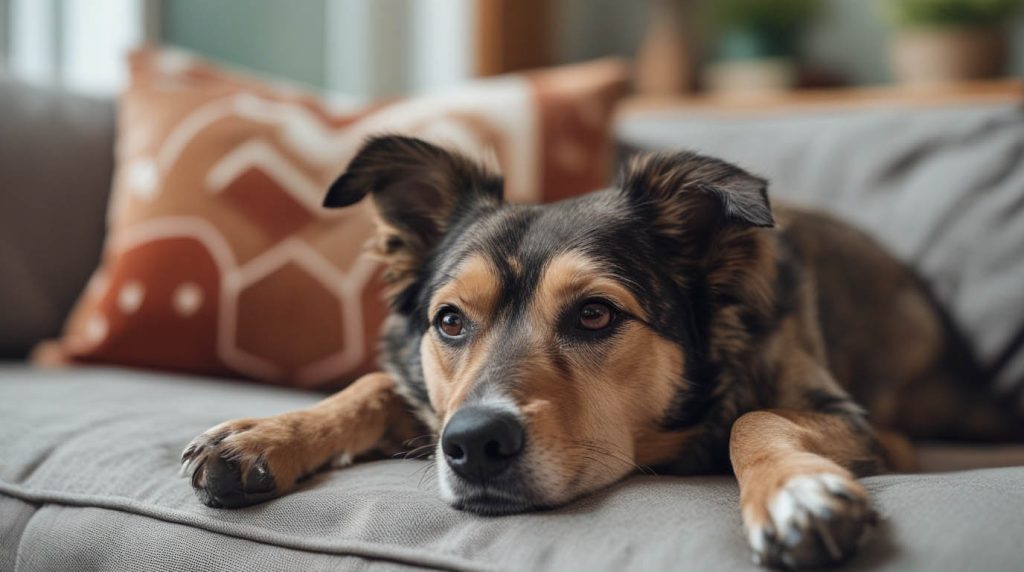
When you’re worried about why does my dog breathe fast while resting, you first need to decide if it’s:
- Panting (mouth open, tongue out, using breath to cool)
- Rapid quiet breathing (tachypnea: faster chest movements, mouth often closed)
Quick way to check your dog’s resting breathing rate
- Wait until your dog is sleeping or very relaxed, not right after exercise.
- Watch the rise and fall of the chest.
- Count breaths for 30 seconds and multiply by 2.
Quick Tip:
If the resting rate is consistently over 40 breaths per minute and your dog seems unwell, call your veterinarian.
For more detail on normal breathing vs. panting, see our guide: Dog Panting vs. Fast Breathing.
Normal vs. abnormal patterns
| Pattern | Likely Meaning |
|---|---|
| Fast breathing during a dream | Often normal REM sleep |
| Fast breathing in a hot room | Cooling down, panting |
| Fast breathing + coughing or collapse | Possible heart/lung emergency |
| Fast breathing + limping or injury | Pain response |
| Fast breathing + pacing, whining | Anxiety or fear |
Common Causes: Why Does My Dog Breathe Fast While Resting?
Normal causes behind why does my dog breathe fast while resting
Sometimes, why does my dog breathe fast while resting has an innocent answer:
- Dreaming: During REM sleep, the brain replays daily events. You may see twitching paws and quick breathing.
- Mild heat: Dogs don’t sweat like we do. Even indoors, they may breathe a bit faster to regulate temperature.
- Recent excitement: After play or a scare, the nervous system needs a few minutes to settle, even if your dog is lying down.
As long as your dog relaxes within several minutes and shows no other signs of distress, these are usually normal.
Pain, fever, or illness
Fast breathing at rest is also a common sign of discomfort. In my experience, this is one of the most overlooked reasons people ask why does my dog breathe fast while resting.
Look for:
- Restlessness, shifting position constantly
- Whining or reluctance to move
- Warm ears or body (possible fever)
- Limping or licking at a specific spot
Veterinarians often remind owners: “Pain can show up as changes in breathing before anything else.” If you suspect this, a vet visit is the safest next step.
Heart and lung disease
This is the area where why does my dog breathe fast while resting can be most serious.
Possible signs:
- Coughing, especially at night or after lying down
- Trouble getting comfortable, stretching the neck out to breathe
- Fatigue on walks, slowing down more than usual
- Swollen belly or weight loss
Some studies estimate that around 10% of dogs seen in general practice have some form of heart disease, especially in certain breeds. When the heart or lungs struggle, the body compensates by breathing faster, even during rest.
Related resources:
- Canine Dehydration symptoms
- Chronic Cough in Dogs
Anxiety and stress
Emotions can also answer why does my dog breathe fast while resting.
You might notice:
- Pacing, panting, and fast breathing when left alone
- Heavy breathing during storms or fireworks
- Clingy behavior, trembling, or lip licking
In these cases, your dog may look like they’re “resting” on the surface but are mentally on high alert. Our guides on Separation Anxiety in Dogs and Helping Dogs With Noise Phobias can be helpful here.
Breed and age factors
Certain dogs naturally breathe faster:
- Brachycephalic (flat-faced) breeds like Pugs, Bulldogs, and Shih Tzus have narrowed airways, so their “normal” may look fast and noisy.
- Puppies often breathe more quickly in sleep, especially after a busy day.
- Senior dogs may breathe faster due to reduced fitness, pain, or medical conditions.
Even so, sudden changes in any dog’s resting breathing are worth a check.
When “Why Does My Dog Breathe Fast While Resting” Is an Emergency
Here’s where things get serious. Sometimes why does my dog breathe fast while resting is the first thing you notice in a genuine emergency.
Seek urgent veterinary care if you see:
- Blue, gray, or very pale gums
- Breathing with belly heaving or sides pulling in hard
- Wide stance, neck stretched out, elbows away from body
- Collapse, extreme weakness, or confusion
- Resting rate over 60 breaths per minute that doesn’t drop
As many emergency vets say, “If you’re counting fast breaths at rest and your gut says something’s wrong, we’d always rather see your dog sooner than later.”
If you’re not sure, call your vet or nearest emergency hospital and describe exactly what you see and the breathing rate you counted.
Helping Your Dog When Why Does My Dog Breathe Fast While Resting Happens
So, how do you “implement” what you’ve learned about why does my dog breathe fast while resting in real life?
Step-by-step plan at home
- Stay calm and observe
Your dog reads your energy. Breathe slowly yourself and note what you see. - Count the breaths
Use the 30‑second method mentioned earlier. Write the number down. - Check the environment
- Is it too warm?
- Is your dog lying in direct sun or near a heater?
- Has something scary just happened (loud noise, argument, visitors)?
- Look for other symptoms
- Cough, gagging, or sneezing?
- Limp, visible injury, or tenderness to touch?
- Gum color changes, bloated abdomen, or vomiting?
- Decide on urgency
- Mildly fast breathing that settles in 10–15 minutes, no other signs: monitor.
- Persistent or worsening fast breathing, any red flags: call the vet.
Long-term strategies
Over time, you can reduce how often you worry about why does my dog breathe fast while resting by:
- Keeping your dog at a healthy weight
- Providing daily, appropriate exercise
- Using parasite prevention (heartworm, lungworm where relevant)
- Managing chronic pain with your vet’s help
- Creating safe spaces for anxious dogs and using training to build coping skills
Useful resources on our site:
Case Study: A Real “Why Does My Dog Breathe Fast While Resting” Story
I worked with a family whose 7‑year‑old Cocker Spaniel, Daisy, started breathing fast every evening while lying on the rug. They kept asking, “why does my dog breathe fast while resting only at night?”
At first, it seemed random. However, after some careful observation, a pattern appeared:
- Daisy panted and breathed fast during thunderstorms and when neighbors’ fireworks went off.
- On quiet nights, her breathing looked normal.
- She also hid under the table and licked her lips a lot.
Her vet ruled out heart and lung disease, then diagnosed noise anxiety. With a mix of:
- Sound desensitization training
- A quiet, safe den area in the house
- Vet‑recommended calming supplements
…Daisy’s nighttime breathing gradually improved. The question why does my dog breathe fast while resting turned from a medical concern into a behavior and environment issue they could manage.
Future Trends in Monitoring Why Does My Dog Breathe Fast While Resting
Technology is making it easier to track questions like why does my dog breathe fast while resting:
- Smart collars and harnesses that monitor breathing and heart rate
- Home cameras so you can review how your dog breathes when alone
- Telehealth platforms for quick vet consults with video
As these tools develop, early detection of problems like heart disease, chronic pain, and anxiety will only get better.
FAQ: Why Does My Dog Breathe Fast While Resting?
1. Why does my dog breathe fast while resting at night?
Nighttime fast breathing can stem from dreams, room temperature, pain that flares when lying down, or conditions like heart disease. Always look for patterns and other symptoms.
2. Why does my dog breathe fast while resting after a walk?
If they recently exercised, their body may still be cooling down. Breathing should gradually slow within 10–20 minutes. If it doesn’t, or if your dog collapses or seems distressed, call your vet.
3. Why does my dog breathe fast while resting but still eat and play?
Some dogs with early heart or lung disease, or mild anxiety, can seem “normal” otherwise. Persistent changes in resting breathing always deserve a vet check.
4. Is it normal for puppies to breathe fast while resting?
Puppies often breathe faster, especially during active dreaming. However, very high rates at rest plus coughing, lethargy, or poor weight gain are not normal.
5. Why does my dog breathe fast while resting with mouth closed?
Fast, shallow, closed‑mouth breathing (tachypnea) can signal pain, fever, or heart/lung issues more than simple panting does. Monitor closely and talk to your vet if it continues.
Conclusion: Understanding Why Does My Dog Breathe Fast While Resting
When you slow down and really watch, why does my dog breathe fast while resting becomes a valuable question, not just a scary one. Sometimes the answer is harmless—dreams, warm rooms, or recent excitement. Other times, your dog’s breathing gives you an early warning about pain, disease, or anxiety.
By counting breaths, scanning for other signs, and working closely with your veterinarian, you can catch problems sooner and support your dog’s comfort. Small changes in routine, environment, and long‑term care act like health engine optimization, helping your dog’s body run more smoothly.
If your dog’s resting breathing worries you, don’t wait for it to “get really bad.” Start a simple log tonight, read through related guides like Dog Panting Stress: Is Your Dog Anxious?, Puppies and Separation Anxiety, and How to Calm a Hyper Puppy, and call your vet with your observations. You know your dog better than anyone; listening to that little voice of concern is often the best first step.
