

 Animal Zoid Editorial Team
 Introduction: Spotting Symptoms of Onion Poisoning in Dogs Before It’s Too Late
You never forget the first time you see the symptoms of onion poisoning in dogs up close. A dog that seemed fine after stealing leftovers suddenly refuses food, lies down and won’t get up, and looks at you with pale gums and tired eyes. At first, it doesn’t even cross your mind to connect that change to the onion‑covered steak from two days ago.
That gap—between the sneaky exposure and the delayed illness—is exactly why learning the symptoms of onion poisoning in dogs matters so much. Onions don’t just upset a dog’s stomach. They can quietly destroy red blood cells, cause hemolytic anemia, and, in severe cases, lead to organ failure if you don’t act quickly enough.
In this comprehensive, practical guide, you’ll learn:
- What onion toxicity actually is and how it works
- The early and late symptoms of onion poisoning in dogs you can spot at home
- Real‑world examples of how dogs end up sick from everyday foods
- Step‑by‑step actions to take the moment you suspect a problem
- Prevention strategies so you (hopefully) never need this information in an emergency
Throughout, we’ll lean on up‑to‑date veterinary resources and real case patterns, so you get not just theory, but usable, trustworthy insight.
What Are the Symptoms of Onion Poisoning in Dogs?
Before we break down specific symptoms of onion poisoning in dogs, it helps to understand what onion toxicity actually means.
Onions (and their relatives like garlic, leeks, and chives) belong to the Allium family. They contain sulfur‑containing compounds that, in dogs, cause oxidative damage to red blood cells. Over time, those damaged cells break down, and the dog develops hemolytic anemia—their body can’t carry enough oxygen.
The Merck Veterinary Manual – Onion and Garlic Toxicity explains that this damage leads to the formation of Heinz bodies inside red blood cells, making them fragile and prone to destruction.
Because of that, the symptoms of onion poisoning in dogs usually fall into two broad categories:
- Gastrointestinal signs that may appear quickly
- Anemia‑related signs that often show up a day or more later
Let’s walk through both phases in detail.
Early Symptoms of Onion Poisoning in Dogs (First 24 Hours)
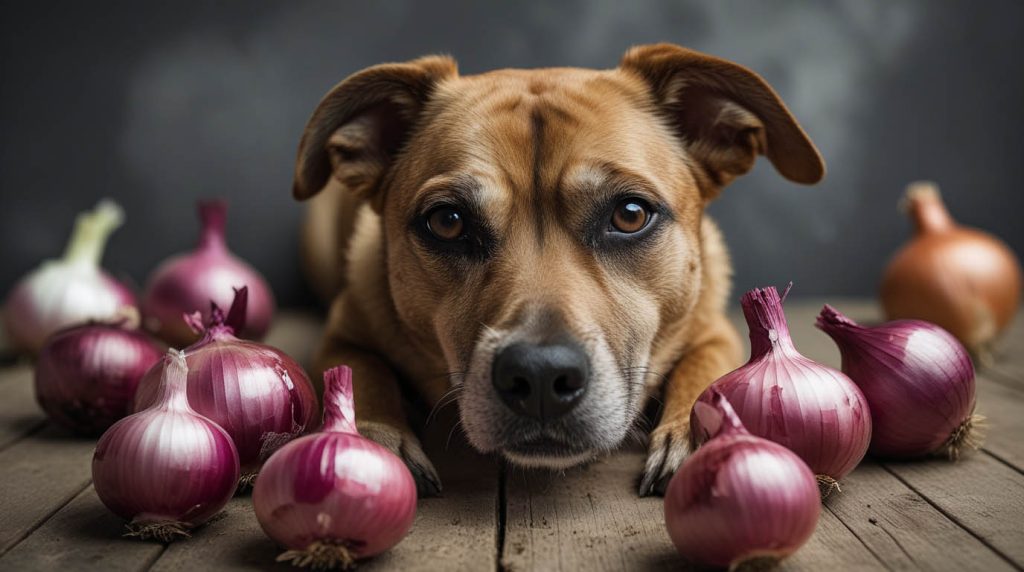
The early symptoms of onion poisoning in dogs usually relate to the digestive system. They may appear within a few hours or up to a day after your dog eats onion‑containing food.
Gastrointestinal Symptoms of Onion Poisoning in Dogs
Right after ingestion, common signs can include:
- Vomiting – sometimes repeated, with food or yellow bile
- Diarrhea – loose or watery stools, possibly with mucus
- Loss of appetite – your dog turns away from food or eats much less
- Drooling (hypersalivation) – more saliva than usual, sometimes with lip‑smacking
- Abdominal discomfort – restlessness, whining, or a hunched posture
At this stage, a lot of owners think, “They just got into rich leftovers” and move on. However, if you know onions were involved, you should already be thinking about the potential for later, more serious symptoms of onion poisoning in dogs.
Mild Behavior Changes as Early Symptoms
Even early on, you might notice:
- Your dog seems quieter than usual
- They choose to lie down instead of play
- Short walks tire them out more than normal
Individually, those signs can be easy to dismiss. Together—and combined with recent onion exposure—they form the first half of the onion toxicity picture.
Delayed Symptoms of Onion Poisoning in Dogs (1–5 Days Later)
Here’s where onion toxicity gets tricky. Many of the most dangerous symptoms of onion poisoning in dogs don’t show up until one to several days after the exposure. By then, it’s easy to forget about the onion‑laden stew or stir‑fry.
Anemia‑Related Symptoms of Onion Poisoning in Dogs
As red blood cells break down and anemia develops, you may see:
- Lethargy and weakness
Your dog sleeps more, moves slowly, and loses interest in favorite activities. - Pale or white gums
Lift your dog’s lip and look at the gums. Healthy gums are bubble‑gum pink. In anemia, they can look very pale or almost white. - Elevated heart rate (tachycardia)
The heart beats faster to move the reduced oxygen supply around the body. - Rapid or labored breathing
You may see fast, shallow breaths even at rest, or excessive panting. - Exercise intolerance
Your dog may lag behind on walks or stop to lie down sooner than usual.
More Severe Symptoms of Onion Poisoning in Dogs
With heavier exposures or delayed treatment, symptoms can escalate to:
- Dark red, brown, or tea‑colored urine
This comes from hemoglobin released when red blood cells break down. - Yellowish gums, eyes, or skin (jaundice)
A sign that the body is overwhelmed by red cell breakdown products. - Collapse or inability to stand
Extreme weakness due to lack of oxygen to muscles and brain. - Cold extremities or signs of shock
Paws and ears feel cold; your dog appears dazed or unresponsive.
When you reach this stage, symptoms of onion poisoning in dogs represent a medical emergency, not something to “wait and see” about.
Why Symptoms of Onion Poisoning in Dogs Are So Serious
At this point, you might ask, “Do a few onion‑related symptoms really justify a vet visit?” Let me explain why the answer is yes.
How Onion Toxicity Makes Symptoms of Onion Poisoning in Dogs So Dangerous
The core problem is simple: red blood cells carry oxygen. When onions destroy those cells faster than the body can replace them, every organ starts to struggle.
The Pet Poison Helpline – Onions notes that severe onion toxicity can cause life‑threatening anemia, organ damage, and even death without timely treatment.
As the anemia worsens:
- The heart works harder, trying to push what little oxygen is left
- The lungs work harder, trying to pull in more oxygen
- The brain and muscles get less oxygen, causing weakness, confusion, or collapse
- The kidneys and liver struggle to handle waste from red cell breakdown
So the symptoms of onion poisoning in dogs don’t exist in isolation. They represent the body’s desperate compensation attempts. If you ignore them, the whole system can crash.
Dogs and Breeds at Higher Risk of Severe Symptoms
Certain dogs may develop more severe symptoms of onion poisoning in dogs at lower doses, including:
- Smaller dogs, because a small amount of onion is a larger dose per kilogram
- Dogs with pre‑existing anemia or immune problems
- Dogs with G6PD deficiency‑like issues (less common but possible)
- Some reports suggest Akitas and Shiba Inus might be more sensitive, likely due to a higher level of certain hemoglobin types
Even so, any dog—large or small, purebred or mixed—can develop serious onion toxicity. That’s why the safest mindset is that no dog is exempt from the risk.
How the Symptoms of Onion Poisoning in Dogs Develop: A Simple Timeline
To put everything together, here’s a typical (simplified) progression:
0–24 hours after onion ingestion
- Vomiting, diarrhea
- Reduced appetite
- Mild lethargy
1–3 days after ingestion
- Noticeable lethargy and weakness
- Pale gums
- Faster heart rate and breathing
3–5 days after ingestion
- Dark urine
- Jaundice (yellow gums/eyes)
- Potential collapse or signs of shock
Of course, not every dog follows this exact pattern. Some may show almost no early GI signs and jump directly to anemia‑related symptoms of onion poisoning in dogs. Others may show milder anemia but still feel very unwell.
Either way, that timeline helps you connect the dots between “they got into onions” and “they suddenly look sick.”
Recognizing Symptoms of Onion Poisoning in Dogs at Home
You don’t need a medical degree to catch early symptoms of onion poisoning in dogs—you just need to know what to look for and practice a few simple checks.
Watching Behavior and Energy as Symptoms of Onion Poisoning in Dogs
Behavior is often your earliest clue. Ask yourself:
- Has my dog’s energy level changed noticeably in the last day or two?
- Are they suddenly less interested in walks or play?
- Do they seem clingier, quieter, or restless for no obvious reason?
Because you know your dog’s normal habits better than anyone, you’ll often spot changes before a vet ever could. When changed behavior lines up with a recent onion exposure, pay attention—this might be the first hint of developing symptoms of onion poisoning in dogs.
Checking Gums, Breath, and Urine for Symptoms of Onion Poisoning in Dogs
A few quick physical checks can give you powerful information:
- Gum Color
- Lift your dog’s lip and look at the gums.
- Healthy: bubble‑gum pink.
- Concerning: very pale, white, or yellowish.
- Breathing
- Watch their chest at rest for 15–30 seconds.
- Is it moving faster or more shallowly than usual?
- Is there noisy or labored breathing?
- Urine Color
- When your dog urinates, glance at the color.
- Dark red, brown, or cola‑colored urine can signal red blood cell breakdown.
In my experience, owners who learn these quick checks spot worrying symptoms of onion poisoning in dogs much sooner—and that early detection can mean a less intense treatment and better outcomes.
Step‑by‑Step Response to Symptoms of Onion Poisoning in Dogs
So, what should you do when you notice potential symptoms of onion poisoning in dogs, or if you know your dog ate onion‑containing food?
When to Call the Vet About Symptoms of Onion Poisoning in Dogs
You should call your vet or an emergency clinic immediately if:
- Your dog ate a moderate or large amount of onions or onion‑rich food
- You see both GI signs (vomiting/diarrhea) and behavior changes
- You notice pale gums, dark urine, or clear weakness
- Symptoms appear or worsen over 24–72 hours after known onion exposure
You can also call a dedicated poison hotline like:
Have this information ready:
- Dog’s weight, age, and health history
- What they ate (type of onion or dish), how much, and when
- Any current symptoms of onion poisoning in dogs you’ve noticed
What Your Vet May Do for Symptoms of Onion Poisoning in Dogs
At the clinic, your vet might:
- Perform a physical exam
- Check gum color, heart rate, breathing, temperature, and hydration.
- Run bloodwork
- Complete blood count (CBC) to measure red blood cell levels.
- Look for Heinz bodies under the microscope.
- Check urine
- Look for hemoglobin, blood, or concentrated urine.
- Start treatment
- IV fluids to support circulation and kidney function.
- Oxygen therapy if anemia causes breathing difficulty.
- In severe cases, a blood transfusion to replace destroyed red cells.
The American Veterinary Medical Association – Pet Food Safety notes that prompt veterinary care is crucial when pets ingest toxic foods like onions, because waiting can significantly worsen outcomes.
It may feel scary to take your dog in “just in case,” but with symptoms of onion poisoning in dogs, that caution can literally save their life.
Common Mistakes Owners Make About Symptoms of Onion Poisoning in Dogs
Even caring, experienced owners get caught off‑guard by onion toxicity. Here are mistakes I’ve seen again and again.
Mistake 1: Assuming Only Raw Onions Cause Symptoms
Many people think that symptoms of onion poisoning in dogs only follow raw onion ingestion. In reality:
- Cooked onions (grilled, sautéed, roasted, caramelized) are still toxic
- Onion powder in gravies, soups, and seasoning mixes is often worse because it’s concentrated
- Leftover dishes like stew can contain large amounts of onion without looking obvious
So, don’t relax just because the onions were “well cooked.” Your dog’s body doesn’t care whether the onions were raw or in a gourmet sauce.
Mistake 2: Ignoring Symptoms Because the Dog “Seems Fine”
Another big trap: the delay.
Your dog steals onion‑rich food on Monday. By Tuesday, they might show mild vomiting, but by Wednesday the GI signs fade. Then on Thursday, the symptoms of onion poisoning in dogs related to anemia start—lethargy, pale gums, dark urine—and by then, people often don’t connect back to Monday’s mishap.
If you know an onion exposure happened, keep that event in mind for at least 3–5 days, even if your dog appears okay at first.
Mistake 3: Underestimating Repeated Small Exposures
Owners sometimes say, “We only give a little bite from the table each night.” The problem is that onion toxicity is dose‑dependent over time.
Repeated small servings of onion‑seasoned food can build up to a toxic total dose, especially in small dogs. The symptoms of onion poisoning in dogs may appear gradually, which makes it even easier to overlook the true cause.
Best Practices to Prevent Symptoms of Onion Poisoning in Dogs
Of course, the easiest way to handle symptoms of onion poisoning in dogs is simply to avoid them altogether. That means changing a few kitchen and feeding habits.
Kitchen and Feeding Habits That Prevent Symptoms of Onion Poisoning in Dogs
You can dramatically lower risk if you:
- Keep dogs out of the kitchen while you cook with onions.
Use baby gates, crates, or a solid “place” command. - Secure trash and compost bins.
Onions, peels, and onion‑laden scraps in the trash are classic culprits. - Never let dogs lick plates or pans that held onion‑containing foods.
That includes onion gravy, stir‑fry sauces, and onion‑topped meats. - Set aside plain portions for your dog before seasoning.
Cook the meat or vegetables, remove a small portion for your dog, then add onions, garlic, salt, and sauces for yourself. - Teach kids and guests the rules.
Make sure everyone knows that even sharing “small” onion‑seasoned bites can lead to serious symptoms of onion poisoning in dogs.
Safe Treat Alternatives That Avoid Symptoms of Onion Poisoning in Dogs
Instead of sharing onion‑rich meals, try:
- Plain cooked chicken, turkey, or lean beef (no seasoning)
- Steamed or raw carrots, green beans, or peas
- Small amounts of dog‑safe fruits like blueberries or apple slices (no seeds)
- Vet‑approved commercial treats
The American Kennel Club – Human Foods Dogs Can and Can’t Eat offers a great starter list for safe alternatives.
By building a go‑to list of dog‑safe foods, you make it much easier to avoid any symptoms of onion poisoning in dogs in the first place.
Tools and Resources to Understand Symptoms of Onion Poisoning in Dogs
You don’t need to rely on memory alone. Several excellent resources can support you whenever you worry about the symptoms of onion poisoning in dogs or any other food risk.
Trusted Websites and Hotlines
Bookmark these:
- ASPCA Animal Poison Control Center – Toxic food lists, onion toxicity info, and a 24/7 hotline.
- Pet Poison Helpline – Onions – Detailed explanation of onion poisoning and what to do.
- Merck Veterinary Manual – Onion & Garlic Toxicity – Professional‑level toxicology details.
- PetMD – Can Dogs Eat Onions? – Vet‑reviewed article summarizing onion risks and symptoms.
How to Track Symptoms of Onion Poisoning in Dogs Effectively
If your dog has already eaten onions and your vet suggests home monitoring:
- Write down any vomiting, diarrhea, appetite changes, or weird behavior.
- Note the time and date for each sign.
- Check gum color and breathing rate daily for 3–5 days.
- Call your vet immediately if you see pale gums, dark urine, or increased lethargy.
This simple tracking turns vague worry into concrete data, which helps your vet evaluate any developing symptoms of onion poisoning in dogs faster and more accurately.
Case Studies: Real Symptoms of Onion Poisoning in Dogs
Sometimes real‑life stories stick with us better than lists. Here are two composite cases based on common patterns.
Case Study 1: The Leftover Stew
Bella, a 30‑lb mixed breed, loved cleaning up the kids’ plates. One night, the family had beef stew made with a generous amount of onions. Several plates went down to Bella, full of gravy and bits of onion.
Within 24 hours, Bella started vomiting and had loose stool. Her owners blamed “rich food” and decided to wait. Two days later, she seemed very tired and didn’t want to go for her usual walk. When they finally checked her gums, they were pale.
At the vet, bloodwork confirmed anemia consistent with onion toxicity. Bella needed several days of supportive care, but she recovered. Her owners now recognize even mild GI upset as early symptoms of onion poisoning in dogs when onions are involved.
Case Study 2: The Daily Taste Test
Rocky, a 55‑lb Labrador, got a small share of table food every night—often bits of onion‑seasoned chicken, stir‑fry, or pasta. Over months, he slowly became more lethargic. His owners thought he was “just getting older.”
Eventually, a wellness check showed mild but significant anemia. When the vet asked about diet, the onion pattern came out. Once they stopped sharing onion‑seasoned foods, Rocky’s bloodwork improved and his energy came back.
In my experience, Rocky’s story is incredibly common: repeated small exposures cause subtle but real symptoms of onion poisoning in dogs that sneak up on everyone.
Future Trends in Detecting Symptoms of Onion Poisoning in Dogs
While the basic science behind onion toxicity is well established, new tools may soon help owners catch symptoms of onion poisoning in dogs even earlier.
Wearable Tech and Home Monitoring
Pet wearables that track:
- Activity levels
- Heart and breathing rates
- Sleep patterns
may eventually flag early changes that align with anemia, even before you notice them. If your dog’s activity level drops significantly a few days after they snuck food from the counter, a smart device might help draw your attention to subtle symptoms of onion poisoning in dogs.
Growing Awareness and Education
More vets, trainers, and shelters now include food toxicity education in their materials. Over time, that should mean:
- Fewer onion exposures
- Faster recognition when symptoms of onion poisoning in dogs appear
- Better overall outcomes for dogs who do get into trouble
We may not change the fact that onions are toxic to dogs, but we can keep getting better at preventing and catching problems early.
FAQ: Quick Answers About Symptoms of Onion Poisoning in Dogs
Q1: How long after eating onions do symptoms of onion poisoning in dogs appear?
Early GI symptoms can appear within hours, while anemia‑related symptoms of onion poisoning in dogs (like pale gums and weakness) often show up 1–5 days after ingestion.
Q2: What’s the first symptom of onion poisoning in dogs I’m likely to see?
Many dogs show vomiting, diarrhea, or loss of appetite first. However, in some cases, the first thing owners notice is unusual lethargy or pale gums a day or two later.
Q3: Can a dog recover fully after showing symptoms of onion poisoning?
Yes, many dogs recover completely—especially if you catch the symptoms of onion poisoning in dogs early and get prompt veterinary care. Severe cases may require hospitalization and even a blood transfusion.
Q4: Are cooked onions less likely to cause symptoms than raw onions?
No. Cooked onions are just as capable of causing symptoms of onion poisoning in dogs as raw onions. Onion powder and concentrated sauces may even be more dangerous per bite.
Q5: When should I go straight to the emergency vet for onion poisoning symptoms?
Go immediately if you see pale or white gums, dark or brownish urine, collapse, extreme weakness, or rapid breathing alongside a known onion exposure. These are severe symptoms of onion poisoning in dogs and need urgent care.
Conclusion: Act Fast When You See Symptoms of Onion Poisoning in Dogs
Onions might be a staple in your kitchen, but in your dog’s body, they become something entirely different: a slow, quiet threat to the red blood cells that keep every organ alive. That’s why understanding the symptoms of onion poisoning in dogs isn’t just “nice to know”—it’s a core part of protecting your dog’s health.
You now know how onion toxicity works, how early GI signs can quickly give way to anemia‑related symptoms, and why pale gums, lethargy, and dark urine should always set off alarm bells after onion exposure. More importantly, you’ve seen that the faster you recognize and respond to these symptoms of onion poisoning in dogs, the better the odds of a full recovery.
Here’s your call to action:
Tonight, take five minutes to talk with your household about onions and dogs. Decide which onion‑containing foods are “dog‑off‑limits,” secure your trash, and practice a quick gum‑color check on your dog so you know what “normal” looks like. Then, bookmark at least one poison control resource.
When you combine that awareness with the knowledge of symptoms of onion poisoning in dogs you’ve just learned, you turn a common kitchen hazard into a risk you can fully manage—giving your dog a safer, healthier life by your side.

 Symptoms of Onion Poisoning in Dogs: Full Guide