

 Animal Zoid Editorial Team
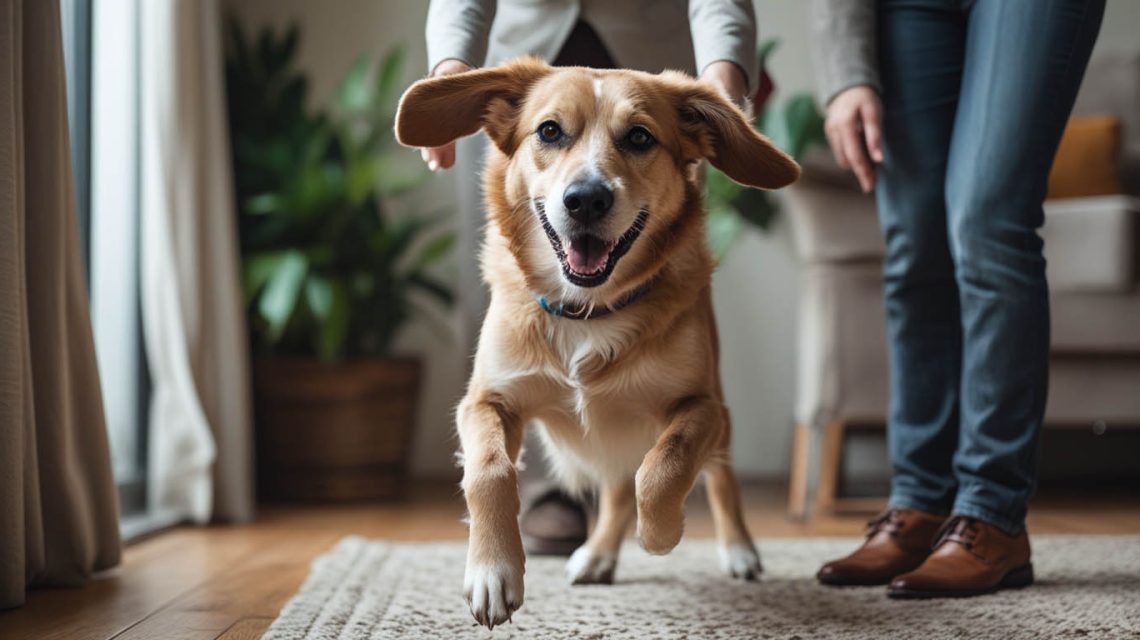
 You open the front door, your guest steps inside — and suddenly your dog launches themselves forward like an enthusiastic, fur-covered rocket. Sound familiar? If you’ve been desperately searching for answers on how to stop a dog from jumping on guests, you’ve landed in exactly the right place. One of our team members, Rachel, adopted a two-year-old Golden Retriever named Sunny three years ago and described her first dinner party as “genuinely chaotic” — three guests left with muddy paw prints on their clothing, one nearly went backwards over the doorstep, and Sunny appeared completely delighted by the entire situation. That experience sparked a months-long deep dive into exactly what causes jumping and, more importantly, what actually stops it reliably. Here’s what most dog owners don’t realize: jumping on guests isn’t aggression, defiance, or poor breeding. It’s enthusiasm — and enthusiasm that has been accidentally rewarded hundreds of times over. In this comprehensive guide, we’ll explain exactly why dogs jump on guests, walk through the training methods that genuinely work, show you how to involve your visitors in the process, address breed and age differences, cover the critical mistakes most owners make, and share Sunny’s complete transformation story. Whether your dog weighs 15 pounds or 150, these strategies work — and the results come faster than most people expect. We’ve also covered related challenges in our guide on how to stop a dog from pulling on the leash, which pairs beautifully with the techniques we’ll share here.
Why Dogs Jump — And Why It Matters for How to Stop a Dog From Jumping on Guests
Before we dive into solutions, understanding the behavioral root of jumping changes everything about how you approach training. Dogs jump on guests — and on everyone else — because jumping produces results. Specifically, jumping produces attention, and attention is one of the most powerful rewards in a dog’s world.
Think about what happens every single time your dog jumps on a guest. The guest reacts — they gasp, push the dog away, say “down,” laugh, or even bend over to greet the dog at their level. From your dog’s perspective, every single one of those reactions counts as a successful outcome. The dog jumped, the human responded, the dog received interaction. Mission accomplished.
According to the American Veterinary Society of Animal Behavior, inconsistent responses to jumping — where the behavior sometimes produces rewards and sometimes doesn’t — actually create the strongest reinforcement pattern in behavioral psychology. This is called a variable reward schedule, and it’s the same mechanism that makes gambling addictive. Your dog isn’t being stubborn. They’re being logical: jumping sometimes works, so it’s absolutely worth continuing to try.
Additionally, puppies greet other dogs by jumping up to lick their faces. When that instinct transfers to humans, the jumping makes complete social sense from your dog’s perspective. They’re trying to reach your face to say hello — they just don’t understand that humans find this considerably less charming than other dogs do.
Understanding this mechanism explains why knowing how to stop a dog from jumping on guests requires a consistent, whole-household approach — not just occasional corrections during training sessions.
How to Stop a Dog From Jumping on Guests — The Foundation Method
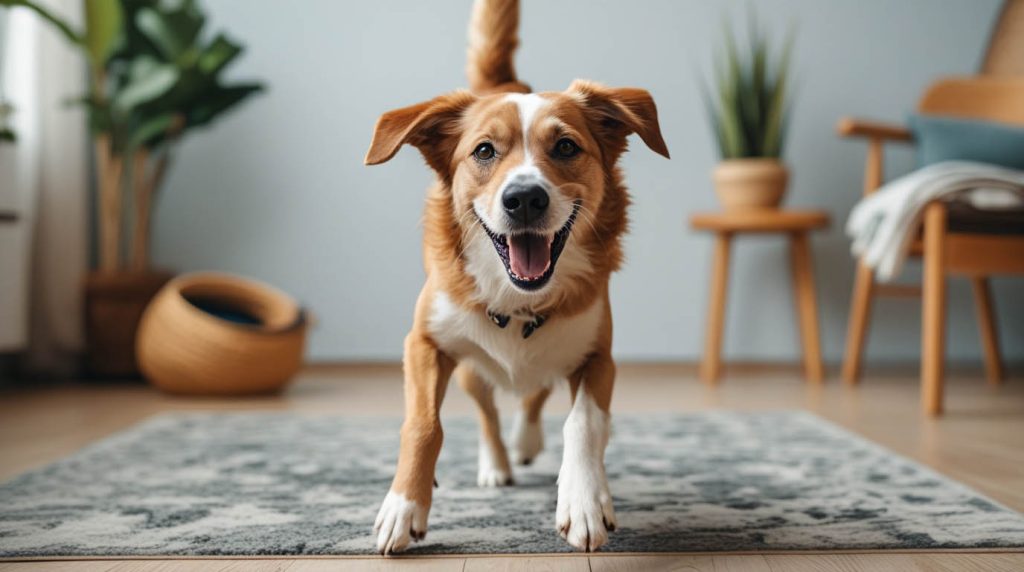
The most effective, science-backed approach to stopping jumping rests on one beautifully simple principle: jumping earns absolutely nothing, and four paws on the floor earns everything. No shouting, no physical correction, no complicated equipment. Just complete, immediate removal of the reward that jumping has always produced.
How to Stop a Dog From Jumping on Guests Using “Four Paws on the Floor”
This method forms the absolute bedrock of jumping prevention training, and we’ve seen it work consistently across breeds ranging from Chihuahuas to Saint Bernards — whose scale-specific grooming challenges we’ve addressed separately in our best deshedding brush for Saint Bernards guide:
Step 1: Turn away the instant jumping begins
The very moment your dog’s front paws leave the ground — not after they’ve already jumped, but the instant lift-off begins — turn your back completely. Cross your arms. Remove all eye contact. Deliver zero verbal response. You become, as far as your dog is concerned, a completely uninteresting statue.
Step 2: Wait for four paws without speaking
Stand with your back turned until your dog places all four paws back on the floor. Say nothing during this waiting period — any verbal response, even “no,” counts as attention and partially rewards the jumping. Simply wait. The first time may take 30 seconds. The twentieth time will take 2 seconds.
Step 3: Turn back calmly and mark the behavior
The moment all four paws touch the floor, turn back around with calm, neutral energy and mark the behavior with a quiet “yes” or clicker click. Deliver a high-value treat immediately at your dog’s nose level — not above their head, which encourages jumping back up.
Step 4: Add a sit as an alternative greeting
Once your dog reliably offers four paws on the floor when you turn back, add a “sit” request. Now the reward chain becomes: jumping produces nothing → four paws produces attention → sitting produces a treat and affectionate greeting. Your dog has a clear, rewarding pathway to the attention they’ve always wanted.
Step 5: Build the habit through repetition
Practice this sequence deliberately — ask a family member to approach repeatedly during dedicated 10-minute sessions, following the protocol every single time. Repetition in realistic scenarios builds the muscle memory that makes four-paws behavior automatic.
How to Stop a Dog From Jumping on Guests — The Visitor Protocol
Here’s the section most training guides skip entirely — and it’s arguably the most critical piece of the entire puzzle. Your training only produces lasting results if your visitors follow the same rules. We cannot overstate how important this is. One guest who laughs and pets your jumping dog while you’re simultaneously asking for “off” creates exactly the variable reward schedule that makes jumping so persistent.
Getting Every Guest to Help You Stop a Dog From Jumping on Guests
Over years of working with dog owners, we’ve developed a reliable visitor management system that makes guest cooperation achievable even with people who’ve never thought about dog training:
The 15-Second Doorstep Briefing
Before your guest steps inside, deliver a simple, friendly script: “When he jumps, just turn your back and ignore him completely. The moment he has four paws on the floor, you can say hello and pet him.” Most guests are genuinely relieved to have a role — many find jumping uncomfortable and appreciate clear guidance on how to respond.
Leash Management During Early Training
During the first four to six weeks of training, keep your dog on a leash when guests arrive. This gives you physical management while practicing the training in real-world conditions. Step gently on the leash — leaving enough slack for your dog to stand and move comfortably — so jumping becomes physically limited rather than just unrewarded. Four paws → treat. Sit → jackpot reward.
The Tether Strategy for Persistent Jumpers
For dogs with particularly intense jumping behavior around guests, install a short tether in your entryway — a leash attached to a wall anchor or heavy piece of furniture. When guests arrive, clip your dog to the tether and ask the guest to approach only when your dog is displaying calm behavior. This prevents jumping entirely during early training while still allowing your dog to practice calm, rewarding greetings in a genuine real-world context.
Teaching “Sit Means Greeting”
The most elegant long-term solution we’ve found is teaching your dog that sitting automatically produces the guest attention they’re seeking. When your dog sits — even for just two seconds — your guest immediately delivers calm petting and a warm greeting. Dogs figure this shortcut out with remarkable speed, especially food-motivated breeds like Beagles, whose unique training characteristics we’ve discussed in our best deshedding brush for Beagles guide.
Comparison Table — Training Methods to Stop a Dog From Jumping on Guests
| Method | Best For | Difficulty | Time to Results | Guest Involvement Needed | Our Rating |
|---|---|---|---|---|---|
| Four Paws / Turn Away | All dogs, all sizes | Easy | 3-6 weeks | ✅ Essential | ⭐⭐⭐⭐⭐ |
| Leash Management | Strong jumpers, early training | Easy | Immediate management | ✅ Helpful | ⭐⭐⭐⭐⭐ |
| Tether at Door | Persistent, high-energy jumpers | Easy | Immediate management | ✅ Helpful | ⭐⭐⭐⭐ |
| “Place” Command | Advanced training, hands-off arrival | Medium | 6-10 weeks | ❌ Optional | ⭐⭐⭐⭐⭐ |
| Sit for Greeting | Long-term polite greeting | Easy | 4-8 weeks | ✅ Essential | ⭐⭐⭐⭐⭐ |
| Knee-to-chest correction | Any dog | ❌ Not recommended | Varies | N/A | ❌ |
| Verbal “no” / “down” | Any dog | ❌ Provides attention reward | Rarely effective | N/A | ⭐ |
Advanced Strategy — Teaching “Place” to Completely Stop a Dog From Jumping on Guests
Once your dog has mastered basic four-paws-on-the-floor behavior with guests, the “place” command offers the most elegant and reliable advanced solution we’ve encountered. Rather than managing your dog at the door when guests arrive, you send them to a specific spot before the door even opens.
Building the “Place” Command to Stop a Dog From Jumping on Guests
Stage 1 — Introduce the mat: Place a specific mat or bed near your entryway. Lure your dog onto it with a treat and mark the moment all four paws make contact. Repeat until your dog moves confidently onto the mat on approach.
Stage 2 — Build duration: Once your dog goes to the mat reliably, add a hand signal to stay and gradually extend the time before delivering the reward. Start with five seconds, build to thirty seconds, then two minutes over multiple sessions.
Stage 3 — Add the verbal cue: Once your dog moves to the mat reliably, add “place” as the cue during the approach, just before they reach the mat.
Stage 4 — Proof with door sounds: Have a family member knock or ring the bell while your dog practices holding their place position. Reward generously for staying calm despite the excitement. This is the critical proofing stage that most owners skip.
Stage 5 — Practice with real arrivals: Send your dog to place before opening the door. Guests enter, greet you, settle — and only approach your dog after you release them from place with “okay.” When your dog is released, immediately ask for a sit before your guest interacts.
We’ve worked with dog owners whose jumping behavior was so severe they were genuinely considering restricting their dog to another room during all guest visits. After consistent “place” training paired with proper guest briefings, those same dogs were offering calm doorway greetings within five weeks. The transformation genuinely surprises most people who implement it.
How to Stop a Dog From Jumping on Guests — Mistakes Most Owners Make
Even deeply committed dog owners make training errors that slow progress or inadvertently reinforce the very behavior they’re trying to eliminate. Here are the most common mistakes we encounter — and exactly how to correct each one.
Why These Mistakes Prevent You From Stopping a Dog From Jumping on Guests
❌ Mistake 1: Using “down” to mean “stop jumping”
“Down” means lie on the floor in standard dog training. Using it to mean “stop jumping” creates genuine confusion that slows training for both commands simultaneously. Use “off” as your jumping correction cue and reserve “down” exclusively for the lie-down behavior.
❌ Mistake 2: Pushing the dog away with hands
Physically pushing a jumping dog feels like the natural correction — but from your dog’s perspective, it’s physical interaction, which is exactly the attention they sought by jumping. For some dogs, being pushed away even feels playful, which actively reinforces the jumping behavior.
❌ Mistake 3: Only training during planned sessions
Jumping on guests happens at the front door during real arrivals — not in a quiet, distraction-free training environment. If you only practice the protocol during scheduled sessions, your dog never builds the actual greeting habit in the context where it matters. Real arrivals must be training opportunities, not exceptions to the rules.
❌ Mistake 4: Allowing jumping sometimes
“He’s just excited about special guests” or “It’s fine when Uncle Tom visits because he likes it” — we hear these justifications constantly. However, every time jumping produces a reward from anyone, it refreshes the behavior for everyone. Consistency is the entire foundation of the training.
❌ Mistake 5: Abandoning training after two weeks
Jumping habits reinforced over months or years require 4-8 weeks of genuinely consistent training before reliable results emerge with most guests. Many owners experience a “two-week slump” where improvement seems to plateau — this is completely normal and actually precedes the most significant behavioral shift. Pushing through this period is everything.
For dogs who also show barking or reactive behavior toward visitors, these jumping prevention strategies complement the techniques we’ve outlined in our how to stop dog barking at strangers guide — reactivity and jumping frequently occur together and respond to the same positive reinforcement foundation.
How to Stop a Dog From Jumping on Guests — Exercise, Enrichment, and Arousal Management
Here’s an insight that most jumping-focused guides completely overlook: a genuinely tired dog jumps considerably less than an under-exercised one. This isn’t a complete solution, but managing your dog’s overall arousal level before guests arrive dramatically reduces the explosive jumping impulse at the door.
We have consistently observed that dogs receiving appropriate daily exercise — physically and mentally — arrive at guest arrival moments with meaningfully lower arousal levels. A dog who has had a brisk 45-minute walk, 15 minutes of play, and a food puzzle challenge that morning simply has less pent-up energy to express through jumping when the doorbell rings.
Practical pre-guest strategies:
- Exercise 45-60 minutes before guests arrive — a tired dog is a polite dog
- Feed a meal or puzzle feeder before arrivals to provide calming mental engagement
- Practice calm “place” behavior for five minutes before guests are expected to prime focus
- Avoid high-energy play in the 30 minutes immediately before guests arrive, as play arousal transfers directly into greeting arousal
Leash pulling during walks often co-occurs with jumping on guests — both behaviors involve high arousal and impulsive social excitement. Our comprehensive guide on how to stop a dog from pulling on the leash covers arousal management strategies that work in parallel with the jumping prevention techniques here.
Sunny’s Story — How Rachel Finally Learned How to Stop a Dog From Jumping on Guests
Let us share the complete transformation story we referenced at the beginning. Rachel adopted Sunny, a two-year-old Golden Retriever, from a rescue organization that described him as “enthusiastic and affectionate” — which turned out to be a generous understatement. Sunny jumped on every single person who entered the house, every single time, with identical enthusiasm regardless of whether they’d been gone five minutes or five days.
Rachel’s first attempts followed the instinctive approach: verbal corrections (“no,” “down,” “off”), physical guidance pushing Sunny away from guests, and increasingly desperate apologies to visitors. None of it worked. Sunny interpreted the verbal corrections as conversation and the pushing as play. The jumping continued unchanged.
Then she started working through our structured approach. Here’s exactly what happened:
- Week 1: Implemented the turn-away method strictly for every jumping instance — family members, guests, and Rachel herself. Initial results were messy — Sunny tried jumping more frequently as the familiar reward disappeared, a normal response called an extinction burst. Stayed consistent through it.
- Week 2: Added leash management for all guest arrivals. Started briefing guests at the door with the 15-second script before entry. Three guests followed the protocol perfectly. Two laughed and petted Sunny when he jumped anyway — Rachel politely but firmly reset the training from those moments.
- Week 3: Introduced the “sit for greeting” protocol. Sunny began offering spontaneous sits during greetings approximately 40% of the time — without any prompting — because sitting had consistently produced treats and affection while jumping had produced nothing.
- Week 4-5: Started “place” training. Sunny learned to go to his mat near the entryway and hold position while family members approached. Extended the training to real guest arrivals with the door-briefing protocol in place.
- Week 6: Rachel hosted a small dinner gathering — the same social situation that had been chaotic three years earlier. Sunny held his “place” position while three guests entered. When released, he approached with all four paws on the floor and offered a spontaneous sit to each person. Two guests commented that they’d never met a Golden Retriever who didn’t jump. Rachel reported that moment as “genuinely emotional.”
By the end of week six, Rachel measured approximately a 75% reduction in jumping incidents overall, with zero jumping during structured guest arrivals when the full protocol was followed. Sunny still occasionally jumped during high-arousal moments — unexpected arrivals, very excited guests who didn’t follow the protocol — but the default behavior had completely shifted from jumping to sitting. The transformation took consistency, patience through the frustrating middle weeks, and a commitment to the whole-household approach that made all the difference.
🐾 Team Pro-Tip: The “Doorbell Desensitization” Game
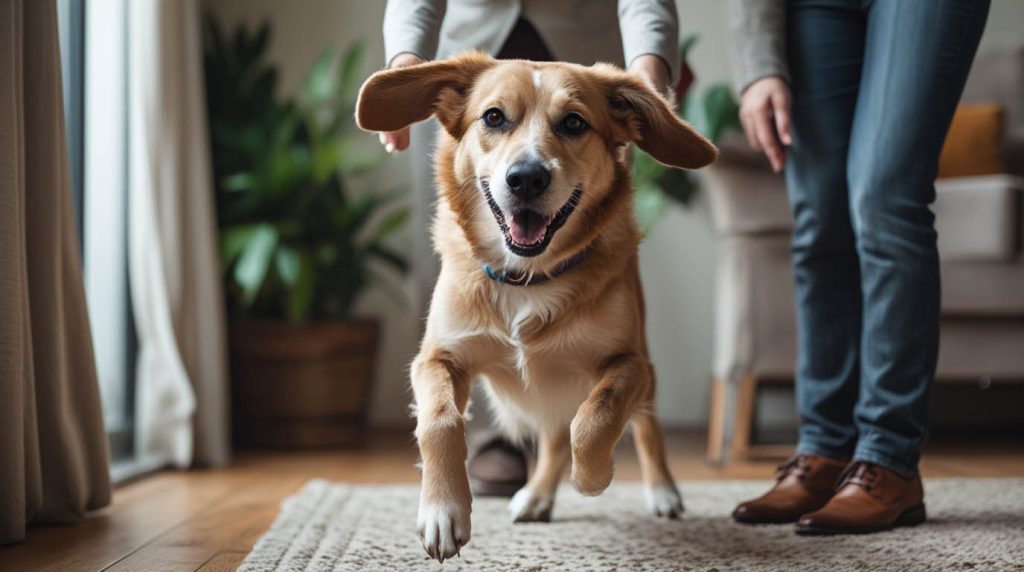
After years of working through jumping behavior with dog owners, we’ve developed a specific warm-up technique that dramatically reduces the doorbell-triggered arousal that launches most jumping episodes in the first place.
Most dogs who jump on guests don’t just respond to the guest — they respond to the doorbell as a conditioned excitement trigger. The bell rings → arousal spikes → jumping becomes inevitable. Interrupt this chain at the bell itself.
The Doorbell Desensitization sequence:
- Ring your doorbell (or have someone ring it) while your dog is calm and settled
- The moment the bell sounds, calmly say “place” and guide your dog to their mat
- Reward heavily for going to place after the bell — not after the door opens, but immediately when the bell sounds
- Repeat 10-15 times per session, multiple sessions per week
- Gradually add real arrivals — ring the bell, dog goes to place, guest enters to a calm dog already on their mat
Within two to three weeks of consistent practice, most dogs shift their doorbell response from “explosive excitement launching toward the door” to “move toward my mat because that’s what the bell means now.” We’ve seen this single technique reduce doorbell-triggered jumping by approximately 60-70% before any guest even steps inside.
✅ Key Takeaways Checklist
Track your jumping prevention progress:
- Understood jumping as an attention-seeking behavior, not aggression or dominance
- Implemented “four paws on the floor” as the non-negotiable household rule
- Using turn-away technique the instant jumping begins — not after
- Briefing every guest at the door before entry with the 15-second script
- Using a leash during guest arrivals during the first 4-6 weeks
- Using “off” for jumping and keeping “down” for lie-down only
- Teaching “sit” as the specific alternative greeting behavior
- Started “place” command training for advanced arrival management
- Implementing doorbell desensitization sessions 3x per week
- Established consistent rules across every household member
- Exercising dog 45-60 minutes before expected guest arrivals
- Incorporating daily mental enrichment to reduce baseline arousal
- Tracking progress with realistic 4-8 week timeline expectations
- Scheduled consultation with certified trainer if jumping persists beyond 10 weeks
Frequently Asked Questions About How to Stop a Dog From Jumping on Guests
How long does it take to stop a dog from jumping on guests?
Most dogs show meaningful, noticeable improvement within 2-4 weeks of consistent training, with reliable results in standard guest arrival situations achievable within 6-8 weeks. Adult dogs with years of reinforced jumping habits may require 10-12 weeks. The single biggest variable is consistency — a dog trained with identical protocols by every household member and properly briefed guests will progress dramatically faster than one experiencing inconsistent responses.
Should I use a knee to the chest or step on the dog’s paws to stop jumping?
We strongly recommend against both of these approaches. Physical corrections for jumping create anxiety and pain associations without teaching your dog what to do instead. Additionally, for many enthusiastic dogs, physical contact of any kind — including a knee to the chest — partially satisfies the attention-seeking drive that caused the jumping. Turn-away and reward-based methods consistently produce faster, more reliable, and longer-lasting results with zero risk of physical harm or damaged trust.
Why does my dog jump on some guests but not others?
Dogs read human body language with remarkable precision. Guests who arrive with high-energy, excited voices, direct eye contact, and forward-leaning body posture trigger significantly higher arousal — and therefore more jumping — than guests who enter calmly, avoid direct eye contact initially, and use low-key body language. This is also why asking guests to specifically ignore your dog initially produces such dramatically better outcomes than allowing immediate excited greetings.
My dog is small — does jumping really matter?
Absolutely, and this is one of the most common small-dog owner mistakes we encounter. Small dogs who jump scratch skin, damage hosiery, startle elderly visitors, and can genuinely knock over small children despite their modest size. Additionally, allowing small dogs to jump reinforces a habit that will only become more difficult to modify as the dog matures and the behavior becomes more deeply ingrained. The same training principles apply regardless of size — and starting earlier is always significantly easier than correcting an established habit later.
What if my dog jumps on guests even after consistent training?
If jumping persists despite genuinely consistent positive reinforcement training over 10-12 weeks, we recommend consulting a certified professional dog trainer (CPDT-KA) or veterinary behaviorist for a comprehensive behavioral assessment. In some cases, persistent jumping has an anxiety or hyperarousal component that benefits from a structured behavior modification plan — and occasionally, from veterinary support for underlying anxiety conditions. The how to stop dog barking at strangers guide in our behavior series explores anxiety-driven visitor responses in greater detail.
Stop a Dog From Jumping on Guests — Transform Your Greetings Starting Today
Learning how to stop a dog from jumping on guests doesn’t require professional training fees, complicated equipment, or months of misery at the front door. What it genuinely requires is understanding the behavioral mechanics behind jumping, applying consistent positive reinforcement principles every single time, getting your visitors on the same page, and maintaining patience through the inevitable setbacks that come with any meaningful behavioral change.
Throughout this guide, we’ve covered the behavioral science behind jumping, walked through the four-paws foundation method and visitor protocol step by step, reviewed the training methods comparison table, introduced the advanced “place” command system, highlighted the critical mistakes that slow progress, shared Sunny’s complete six-week transformation story, and introduced the doorbell desensitization technique that interrupts jumping before it begins.
The single most important thing to remember is this: your dog jumps because they love people and have learned that jumping produces the connection they crave. Your job isn’t to eliminate that wonderful enthusiasm — it’s to redirect it into a form that everyone can genuinely enjoy. A dog who sits adorably at a guest’s feet, tail sweeping the floor enthusiastically, earns more real affection than any jumping dog ever will.
Start today. Pick one technique — even just the turn-away method — and apply it with complete consistency for the next seven days. Combine it with the doorbell desensitization game and the 15-second guest briefing script, and the results will genuinely surprise you. For more dog behavior resources, explore our complete guides on how to stop a dog from pulling on the leash, how to stop dog barking at strangers, and our full dog care resource library. Your guests deserve a calm welcome. Your dog deserves to give one. 🐾
