

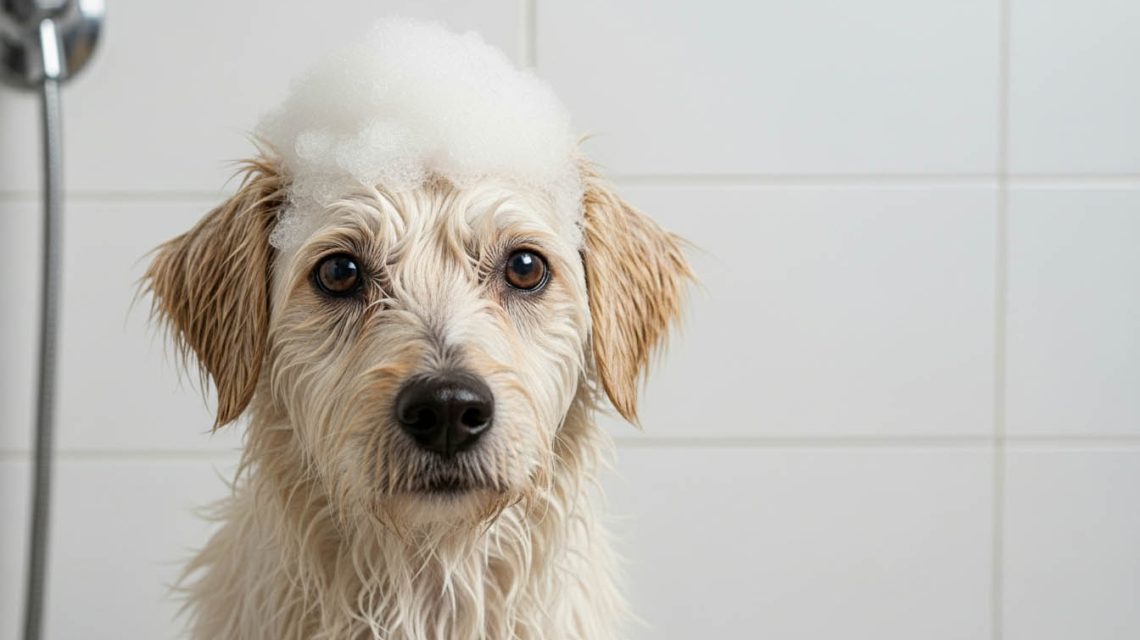
 Animal Zoid Editorial Team
 Most dog owners ask themselves the same question at least once a week: how often should you bathe your dog? The honest answer is that it genuinely depends on your dog’s breed, coat type, activity level, and skin health — and getting it wrong in either direction causes real problems. Bathe too rarely, and you’re dealing with odor, skin buildup, and potential infections. Bathe too frequently, and you strip the natural oils that keep your dog’s coat healthy and skin protected. We’ve worked through this question with hundreds of dog owners across dozens of breeds, and the nuance involved consistently surprises people who assumed there was one simple universal answer.
Here’s what this guide covers: the factors that determine the right bathing frequency for your specific dog, breed-by-breed and coat-type recommendations, the warning signs that you’re bathing too much or too little, a complete step-by-step bathing guide, how bathing frequency connects to your broader grooming routine — including tools like the best deshedding brush for Saint Bernards and the best deshedding brush for Beagles — and answers to the most common bathing questions we receive.
By the end, you’ll know exactly how often you should bathe your dog — and why that schedule will keep them healthier, more comfortable, and genuinely happier.
How Often Should You Bathe Your Dog — The General Rule
Let’s start with what veterinary dermatologists actually recommend as a baseline. According to the American Society for the Prevention of Cruelty to Animals (ASPCA), most dogs benefit from a bath approximately once every four to six weeks. This general guideline applies to the average healthy dog with a standard coat living an average indoor lifestyle.
However — and this is the critical point — “average” describes very few dogs. The moment you factor in coat type, breed characteristics, lifestyle, skin conditions, and activity level, that four-to-six-week baseline shifts significantly in either direction.
We’ve found that the most common mistake dog owners make isn’t bathing their dogs incorrectly. It’s applying a one-size-fits-all schedule without considering what their specific dog actually needs. A Border Collie who spends weekends hiking through muddy trails needs a completely different bathing schedule than a Maltese who lives primarily indoors and stays remarkably clean between groomings.
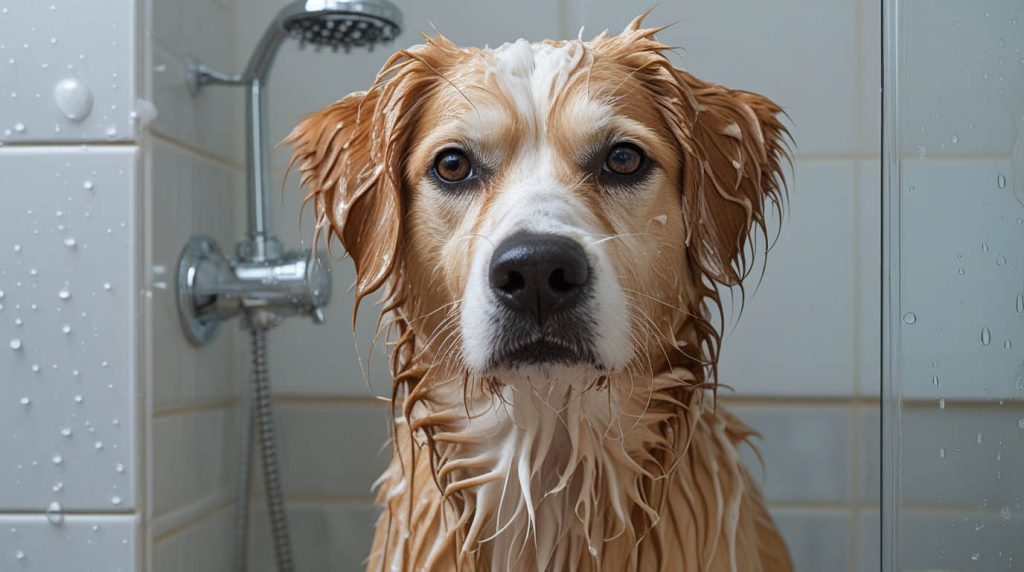
How Often Should You Bathe Your Dog Based on Coat Type
Coat type is the single most important variable in determining the right bathing frequency. Here’s our evidence-based breakdown:
Short, smooth coats (Beagles, Boxers, Dalmatians):
These breeds naturally repel dirt and distribute oils efficiently across the coat surface. Generally, every 6 to 8 weeks works well — sometimes even longer for dogs who stay relatively clean indoors. Overbathing short-coated breeds is actually more common than under-bathing, because owners assume the short coat needs frequent washing. It doesn’t. If you own a Beagle, our best deshedding brush for Beagles guide explains how proper brushing between baths keeps their coat in excellent condition without water.
Double coats (Huskies, German Shepherds, Saint Bernards, Golden Retrievers):
Double-coated breeds present a unique challenge. Their dense undercoat traps dirt, debris, and loose fur between baths — making a pre-bath brush-out absolutely essential before water touches the coat. Bathing frequency should land around every 6 to 8 weeks for indoor dogs, with adjustments upward during heavy seasonal coat blows. Our guides on how to stop Husky shedding in the house, how to stop German Shepherd shedding, and how to stop Golden Retriever shedding explain how bathing integrates into broader shedding management.
Long, silky coats (Shih Tzus, Maltese, Yorkshire Terriers):
These breeds need more frequent bathing — typically every 2 to 4 weeks — because their long coat collects dirt, debris, and environmental allergens quickly. Without regular washing, long coats mat and tangle in ways that cause discomfort and skin issues.
Curly and wavy coats (Poodles, Labradoodles, Portuguese Water Dogs):
Curly-coated breeds fall somewhere between long and double-coated dogs in terms of bathing needs. Every 4 to 6 weeks typically works well, though dogs with more outdoor lifestyles may need washing every 3 weeks. Their curls trap dirt and debris surprisingly effectively.
Hairless breeds (Chinese Crested, Xoloitzcuintli):
Counterintuitively, hairless breeds actually need the most frequent bathing — every 1 to 2 weeks — because without a coat to absorb and distribute skin oils, those oils accumulate directly on the skin surface and can cause clogged pores and skin irritation.
Wire and rough coats (Wire Fox Terriers, Border Terriers, Schnauzers):
The rough texture of wire coats naturally repels dirt to some extent. Every 6 to 8 weeks typically suits these breeds well, with attention to beard and eyebrow areas that collect food and debris between baths.
Comparison Table: How Often Should You Bathe Your Dog by Breed Type
| Coat Type | Example Breeds | Recommended Frequency | Key Consideration |
|---|---|---|---|
| Short / Smooth | Beagles, Boxers, Dalmatians | Every 6-8 weeks | Avoid overbathing — strips oils quickly |
| Double coat | Huskies, German Shepherds, Saint Bernards | Every 6-8 weeks | Always brush before bathing |
| Long / Silky | Maltese, Shih Tzu, Yorkshire Terriers | Every 2-4 weeks | Mats form quickly without regular washing |
| Curly / Wavy | Poodles, Labradoodles | Every 4-6 weeks | Curls trap debris effectively |
| Hairless | Chinese Crested, Xoloitzcuintli | Every 1-2 weeks | No coat to absorb oils — pores clog easily |
| Wire / Rough | Schnauzers, Border Terriers | Every 6-8 weeks | Beard and brow areas need extra attention |
| Working / Active dogs | Any breed | As needed + schedule | Mud, water, and outdoor exposure drive frequency |
How Often Should You Bathe Your Dog — Lifestyle Factors That Change Everything
Breed and coat type set your baseline bathing schedule, but lifestyle factors frequently push that schedule forward. Understanding these variables helps you make smart, real-time decisions rather than rigidly following a calendar.
How Often Should You Bathe Your Dog If They’re Highly Active
Outdoor and highly active dogs accumulate dirt, mud, pollen, bacteria, and environmental allergens far faster than indoor companions. A Labrador who runs through fields daily will genuinely need bathing every 2 to 3 weeks regardless of their typical coat recommendations. Conversely, an indoor Labrador with minimal outdoor exposure might comfortably go 6 to 8 weeks between baths.
Here’s the thing — activity-based bathing adjustments don’t always require a full bath. We recommend targeted spot cleaning between scheduled baths for active dogs. A warm damp cloth or dog-safe rinse wipe on muddy paws, belly, and legs removes surface contamination without the full water commitment. This approach extends the time between full baths while keeping your dog genuinely clean. Our how to stop Labrador shedding in the house guide discusses how activity levels affect the overall grooming routine for active breeds.
How Often Should You Bathe Your Dog With Skin Conditions
Skin conditions fundamentally alter bathing requirements — sometimes dramatically. Dogs with allergies, atopy, seborrhea, or recurring skin infections often benefit from more frequent medicated baths rather than standard washing. In these cases, bathing frequency becomes a therapeutic tool rather than a cosmetic routine.
If your dog struggles with itchy, inflamed, or flaky skin, our dog atopy home remedy guide covers natural approaches that complement a medicated bathing schedule. Veterinary dermatologists frequently prescribe medicated shampoo baths every 5 to 7 days for dogs with active skin conditions — a frequency that sounds alarming to owners accustomed to the standard 4 to 6-week guideline but is clinically appropriate when the right shampoo is used.
The key distinction here is the shampoo type. Standard shampoos strip natural skin oils with every wash. Medicated shampoos — particularly those containing chlorhexidine, miconazole, or colloidal oatmeal — are specifically formulated for frequent use without damaging the skin barrier.
Signs You’re Bathing Your Dog Too Often or Not Enough
One of the most valuable skills a dog owner can develop is reading their dog’s coat and skin for signals about bathing frequency. Your dog communicates their needs clearly if you know what to look for.
Signs You’re Bathing Your Dog Too Frequently
- Dry, flaky skin that appeared after increasing bathing frequency
- Dull, brittle coat that lacks the healthy shine it had previously
- Excessive scratching without any identifiable allergen or parasite cause
- Red, irritated skin patches — particularly around the belly, armpits, and groin
- Your dog actively resists bathtime more than typical bath-averse behavior would explain — sometimes this indicates genuine skin sensitivity from over-washing
When these signs appear, we recommend immediately extending the interval between baths and switching to a gentle, moisturizing shampoo with colloidal oatmeal or aloe vera.
Signs You’re Not Bathing Your Dog Frequently Enough
- Persistent, strong odor that doesn’t dissipate between baths — beyond the normal “dog smell” every dog owner recognizes
- Greasy, heavy coat texture that feels oily or waxy to the touch
- Visible dirt accumulation in the coat — particularly in lighter-colored dogs
- Excessive scratching combined with visible debris in the coat
- Skin buildup — visible dark flaking around the base of the hair follicles, particularly along the back and tail base
Both extremes cause real discomfort for your dog. Finding the right middle ground — the schedule that keeps your specific dog healthy and comfortable — is what this guide aims to help you achieve.
How Often Should You Bathe Your Dog — Step-by-Step Bathing Guide
Once you know how often you should bathe your dog, getting the technique right matters just as much as the schedule. A poorly executed bath — even at the perfect frequency — can cause stress, skin irritation, and coat damage.
Step-by-Step: How Often Should You Bathe Your Dog and How to Do It Right
Step 1: Brush Before Bathing — Always
This step applies to every coat type but matters most for double-coated and long-coated breeds. Wet fur tangles and mats far more severely than dry fur. Brush thoroughly before water touches your dog’s coat, removing all tangles, loose undercoat, and surface debris. For heavy shedders like Saint Bernards, using the best deshedding brush for Saint Bernards before bathing dramatically improves the effectiveness of the wash.
Step 2: Use Warm (Not Hot) Water
Water temperature matters more than most owners realize. Hot water dries and irritates dog skin, while cold water is uncomfortable and causes muscle tension that makes bathtime stressful. Aim for lukewarm water — comfortable on your inner wrist but not noticeably warm.
Step 3: Choose the Right Shampoo for Your Dog
This decision is more important than bathing frequency. Use a pH-balanced, dog-specific shampoo every time. Human shampoos — including gentle baby shampoos — have a different pH from dog skin and cause irritation with regular use. Match your shampoo to your dog’s coat and skin type:
- Oatmeal or aloe vera shampoos for sensitive skin
- Deshedding shampoos for heavy-shedding double-coated breeds
- Whitening shampoos for light-colored coats
- Medicated shampoos for skin conditions (under veterinary guidance)
Step 4: Wet Thoroughly Before Applying Shampoo
Double-coated breeds in particular require thorough saturation before shampoo application. Their dense undercoat resists water penetration — spend 3 to 5 minutes ensuring water reaches the skin beneath the topcoat before reaching for shampoo.
Step 5: Apply Shampoo and Massage Gently
Work shampoo through the coat in sections, massaging gently to the skin without scrubbing aggressively. Give particular attention to high-dirt areas — paws, belly, rear end, and collar region. Leave shampoo in contact with the skin for at least 5 minutes for medicated shampoos, or 2 to 3 minutes for standard shampoos, to allow active ingredients to work.
Step 6: Rinse Completely — Then Rinse Again
Shampoo residue left in the coat causes skin irritation, itching, and coat dullness. Rinse until the water runs completely clear and then rinse for another full minute. For double-coated breeds, this means 5 to 10 minutes of thorough rinsing to clear shampoo from the dense undercoat.
Step 7: Consider a Conditioner
Conditioner isn’t optional for long-coated or double-coated breeds — it’s an important step. Conditioner restores moisture, reduces static, eases detangling, and leaves the coat smooth and manageable. Use a dog-specific conditioner and rinse thoroughly.
Step 8: Dry Thoroughly
Never leave your dog even slightly damp, particularly around skin folds, the ear canals, belly, and between toes. Moisture trapped in these areas creates the perfect environment for yeast and bacterial infections. Use absorbent towels first, then a dog-appropriate blow dryer on a low, cool setting. Keep the dryer moving constantly — never hold it stationary against the coat.
How Often Should You Bathe Your Dog — Mistakes That Damage Coat Health
Even owners who nail their bathing frequency make technique mistakes that undermine their efforts. Here are the most common bathing errors we encounter — and exactly how to correct them.
Using human shampoo: This is the single most damaging common mistake. Human scalp pH sits around 5.5, while dog skin pH ranges from 6.2 to 7.4. Regular use of human shampoo — even mild varieties — disrupts your dog’s skin barrier and invites bacterial and fungal infections.
Skipping the pre-brush: Bathing a tangled coat creates mats that are far tighter and more difficult to remove than the original tangles. Always brush completely before bathing.
Bathing a frightened dog without preparation: Dogs who experience bath anxiety often develop worsening resistance over time if the anxiety is not addressed. Build positive associations with bath equipment — the tub, the shampoo bottle, the blow dryer — through treat-based desensitization before attempting full baths. Once bathing becomes a genuinely calm experience for your dog, the entire routine becomes easier for everyone involved.
Getting water in the ears: Moisture in the ear canal causes ear infections — one of the most common and uncomfortable conditions in domestic dogs. Place a small, clean cotton ball gently at the entrance of each ear canal before bathing to prevent water entry. Remove immediately after drying.
Bathing outside in cold weather: Cold air on wet fur causes discomfort and, in smaller or short-coated breeds, genuine hypothermia risk. Always bathe indoors in temperature-controlled environments, and ensure your dog is fully dry before going outside.
🐾 Team Pro-Tip: The “Smell Test” Method
Here’s our favorite practical approach for dog owners who struggle with deciding whether bath day has actually arrived:
Rather than rigidly following a calendar schedule — “it’s week 6, bath time!” — we recommend the Smell Test Method combined with a visual coat check. Once a week, sit with your dog and run your fingers through their coat down to the skin. Then smell your hand.
A healthy dog coat has a mild, warm, natural scent that most dog owners describe as simply “dog smell” — present but not offensive. When that scent tips into something noticeably stronger, mustier, or unpleasant, it’s a reliable indicator that sebum, environmental debris, and bacterial activity have reached the point where a bath genuinely benefits your dog’s skin health — not just your nose.
Combine this with a visual check for coat oiliness or debris accumulation, and you have a practical, dog-specific signal system that works far better than any fixed schedule for most households. The calendar gives you a useful framework; your dog’s actual coat and skin tell you when to act.
✅ Key Takeaways Checklist
Use this checklist to build your dog’s perfect bathing routine:
- Identified your dog’s coat type and matched their baseline bathing frequency accordingly
- Adjusted baseline frequency for your dog’s specific activity level and lifestyle
- Consulted your veterinarian about bathing frequency if your dog has a skin condition
- Switched to a pH-balanced, dog-specific shampoo appropriate for your dog’s coat and skin
- Always brush thoroughly before every bath (without exception)
- Using lukewarm water and rinsing completely after every bath
- Drying your dog fully — including skin folds, ears, belly, and between toes
- Protecting ear canals with cotton balls during bathing
- Using conditioner for long-coated and double-coated breeds
- Monitoring for signs of over-bathing (dry, flaky, itchy skin) and under-bathing (odor, greasiness)
- Implemented the Smell Test Method for practical, dog-specific timing decisions
- Building positive bath associations for dogs who show bath anxiety
FAQ — How Often Should You Bathe Your Dog
How often should you bathe your dog as a general baseline?
Most healthy dogs with standard coats benefit from bathing every 4 to 6 weeks as a general guideline. However, coat type, lifestyle, activity level, and skin health significantly modify this baseline in either direction. Short-coated indoor dogs may comfortably go 6 to 8 weeks, while long-coated or highly active dogs may need bathing every 2 to 3 weeks.
Can you bathe your dog too often?
Absolutely. Bathing your dog too frequently strips the natural skin oils that protect and moisturize both the skin and coat. The result is dry, flaky, irritated skin — sometimes accompanied by increased shedding, dull coat appearance, and a higher susceptibility to skin infections. If your dog develops these signs after increasing bath frequency, extend the interval and switch to a gentler moisturizing shampoo.
How often should you bathe your dog if they have allergies?
Dogs with environmental allergies often benefit from more frequent bathing — sometimes as often as weekly — using a gentle, hypoallergenic shampoo. Regular bathing removes environmental allergens (pollen, dust, mold spores) from the coat and skin surface before they trigger inflammatory responses. However, always use a shampoo specifically formulated for sensitive or allergic skin, and consult your veterinarian for a personalized protocol.
What shampoo should you use when bathing your dog?
Always use a pH-balanced, dog-specific shampoo — never human shampoo, even gentle baby shampoos. Beyond that, match your shampoo to your dog’s specific needs: oatmeal or aloe-based formulas for sensitive skin, deshedding shampoos for heavy-shedding breeds, and medicated formulas (under veterinary guidance) for skin conditions. The right shampoo makes bathing frequency far less critical — a gentle, appropriate shampoo causes far less disruption to skin health than an aggressive formula used at any frequency.
How often should you bathe your dog during shedding season?
During peak shedding seasons — typically spring and fall — increasing bath frequency by one session helps loosen and remove large volumes of dead undercoat more efficiently. Combined with the right deshedding tools (see our guides for Saint Bernards, Huskies, Corgis, and German Shepherds), a shedding-season bath with a deshedding shampoo and thorough blow-dry dramatically reduces the volume of loose fur that ends up on your floors and furniture.
How Often Should You Bathe Your Dog — Start Your Routine Today
Understanding how often you should bathe your dog is one of the most genuinely impactful things you can do for their long-term skin and coat health. Throughout this guide, we’ve established that the standard four-to-six-week baseline is just a starting point — your dog’s coat type, lifestyle, activity level, and individual skin health all shape the right schedule for your specific companion.
We’ve walked through coat-type specific recommendations, lifestyle adjustments for active and outdoor dogs, the critical warning signs of over-bathing and under-bathing, a complete step-by-step bathing technique guide, the most common bathing mistakes and exactly how to avoid them, and our practical Smell Test Method for real-world timing decisions.
The most important thing to take away from all of this? There is no universal answer — but there is a perfect answer for your dog, and you now have everything you need to find it.
Start this week. Identify your dog’s coat type, assess their lifestyle and activity level, check your current shampoo label, and establish a bathing schedule based on what your dog actually needs rather than habit or guesswork. For complete grooming support beyond bathing, explore our related guides on how to deal with dog shedding, our dog atopy home remedy guide, and breed-specific resources for Golden Retrievers, Labradors, and Beagles.
Your dog can’t tell you when they need a bath — but their coat, their skin, and yes, their smell, absolutely can. Now you know how to listen. 🐾
