

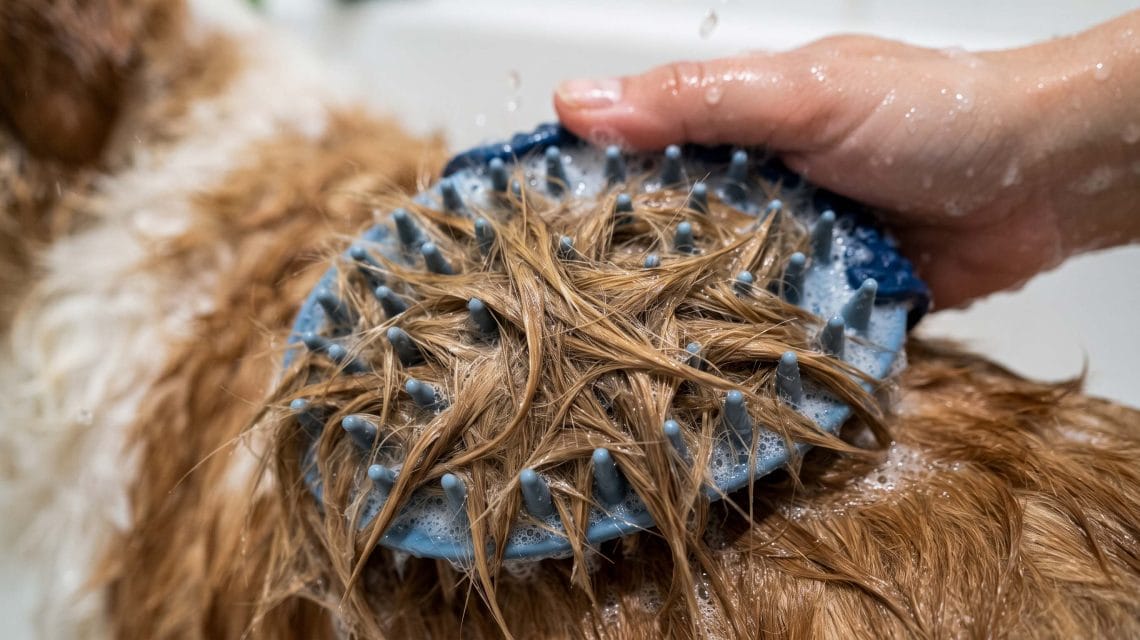
 Animal Zoid Editorial Team
 ⚡ Quick Answer
The best bath brush for short haired dogs that shed a lot is a rubber curry brush with flexible, textured nubs rather than a slicker brush or standard bristle brush. Rubber curry brushes work directly against the skin during shampooing, loosening and lifting dead hair while massaging, without the scratching risk that stiffer bristles or wire pins carry on short, fine coats. Look for one with a hand-strap design for better control and enough flexibility to contour around your dog’s body shape.
Short-haired dogs get an unfair reputation for being “low maintenance,” and then owners of Labs, Boxers, Beagles, and Pit Bulls end up buried in loose hair anyway, wondering what went wrong. Finding the best bath brush for short haired dogs that shed a lot solves a problem most standard grooming advice doesn’t address well, since so many popular brushes are designed with longer coats in mind, not the dense, tightly-packed short hair that heavy-shedding breeds carry.
We’ve worked through this exact frustration with plenty of owners who assumed any brush would do the job during bath time, only to find their dog just as covered in loose hair after the bath as before. This guide covers what actually makes the best bath brush for short haired dogs that shed a lot, why short coats need a genuinely different brush design than long or double coats, which specific features matter most, and how to use the right brush during bathing to get real results instead of just a wet, still-shedding dog.
Why Short-Haired Dogs Need a Different Bath Brush Approach
Before covering what makes the best bath brush for short haired dogs that shed a lot, it’s worth understanding why short coats present a unique challenge in the first place. Breeds like Labradors, Boxers, Beagles, Dobermans, and Pit Bulls carry a dense undercoat packed beneath short, coarse guard hairs, and that combination sheds constantly, sometimes at volumes that surprise owners who assumed “short hair” meant “less shedding.”
Standard slicker brushes, with their fine wire pins, are designed to work through longer hair and pull loose undercoat free from more open coat structures. On a short-haired dog, those same wire pins often can’t get proper purchase on such short, tightly-packed hair, and they carry a real risk of scratching skin that’s positioned much closer to the surface than it is on a longer-coated breed. This mismatch is exactly why so many owners feel like their brushing efforts during bath time barely make a dent.
The Skin Proximity Problem With Short Coats
Here’s something that doesn’t get explained often enough: short-haired dogs have noticeably less coat depth between the brush and the skin surface compared to double-coated or long-haired breeds. A tool that feels perfectly safe used on a Golden Retriever’s dense coat can feel considerably more intense, even uncomfortable, on a Boxer or a Beagle, simply because there’s so much less coat cushioning the contact. This is the core reason the best bath brush for short haired dogs that shed a lot needs a fundamentally different design than tools marketed toward longer-coated breeds.
What Makes the Best Bath Brush for Short Haired Dogs That Shed a Lot
A handful of specific features separate an effective bath brush from one that just gets your dog wet without meaningfully reducing shedding.
Rubber or Silicone Bristles Over Wire Pins
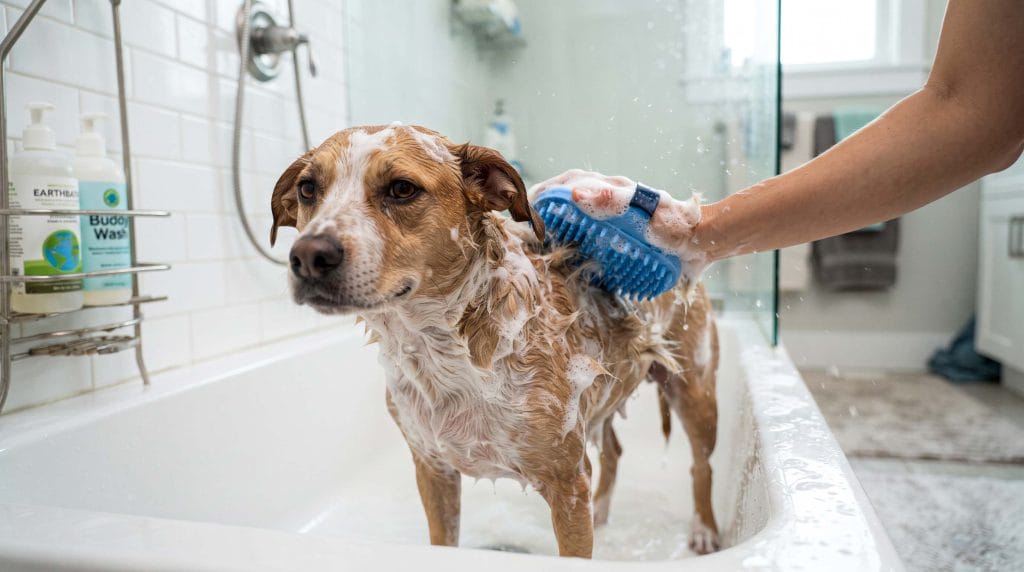
Rubber and silicone bristles flex against the body’s contours and work directly against skin without the scratching risk wire pins carry. During a bath, these softer materials also work well combined with shampoo lather, massaging the coat while loosening dead hair at the same time, which is exactly the dual function that makes bath time productive rather than just a wet brushing session that accomplishes little.
A Textured, Nub-Style Surface
Look for a brush surface covered in small, raised nubs or ridges rather than a flat rubber surface. These textured nubs create more points of contact with the coat, catching loose hair more effectively during the massaging motion than a smooth surface would.
A Hand-Strap or Glove-Style Design
Many of the most effective bath brushes for short-haired, heavy-shedding dogs use either a hand-strap attachment or a full glove design, both of which give considerably more control and natural hand movement than a rigid handle-and-head brush design. This matters especially during bathing, when wet, soapy conditions make grip and control more challenging than during a standard dry brushing session.
Appropriate Firmness for Skin Sensitivity
Firmness needs to be substantial enough to actually loosen embedded hair, but gentle enough not to irritate skin that sits close to the surface. Most well-designed bath brushes for this specific use case land in a medium-firm range, softer than a stiff bristle brush but firmer than a simple washcloth or sponge.
Comparison Table: Bath Brush Types for Short-Haired, Heavy-Shedding Dogs
| Brush Type | Effectiveness on Short Coats | Skin Safety | Best Use |
|---|---|---|---|
| Rubber curry brush (nub-style) | ✅✅✅ Excellent | Very safe | Bath time massaging and hair removal |
| Silicone bath glove | ✅✅✅ Excellent | Very safe | Bath time, especially for sensitive dogs |
| Standard slicker brush | ✅ Weak on short hair | Moderate risk on short coats | Not recommended for bath use on short hair |
| Bristle brush | ✅ Weak | Low risk | Light surface grooming, not deep hair removal |
| Deshedding tool (metal blade) | ✅✅ Good, but not for wet use | Risky if used on wet skin | Dry coat use only, not during bathing |
How to Use the Best Bath Brush for Short Haired Dogs That Shed a Lot Effectively
Owning the right brush only gets you halfway there. Technique during the bath itself makes a significant difference in results.
Step 1: Wet the Coat Thoroughly Before Brushing
Starting the brushing motion once the coat is fully saturated, rather than brushing dry hair first, allows the water and eventual shampoo lather to work alongside the brush’s massaging action from the very beginning.
Step 2: Apply Shampoo and Work in Small Circular Motions
Using the rubber or silicone bath brush, work shampoo into the coat with small, circular motions rather than long strokes. This circular movement is what actually loosens embedded hair at the follicle level, rather than just spreading soap across the surface.
Step 3: Focus Extra Attention on Dense Shedding Zones
Areas like the back, hindquarters, and sides of the neck typically carry the highest density of loose undercoat on short-haired breeds. Spending extra time in these zones during the bath produces noticeably better results than treating the whole body with uniform, brief attention.
Step 4: Rinse Thoroughly and Re-Brush During Rinsing
A second pass with the bath brush during the rinse cycle, after shampoo has already loosened hair, often releases additional hair that the initial shampooing pass didn’t fully dislodge. This two-pass approach consistently produces better results than a single brushing pass during the entire bath.
Step 5: Towel-Dry and Brush Again Once Dry
Some loosened hair doesn’t detach until the coat dries. A quick pass with a standard bristle brush or grooming mitt once your dog is dry catches this remaining hair, similar to the drying and brushing principles covered in our guide on drying a double-coated dog without a high velocity dryer, even though short-haired dogs generally dry faster than double-coated breeds.
Common Mistakes People Make Choosing a Bath Brush for Heavy-Shedding Short Hair Dogs
Using a slicker brush designed for longer coats. Wire pins on short hair often can’t reach loose undercoat effectively and carry unnecessary scratching risk given how close the skin sits to the surface.
Choosing a brush based on price alone without checking bristle material. The cheapest bath brushes sometimes use overly stiff rubber or thin, poorly textured surfaces that don’t actually loosen hair effectively during washing.
Brushing too aggressively, assuming more pressure removes more hair. Short-haired dogs’ proximity of skin to the coat surface means excessive pressure causes irritation rather than better results. Gentle, consistent circular motion works better than forceful scrubbing.
Skipping the second brushing pass during rinsing. A single brushing pass during shampooing alone misses hair that only loosens fully once soap residue begins rinsing away.
Assuming bath brushes alone eliminate the need for regular dry brushing. Bath brushes handle a significant portion of loose hair removal, but consistent brushing between baths remains necessary for genuinely heavy-shedding breeds.
Marcus’s Story — Finding the Right Tool After Years of Frustration
One of the pet owners in our community, Marcus, has a Boxer named Duke and spent years assuming Duke’s constant shedding was simply unmanageable, given how short his coat already was. Marcus used a standard bristle brush during bath time, mostly out of habit, and never noticed much difference in how quickly hair reappeared around the house afterward.
A conversation with a groomer eventually pointed out the mismatch — Duke’s coat, dense and short, needed a rubber curry brush working directly against the skin during the bath itself, not a bristle brush skimming the surface. Marcus was skeptical at first, since the idea of a rubber brush sounded almost too simple compared to the specialty deshedding tools he’d seen marketed for double-coated breeds.
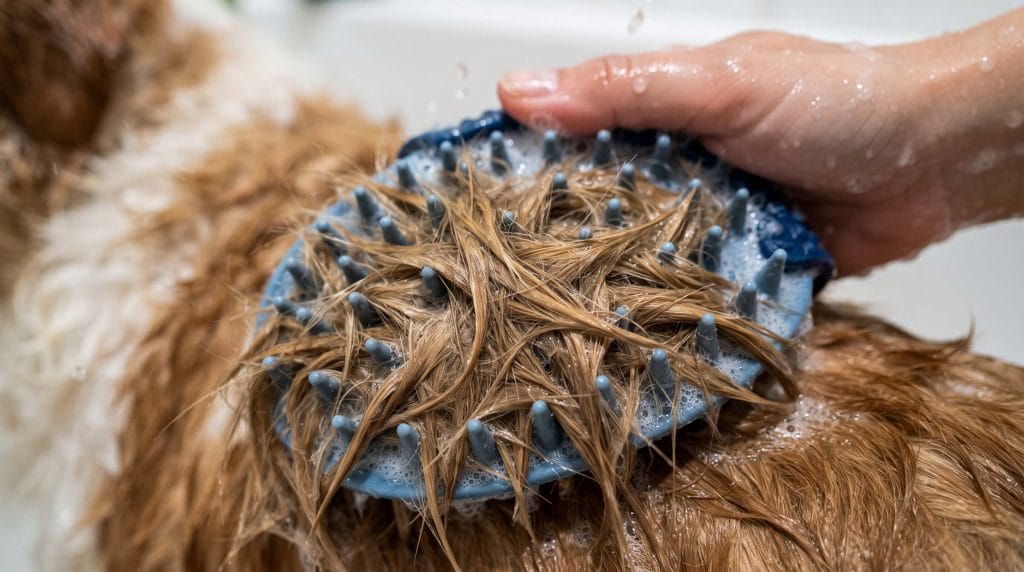
The difference during the very first bath using a proper rubber curry brush was significant enough that Marcus mentioned it unprompted weeks later. The amount of hair that came off during that single bath, visible clumping in the tub drain and caught in the brush itself, was noticeably more than anything his old bristle brush routine had ever produced. Duke’s shedding around the house didn’t disappear entirely, since that’s simply not realistic for a heavy-shedding breed, but the volume dropped enough that Marcus’s vacuum schedule went from daily to every other day, a change he genuinely hadn’t expected from something as simple as switching brush types.
🐾 A Detail Most Bath Brush Guides Overlook
Here’s something worth knowing that rarely comes up in typical grooming advice: brush temperature actually affects performance on short-haired dogs more than people realize. A rubber or silicone brush that’s been sitting in a cold bathroom cabinet feels noticeably stiffer and less flexible when first applied to wet skin, which reduces its ability to contour properly around your dog’s body and work loose hair free effectively.
Running the brush under warm water for thirty seconds before starting, the same warm water you’re already using for the bath itself, softens the rubber slightly and improves how well it flexes against the coat. This small step, easy to skip in the rush of getting a bath started, genuinely improves how effectively the brush performs during the first few minutes of use, which is exactly the window where a stiff, cold brush would otherwise underperform.
Best Practices for Managing Shedding in Short-Haired Dogs Beyond the Bath Brush
- Brush between baths with a rubber curry brush too, not just during bath time, since the same tool works well dry as it does wet.
- Bathe every three to four weeks during normal shedding, adjusting based on your dog’s specific coat and skin condition.
- Consider a deshedding shampoo used at appropriate frequency, following the same principles covered in our guide on how often to use deshedding shampoo, which applies just as directly to short-haired breeds as it does to Labs specifically.
- Feed a diet with adequate omega fatty acids, since coat health directly affects how much hair sheds and how easily it releases during grooming.
- Combine bath brushing with a dry deshedding tool for maximum results, using the bath brush during washing and a more targeted tool like an undercoat rake or deshedding comb during dry sessions between baths.
For a complete shedding management approach beyond just bath tools, our guides on Labrador shedding management, does warm water increase shedding during baths, and our complete shedding management guide round out a full routine for managing heavy shedding in any coat type.
Tools Worth Having for Short-Haired, Heavy-Shedding Dogs
- Rubber curry brush with textured nubs — the core recommendation for bath-time hair removal on short coats
- Silicone bath glove — an alternative design offering similar benefits with a more natural hand-shape fit
- Deshedding shampoo — pairs well with brushing to maximize hair loosening during the wash
- A soft bristle brush for dry, post-bath touch-ups — catches hair that loosens after the coat dries
- A grooming mitt for daily maintenance — useful for quick between-bath sessions without a full brushing routine
What’s Changing in Bath Brush Design for Short-Haired Breeds
Pet grooming product manufacturers have started paying closer attention to short-haired, heavy-shedding breeds specifically, moving away from the assumption that shedding tools should primarily target long or double-coated dogs. Several newer bath brush designs now feature dual-density rubber, firmer at the base and softer at the nub tips, specifically engineered to balance effective hair loosening with skin safety on coats where skin sits close to the surface.
Ergonomic design has also improved considerably, with more brushes incorporating adjustable hand straps and contoured grips designed specifically for the repetitive circular motion bath-time brushing requires, reducing hand fatigue during longer sessions with heavy-shedding dogs that need more thorough attention than a quick, cursory brush-through provides.
Key Takeaways for Choosing a Bath Brush for Short-Haired Shedders
- Choose a rubber or silicone curry brush over a slicker brush or bristle brush
- Look for a textured, nub-style surface for better hair-catching contact
- Prioritize a hand-strap or glove design for better control during wet conditions
- Use small circular motions during shampooing, not long strokes
- Focus extra time on dense shedding zones like the back and hindquarters
- Re-brush during the rinse cycle for a second round of hair removal
- Warm the brush under water before starting for better flexibility
- Follow up with dry brushing once your dog is fully dry
FAQ — Best Bath Brush for Short Haired Dogs That Shed a Lot
What’s the best bath brush for short haired dogs that shed a lot compared to a slicker brush?
A rubber curry brush with textured nubs works significantly better than a slicker brush on short coats, since wire pins on slicker brushes can’t get proper purchase on short hair and carry more scratching risk given how close the skin sits to the surface.
Can I use the same bath brush for daily dry brushing too?
Yes, most rubber curry brushes work well both wet and dry, making them a versatile tool for daily maintenance brushing between baths as well as bath-time use.
How often should I bathe a heavy-shedding short-haired dog?
Every three to four weeks generally works well for normal shedding, with more frequent bathing reasonable only during heavier seasonal shedding periods, provided skin condition is monitored for dryness.
Does brush material really matter that much for short-haired dogs specifically?
Yes, significantly. Short coats have less depth between the brush and the skin, making rubber or silicone materials considerably safer and more effective than stiffer bristle or wire-pin designs.
Should I use a deshedding shampoo along with a bath brush?
Yes, combining the two produces better results than either alone, though deshedding shampoo frequency should stay within recommended limits to avoid drying out the skin over time.
Making Bath Time Actually Count
The best bath brush for short haired dogs that shed a lot comes down to rubber or silicone bristles working directly against the skin, not wire pins designed for longer coats they were never built to handle. The right brush, combined with proper circular motion technique and a second pass during rinsing, turns bath time into genuine shedding reduction rather than just a wet version of the same ineffective routine.
For a complete approach to managing heavy shedding in short-haired breeds, check out our guides on Labrador shedding management, how often to use deshedding shampoo, does warm water increase shedding during baths, and our complete shedding management guide to build a routine that finally gets ahead of the hair instead of chasing it around your house. 🐾
This article provides general grooming guidance for informational purposes. If your dog shows signs of skin irritation or unusual shedding patterns, consult a veterinarian to rule out underlying conditions.
