

 Animal Zoid Editorial Team
 If you’re finding clumps of dog hair on your couch in January and wondering why is my dog shedding in winter, you’re not imagining things — and you’re definitely not alone. Most people assume shedding is a summer problem. But here’s the thing: winter shedding is completely real, incredibly common, and happens for reasons that are actually pretty fascinating once you understand what’s driving it.
This guide covers exactly that. We’ll walk you through the biology behind why is my dog shedding in winter, which triggers make it worse, what signs tell you something might actually be wrong, and what you can do right now to get it under control. Whether your dog is a heavy-shedding Husky or a breed that “shouldn’t” shed much, this applies to you.
Before we get into it — if your dog is a double-coated breed and shedding is a year-round battle, our Husky shedding guide, German Shepherd shedding guide, and Golden Retriever shedding guide cover breed-specific solutions in detail. Our comprehensive shedding management guide gives you the full picture year-round.
Why Is My Dog Shedding in Winter — The Biology Nobody Explains Properly
Why Is My Dog Shedding in Winter When It Should Be Cold?
Most people expect shedding to peak in spring and fall — and for outdoor dogs, that’s largely true. But the story changes the moment your dog spends most of their time inside a heated home. And that’s where the answer to why is my dog shedding in winter actually lives.
Here’s what’s happening. Your dog’s coat cycle is regulated primarily by photoperiod — the amount of light they’re exposed to each day, not temperature. In the wild, shorter winter days signal the body to hold the winter coat. But indoor dogs don’t experience natural light cycles the way outdoor dogs do. They live under artificial lighting for 10, 12, sometimes 14 hours a day. Their bodies register this as extended daylight — and instead of holding the coat for winter insulation, the follicles keep cycling. The result? Year-round shedding with no clean seasonal pause.
Add central heating to that equation and the problem compounds. Heated indoor air is dry. Dry air pulls moisture from the skin, which weakens the follicle’s grip on each hair shaft. Hairs that might otherwise stay anchored for another few weeks release early. So your dog isn’t just shedding because of the light cycle disruption — they’re also shedding because their skin is dehydrated from the heating system you’re running to stay comfortable.
This is the core answer most websites miss when owners ask why is my dog shedding in winter. It’s not a malfunction. It’s your dog’s biology responding logically to an environment it wasn’t designed for.
Why Is My Dog Shedding in Winter — The Specific Triggers
Common Reasons Your Dog Sheds More in Winter
Understanding the biology is one thing. But let’s get specific about the exact triggers that make winter shedding worse — because once you identify which ones apply to your dog, you can actually do something about them.
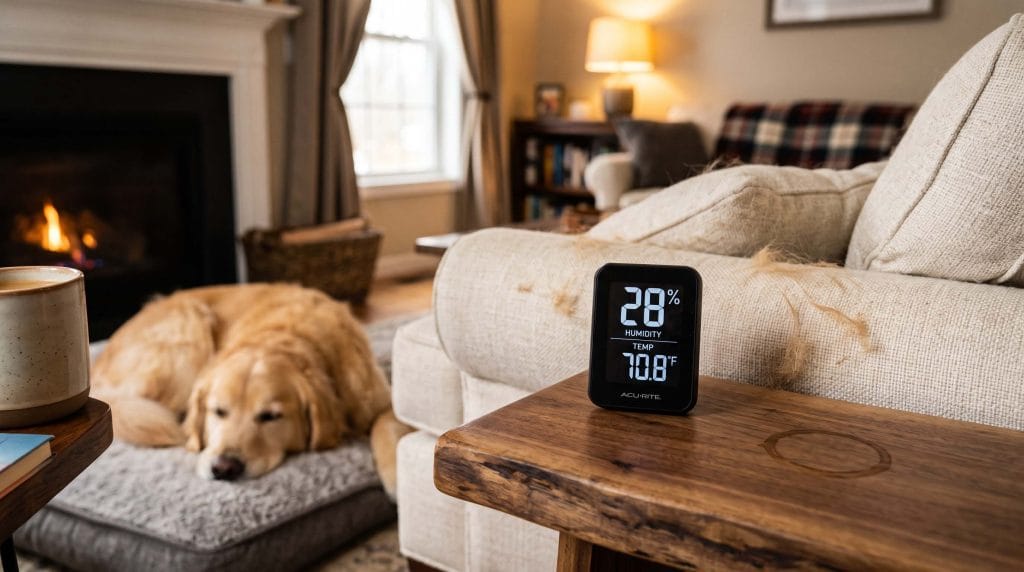
Indoor heating and low humidity. This is the biggest one, and it’s underappreciated. When your furnace or radiator runs all day, indoor humidity drops — sometimes to 20–30%, well below the 45–55% range that’s comfortable for both humans and dogs. At that humidity level, your dog’s skin dries out, the coat becomes brittle, and shedding accelerates. A hygrometer (a cheap humidity monitor, available at any hardware store) will tell you exactly what you’re dealing with.
Reduced outdoor time. In winter, most dogs get shorter walks and less outdoor activity. Less movement means less natural coat maintenance — rolling in grass, brushing against surfaces, the physical stimulation that loosens dead hair before it ends up on your furniture. That dead hair stays in the coat longer and then releases all at once indoors.
Dietary changes and winter weight gain. Some owners adjust feeding in winter, either intentionally or because their dog becomes less active and their appetite changes. Nutritional dips — particularly in omega-3 fatty acids, zinc, and biotin — directly affect coat health. A coat that isn’t nutritionally supported sheds more. It’s that simple.
Stress from routine disruption. Winter changes schedules. Holidays, travel, kids home from school, less consistent exercise — these routine disruptions elevate cortisol levels. Elevated cortisol is one of the clearest documented triggers for increased shedding in dogs. If your dog seems to shed more around Christmas or during winter breaks, this is likely a contributing factor.
The winter coat blow itself. Some double-coated breeds do experience a legitimate coat transition in late winter — typically January through March — as the body begins preparing for spring. This is a genuine seasonal shed that overlaps with the indoor-environment factors above, making it feel more dramatic than a typical coat blow.
What’s Normal and What Isn’t — Why Is My Dog Shedding in Winter Edition
When Winter Shedding Is a Health Warning Sign
Here’s where we want to be direct, because this part matters. Most winter shedding is normal — driven by the environmental and biological factors above. But some shedding patterns point to something that needs veterinary attention, and the difference is worth knowing.
Normal winter shedding looks like: increased but relatively even hair loss across the body, coat that still looks full and healthy overall, no skin changes, and a dog that’s acting completely normal in every other way.
Shedding that warrants a vet visit looks like: bald patches or thinning in specific locations (particularly the flanks, tail base, or top of the back), skin that looks red, flaky, thickened, or discolored underneath the thinning hair, a coat that’s changed in texture (become brittle or dull), or shedding that’s accompanied by other symptoms like increased thirst, weight changes, lethargy, or behavioral shifts.
The conditions most commonly confused with normal winter shedding include hypothyroidism, Cushing’s disease, nutritional deficiencies, and contact or environmental allergies. All of these are treatable — but only if you catch them. If anything about your dog’s shedding pattern feels different from previous winters, that’s worth a conversation with your vet rather than just a grooming appointment.
Meet Cooper — A Real Winter Shedding Story
Cooper is a five-year-old Golden Retriever whose owner, James, contacted our team last February after noticing that Cooper seemed to be shedding significantly more than in previous winters. James had a new house that winter — and a very efficient forced-air heating system that ran almost constantly during cold snaps.
Our team asked James three questions: What was the indoor humidity in his home? Had Cooper’s diet or exercise routine changed? And was the shedding even across the body or concentrated in certain spots?
The answers: indoor humidity was sitting at 24% (well below healthy range), Cooper’s walks had shortened from 45 minutes to about 20 minutes because of the cold, and the shedding was even across the body with no skin changes.
Classic indoor-heating shedding — not a health issue. James picked up a humidifier for the main living area, added a fish oil supplement to Cooper’s morning meal, and committed to longer weekend walks even in cold weather. Within six weeks, the shedding had reduced noticeably. Cooper’s coat looked better than it had all autumn.
James’s summary: “I was convinced something was wrong. It turned out my house was basically a hair dryer running on Cooper 24 hours a day.”
Cooper’s story represents the most common version of why is my dog shedding in winter that we see — a perfectly healthy dog responding logically to an indoor environment that’s actively drying out their skin and coat.
Why Is My Dog Shedding in Winter — What to Do About It
Practical Solutions That Actually Reduce Winter Shedding
Now that you understand what’s driving it, here’s what actually helps. These aren’t generic tips — they’re specific interventions matched to the specific triggers above.
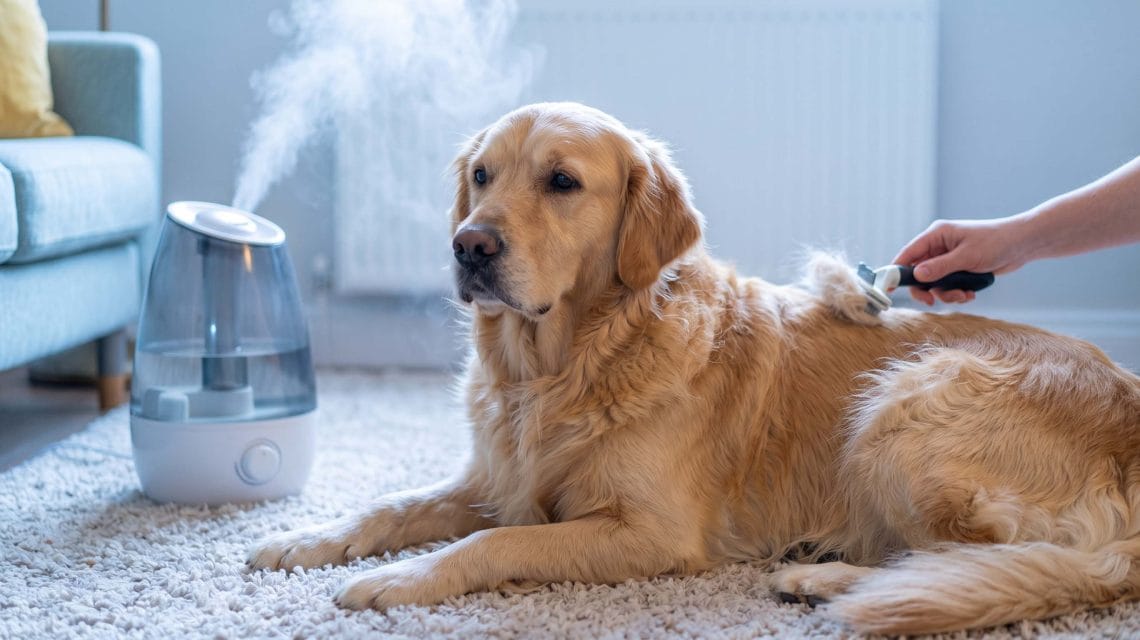
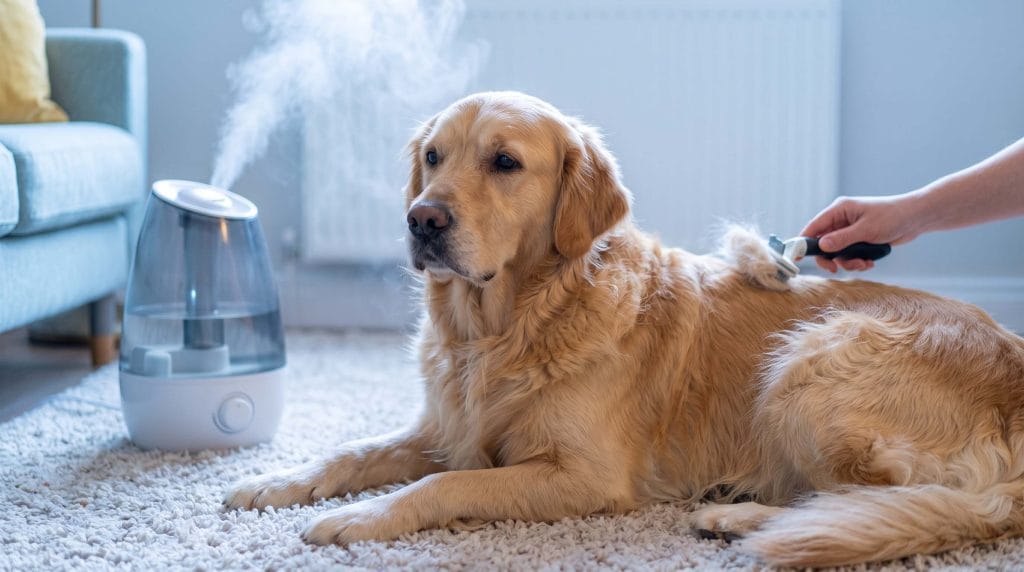
Fix the humidity first. If you do nothing else on this list, do this. A humidifier in the room where your dog spends most of their time brings indoor humidity back into the 45–55% range where skin stays healthy and follicles hold onto hair longer. Whole-house humidifiers attached to your HVAC system are the most effective option. Portable units work well for single rooms. Either way, the investment is small relative to the difference it makes.
Add omega-3 fatty acids to the diet. Fish oil at the appropriate weight-based dose supports follicle health, reduces inflammatory shedding, and visibly improves coat texture within 4–6 weeks. Our team consistently recommends this as the single highest-impact nutritional change for dogs with increased winter shedding. Use a product specifically formulated for dogs, and check the dosage against your dog’s body weight — the human supplements aren’t wrong, just often under-dosed for large breeds.
Keep exercise consistent. This one requires some winter commitment, but it matters. Consistent movement stimulates circulation to the skin, which supports follicle health. It also reduces the cortisol elevation that comes from under-stimulated, bored dogs. Early morning or late afternoon walks avoid the coldest part of the day without eliminating them entirely. Dog coats exist for a reason — use them for short-coated breeds if temperature is the barrier.
Brush more frequently, not less. The instinct when shedding increases is sometimes to brush less to avoid making it worse. That’s backwards. Regular brushing — 3–4 times weekly during heavy winter shedding — removes dead hair before it falls on your furniture, stimulates the skin’s natural oil distribution, and catches mats before they develop. Use the right tool for your dog’s coat type. An undercoat rake for double-coated breeds. A slicker brush for medium coats. A rubber grooming mitt for short-coated breeds.
Consider a professional deshedding bath. A single professional deshedding treatment — using a deshedding shampoo followed by a high-velocity blow-out — removes more dead undercoat in one session than weeks of home brushing. We recommend one at the start of winter and one in early spring for heavy-shedding breeds. Ask your groomer specifically for a “deshedding treatment with high-velocity blow-out” rather than a standard bath.
🐾 What Our Team Tells Every Winter Shedding Client First
Before recommending any supplement or grooming change, we always ask one question that most owners haven’t thought to check: What’s the humidity in your home right now?
The answer is almost always under 35%. And nine times out of ten, that single number explains everything.
Buy a digital hygrometer before your next grooming tool or supplement. They cost around $10–15 at any hardware store. Put it in the room where your dog sleeps. If the reading is below 40%, that’s your answer. That’s why your dog is shedding in winter. Fix that first — then layer in the other interventions. You’ll see a difference faster than any brush or supplement alone can deliver.
This isn’t advice you’ll find on the packaging of any deshedding shampoo. But it’s the single most consistent pattern we’ve observed across winter shedding cases, season after season.
Why Is My Dog Shedding in Winter — Breed-Specific Notes
Does Breed Change the Answer to Why Is My Dog Shedding in Winter?
Yes — but not as much as people think. The indoor-environment factors above apply to virtually every breed. What changes is the baseline shedding volume and the specific coat mechanics.
Double-coated breeds — Huskies, German Shepherds, Golden Retrievers, Labradors, Corgis — shed more volume overall and experience the artificial-light cycle disruption most dramatically because their coats are designed for genuine seasonal transitions. Our Labrador shedding guide and Corgi shedding guide cover the breed-specific tools and techniques for managing winter shedding in those coats.
Single-coated breeds — Poodles, Maltese, Shih Tzus — shed less overall but are not immune. Their shedding can actually be harder to notice because the hair tends to mat into the coat rather than falling freely, which is why regular grooming matters even more for these breeds in winter.
Short-coated breeds — Beagles, Boxers, Vizslas — shed continuously in small amounts and are the most directly affected by indoor humidity because their thin coats provide almost no barrier between the skin and dry air.
Winter Shedding Management — Quick Reference
Immediate actions:
- Check indoor humidity with a hygrometer — target 45–55%
- Add a humidifier to main living area if below 40%
- Start fish oil supplementation at weight-appropriate dose
- Increase brushing to 3–4 times weekly
- Book professional deshedding bath if not done in last 8 weeks
Ongoing winter routine:
- Maintain consistent daily exercise regardless of temperature
- Keep feeding schedule stable — no significant diet changes
- Monitor coat for uneven thinning, bald patches, or skin changes
- Vacuum high-traffic areas every 2–3 days to reduce hair buildup
- Check humidity weekly — heating systems vary with outdoor temperature
See a vet if:
- Bald patches appear anywhere on the body
- Skin looks red, flaky, thickened, or discolored
- Coat texture has changed significantly from previous winters
- Shedding is accompanied by increased thirst, weight change, or lethargy
- The pattern is noticeably different from last winter with no clear environmental explanation
FAQ — Why Is My Dog Shedding in Winter?
Why is my dog shedding in winter more than in summer?
The most common reason is indoor environment — specifically the combination of artificial lighting disrupting your dog’s natural photoperiod and central heating reducing indoor humidity. Your dog’s follicle cycle reads extended artificial light as “spring approaching” and keeps cycling rather than holding the winter coat. Dry heated air then weakens follicle grip and accelerates hair release. This combination often produces more visible shedding than the summer period, particularly in double-coated breeds.
Is winter shedding in dogs normal?
Yes — within certain patterns. Even, moderate shedding across the body with no skin changes and a dog that’s otherwise healthy and acting normally is almost always a normal environmental response. Shedding that’s patchy, accompanied by skin changes, or paired with other symptoms like increased thirst or lethargy warrants a veterinary check to rule out thyroid issues, Cushing’s disease, or nutritional deficiencies.
Does diet affect why my dog is shedding in winter?
Directly, yes. Omega-3 fatty acid deficiency, zinc insufficiency, and low biotin intake all increase shedding by weakening follicle health and reducing the skin’s natural oil production. Winter dietary changes — intentional or due to reduced activity — can tip a dog from normal shedding into excessive shedding. Fish oil supplementation is the most evidence-backed nutritional intervention for coat health and shedding reduction.
Should I shave my dog to reduce winter shedding?
No — and this applies especially to double-coated breeds. Shaving a double-coated dog removes the thermal regulation system that protects them from cold and heat simultaneously, and the coat regrowth process often produces an altered texture that mats more easily than the original coat. For single and short-coated breeds, shaving doesn’t reduce shedding — it just changes the length of the hair that falls. The correct intervention is deshedding, not shaving.
How long does winter shedding last in dogs?
For most indoor dogs experiencing environment-driven winter shedding, the heaviest period runs 6–10 weeks — typically peaking in mid-winter when heating systems are running most consistently. Dogs who are also beginning the spring coat preparation shed heavily from late January through March. Managing the environmental triggers (humidity, exercise, nutrition) shortens the heavy period noticeably. Without intervention, it tends to continue until heating demand drops in spring.
The Honest Bottom Line on Why Is My Dog Shedding in Winter
Why is my dog shedding in winter? Almost certainly because your indoor environment is working against their coat health in ways that are completely fixable. The combination of artificial light disrupting their coat cycle, central heating drying out their skin, reduced exercise lowering their baseline health, and potentially some nutritional gaps — these are the real drivers behind most winter shedding cases.
The good news? Every single one of those factors responds to straightforward interventions. A humidifier, fish oil, consistent exercise, and regular brushing will make a visible difference within weeks. A professional deshedding bath makes a difference within days.
Start with the hygrometer. Check your indoor humidity tonight. That number will tell you more about why your dog is shedding in winter than any article, including this one.
Ready to dig deeper? Explore our breed-specific shedding guides for Huskies, German Shepherds, Golden Retrievers, Labradors, and Corgis — or visit our complete shedding management guide for a year-round plan that keeps your home and your dog’s coat in the best shape possible. 🐾
This article provides general guidance based on our team’s experience and current veterinary understanding. For dogs showing signs of abnormal shedding or skin changes, always consult a licensed veterinarian.
