

 animalzoid
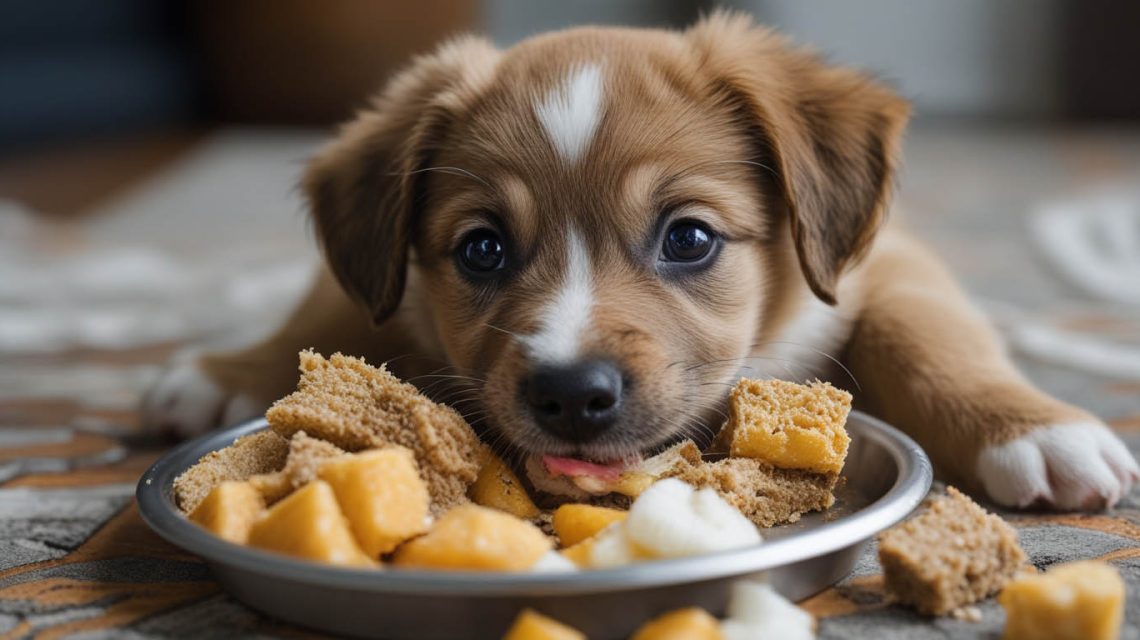
 Why does my puppy eat so fast? Puppies typically inhale their food because of natural survival instincts, competition with littermates, hunger from rapid growth, or anxiety around mealtime. Watching your adorable new pup vacuum an entire bowl of kibble in under 30 seconds feels equal parts impressive and terrifying. If you’ve been searching for answers to why does my puppy eat so fast, you’re not alone—this ranks among the most common concerns new puppy owners bring to veterinarians across the United States.
In this guide, I’ll uncover the real reasons behind your puppy’s speed eating, explain the genuine health risks involved, and share proven strategies that slow mealtime down safely and effectively.
The Real Reasons Why Does My Puppy Eat So Fast
Understanding the root cause behind your puppy’s lightning-speed eating helps you choose the right solution. Surprisingly, most reasons trace back to deeply ingrained biological instincts rather than simple greediness.
Here’s the thing—your puppy isn’t trying to be difficult or messy. Their brain is literally wired to eat quickly based on thousands of years of canine evolution. Once you understand this, solving the problem becomes much easier and far less frustrating.
Survival Instincts Explain Why Puppies Eat So Fast
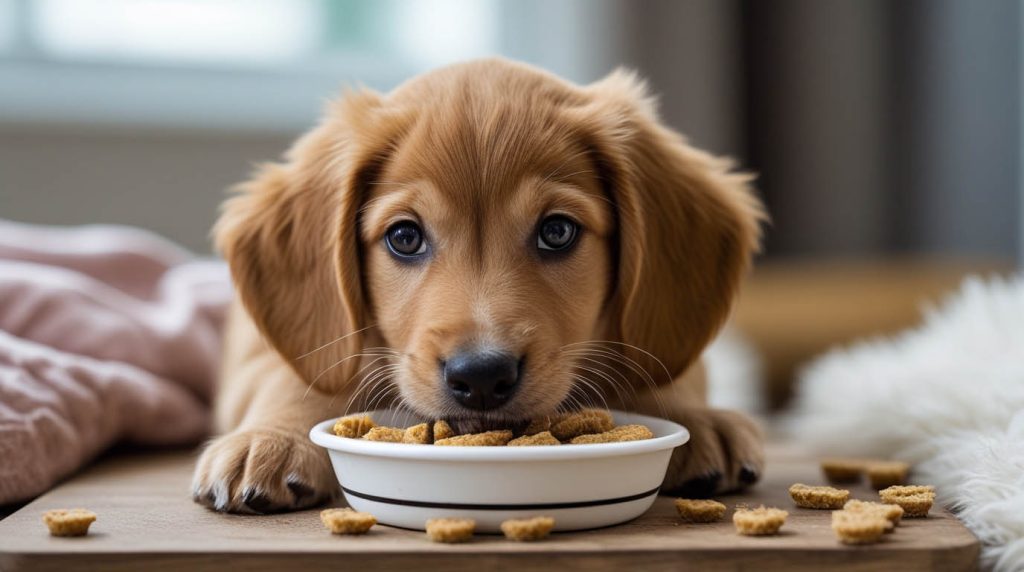
The most fundamental answer to why does my puppy eat so fast lies in wolf ancestry. Wild canines evolved to eat as quickly as possible because lingering over a meal meant risking losing food to competitors, predators, or pack members. Even though your puppy lives safely in your home with guaranteed meals, those ancient survival instincts still fire strongly.
This instinct runs especially deep in puppies because their developing brains haven’t yet learned that food will consistently appear at predictable intervals. Consequently, every meal triggers a “this might be my only chance” response—even when you feed them on a perfectly reliable schedule.
In my experience, this instinct-driven speed eating gradually decreases as puppies mature and develop confidence in their feeding routine. However, without intervention, many dogs carry this habit well into adulthood.
Litter Competition: A Key Reason Why Your Puppy Eats So Fast
If you’ve ever watched a litter of puppies eat from a shared bowl, you’ve witnessed absolute controlled chaos. Puppies who grew up competing with siblings for food learned one critical lesson very early: eat faster or go hungry.
According to veterinary behaviorists, puppies from larger litters tend to eat significantly faster than puppies from smaller litters. This competitive conditioning becomes hardwired during those crucial first weeks of life—long before your puppy ever arrived at your home. Even after months of eating alone from their own bowl, the competitive reflex persists strongly.
Rapid Growth and Why Your Puppy Eats So Fast
Puppies grow at an astonishing rate during their first year. Depending on breed, your puppy may double or triple their body weight within just a few months. This explosive growth demands enormous caloric intake, creating genuine physiological hunger that drives speed eating.
Large breed puppies—Golden Retrievers, Labrador Retrievers, German Shepherds—face particularly intense growth demands. Their bodies genuinely need more fuel, and their brains interpret this need as urgency at the food bowl. Our guide on best food for puppies by age helps you ensure your growing pup receives proper nutrition matched to their developmental stage.
Why Does My Puppy Eat So Fast and Is It Dangerous?
Let me be direct—yes, speed eating poses real health risks that every puppy owner should take seriously. Understanding these dangers motivates you to address the behavior before serious consequences develop.
Choking and Gagging Risks
Puppies who inhale food without chewing adequately face a genuine choking hazard. Large kibble pieces or chunks of wet food can lodge in the throat, triggering gagging, coughing, or—in worst cases—complete airway obstruction. If your puppy frequently gags during or after meals, our article on why does my dog keep gagging but not throwing up explains related causes and solutions in detail.
Bloat: The Most Dangerous Consequence
Gastric dilatation-volvulus (GDV), commonly called bloat, represents the most life-threatening risk associated with speed eating. When dogs gulp food rapidly, they simultaneously swallow large quantities of air. This excess air can cause the stomach to expand dangerously and potentially twist on itself.
The American College of Veterinary Surgeons reports that bloat carries a mortality rate of up to 30% even with emergency surgical treatment. While bloat occurs more frequently in large, deep-chested adult dogs, establishing healthy eating habits during puppyhood significantly reduces lifetime risk.
⚠️ Critical Warning: If your puppy’s abdomen appears distended after eating, they retch without producing vomit, or they show obvious distress, seek emergency veterinary care immediately.
Vomiting and Digestive Upset
Speed eating overwhelms your puppy’s digestive system. Swallowing large, unchewed pieces forces the stomach to work overtime, frequently resulting in vomiting shortly after meals. Additionally, excess swallowed air causes uncomfortable bloating, gas, and stomach cramps that leave your puppy miserable.
Why Does My Puppy Eat So Fast Compared to Adult Dogs?
This comparison question comes up constantly, and the answer involves several puppy-specific factors working simultaneously.
| Factor | Puppies | Adult Dogs |
|---|---|---|
| Survival instinct intensity | Very high | Moderate to low |
| Litter competition memory | Fresh and strong | Faded over time |
| Growth-driven hunger | Extreme | Minimal |
| Mealtime confidence | Low—still developing | High—established routine |
| Impulse control | Very limited | Better developed |
| Food bowl security | Uncertain | Confident |
Essentially, puppies experience a perfect storm of biological urgency, underdeveloped impulse control, and lingering competitive instincts that together create the speed-eating phenomenon. As dogs mature—typically between 12 and 18 months—most naturally slow down somewhat. However, actively training slower eating habits during puppyhood produces far better long-term results than waiting for nature to take its course.
Proven Solutions When Your Puppy Eats So Fast
Now that you understand why does my puppy eat so fast, let’s focus on practical fixes that actually work. I’ve seen each of these strategies produce measurable results for countless puppy owners.
Slow-Feeder Bowls: The Best Fix for Puppies Who Eat So Fast
Slow-feeder bowls contain raised ridges, mazes, or obstacles that force your puppy to work around barriers to reach their food. This simple design change typically extends mealtime from 30 seconds to 5–10 minutes—a dramatic improvement.
I’ve found that maze-style slow feeders work best for aggressive speed eaters, while simpler raised-ridge designs suit moderate cases. Either way, the investment typically costs between $10–$25 and delivers immediate results from the very first meal.
Additional Strategies to Slow Down Fast-Eating Puppies
- Spread food on a flat baking sheet — Eliminates the “pile” that enables gulping and forces your puppy to eat individual pieces
- Use a muffin tin — Place small portions in each cup, requiring your puppy to move between compartments
- Hand-feed portions — Building mealtime into training sessions simultaneously slows eating and strengthens your bond
- Add water to kibble — Moistened food becomes harder to gulp rapidly and improves hydration simultaneously
- Divide meals into smaller portions — Feed 3–4 smaller meals daily instead of 2 larger ones
- Place a large ball in the food bowl — A clean tennis ball or similar object forces your puppy to eat around it
- Use puzzle feeders and snuffle mats — These mentally stimulating options turn mealtime into enrichment activities
💡 Quick Tip: Start with the simplest solution first. A slow-feeder bowl alone resolves speed eating for roughly 70% of puppies without needing additional interventions.
For broader feeding guidance, our article on essential first-year puppy care tips covers nutrition alongside other critical developmental milestones.
Common Mistakes Owners Make About Puppies Eating Fast
Understanding why does my puppy eat so fast is important, but avoiding counterproductive responses matters equally. These common mistakes actually worsen the problem.
Taking the bowl away mid-meal — Removing food while your puppy eats creates resource guarding anxiety and makes them eat even faster next time. Instead, add food to the bowl while they eat to build positive associations.
Free-feeding throughout the day — Leaving food available constantly seems logical but actually prevents your puppy from developing a healthy mealtime routine. Structured meal times work significantly better.
Punishing or scolding during meals — Negative attention during eating increases stress and anxiety, which directly accelerates eating speed. Keep mealtimes calm, quiet, and positive.
Ignoring the behavior entirely — Hoping your puppy “grows out of it” risks allowing dangerous habits to solidify permanently. Proactive intervention during puppyhood yields the best outcomes by far.
Our guide on why does my dog gag explores related digestive consequences that develop when speed eating goes unaddressed for too long.
Why Does My Puppy Eat So Fast Only Around Other Pets?
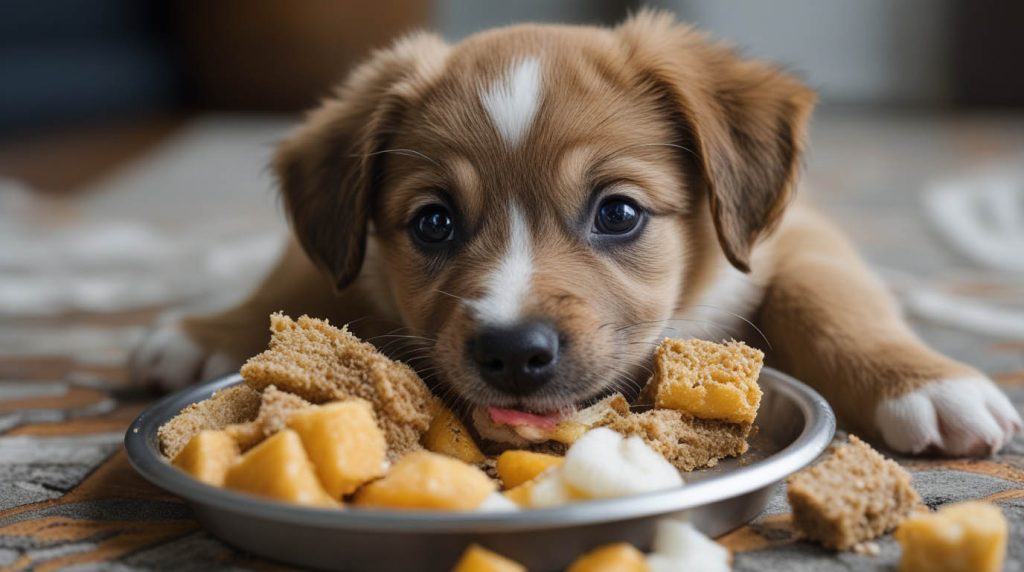
Multi-pet households frequently intensify speed eating dramatically. If your puppy only inhales food when other animals are nearby, competition anxiety drives the behavior entirely.
The fix is straightforward: Feed your puppy in a separate room with the door closed. Remove all perceived competition from the equation completely. Once your puppy consistently eats at a relaxed pace alone, you can gradually reintroduce proximity to other pets during mealtimes—but always with separate bowls spaced well apart.
I’ve found that puppies in multi-dog households take roughly 2–4 weeks of separated feeding before their mealtime anxiety noticeably decreases. Patience and consistency during this period pay enormous dividends.
Frequently Asked Questions
Why does my puppy eat so fast and then throw up?
Speed eating causes puppies to swallow large unchewed pieces and excessive air simultaneously. The overwhelmed stomach responds by ejecting contents almost immediately. A slow-feeder bowl typically eliminates post-meal vomiting within the first few uses.
At what age do puppies stop eating so fast?
Many puppies naturally slow down between 12–18 months as impulse control develops and mealtime confidence grows. However, dogs who don’t receive intervention during puppyhood often carry speed-eating habits throughout their entire lives.
Why does my puppy eat so fast but my older dog doesn’t?
Adult dogs have established mealtime security, better impulse control, lower growth-driven hunger, and faded competitive instincts. Puppies lack all four of these calming factors, creating the dramatic speed difference you observe between them.
Can speed eating cause bloat in puppies?
While bloat occurs more commonly in adult large-breed dogs, speed eating during puppyhood establishes dangerous habits that increase lifetime bloat risk. Addressing the behavior early serves as important preventive care for your puppy’s entire future.
Why does my puppy eat so fast even when given small portions?
Small portions don’t address the underlying instinct driving the behavior. Your puppy’s brain responds to food presence—not food quantity—with urgency. Slow-feeder bowls and puzzle feeders address the mechanism of eating rather than the amount, making them far more effective than simply reducing portion size.
Conclusion
So why does my puppy eat so fast? The behavior stems from a powerful combination of deep-rooted survival instincts, competitive conditioning from littermate experiences, intense growth-driven hunger, and underdeveloped impulse control. While these causes are completely natural and understandable, the health risks—including choking, vomiting, dangerous bloating, and potentially fatal GDV—make addressing speed eating genuinely important rather than merely convenient.
Fortunately, the solutions are affordable, accessible, and remarkably effective. A quality slow-feeder bowl resolves the majority of cases almost instantly. Supplementing with puzzle feeders, divided meals, separated feeding areas, and consistent mealtime routines reinforces healthier habits that last your dog’s entire lifetime.
Start today—not tomorrow: Order a slow-feeder bowl right now, or simply grab a muffin tin from your kitchen and divide tonight’s dinner into the cups. Time how long your puppy takes to finish, then compare it to their usual speed. You’ll likely see a dramatic difference from the very first meal. Building these habits during puppyhood protects your dog’s digestive health for years to come and transforms stressful, chaotic mealtimes into calm, enriching experiences you can both enjoy. Your puppy’s stomach will thank you! 🐶
