

 Animal Zoid Editorial Team
 If you’re here frantically typing “what happens if a dog eats onions” after seeing your dog steal something from the counter, you’re not alone. It’s one of those questions that always seems to come up after the accident. Maybe your dog licked onion gravy off a plate, or grabbed a piece of stir‑fry before you could stop them. Now you’re wondering: is this just a stomach upset, or something far more serious?
Here’s the unsettling reality: when we talk about what happens if a dog eats onions, we’re not just talking about a day of loose stool. Onions can damage your dog’s red blood cells, cause hemolytic anemia, and, in serious cases, lead to life‑threatening complications if you don’t act quickly.
In this in‑depth guide, we’ll walk through:
- The science of what happens if a dog eats onions
- How fast symptoms appear and what they look like
- Real‑world case stories of onion exposure
- Exactly what to do in the first minutes and days afterward
- How to change your kitchen habits so this never becomes your story again
I’ll also reference trusted veterinary resources and share practical, experience‑based tips, so you’re not guessing in a moment when your dog really needs you.
What Happens If a Dog Eats Onions: The Quick Answer
Before we dig into details, let’s answer the core question in plain language.
What happens if a dog eats onions? The onion’s sulfur‑containing compounds cause oxidative damage to the dog’s red blood cells. Those damaged cells break apart or get removed faster than the body can replace them, which leads to hemolytic anemia. As a result, your dog’s body can’t carry enough oxygen, and they may become weak, lethargic, short of breath, and, in severe cases, collapse.
According to the Merck Veterinary Manual – Onion and Garlic Toxicity, all forms of onion—raw, cooked, powdered, or dehydrated—can cause this red blood cell damage in dogs.
So when you wonder what happens if a dog eats onions, remember this: onion poisoning is a blood problem, not just a gut problem, and it can escalate faster than most people expect.
What Happens If a Dog Eats Onions Inside the Body
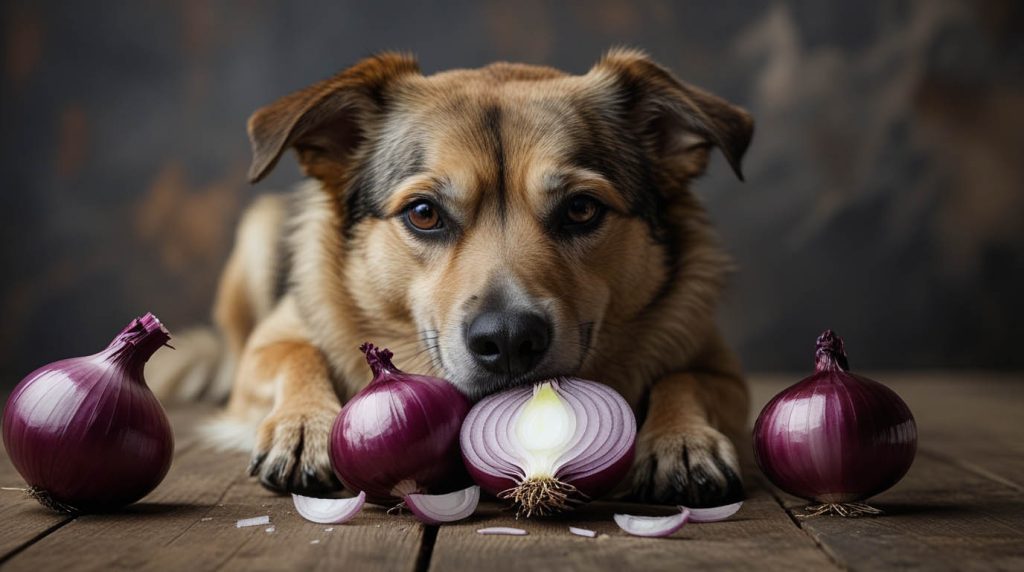
To understand what happens if a dog eats onions, it helps to picture what’s going on internally. Once you know the process, the symptoms make a lot more sense.
What Happens If a Dog Eats Onions to Red Blood Cells
Here’s the simplified chain of events:
- Ingestion
Your dog eats onions or an onion‑containing food (like onion gravy, stir‑fry, or seasoned meat). - Absorption
Onion compounds pass through the digestive tract and enter the bloodstream. - Oxidative damage
Specific sulfur‑containing molecules in onions attack hemoglobin (the oxygen‑carrying protein in red blood cells). This creates oxidative stress. - Heinz body formation
Damaged hemoglobin clumps into small inclusions called Heinz bodies inside red blood cells. Under a microscope, vets can actually see these. - Red cell destruction (hemolysis)
The body recognizes these damaged cells as abnormal. They either rupture in circulation or get removed by the spleen. This process is called hemolysis.
As more red cells are destroyed, your dog develops hemolytic anemia. That’s the core of what happens if a dog eats onions.
The Pet Poison Helpline’s page on onion toxicity vexplains this same mechanism and notes that dogs are particularly sensitive to these oxidative effects.
What Happens If a Dog Eats Onions to Organs and Oxygen Supply
Once anemia sets in, the body struggles to supply oxygen. That means:
- The heart beats faster (tachycardia) to push what oxygenated blood remains.
- The lungs work harder (tachypnea), so you see rapid or labored breathing.
- The muscles and brain receive less oxygen, leading to weakness, disorientation, or collapse.
- The kidneys and liver must process extra waste from destroyed red blood cells (like free hemoglobin and bilirubin).
So, in practice, what happens if a dog eats onions is that a common kitchen ingredient quietly creates a whole‑body oxygen crisis over the course of hours to days.
What Happens If a Dog Eats Onions in Different Amounts
Not every ingestion looks the same. The outcome of what happens if a dog eats onions depends on how much they ate, their size, and how often it’s happening.
Small Bite: What Happens If a Dog Eats Onions Once
If a medium or large dog eats a very small piece of onion one time, you might see:
- No obvious symptoms at all, or
- Brief stomach upset (mild vomiting or soft stool)
However, that doesn’t mean it was truly safe. Instead, it means the dose probably wasn’t high enough to trigger obvious anemia. The risk still exists, and it’s higher for:
- Small dogs (because a small bite is a larger dose per kilogram)
- Dogs with pre‑existing anemia or immune issues
So when we talk about what happens if a dog eats onions, even tiny bites fall into the category of “not worth repeating,” especially if you don’t know your dog’s sensitivity.
Large Dose: What Happens If a Dog Eats Onions in a Meal
If a dog eats a significant amount of onion—say, a small onion’s worth or more, or a large portion of onion‑rich stew—then what happens if a dog eats onions can be much more serious:
- Gastrointestinal upset within hours
- Noticeable lethargy within a day or two
- Pale gums, fast breathing, and dark urine over 1–5 days
- Potential collapse in severe cases
Veterinary toxicology often cites a dose of around 0.5% of the dog’s body weight in onion as enough to cause noticeable issues, though it can vary. That means a 10 kg (22 lb) dog might develop problems from around 50 g of onion, and a 20 kg (44 lb) dog from around 100 g.
Repeated Snacks: What Happens If a Dog Eats Onions Over Time
Here’s a really common and overlooked scenario: a dog doesn’t eat a whole onion at once, but gets lots of tiny servings:
- Little tastes of onion‑seasoned meat
- Leftover casseroles over several days
- Plate‑licking after onion‑rich meals
In that case, what happens if a dog eats onions repeatedly is cumulative. Onion compounds build up, and slow, ongoing red blood cell damage leads to chronic anemia. The dog just seems to “lose energy” over weeks or months, and owners blame age or weather.
Once you understand this pattern, repeated sharing of onion‑flavored foods stops feeling cute and starts to look like a slow‑motion poisoning.
Early Signs of What Happens If a Dog Eats Onions
Because the damage plays out in stages, the first signs of what happens if a dog eats onions are often subtle and easy to miss.
Digestive Clues of What Happens If a Dog Eats Onions
Within the first 6–24 hours after ingestion, you may notice:
- Vomiting
- Diarrhea or soft stool
- Drooling or lip‑smacking
- Mild abdominal discomfort or restlessness
- Reduced interest in food
At this point, you might just think, “They ate something too rich.” However, if you know onions were involved, file this away—it’s often the first chapter in the story of what happens if a dog eats onions.
Behavior Changes When a Dog Eats Onions
Alongside or after the GI signs, some dogs show changes like:
- Unusual tiredness or “clinginess”
- Skipping a favorite game or walk
- Choosing to lie down more often
- Slower response when you call or invite them to play
Because you know your dog better than anyone, you’ll often see these shifts before anyone else. When you pair them with known onion access, you’re already seeing what happens if a dog eats onions starting to unfold.
Serious Symptoms When a Dog Eats Onions
As hemolytic anemia develops over the next few days, the consequences of what happens if a dog eats onions become much harder to ignore.
Anemia and Collapse: What Happens If a Dog Eats Onions
Classic later‑stage signs include:
- Pale or white gums – instead of healthy bubble‑gum pink
- Rapid breathing – panting at rest, or shallow, quick breaths
- Elevated heart rate – the heart thumps faster than normal
- Weakness and collapse – difficulty standing, stumbling, or outright collapse
- Dark red, brown, or cola‑colored urine – from hemoglobin released by destroyed red blood cells
- Yellowish gums or eyes (jaundice) in more severe or prolonged cases
At this stage, you’re seeing the full impact of what happens if a dog eats onions and you don’t intervene early. This is a medical emergency, and waiting “to see if it passes” can be the difference between recovery and catastrophe.
The ASPCA Animal Poison Control Center warns that onion and garlic ingestion can cause these exact signs and urges owners to seek prompt veterinary care.
What Happens If a Dog Eats Onions and You Act Fast
Now let’s talk action. Once you realize what happens if a dog eats onions, the clock starts ticking. Your response can dramatically change the outcome.
Step‑by‑Step: What Happens If a Dog Eats Onions and You Respond
- Stay calm and gather information
Take a breath, then quickly note:- What your dog ate (type of onion dish, raw vs. cooked, powder, etc.)
- Roughly how much they might have eaten
- When it happened
- Any symptoms you see right now
- Call your veterinarian or a poison hotline immediately
Don’t wait for severe symptoms. Call:- Your regular vet (if open)
- A 24/7 emergency animal hospital
- Or a poison hotline such as the ASPCA or Pet Poison Helpline
- External Link: ASPCA Animal Poison Control Center
- External Link: Pet Poison Helpline
- Follow their instructions exactly
Based on dose, timing, and your dog’s condition, they might recommend:- Monitoring at home if exposure was tiny
- Coming straight in for an exam and bloodwork
- Inducing vomiting (usually at the clinic, sometimes at home if they give precise instructions)
- Giving activated charcoal to reduce absorption
- Avoid unverified home remedies
Don’t give:- Salt, hydrogen peroxide, or ipecac without explicit vet direction
- Human meds to “help the blood” or “detox”
These can cause new problems on top of what happens if a dog eats onions.
- Watch for delayed symptoms over several days
Even if your vet initially says to monitor at home, keep checking:- Gum color
- Energy level
- Breathing rate at rest
- Urine color
Veterinary Treatment: What Happens If a Dog Eats Onions and Needs Care
Once you arrive at the clinic, the vet moves from theory to practice: confirming onion toxicity and treating the damage.
Diagnostics Used When a Dog Eats Onions
To understand the extent of what happens if a dog eats onions, your vet may:
- Take a complete history – focusing on diet, treats, trash raids, and recent human meals
- Perform a physical exam – checking gums, heart rate, breathing, temperature, and hydration
- Run a complete blood count (CBC) – to measure red blood cell levels and detect anemia
- Examine a blood smear – to look for Heinz bodies and other changes typical of onion toxicity
- Possibly run biochemical panels and urinalysis – to assess organ function and detect hemoglobin in urine
These tests don’t just confirm what happens if a dog eats onions; they shape the treatment plan.
Hospital Care After a Dog Eats Onions
Treatment focuses on:
- Stopping further absorption
- Inducing vomiting if ingestion was recent and safe
- Giving activated charcoal to bind remaining toxins
- Supporting circulation and oxygen
- IV fluids to maintain blood pressure and support kidneys
- Oxygen therapy if breathing is difficult or anemia is severe
- Replacing destroyed red blood cells
- Blood transfusions in cases where anemia is life‑threatening
- Managing symptoms
- Anti‑nausea medications
- Stomach protectants
- Pain control, if needed
The American Veterinary Medical Association’s pet food safety guidance underlines how important rapid veterinary intervention is when pets eat toxic foods like onions and garlic.
With timely treatment, many dogs recover from what happens if a dog eats onions. The key is not waiting until they’re on the brink.
Prevention: So What Happens If a Dog Eats Onions Never Becomes Your Story
Once you understand what happens if a dog eats onions, prevention stops feeling like overkill. It becomes common sense.
Kitchen Habits to Avoid What Happens If a Dog Eats Onions
You can dramatically lower your risk by:
- Creating a dog‑free cooking zone
Use baby gates, closed doors, or a solid “place” command to keep your dog away from chopping boards and hot pans. - Securing trash and compost
Dog‑proof bins or closed cabinets prevent access to onion peels, discarded stir‑fry, and paper towels soaked in onion juice. - Banning plate‑licking when onions are involved
If a dish contained onions, garlic, or onion‑based sauce, it goes directly to the sink—not to your dog. - Setting aside plain portions before seasoning
If you like to share, remove a small amount of plain cooked meat or vegetables for your dog before you add onions, garlic, salt, or sauces.
Once these habits feel routine, you’ll rarely reach the point of asking what happens if a dog eats onions in a panic.
Safe Alternatives When a Dog Eats Onions by Mistake
You don’t need onions to spoil your dog. Instead, you can safely offer:
- Plain cooked chicken, turkey, or lean beef (no seasoning)
- Steamed or raw carrots, green beans, or peas
- Small amounts of dog‑safe fruit like blueberries or apple slices (no seeds)
- Vet‑approved dog treats
For a quick reference on safe vs. unsafe human foods, the American Kennel Club provides a helpful list.
When you understand what happens if a dog eats onions, switching to these alternatives feels like an easy, obvious trade‑off.

Case Studies: What Happens If a Dog Eats Onions in Real Homes
Sometimes a story sticks more than any list of facts. Here are two composite cases based on common scenarios.
The Trash Raider: Real‑World What Happens If a Dog Eats Onions
Milo, a 40‑lb Labrador mix, loved tipping over the kitchen trash. One night, the family threw away the remains of a big onion‑heavy stir‑fry. Milo got in while they were in another room and devoured the leftovers.
The next day, he vomited once and had loose stool. His owners assumed it was just trash. Two days later, though, he barely wanted to walk and his gums looked pale. Only then did they rush him to the emergency vet.
Bloodwork showed significant anemia with Heinz bodies—classic proof of what happens if a dog eats onions. Milo needed IV fluids and a blood transfusion, but he survived. That family now uses a lidded, locked trash can, because they’ve seen first‑hand what happens if a dog eats onions from the trash.
The Leftover Sharer: Slow‑Burn Onion Risk
Sophie, a 25‑lb mixed breed, got “just a little taste” from the table almost every night. Over time, that included:
- Meatloaf with onions
- Pasta in onion‑based sauce
- Onion‑rich soups
Her owners never realized how much onion she was getting. Over months, Sophie slowed down. She still ate, but she tired easily and slept more. At her annual check‑up, her bloodwork showed mild anemia.
When the vet asked about human foods, the pattern emerged. That’s when the family learned what happens if a dog eats onions repeatedly in small amounts. Once they stopped sharing onion‑seasoned leftovers, Sophie’s energy and blood numbers gradually improved.
In my experience, Sophie’s story is one of the most common ways people discover what happens if a dog eats onions the hard way.
Tools and Resources for Handling What Happens If a Dog Eats Onions
You don’t have to rely on memory alone when facing what happens if a dog eats onions. A few solid resources can guide you.
Helpful Resources
- Merck Veterinary Manual – Onion & Garlic Toxicity – Deep scientific breakdown of onion toxicity in animals.
- Pet Poison Helpline – Onions – Clear, owner‑friendly summary of risks, signs, and treatment.
- ASPCA Animal Poison Control Center – Database and 24/7 phone support.
- Pet Food Safety – Broad overview of human foods (including onions) that can harm pets.
- PetMD – Can Dogs Eat Onions? – Vet‑reviewed explanation in everyday language.
Keep at least one of these bookmarked. If you ever even suspect what happens if a dog eats onions might be happening in your home, you’ll have expert help one tap away.
FAQ: Quick Answers About What Happens If a Dog Eats Onions
Q1: How long does it take to see what happens if a dog eats onions?
You may see vomiting or diarrhea within hours. Anemia‑related effects of what happens if a dog eats onions—like pale gums, weakness, and dark urine—often appear 1–5 days after ingestion.
Q2: What should I do right after I see what happens if a dog eats onions in my house?
Call your vet or a poison hotline immediately. Tell them your dog’s weight, how much onion they might have eaten, when it happened, and any symptoms you see. Don’t wait for things to get “really bad” before calling.
Q3: Is it always serious when a dog eats onions?
Not every onion exposure leads to obvious illness, especially if the dose is very small and the dog is large. However, because we know what happens if a dog eats onions at toxic doses, vets strongly recommend you never offer onions on purpose and always treat accidental ingestion seriously.
Q4: Are cooked onions safer than raw ones?
No. Cooking doesn’t remove the compounds that cause what happens if a dog eats onions; it just changes flavor and texture. Cooked, grilled, caramelized, and powdered onions are all dangerous.
Q5: Can my dog recover after experiencing what happens if a dog eats onions?
Yes, many dogs recover fully—especially with early veterinary care. Treatment often includes IV fluids, monitoring, and sometimes blood transfusions. The sooner you seek help after understanding what happens if a dog eats onions, the better the prognosis.
Final Thoughts on What Happens If a Dog Eats Onions
Now that you’ve seen the full picture of what happens if a dog eats onions, it’s clear this isn’t just another fussy “don’t feed table scraps” rule. Onions can quietly injure your dog’s red blood cells, steal their energy, and, if ignored, push them into a life‑threatening anemia that no one saw coming until it was almost too late.
You’ve learned what happens inside the body, what symptoms unfold over time, and how even small, repeated tastes of onion‑rich food can create serious problems. You’ve also seen how fast, calm action—calling a vet, following instructions, and monitoring closely—can turn a frightening onion incident into a survivable story.
Here’s your next step:
Tonight, take five minutes to walk through your kitchen and feeding habits. Identify which dishes always contain onions, secure your trash, and agree with your household that onion‑seasoned food is for humans only. Then bookmark at least one of the poison control resources above.
If you ever find yourself asking what happens if a dog eats onions again, you’ll be ready—with knowledge, a plan, and the confidence to protect your dog when it matters most.

 What Happens If a Dog Eats Onions: Full Guide