

 animalzoid
 Introduction: Why “Should Dogs Eat Onions” Is a Big Deal
If you share food with your dog, you’ve probably asked yourself at some point, “should dogs eat onions?” Maybe your pup licked onion gravy off a plate, or swiped a piece of stir‑fry before you could grab it. In the moment, it’s hard to tell if you’re overreacting or if something genuinely dangerous just happened.
Here’s the blunt answer: dogs should not eat onions in any form.
That might sound strict, but there’s a good reason. Onions can silently damage your dog’s red blood cells, cause hemolytic anemia, and, in serious cases, lead to collapse and even death if you don’t catch the problem in time. Yet the damage often develops over days, which means you only see the consequences long after you’ve forgotten that plate of leftovers.
In this in‑depth guide, we’ll unpack:
- What the question “should dogs eat onions” really means in everyday life
- Exactly how onions hurt dogs and why the risk is real
- Early and late warning signs you can spot at home
- Step‑by‑step actions if your dog already ate onions
- Safer feeding habits so “should dogs eat onions” becomes a settled rule, not a constant worry
You’ll also see real‑world examples, plus guidance backed by trusted sources like the Merck Veterinary Manual, ASPCA Animal Poison Control Center, Pet Poison Helpline, and the American Veterinary Medical Association.
Why Understanding “Should Dogs Eat Onions” Matters
The Physiology Behind Why Dogs Should Not Eat Onions
To answer “should dogs eat onions” properly, you need to know what onions do inside a dog’s body.
Onions (and their Allium relatives like garlic, leeks, chives, and shallots) contain sulfur‑containing compounds—especially N‑propyl disulfide—that:
- Cause oxidative damage to hemoglobin inside red blood cells
- Create abnormal clumps called Heinz bodies
- Make red blood cells fragile and easy to rupture or remove
The Merck Veterinary Manual’s onion and garlic toxicity section explains that this process leads to hemolytic anemia—red blood cells are destroyed faster than the bone marrow can replace them.
Because red blood cells carry oxygen, this chain reaction creates a body‑wide oxygen shortage. That’s why, once you really understand the mechanism, it stops making sense to ask if dogs should eat onions. You realize you’re essentially asking:
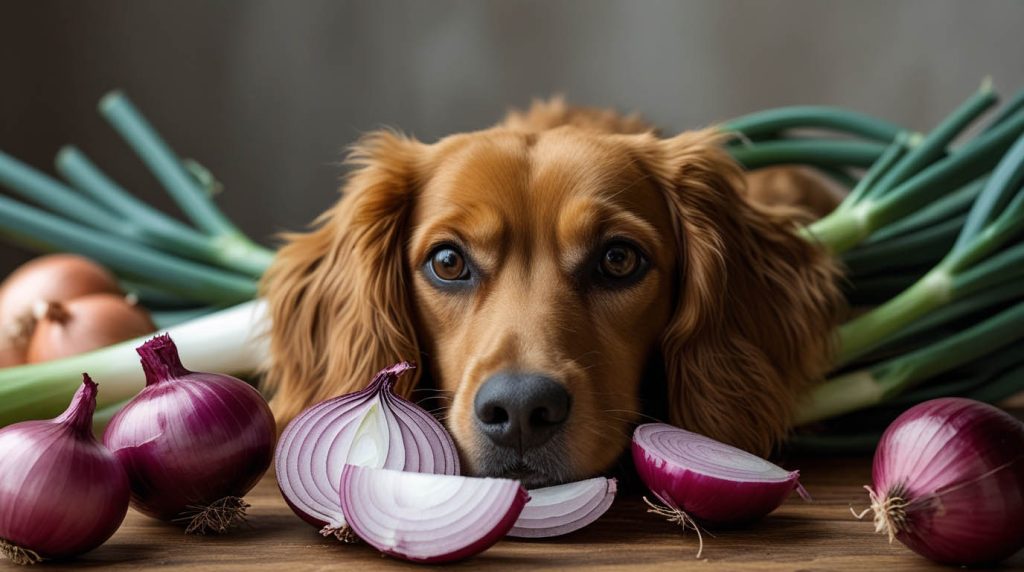
“Should dogs eat something that attacks their blood and oxygen supply?”
And the answer, obviously, is no.
How Toxic Doses Shape the “Should Dogs Eat Onions” Rule
Toxicity always depends on dose per body weight and frequency. Studies summarized in veterinary references suggest that as little as 0.5% of a dog’s body weight in onion can cause problems.
Roughly speaking:
- A 10 kg (22 lb) dog may be at risk from ~50 g of onion (about half a small onion).
- A 20 kg (44 lb) dog may be at risk from ~100 g (about one small onion).
However, two extra details explain why the answer to “should dogs eat onions” is still “no,” even when portions look tiny:
- Onion powder is more concentrated than fresh onion, so small amounts can deliver a big dose.
- Repeated small servings over days can add up to a toxic total dose.
So even if your dog “seemed fine” after a small bite once, that doesn’t mean you should treat onions as safe going forward.
What Does “Should Dogs Eat Onions” Actually Mean in Daily Life?
Forms of Onion That Affect Whether Dogs Should Eat Onions
When people ask “should dogs eat onions,” they often picture raw rings or diced onion. But onions sneak into your dog’s world in many forms:
- Raw onions (red, yellow, white, sweet)
- Cooked onions (grilled, fried, sautéed, roasted, caramelized)
- Onion powder in spice mixes, soups, sauces, chips, and snacks
- Dehydrated onion in instant noodles and dry soup packets
- Mixed dishes like stews, stir‑fries, curries, casseroles, burgers, and meatloaf
- Prepared items such as some broths, baby foods, deli salads, and frozen meals
The ASPCA Animal Poison Control Center lists onions as toxic in all these forms. Cooking may soften the texture and sweeten the flavor, but it doesn’t remove the harmful compounds.
So when you decide whether dogs should eat onions, you’re also deciding about onion gravy, onion‑seasoned meat, onion‑based soups, and any food where onion hides under the label “spices” or “natural flavors.”
Related Alliums and the “Should Dogs Eat Onions” Question
Onions aren’t alone. The Allium family includes:
- Garlic
- Leeks
- Shallots
- Chives
These share similar oxidative compounds and can cause the same type of anemia. Some evidence even suggests garlic is more potent than onion by weight.
In other words, when you say, “Dogs shouldn’t eat onions,” you’re also implicitly saying:
“Dogs shouldn’t eat other Allium vegetables either.”
That one mental shift simplifies a lot of feeding decisions.
What Happens When You Ignore “Should Dogs Eat Onions”?
Early Clinical Signs That Follow “Should Dogs Eat Onions” Mistakes
If a dog eats onions, the first signs you see usually involve the digestive system. These can appear within a few hours to 24 hours:
- Vomiting
- Diarrhea or soft stool
- Drooling or lip‑smacking
- Loss of appetite
- Mild abdominal pain (restlessness, whining, hunched posture)
At this point, most people don’t connect these symptoms to the “dogs should not eat onions” rule they broke the day before. It just looks like “they ate something that didn’t agree with them.”
However, if you know onions were involved, you’re already seeing the first wave of consequences.
Advanced Symptoms That Prove Dogs Should Not Eat Onions
Over the next 1–5 days, as hemolytic anemia develops, more serious signs show up:
- Lethargy and weakness – your dog seems unusually tired or “floppy”
- Pale or white gums – instead of healthy bubble‑gum pink
- Fast breathing or panting at rest – the body tries to make up for low oxygen
- Elevated heart rate – you can feel a rapid heartbeat at the chest
- Exercise intolerance – your dog can’t finish usual walks or play sessions
- Dark red, brown, or cola‑colored urine – from hemoglobin released by destroyed red blood cells
- Yellowish gums or eye whites (jaundice) in severe or prolonged cases
- Collapse or inability to stand in the most serious situations
The Pet Poison Helpline’s onion page describes this exact progression and emphasizes how dangerous it can become without treatment.
Once you’ve watched a dog struggle to walk or seen cola‑colored urine after an onion ingestion, you stop asking whether dogs should eat onions as a theoretical question. You start treating it as a hard rule.
What Is “Should Dogs Eat Onions” From a Vet’s Perspective?
How Vets Frame the “Should Dogs Eat Onions” Decision
From a veterinarian’s point of view, “should dogs eat onions” isn’t just a diet question. It’s a toxicity question.
They see:
- A totally avoidable cause of hemolytic anemia
- A frequent source of emergency visits, especially around holidays and big family meals
- A problem that costs dogs suffering, and owners stress and money
The American Veterinary Medical Association’s pet food safety guidance explicitly lists onions and garlic as human foods that regularly send pets to the vet.
When you ask a vet, “Should dogs eat onions if it’s just a little bit?” you’re really asking, “Is it okay if I risk anemia and emergency care for flavor?” Their answer will almost always be: no, it’s not worth it.
How Vets Diagnose Onion Problems After Dogs Eat Onions
When a dog comes in with a history that suggests the “should dogs eat onions” rule got ignored, vets typically:
- Take a detailed history – what the dog ate, when, and in what amount.
- Perform a physical exam – checking gum color, heart and breathing rates, abdominal comfort, and hydration.
- Run a complete blood count (CBC) – measuring red blood cell levels and looking for evidence of anemia.
- Examine a blood smear – to identify Heinz bodies and other red cell changes typical of onion toxicity.
- Sometimes check urinalysis and blood chemistry – to assess organ function and see if hemoglobin appears in the urine.
Once they connect anemia and Heinz bodies to a confirmed onion exposure, the answer to “should dogs eat onions” becomes more than theoretical—it’s backed up by lab data from your own dog.
Why Clear Rules About “Should Dogs Eat Onions” Are Essential
Why “Should Dogs Eat Onions” Knowledge Protects Your Dog
Understanding that dogs shouldn’t eat onions does a few important things for you:
- It simplifies feeding decisions – no more debates at the table about “just one bite.”
- It helps you spot danger early, because you connect subtle symptoms (like lethargy or pale gums) back to onion exposure.
- It lets you educate others—kids, guests, dog sitters—so your dog stays safe even when you’re not in the room.
- It reduces the odds of an expensive, emotionally draining emergency visit.
In my experience, once owners deeply “get” why should dogs eat onions is always answered with no, they stop asking for exceptions. Instead, they ask better questions: “What can I safely share?” and “What should I do if an accident happens?” Those questions actually protect dogs.
How To Implement “Should Dogs Eat Onions” Safely in Daily Life
Step‑by‑Step Feeding Strategy Around “Should Dogs Eat Onions”
You don’t have to memorize complex rules. You just need a simple, repeatable strategy:
- Plan ahead when you cook
- Before chopping onions, decide where your dog will be (crate, bed, another room).
- Gather your ingredients so you don’t leave onion scraps where your dog can grab them.
- Create dog‑safe and dog‑unsafe zones
- Mark the kitchen as a no‑dog area during cooking and cleanup.
- Treat the trash can and compost bin as off‑limits by using lids or placing them behind doors.
- Set aside plain food before seasoning
- Cook meats and veggies with no onion or garlic first.
- Remove your dog’s portion into a separate container or bowl.
- Then season your portion with onions, garlic, salt, and spices.
- Never use “flavored” broths or sauces for dog food without checking labels
- Many “savory” or “home‑style” broths contain onion or garlic powder.
- Read the ingredient list and skip anything with Allium ingredients for your dog.
- Standardize leftover rules
- Leftovers with onions, garlic, or unknown seasonings never go to the dog.
- If nobody can confirm what’s in it, the default answer is “not for the dog.”
Step‑by‑Step Response If You Broke the “Should Dogs Eat Onions” Rule
If an accident happens—and it will, in real life:
- Stay calm but act quickly.
Take a breath so you can think clearly. - Estimate how much onion your dog ate and when.
Note whether it was raw, cooked, or a dish with onion powder. - Call your veterinarian or an emergency clinic.
Describe your dog’s weight, what they ate, how much, and any symptoms. - Follow professional instructions exactly.
If they say to come in, go. If they say to monitor at home, keep a close eye and call back if things change. - Watch for delayed symptoms over the next several days.
Pay attention to gum color, energy, breathing, and urine color.
Once you’ve been through one scare, you’ll find the “should dogs eat onions” rule feels much more real, and you’re far less likely to let it slide again.
Common Mistakes About “Should Dogs Eat Onions”
Misconception 1: Dogs Should Eat Onions Only If They’re Cooked
Many people think cooking makes toxic foods safe. With onions, it doesn’t. Cooking:
- Changes texture and flavor
- Does not remove the compounds that damage red blood cells
Caramelized onions, grilled onions on burgers, and sautéed onions in stir‑fries all pose the same basic risk. So, even in cooked form, the answer to “should dogs eat onions” stays firmly “no.”
Misconception 2: Big Dogs Should Eat Onions Because They Can “Handle More”
Yes, a large dog generally needs more onion to reach a dangerous dose. But:
- Big dogs often get bigger leftovers, so the margin of safety shrinks quickly.
- Even large dogs can develop anemia from repeated small doses.
Treating “big” as “safe” is a shortcut that ignores the science. It’s much easier to keep the should dogs eat onions answer consistent for every dog in your house.
Misconception 3: If No Symptoms Show, Dogs Should Eat Onions Again
Sometimes a dog eats a small amount of onion and nothing obvious happens right away. Owners then think, “Well, they didn’t get sick, so maybe dogs should eat onions in tiny amounts.”
Here’s the problem:
- Mild damage might not produce visible signs.
- Subclinical anemia can still stress the body, especially if the dog faces another illness later.
- You have no way to know exactly how close you came to a serious issue.
In short: a lucky escape doesn’t mean the risk disappears. It just means you got a warning and a second chance to enforce “should dogs eat onions” = no.
Best Practices Once You Decide “Should Dogs Eat Onions” Is No
Safe Treat Alternatives When Dogs Should Not Eat Onions
Knowing that dogs shouldn’t eat onions doesn’t mean your dog never gets a tasty snack. It just means you choose different options.
Safer human foods include:
- Plain cooked meats – chicken, turkey, lean beef or pork (no bones, no seasoning)
- Dog‑safe vegetables – carrots, green beans, peas, cucumber slices
- Dog‑safe fruits (in moderation) – blueberries, apple slices (no seeds), banana
The American Kennel Club’s guide to human foods is a great quick reference.
This way, “no” to should dogs eat onions feels less restrictive, because you’ve got a list of “yes” options ready to go.
Quick Takeaway Box
Practical Tip:
Anytime you wonder, “Should dogs eat this?” run through two questions:
- Does it contain onion, garlic, or onion/garlic powder?
- Am I totally sure it doesn’t?
If the answer to #1 is yes, or the answer to #2 is no, then it’s not for your dog.
Tools and Resources That Back Up “Should Dogs Eat Onions = No”
You don’t have to remember every toxic food. Keep a few trusted resources handy so the answer to “should dogs eat onions” is always backed by evidence, not just “something you heard once.”
Useful resources include:
- Merck Veterinary Manual – Onion and Garlic Toxicity – In‑depth scientific reference.
- Pet Poison Helpline – Onions – Owner‑friendly explanation of toxicity, signs, and treatment.
- ASPCA Animal Poison Control Center – Database plus 24/7 emergency hotline.
- AVMA – Pet Food Safety – Overview of risky human foods for pets.
- PetMD – Can Dogs Eat Onions? – Vet‑reviewed article in straightforward language.
Bookmark at least one. Then, if someone questions your “no” on should dogs eat onions, you can show them the data, not just your opinion.
Case Studies: Families Who Learned “Should Dogs Eat Onions” the Hard Way
Case 1: The Onion Soup Disaster
Jack, a 25‑lb Cocker Spaniel, lived with a family that adored French onion soup. One evening, they left a large bowl on the coffee table. Jack helped himself to the soaked bread and a fair bit of onion while they were in another room.
The next day, Jack vomited and had diarrhea. His owners assumed it was a simple stomach upset. Two days later, he could barely stand, his gums looked white, and he breathed rapidly even at rest.
At the emergency clinic, blood tests showed severe anemia. The vet asked about diet, and suddenly that bowl of onion soup came back to mind. Jack needed IV fluids, oxygen, and a blood transfusion. He survived—but the family will never again argue about “should dogs eat onions.”
Case 2: The “Just a Bite” Habit
Milo, a 50‑lb mixed breed, was used to getting “just a bite” of whatever his owners ate. Many nights that meant a few forkfuls of stir‑fry, pasta with onion‑rich sauce, or meatloaf with sautéed onions.
Over time, Milo’s energy dropped. He still ate and wagged, but he quit halfway through play sessions and slept a lot. At his annual checkup, his vet found mild anemia on bloodwork and pale gums on exam.
When they walked through Milo’s diet, the picture became clear. The vet explained that the answer to “should dogs eat onions” is “no,” even in small daily amounts. After they cut out table scraps, Milo’s red blood cell levels normalized and his energy returned.
These stories echo countless cases seen by vets and poison centers. Owners aren’t malicious—they’re just unaware. Once they see the real‑world consequences, the rule “dogs shouldn’t eat onions” feels obvious and non‑negotiable.
Future Trends: Will “Should Dogs Eat Onions” Ever Change?
Realistically, the basic science behind onion toxicity is solid. It’s extremely unlikely that future research will suddenly say, “Actually, dogs should eat onions.”
What may change instead is:
- Better tools to prevent accidents – apps that flag onion and garlic when you scan food labels.
- Smarter kitchen products – pet‑safe recipe suggestions and automatic warnings for common toxins.
- Greater public awareness – more vets, trainers, and shelters emphasizing that onions are just as concerning as chocolate in many cases.
So, even as tech evolves, the simple answer to “should dogs eat onions” remains a crucial, protective rule for every dog owner.
Frequently Asked Questions About “Should Dogs Eat Onions”
Q1: Should dogs eat onions in any form at all?
No. Dogs should not eat onions in any form—raw, cooked, powdered, or dehydrated. All forms contain compounds that can damage red blood cells and cause anemia.
Q2: Should dogs eat onions if it’s just a small amount?
Even small amounts can be risky, especially in small dogs or when given repeatedly. Because you can’t know your dog’s exact sensitivity or cumulative dose, the safe and sensible answer is still no.
Q3: Should dogs eat onions if they are mixed into food, like stew or gravy?
They shouldn’t. Onions mixed into dishes still pose the same risk, and onion‑based gravies often contain concentrated onion or onion powder.
Q4: What should I do if my dog accidentally ate onions?
Call your veterinarian or a pet poison hotline right away. Share your dog’s weight, what they ate, how much, and when. Follow their guidance even if your dog seems fine at first, because symptoms can be delayed.
Q5: Should dogs eat onions if my vet didn’t see symptoms last time?
A lack of obvious symptoms after one incident doesn’t make onions safe. It just means the dose wasn’t high enough to cause visible damage that time. The long‑term rule stays the same: dogs should not eat onions.
Conclusion: Make “Should Dogs Eat Onions” a Simple, Lifelong No
Onions feel harmless because they’re a staple in almost every kitchen, but inside a dog’s body they behave like a slow, quiet threat to the blood that carries oxygen everywhere. Once you understand the physiology, the warning signs, and the real‑world cases, the answer to “should dogs eat onions” stops feeling like a cautious suggestion and becomes a clear, protective boundary.
You’ve seen how onion compounds damage red blood cells, how early digestive upset can turn into dangerous anemia, and how quickly things can escalate when owners don’t recognize the pattern. You’ve also learned how simple changes—keeping dogs out of the kitchen, securing the trash, setting aside plain portions, and saying no to seasoned leftovers—can almost eliminate the risk.
Now it’s your turn to act on this knowledge.
Tonight, look through your fridge, pantry, and regular recipes. Decide which foods are always “dog‑only” and which are “human‑only” because they contain onions or garlic. Share your new rules with everyone in your household. Then bookmark at least one veterinary poison resource on your phone.
When you turn “should dogs eat onions” into a firm, thoughtfully enforced no, you’re not being strict—you’re protecting your dog’s blood, oxygen, and life with one of the simplest decisions you’ll ever make as a pet parent.

 Should Dogs Eat Onions? The Definitive Answer