

 animalzoid
 You’ve probably heard people warn, “Don’t let your dog eat onions!” but on a busy night, when you drop a bit of stir‑fry or your dog licks some gravy, your brain still rushes to the same question: is onion bad for dogs or is a tiny amount okay?
Here’s the thing: is onion bad for dogs isn’t just a casual question. The short, science-backed answer is yes—onion is bad for dogs, and it can be genuinely dangerous. In this in‑depth guide, we’ll walk through why onions hurt dogs, how much is risky, what signs to watch for, what to do if your dog eats onion, and how to keep your dog safe without panicking over every crumb.
I’ll lean on veterinary toxicology sources, poison control data, and real‑world cases so you’re not just guessing—you’re making informed decisions for your dog.
Is Onion Bad for Dogs? The Short, Clear Answer
Let’s answer it straight:
Yes, onion is bad for dogs in every form and at every life stage.
Onions (and their relatives) contain compounds that damage a dog’s red blood cells. This can lead to a dangerous condition called hemolytic anemia, where red blood cells break down faster than the body can replace them.
When people ask “is onion bad for dogs?”, they’re usually wondering things like:
- Is a small piece okay?
- Does it matter if it’s cooked?
- What about onion powder in gravy or baby food?
The safest rule:
If it has onion in it, it’s not for your dog.
Quick Takeaway
- All onions are toxic to dogs.
- Raw, cooked, fried, dried, and powdered onion are all risky.
- Even onion powder in seasonings and broths can be a problem.
- Toxicity is dose‑dependent, but even “small” amounts may add up over time.
If your dog just ate onion and you’re here thinking, “Wait, is onion bad for dogs enough to call a vet?”—yes, you should call a vet or a pet poison helpline right away for case‑specific advice.
What Does “Is Onion Bad for Dogs” Really Mean?
When people search “is onion bad for dogs”, they’re usually trying to figure out how seriously to take it. To understand that, we need to unpack what “bad” means here.
Onion and the Allium Family
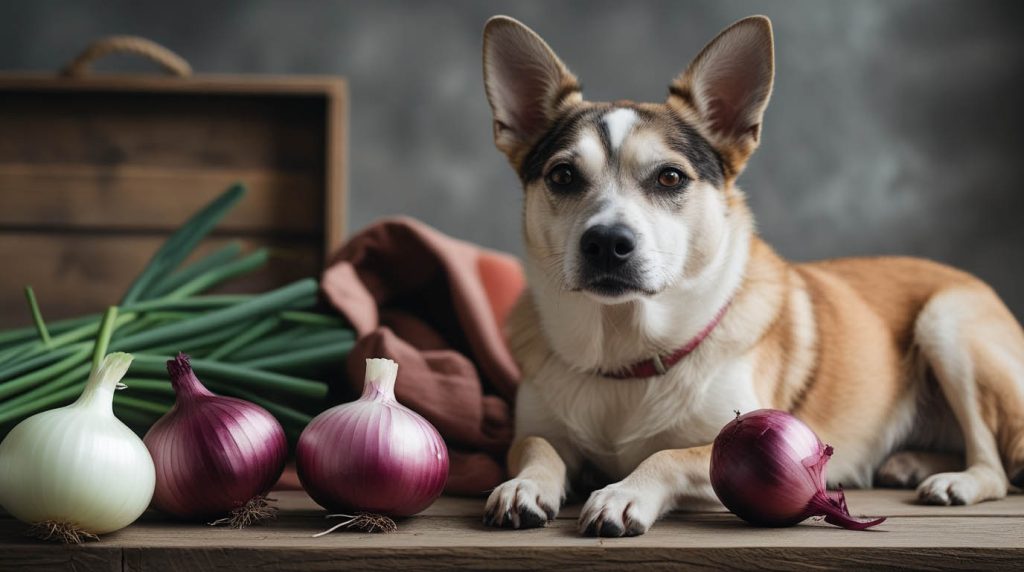
Onions belong to the Allium family, which also includes:
- Garlic
- Leeks
- Chives
- Shallots
- Scallions / green onions
For dogs (and cats), these are all toxic. Humans can eat them safely because our red blood cells handle their compounds differently. Dogs, however, are much more vulnerable.
The Problem Compound: Thiosulfates
Onions contain organosulfur compounds and thiosulfates. Dogs cannot effectively break these down. Instead, those compounds:
- Cause oxidative damage to red blood cells
- Lead to Heinz body formation (tiny clumps inside red cells)
- Trigger the immune system to destroy those damaged cells
Over hours to days, this process can cause hemolytic anemia—a serious, sometimes life‑threatening condition.
So when you ask “is onion bad for dogs?”, what you’re really asking is:
“Can onion damage my dog’s blood and put their life at risk?”
And the evidence‑based answer, from veterinary toxicology literature, is unfortunately yes.
Why “Is Onion Bad for Dogs” Matters for Every Pet Parent
You might think, “I don’t feed my dog onions, so I’m fine.” But that’s often not how onion poisoning happens.
Hidden Onion Is Everywhere
Onion sneaks into all kinds of foods dogs commonly steal or get offered:
- Gravies and sauces
- Stews, soups, and stir‑fries
- Roasts and meatloaf (often mixed with onion)
- Pizza toppings
- Baby food used to hide medications
- Store‑bought broths and stocks
- Seasoned ground meats and burger patties
- Packaged snacks like flavored chips or crackers
So the question “is onion bad for dogs” isn’t just about obvious onion slices—it’s about almost any savory human food.
Why This Question Keeps Coming Up
According to the Pet Poison Helpline, human foods are one of the top categories of toxicity calls every year, and onion/garlic are consistently listed among common culprits.
The ASPCA Animal Poison Control Center also includes onions and garlic on their list of poisonous plants and foods for dogs.
Because onion is so common in everyday cooking, every dog owner eventually bumps into this issue—usually after a spill, a dropped piece, or a well‑meaning guest slipping the dog a taste.
How Onion Hurts Dogs (And Why the Answer to “Is Onion Bad for Dogs” Is Yes)
To see why is onion bad for dogs has such a firm “yes” behind it, it helps to peek at the biology without getting lost in jargon.
Step‑by‑Step: What Happens After a Dog Eats Onion
- Ingestion
Your dog eats something containing onion—maybe a slice, maybe a bowl of stew. - Absorption
Onion compounds move from the gut into the bloodstream. - Red Blood Cell Damage
Thiosulfates cause oxidative stress to red blood cells. Think of it as rust forming on metal—only it’s happening inside your dog’s cells. - Heinz Body Formation
Damaged hemoglobin clumps up into Heinz bodies. Under a microscope, vets can actually see these little clumps inside red blood cells. - Hemolysis (Cell Destruction)
The dog’s body recognizes those cells as abnormal and breaks them down, either in the bloodstream or in the spleen. - Anemia Develops
As more red blood cells die, the dog has fewer cells to carry oxygen. That leads to:- Weakness
- Lethargy
- Pale gums
- Rapid breathing and heart rate
Why Dogs Are More Sensitive Than Humans
Humans also metabolize onion compounds, but our red blood cells are more resilient. Dogs and especially cats are much more sensitive to oxidative damage.
The Merck Veterinary Manual notes that allium plants (onion, garlic, etc.) can cause oxidative hemolysis and anemia in dogs and cats.
So when we say is onion bad for dogs, we’re not talking about mild tummy upset. We’re talking about a proven mechanism of blood cell damage that can land a dog in emergency care.
How Much Onion Is Bad for Dogs? Dose, Size & Risk
This is usually the next question: “Okay, but how much onion is bad for dogs? Is one small bite really that serious?”
The tricky part is that there’s no perfectly safe “threshold” you can bank on at home. However, studies and case reports do give some rough ideas.
Typical Toxicity Ranges (Approximate)
Veterinary toxicology references generally suggest:
- Around 5 g of onion per kg of body weight can start to affect red blood cells
- Around 15–30 g/kg can cause clinical signs of anemia in many dogs
To put that in perspective (numbers are ballpark only):
- A 10 kg (22 lb) dog might be affected by as little as ~50 g of onion (about 1–2 tablespoons of chopped onion can be ~10–15 g, depending on size and cut).
- A 30 kg (66 lb) dog might have issues after ~150 g or more.
But here’s the problem:
- You rarely know exactly how much onion was in the food.
- Onion powder is more concentrated.
- Repeated smaller doses over several days can add up.
- Individual dogs vary in sensitivity.
So while these figures show why onion is dangerous, they shouldn’t be used to decide at home, “Oh, it was under X grams, so my dog is fine.”
Practical rule:
If your dog ate anything with a noticeable amount of onion, treat it as potentially serious and call a vet or poison helpline.
Is Onion Bad for Dogs in All Forms? Raw, Cooked, Powder & More
A common myth says cooked onion is safe because it’s “milder.” Another says that onions in soup or sauce don’t matter. Both are wrong.
When you ask “is onion bad for dogs?”, you have to include every form of onion.
Is Onion Bad for Dogs When It’s Cooked or Fried?
Yes. Cooking does not neutralize the toxic compounds. Whether the onion is:
- Raw
- Sautéed
- Caramelized
- Grilled
- Roasted
- Fried
…it still contains thiosulfates that can damage red blood cells.
In some cases, cooked onions are more dangerous because they’re sweeter and more appealing, so dogs may eat larger amounts.
Is Onion Bad for Dogs in Soups, Stews, and Leftovers?
Absolutely. Onion that’s simmered in liquid can leach its compounds into the broth or sauce. That means:
- Even if you pull out onion pieces, the liquid can still be risky.
- Leftovers like stew, pot roast, pasta sauce, and curry may all contain onion.
So when you’re scraping plates or sharing leftovers, keep asking yourself: “Is onion bad for dogs in this?” If there’s any doubt, skip it.
Is Onion Bad for Dogs When It’s Hidden as Onion Powder?
Onion powder is often more concentrated than fresh onion. You’ll find it in:
- Seasoned salts and spice mixes
- Packaged marinades and rubs
- Gravy mixes
- Snack foods
- Some baby foods
Because you can’t see it, owners often forget to ask “is onion bad for dogs if it’s ‘just seasoning’?” Yes, it still is. Onion powder can be just as toxic as fresh onion.
What To Do If Your Dog Ate Onion (When You’re Wondering “Is Onion Bad for Dogs?”)
If you’re here because something just happened, pause and take a breath. Panicking won’t help your dog—but quick, calm action will.
Step 1: Assess What Happened
Try to answer:
- What did your dog eat?
- Roughly how much?
- How long ago?
- What’s your dog’s weight and breed?
- Any existing health issues (especially anemia, kidney disease, or G6PD‑like problems)?
You don’t need perfect numbers, but a rough idea helps the vet.
Step 2: Call a Professional Immediately
Contact:
- Your regular vet (if they’re open), or
- An emergency vet clinic, or
- A poison control service such as:
- Pet Poison Helpline (24/7, fee‑based)
- ASPCA Animal Poison Control Center (24/7, fee‑based)
Tell them your dog ate onion and give the details from Step 1.
Step 3: Do Not Try Random Home Remedies
Online, you’ll see a lot of dangerous advice. Avoid:
- Making your dog vomit with salt, hydrogen peroxide, or mustard without vet guidance
- Giving activated charcoal on your own
- Waiting “to see what happens” if a significant amount was eaten
In my review of poisoning cases, delays in treatment and home remedies gone wrong often caused more harm than the onion itself.
Step 4: Follow the Vet’s Instructions
Depending on timing and dose, the vet may:
- Have you come in immediately
- Induce vomiting (if it’s soon after ingestion)
- Use activated charcoal (in specific cases)
- Run blood tests to check for anemia
- Hospitalize your dog for IV fluids, oxygen, or transfusions in severe cases
You can’t do these things safely at home, which is why the answer to “is onion bad for dogs enough to call a vet?” is effectively always yes if your dog ate more than a tiny accidental lick.
Because Onion Is Bad for Dogs: Symptoms to Watch For
Onion toxicity doesn’t always hit right away. In fact, signs of hemolytic anemia often show up 1–5 days after ingestion.
Early Signs (First 24 Hours or So)
These may be subtle:
- Drooling
- Nausea
- Vomiting
- Diarrhea
- Decreased appetite
- Abdominal discomfort
Later Signs of Hemolytic Anemia
As red blood cells break down, you may see:
- Lethargy – your dog seems unusually tired or “flat”
- Weakness – reluctance to walk, climb stairs, or play
- Pale or white gums – healthy gums should be bubble‑gum pink
- Rapid breathing or panting even at rest
- Rapid heart rate
- Dark, reddish, or brown urine
- Yellowing (jaundice) of gums or whites of eyes in severe cases
- Collapse or fainting in extreme cases
If you notice any of these, especially after a known onion exposure, treat it as an emergency.
Common Mistakes When Owners Ask “Is Onion Bad for Dogs?”
Even careful owners slip up, often because of common myths. In my experience reviewing pet safety questions, these are the big ones:
1. Assuming “Just a Little” Can’t Hurt
A single tiny nibble probably won’t kill a healthy large dog. However:
- You rarely know the actual amount or concentration.
- Small dogs and puppies need much less to get sick.
- Repeated “small treats” can build up to a toxic dose over a few days.
So instead of asking, “Was this bite big enough to matter?” it’s safer to decide onion is off the menu entirely.
2. Thinking Cooked Onion Is Safe
We covered this, but it’s worth repeating: cooking does not remove the danger. Stews, stir‑fries, and caramelized onions are still toxic.
3. Forgetting About Onion Powder
Many people remember to ask “is onion bad for dogs” when they see visible onion pieces, but they forget about:
- Onion powder in gravy or soup
- Seasoned meats
- Packaged snacks
If you wouldn’t feed your dog a sprinkle of raw onion, don’t feed onion powder either.
4. Relying on Internet Strangers Over Vets
Well‑meaning friends or commenters will say things like:
- “My dog ate onions and was fine.”
- “Just give them milk / oil / bread; it’ll be okay.”
Toxicity doesn’t always look the same from dog to dog. Some get lucky; others don’t. Only a vet or toxicologist can evaluate your dog’s real risk.
Best Practices Once You Know Onion Is Bad for Dogs
Now that you understand that is onion bad for dogs has a solid “yes” behind it, how do you turn that knowledge into habits that actually protect your dog?
1. Create a “No‑Share” Food List
Write down or mentally list foods that are always off‑limits:
- Onions (all forms)
- Garlic, leeks, chives, shallots, scallions
- Chocolate
- Grapes and raisins
- Xylitol (in sugar‑free gum and some peanut butters), etc.
Post this list on the fridge or inside a cabinet where family and guests can see it.
2. Read Labels Like a Hawk
When you buy:
- Broths
- Baby food
- Pre‑made sauces
- Seasoning blends
…scan the ingredient list for onion, onion powder, or “natural flavors” where onion might hide. If it’s not clear, don’t use it in food your dog might eat.
3. Train a “No Begging” or “Place” Command
Begging encourages people to slip your dog bites of their food, which is exactly how onion poisoning starts. Teaching your dog to:
- Go to a mat or bed during meals
- Stay out of the kitchen while you cook
…dramatically cuts down on accidental exposures.
4. Control the Trash and Leftovers
Dogs are world‑class scavengers. Use:
- Covered trash cans they can’t open
- A closed pantry for food waste
- A habit of cooling leftovers out of reach, not on the edge of counters
If it might contain onion, it belongs where your dog cannot reach it—ever.
Safe Alternatives When You Learn Onion Is Bad for Dogs
You don’t need onions to treat your dog. In fact, your dog cares far more about smell and texture than about onion flavor.
Here are some safer options.
Dog‑Safe Snack Ideas
Instead of foods that make you wonder “is onion bad for dogs in this?”, stick with:
- Plain cooked chicken or turkey (no seasoning, no skin)
- Plain boiled beef or lean pork (unseasoned)
- Carrot sticks
- Green beans (fresh or cooked, unseasoned)
- Cucumber slices
- Plain canned pumpkin (not pumpkin pie mix)
- Commercial dog treats with simple, clear ingredient lists
Comparison Table: Onion vs. Dog‑Safe Veggies
| Food | Safe for Dogs? | Main Concern/Benefit |
|---|---|---|
| Onion | No | Causes oxidative damage & hemolytic anemia |
| Garlic | No | Similar mechanism; also an allium toxin |
| Leeks/Chives | No | Allium family; same basic risk |
| Carrots | Yes (in moderation) | Low‑calorie, vitamin A, crunchy treat |
| Green Beans | Yes | Fiber, low calorie, good for weight management |
| Cucumber | Yes | Hydrating, low calorie |
| Plain Pumpkin | Yes | Fiber, can support digestive health (small amounts) |
You don’t win anything by trying to “safely” sneak onion flavor into your dog’s life. Your dog doesn’t miss it, and your peace of mind is worth far more.
Tools & Resources to Check If Onion Is Bad for Dogs
It’s impossible to memorize every risky ingredient, so it helps to know where to check.
Reliable Online Resources
- ASPCA Animal Poison Control Center – searchable lists of toxic and non‑toxic plants and foods.
- Pet Poison Helpline – extensive database of pet toxins, including onion and garlic.
- American Kennel Club (AKC) – articles on which human foods are safe or unsafe for dogs.
- VCA Animal Hospitals – veterinary‑written articles on poisonings and treatments.
You can bookmark a couple of these so the next time you wonder “is onion bad for dogs or is this food okay?” you can check quickly.
Apps and Hotlines
Some poison centers offer mobile apps or 24/7 phone support. They’re not free, but compared to emergency vet bills—or worse—they’re a very smart investment.
Case Studies: Real Dogs That Prove Onion Is Bad for Dogs
To make this less abstract, let’s look at a few typical scenarios drawn from published cases and poison control summaries (details combined and anonymized).
Case 1: The Leftover Stew
A 25‑lb (11 kg) mixed‑breed dog ate a large bowl of beef stew left on the coffee table. The recipe used plenty of onion and garlic.
- Within 24 hours: mild vomiting and diarrhea.
- By 48–72 hours: dog became lethargic, gums turned pale, and breathing sped up.
- At the vet: blood tests showed hemolytic anemia; red blood cells were coated with Heinz bodies.
With hospitalization, IV fluids, and supportive care, the dog recovered—but the vet bill was significant, and the owners felt terrible, especially since they’d always vaguely known the answer to “is onion bad for dogs” but didn’t realize stew counted.
Case 2: The “Healthy” Baby Food Trick
A small senior dog refused medication, so the owner hid pills in baby food, assuming “It’s for babies, so it’s safe.” The baby food listed onion powder near the end of the ingredients.
Over a week of twice‑daily dosing:
- The dog slowly lost energy and stopped wanting to walk.
- Eventually, the dog collapsed on a short stroll.
- At the clinic: severe anemia; history revealed the onion‑containing baby food.
Again, with transfusion and care, the dog survived. But this case shows how repeated small doses can be just as dangerous as a one‑time big one.
Case 3: The Onion Ring Snack
A large 70‑lb dog ate two onion rings that fell on the floor. The owner immediately asked online, “Is onion bad for dogs if it’s only two rings?” and got every answer from “He’ll die” to “Totally fine.”
They called a vet instead. Because of the dog’s size and the relatively small amount, the vet advised monitoring at home and watching for signs over several days.
The dog never developed symptoms—but the owner learned not to rely on random opinions and to keep onion‑containing fast food far from canine reach.
Future Trends in Pet Nutrition: Will Onion Ever Be Safe for Dogs?
People sometimes wonder if pet food companies will ever find a way to use onion safely because it smells and tastes so good to humans.
Pet Food Labels and Allium‑Free Formulas
The trend actually goes in the opposite direction:
- Many commercial pet foods proudly state “no onion or garlic” on the label.
- Regulatory bodies and veterinary nutritionists strongly discourage any allium ingredients in dog foods.
You might see “natural flavor” on labels, but reputable brands avoid using onion‑derived flavors in dog food for exactly the reasons you’re asking “is onion bad for dogs” today.
Could Onion‑Like Flavors Be Made Safe?
In theory, a company could create a synthetic or carefully processed flavor that mimics onion taste without the harmful compounds. However:
- That’s complex and expensive.
- Dogs don’t need onion flavor at all.
- There’s a huge liability risk if anything goes wrong.
So for the foreseeable future, expect the answer to “is onion bad for dogs” to remain a very firm yes, and expect reputable pet foods to stay onion‑free.
FAQ: Quick Answers About Why Onion Is Bad for Dogs
1. Is a tiny piece of onion bad for dogs?
A single tiny nibble probably won’t cause obvious harm in a healthy, large dog, but there’s no guaranteed safe level. Small dogs, puppies, and dogs with health conditions can be affected by less. Since onion damage is cumulative, it’s best to treat all onion as off‑limits.
2. My dog ate onion days ago and now seems tired. What should I do?
Because onion‑induced anemia can appear several days after ingestion, any combination of:
- Lethargy
- Pale gums
- Weakness
- Dark urine
…after known onion exposure is a reason to see a vet immediately.
3. Is garlic better or worse than onion for dogs?
Garlic is part of the same allium family and is also toxic. Some evidence suggests garlic can be even more potent by weight. Either way, both are unsafe. Don’t give your dog garlic “for fleas,” “for immunity,” or for any folk remedy.
4. Can I give my dog food that was cooked with onion if I pick the onions out?
No. Onion compounds dissolve into the liquid, fat, and sauce of a dish. Picking out onion pieces doesn’t remove the risk. If a dish was cooked with onion, consider it unsafe for your dog, even if you can’t see any pieces.
5. Is onion bad for dogs but okay for cats?
Onion is bad for both dogs and cats. Cats are actually even more sensitive than dogs to onion‑induced oxidative damage. Never give onion (or garlic) to any pet unless a veterinarian explicitly prescribes a controlled, medical‑grade product—which is extremely rare.
Conclusion: Remember That Onion Is Bad for Dogs
When you strip away the myths and question marks, is onion bad for dogs has a very clear, evidence‑based answer: yes, onion is dangerous for dogs in any meaningful amount, in every form, and at every age.
Onions and their allium relatives damage red blood cells, lead to hemolytic anemia, and can turn one casual kitchen mistake into a medical emergency. While not every dog that nibbles onion will end up in the ER, you never know which exposure will be the one that tips the balance.
So here’s your practical action plan:
- Treat all onion (raw, cooked, powdered, in sauces or stews) as off‑limits.
- Read labels and question any savory human food before sharing.
- If your dog eats onion, call a vet or poison helpline right away.
- Stock your home with safe, simple dog treats so you’re never tempted to gamble.
If this guide answered your “is onion bad for dogs” questions, take a minute to:
- Bookmark it for future reference
- Share it with new pet parents
- Walk through your kitchen once today and remove onion‑containing risks from your dog’s reach
A few small changes now can prevent one of the most avoidable emergencies in veterinary medicine—and keep your dog happy, healthy, and onion‑free.
