

 Animal Zoid Editorial Team
 The Truth About the Dog Separation Anxiety Crate: A Guide to Safe and Successful Training
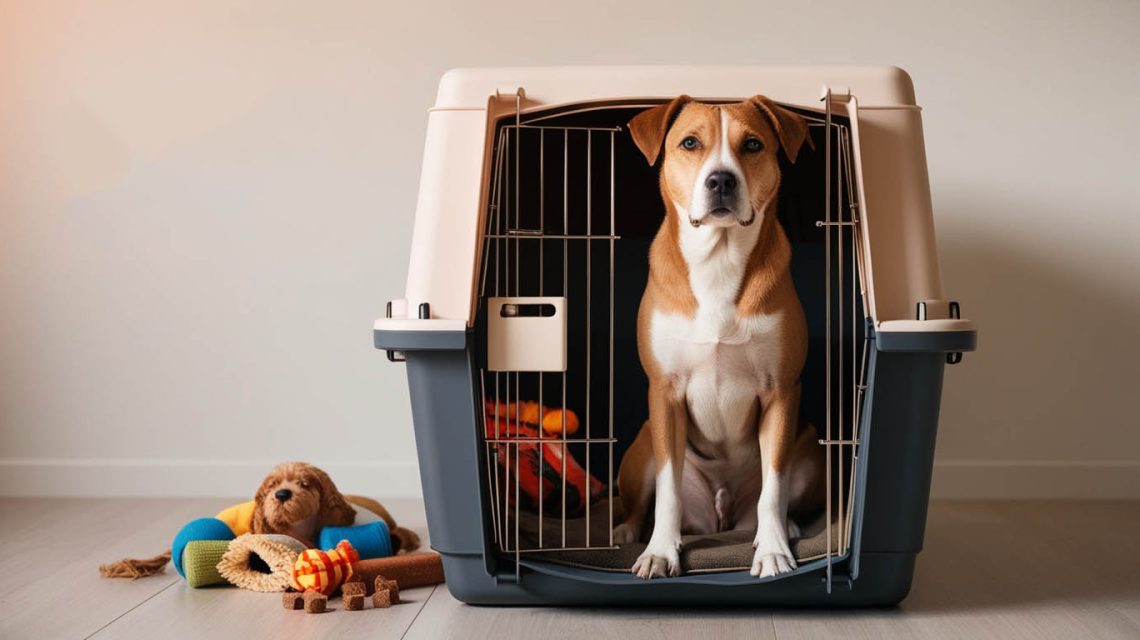
You’ve heard the advice a thousand times: “If your dog is destructive when you leave, just put them in a crate!” But if you’re the owner of a dog with true separation anxiety, you know it’s not that simple. For many of these dogs, a standard crate isn’t a safe den; it’s a panic room. This leads to a critical question: is a dog separation anxiety crate a helpful tool or a harmful trap?
Let’s follow the story of a dog owner named Sam and his rescue, a Beagle mix named Bailey. Sam came home one day to find Bailey had bent the bars of her wire crate, broken a tooth, and was covered in drool. The crate hadn’t contained her; it had amplified her terror. Sam realized that his approach to a dog separation anxiety crate was completely wrong.
This guide will navigate the complex and often misunderstood relationship between crates and separation anxiety. We’ll explore when a dog separation anxiety crate can be used, the immense dangers of using it incorrectly, and the step-by-step training process required to make it a place of safety, not fear.
Understanding the Dog Separation Anxiety Crate Dilemma
Here’s the fundamental conflict: for a well-adjusted dog, a crate taps into their natural denning instinct, providing a sense of security. But for a dog experiencing a separation anxiety panic attack, that same confinement can trigger intense claustrophobia and a frantic desire to escape. This is a crucial distinction.
When a Crate Makes Separation Anxiety Worse
For a significant number of dogs with moderate to severe separation anxiety, a crate is not the answer. The combination of isolation anxiety and confinement anxiety can create a perfect storm of panic.
The American Society for the Prevention of Cruelty to Animals (ASPCA) warns that dogs can seriously injure themselves trying to escape. They can:
- Break teeth on the bars.
- Lacerate their paws and mouth.
- Get their collars or limbs caught.
If your dog is already showing these signs of crate panic, stop using the crate immediately. Your primary goal is safety. A dog-proofed room with a baby gate is a much safer alternative while you work on a behavior modification plan.
When a Dog Separation anxiety Crate Can Be a Helpful Tool
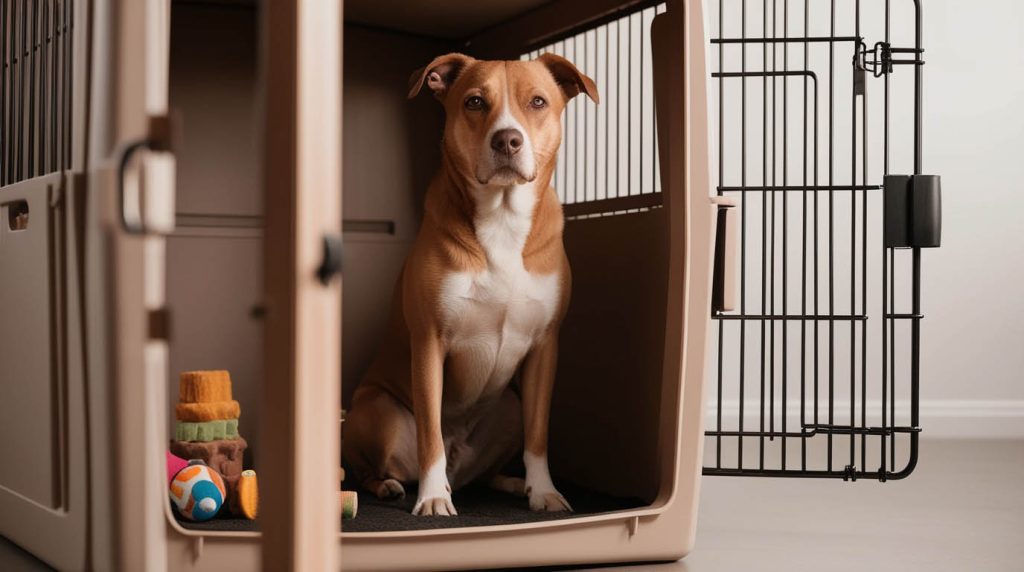
A crate can be a successful part of a separation anxiety plan if, and only if:
- The dog has mild anxiety and doesn’t exhibit escape behaviors.
- The dog has been properly and slowly crate-trained to see it as a safe, happy place before being left alone in it.
The crate doesn’t cure the anxiety, but it can provide a safe, managed space that prevents destructive behavior while you work on the root cause.
The Only Safe Way to Use a Dog Separation Anxiety Crate: Re-Training from Zero
If you believe your dog is a candidate for using a dog separation anxiety crate, you must erase any previous negative associations and start from scratch. This process is slow and requires immense patience.
Step 1: Making the Crate the Best Place on Earth
Your goal is to change your dog’s emotional response to the crate from “prison” to “palace.”
- Location, Location, Location: Place the crate in a central, social area of the house, like the living room.
- Five-Star Accommodations: Fill it with the most comfortable bedding you can find.
- The Open-Door Policy: For the first week (or more), the crate door is never closed. It’s just a comfy new piece of furniture.
- The Magic Appears: Randomly walk by and toss high-value treats inside for your dog to discover. You want them to think, “Amazing things just show up in here!”
- Fine Dining: Feed every single one of your dog’s meals inside the crate. This builds a powerful positive association.
Step 2: Crate Games and Positive Reinforcement
Actively make the dog separation anxiety crate a source of fun.
- Treat Toss: Toss a treat in, let your dog go get it, and come right back out. Repeat dozens of times.
- The “In and Out” Game: Use a cue like “Crate!” and reward your dog enthusiastically for going in. Then, immediately release them. The crate doesn’t mean they are trapped.
Step 3: Building Duration with the Dog Separation Anxiety Crate
This is where most people go wrong—they go too fast.
- Closing the Door (for one second): Once your dog is happily entering the crate, start closing the door for just a second, drop a treat through the bars, and then immediately open it. The door closing predicts a treat, not abandonment.
- Tiny Increments: Slowly increase the duration: three seconds, five seconds, ten seconds. If your dog shows any sign of stress (whining, pawing), you’ve gone too fast. Go back to the previous successful duration.
- Use a High-Value Distraction: Start giving your dog a super special toy (like a frozen Kong) that they only get inside the crate with the door closed.
Beyond the Crate: A Holistic Approach is Key
Remember, the dog separation anxiety crate is, at best, a management tool. It is not a cure. The real work happens outside the crate.
Behavior Modification for Separation Anxiety
The gold-standard treatment is Desensitization and Counter-Conditioning (DSCC) to your departure cues. This means breaking down your departure routine (picking up keys, putting on shoes) into tiny steps and pairing each one with a high-value reward. This slowly teaches your dog that your leaving is not a cause for panic.
The Importance of a Pet Camera
A pet camera is a non-negotiable tool for any dog separation anxiety crate training plan. It allows you to:
- See Their True Threshold: You can see exactly how long your dog is comfortable before they start to show stress signals.
- Prevent Panic: You can return before they have a full-blown panic attack, which is crucial for preventing the fear from getting worse.
What If My Dog is an Escape Artist? The High-Anxiety Crate
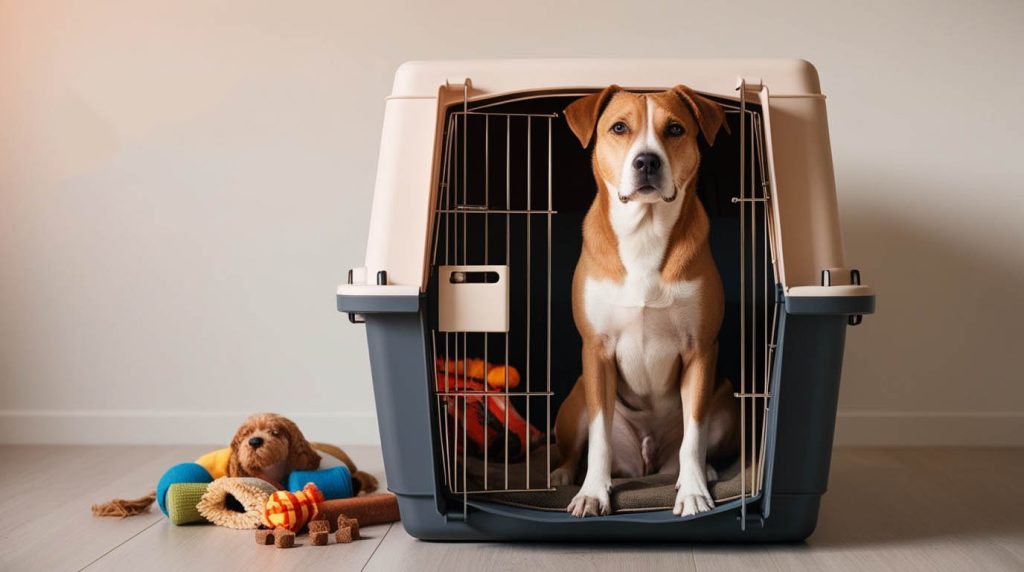
For some dogs, like Sam’s dog Bailey, their panic is so extreme that they will destroy any standard crate. In these specific, severe cases, a heavy-duty, escape-proof crate (often called a high anxiety dog crate) may be necessary for safety.
These are not a first-line solution. They are a significant investment and must be paired with the same slow, positive re-training protocol. Their purpose is to provide a completely safe environment that allows you to work on the underlying anxiety without fear of your dog injuring themselves.
A Case Study: Sam and Bailey’s Journey
After Bailey’s terrifying escape, Sam stopped using the crate and consulted a veterinary behaviorist.
- The Diagnosis: The behaviorist confirmed severe separation anxiety combined with confinement phobia.
- The Plan: They started a behavior modification plan focusing on DSCC. For management, they used a dog-proofed room.
- Medication: The vet prescribed Fluoxetine to lower Bailey’s baseline anxiety, making her more receptive to training.
- Re-introducing a Crate: After months of progress, they decided to try re-introducing a crate, following the slow, positive protocol outlined above. Because Bailey’s core anxiety was lower, she was able to learn that the crate was a safe place for her special Kong. The dog separation anxiety crate became a successful part of her long-term management.
FAQ: Your Questions on Dog Separation Anxiety Crates
Q: Can a dog with separation anxiety be crate trained?
A: Yes, but it requires extreme patience and a very slow, positive-reinforcement-based process. It is not guaranteed to work for every dog. If the dog’s panic escalates, another management solution (like a dog-proofed room) must be used.
Q: What can I put in my dog’s crate for separation anxiety?
A: A high-value, long-lasting food puzzle is your best bet. A frozen Kong filled with wet food, yogurt, or peanut butter (xylitol-free!) can keep a dog occupied and build a positive association. Avoid items they could shred and ingest.
Q: How do I stop my dog from having separation anxiety in the crate?
A: You must re-train the dog’s emotional response to the crate. This means a period of not using the crate for confinement and focusing entirely on “crate games,” feeding in the crate, and building positive associations, as detailed in the guide above.
Q: Is it cruel to crate a dog with separation anxiety?
A: It can be, yes. If a dog is panicking, trying to escape, and at risk of injuring themselves, forcing them into a crate is both cruel and dangerous. A dog separation anxiety crate is only a humane option if the dog has been properly conditioned to see it as a safe space and can remain calm inside it.
Conclusion: A Tool, Not a Cure
The dog separation anxiety crate is one of the most misunderstood tools in the dog training world. It is not a quick fix for a complex emotional disorder. As we’ve seen, for many dogs, it can make the problem dangerously worse. However, when approached with immense patience, a solid understanding of dog behavior, and a commitment to positive reinforcement, it can be a safe and effective part of a larger treatment plan.
The journey of Sam and Bailey teaches us the most important lesson: safety must always come first. From there, a holistic plan that addresses the root anxiety—through behavior modification, enrichment, and veterinary support—is the only true path to success. The crate is just one piece of a very large puzzle.
Is a crate the right tool for your anxious dog? Before you close that door again, take a step back. Assess your dog’s behavior honestly. If you see signs of panic, stop and consult a professional. If you decide to proceed, commit to the slow, positive training process. Your dog’s safety and well-being depend on it.

 Dog Separation Anxiety Crate: Complete Guide