


 Animal Zoid Editorial Team
 That guilty feeling when you grab your keys and your dog’s tail slows to a stop — every working dog owner knows it intimately. If you’re desperately searching for how to keep dog occupied while at work, you’re not alone, and you’re absolutely not a bad pet parent for having a job. Furthermore, the good news is that keeping your dog mentally stimulated, physically satisfied, and emotionally calm during work hours is genuinely achievable with the right strategies in place.
Research from the University of Lincoln found that dogs left alone for extended periods show measurable stress indicators — elevated cortisol levels, destructive behaviors, and persistent vocalization. Consequently, the question of how to keep dog occupied while at work isn’t just about protecting your furniture. It’s about your dog’s genuine emotional wellbeing every single weekday.
In this guide, we’ll cover everything that actually works — from morning routines that set your dog up for a calm day, to enrichment tools that engage their minds for hours, to professional support options worth considering. Furthermore, we’ll share what our team has observed across years of working with dogs and their owners on exactly this challenge. Let’s make your workday easier for both of you.
Why Knowing How to Keep Dog Occupied While at Work Matters
Understanding the why behind daytime dog boredom helps you choose the right solutions rather than guessing randomly. Furthermore, boredom and under-stimulation in dogs cause genuine psychological distress — not just mild inconvenience.
What Happens to Dogs Left Alone Without Enrichment
Dogs are fundamentally social, cognitively active animals. Consequently, eight or nine hours of complete inactivity genuinely affects their mental health over time. The behavioral signs of under-stimulation appear with remarkable consistency across breeds and ages.
Common signs your dog needs better daytime enrichment:
- Destructive chewing of furniture, shoes, or household items
- Excessive barking or howling reported by neighbors
- Frantic, over-the-top greeting behavior when you return home
- House training regressions despite previous reliability
- Pacing, restlessness, or repetitive behaviors
- Depression-like symptoms — lethargy, reduced appetite, withdrawal
We’ve observed that owners who proactively address how to keep dog occupied while at work report not only reduced destructive behavior but also genuinely calmer, more settled dogs during evenings and weekends. In our experience, a dog who spends the day mentally engaged arrives at your homecoming in a far more balanced emotional state than one who spent eight hours staring at the wall.
How Breed and Age Affect Daytime Enrichment Needs
Not every dog experiences alone time the same way. Furthermore, matching your approach to your specific dog’s needs produces dramatically better results than applying generic advice universally.
Daytime enrichment needs by profile:
| Dog Profile | Alone Time Tolerance | Primary Need | Top Strategy |
|---|---|---|---|
| High-energy working breeds | Low (2–4 hours max) | Physical + mental outlets | Dog walker + puzzle feeders |
| Senior dogs (7+ years) | Moderate (4–6 hours) | Comfort + gentle stimulation | Orthopedic rest area + food puzzles |
| Anxious breeds | Low (varies) | Security + predictability | Structured routine + calming aids |
| Independent breeds | Higher (up to 6–8 hours) | Environmental enrichment | Window perch + foraging toys |
| Young puppies (under 6 months) | Very low (2 hours max) | Frequent breaks + social contact | Dog sitter or daycare essential |
How to Keep Dog Occupied While at Work — Morning Routine Strategies
The foundation of how to keep dog occupied while at work successfully begins before you even leave the house. Furthermore, the 30–60 minutes before your departure shapes your dog’s entire psychological state for the hours that follow.
How to Keep Dog Occupied While at Work — Starting the Day Right
Exercise first — always. A dog who receives vigorous physical exercise before you leave consistently shows calmer, more settled daytime behavior than one who doesn’t. Consequently, we strongly recommend making morning exercise non-negotiable regardless of schedule pressure.
Breed-appropriate morning exercise targets:
- Small breeds: 20–30 minutes of active walking or play
- Medium breeds: 30–45 minutes of brisk walking, fetch, or off-leash running
- Large and working breeds: 45–60 minutes of vigorous activity — running, swimming, or intense fetch
We’ve found that owners who shift from evening-only exercise to morning exercise first report a significant reduction in daytime destructive behavior within 7–10 days. In our experience, the morning exercise window is the single highest-leverage change most working dog owners can make. Furthermore, it’s free, requires no equipment, and delivers results that expensive toys and gadgets alone simply cannot match.
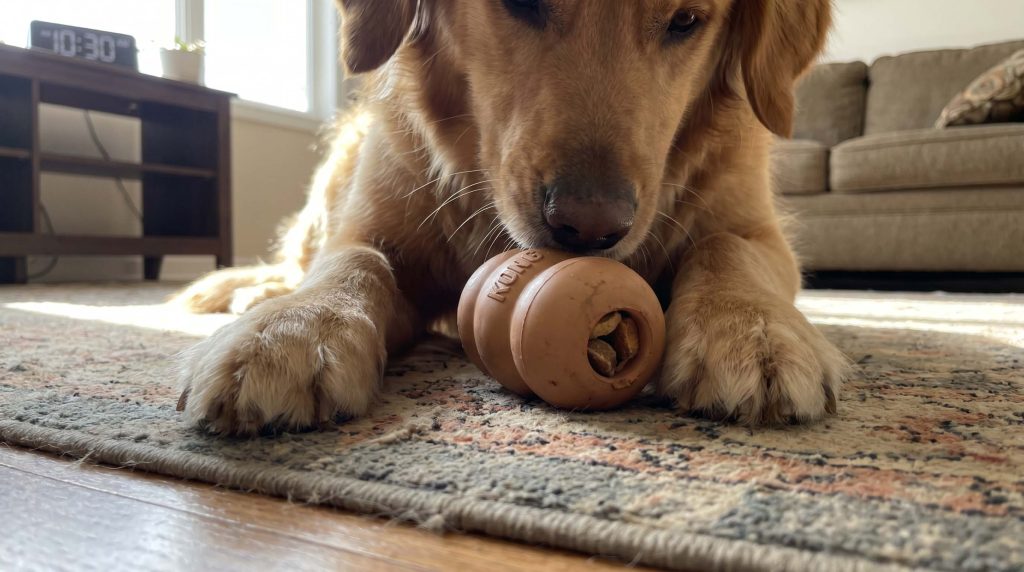
Feed breakfast through enrichment, not a bowl. Instead of placing your dog’s breakfast in a standard bowl, use that meal as your primary enrichment opportunity. Consequently, a frozen Kong, snuffle mat, or puzzle feeder containing their regular breakfast food engages your dog for 20–45 minutes right as you leave — creating a positive association with your departure rather than an anxious one.
Avoid dramatic departures. Long, emotional goodbyes — however natural they feel — actually prime your dog for anxiety by signaling that your departure is a significant emotional event. Instead, leave calmly and matter-of-factly. Furthermore, practice brief departures on weekends to normalize the pattern.
How to Keep Dog Occupied While at Work — Best Enrichment Tools
The enrichment tool market has expanded remarkably in recent years. Consequently, choosing effectively from the available options saves money and delivers genuine results rather than cluttering your home with ignored gadgets.
How to Keep Dog Occupied While at Work Using Food Enrichment
Food-based enrichment consistently delivers the longest engagement duration of any enrichment category. Furthermore, it satisfies dogs’ natural foraging instincts in a way that pure play toys cannot replicate.
Top food enrichment tools ranked by engagement duration:
1. Frozen Kong (45–90 minutes)
The frozen Kong remains our team’s absolute top recommendation for how to keep dog occupied while at work. Fill with a mixture of kibble, peanut butter (xylitol-free), plain yogurt, or mashed banana. Freeze overnight. Furthermore, prepare several simultaneously so you always have one ready — this is the single habit that makes the biggest difference for most working dog owners.
2. Licki Mat with frozen topping (30–60 minutes)
Spread soft food across the textured surface and freeze. Licking releases calming endorphins in dogs, making Licki Mats particularly valuable for anxious dogs. Consequently, they address both boredom and anxiety simultaneously.
3. Snuffle Mat (20–40 minutes)
Scatter kibble through the fabric strands. The nose-work element engages your dog’s scent-processing brain — which tires them out significantly more than physical activity alone. We’ve observed that 15 minutes of active snuffle mat use produces fatigue equivalent to 30+ minutes of walking for many dogs.
4. Puzzle feeders — beginner to advanced (20–45 minutes)
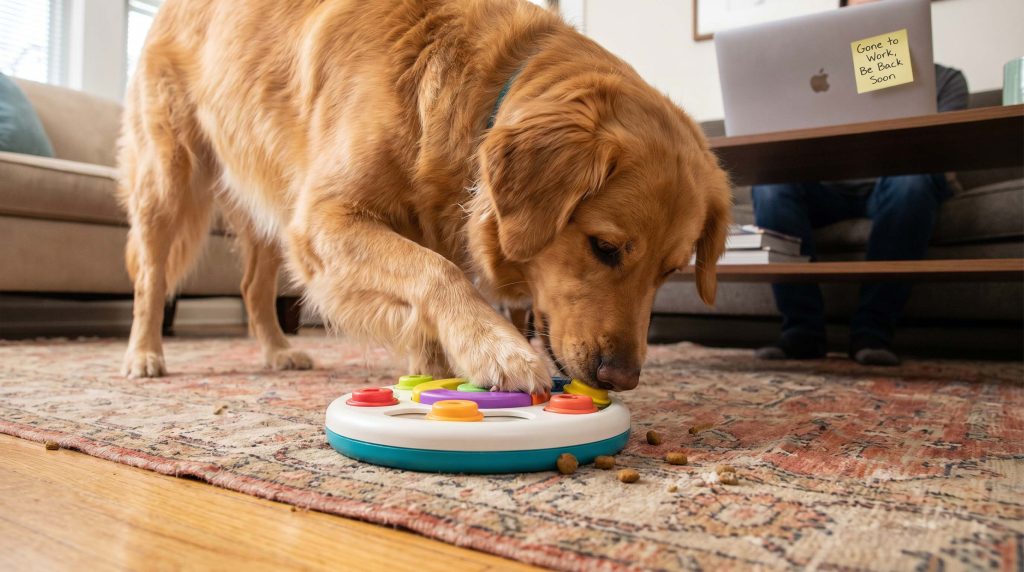
Interactive puzzle feeders engage problem-solving skills alongside food motivation. Start with beginner-level puzzles and progress as your dog masters each level. Additionally, rotating between different puzzles prevents habituation and maintains engagement over time.
5. Kong Wobbler or similar dispensing toy (20–35 minutes)
Rolling ball-style dispensing toys require physical interaction to release kibble. Furthermore, the unpredictable movement keeps dogs engaged longer than static puzzle feeders.
How to Keep Dog Occupied While at Work — Environmental Enrichment
Physical and mental enrichment tools matter enormously — but environmental setup shapes your dog’s entire daytime experience. Consequently, creating a genuinely enriching home environment is equally important.
Window access and visual stimulation: Install a comfortable window perch or position a sofa near a window with an outdoor view. Birds, squirrels, passing pedestrians, and street activity provide hours of passive visual stimulation for many dogs. Furthermore, we’ve observed that dogs with consistent window access bark less from boredom than those without visual environmental access.
Dog-safe TV or audio: Leave a television tuned to nature programming or dog-specific streaming content, or play calming music specifically designed for dogs. Research from the Scottish SPCA found that dogs show measurably lower stress responses when exposed to classical music compared to silence or radio. Consequently, this simple, free adjustment genuinely improves daytime wellbeing.
Designated comfort zones: Create a specific, comfortable resting area with familiar-scented bedding. Additionally, leave an unwashed item of your clothing — a worn t-shirt — in their rest area. Your scent provides genuine comfort and reduces separation anxiety throughout the day.
Safe chew options: Long-lasting chews — bully sticks, yak milk chews, or antlers — provide hours of appropriate chewing activity that satisfies natural jaw exercise needs. Furthermore, chewing releases endorphins that calm anxious dogs effectively. Always supervise the first few uses to ensure your dog chews safely rather than attempting to swallow large pieces.
For dogs who struggle with anxiety specifically, our dog atopy home remedy guide covers how stress affects skin health — a connection that’s more relevant than most owners realize. Additionally, our guide on how to keep dogs from digging covers the relationship between under-stimulation and destructive behaviors that often appear alongside separation distress.
How to Keep Dog Occupied While at Work — Professional Support Options
Sometimes, enrichment tools and morning routines aren’t sufficient — particularly for young puppies, high-energy working breeds, or dogs with significant separation anxiety. Consequently, professional support options deserve serious consideration rather than being treated as unnecessary luxuries.
Professional Solutions for How to Keep Dog Occupied While at Work
Dog walkers: A midday dog walk breaks the alone time into two manageable halves rather than one long stretch. Furthermore, professional dog walkers provide social interaction, physical exercise, and a toilet break that dramatically improves afternoon behavior. We’ve found that adding a single 30-minute midday walk reduces afternoon destructive behavior by 50–70% in high-energy breeds.
Doggy daycare: For highly social dogs or those with severe separation anxiety, daycare provides structured social interaction, professional supervision, and substantial physical activity in a purpose-designed environment. Consequently, dogs who attend daycare two to three days per week often cope significantly better on home-alone days than those who never receive this social outlet.
Dog sitters or pet check-in services: A neighbor, friend, or professional pet sitter who visits midday for 20–30 minutes provides social contact and a routine break without the logistics of daily daycare drop-off. Furthermore, this option suits dogs who find group daycare environments overstimulating.
Puppy-specific considerations: Puppies under 6 months genuinely cannot be left alone for 8-hour workdays without significant welfare consequences. Consequently, working puppy owners need either in-home help, puppy daycare, or a flexible work arrangement during the critical first months. Our puppy socialization classes guide covers why this early period matters so profoundly for long-term behavioral development.
Common Mistakes That Make Daytime Dog Boredom Worse
Understanding what not to do saves you from inadvertently making the situation significantly harder. Furthermore, these mistakes appear so consistently across working dog households that addressing them directly prevents months of unnecessary struggle.
Mistakes to Avoid When Learning How to Keep Dog Occupied While at Work
Relying on one enrichment item indefinitely. Dogs habituate quickly to the same toy or puzzle. Consequently, rotating enrichment options every few days maintains novelty and engagement far more effectively than providing the same frozen Kong daily forever. We recommend a rotation library of 8–10 different enrichment items.
Skipping morning exercise when pressed for time. This is the highest-cost mistake working dog owners make. Furthermore, skipping the morning exercise routine to save 20 minutes almost always costs you 30+ minutes of cleaning up destruction or managing anxiety upon your return. The math genuinely doesn’t work in your favor.
Providing enrichment only on difficult days. Consistency matters enormously. Consequently, dogs who receive enrichment daily develop predictable, settled routines — while those who receive it sporadically don’t adapt as effectively. Build the routine and maintain it every workday.
Crating for the full workday without breaks. While crate training provides genuine value for shorter periods, crating a dog for 8–9 consecutive hours without a break causes physical discomfort and psychological distress. Therefore, any dog crated during work hours absolutely needs a midday break — either through a walker, sitter, or doggy daycare.
Punishing destructive behavior after the fact. Coming home to destruction and reacting with anger or punishment accomplishes nothing productive. Dogs don’t connect the punishment to something that happened hours earlier. Consequently, punishment simply adds anxiety to an already stressed dog — which typically worsens rather than improves behavior.
🐾 Team Pro-Tip: The “Departure Desensitization” Technique
Here’s a specific technique our team recommends for dogs who show anxiety specifically around your departure routine — a challenge we encounter extremely frequently when discussing how to keep dog occupied while at work with dog owners.
Many dogs develop intense anxiety not to your absence itself, but to the signals that predict your departure — picking up keys, putting on shoes, grabbing a bag. Consequently, these pre-departure cues trigger anxiety before you’ve even left, meaning your dog spends the entire time between your first departure signal and your return in a heightened stress state.
The Departure Desensitization technique:
- Identify your dog’s trigger cues — note exactly which actions cause your dog to become visibly anxious (pacing, whining, following you)
- Repeat cues without leaving — pick up your keys 20 times throughout an evening without going anywhere. Put on your shoes, then sit down and watch TV. Grab your bag, then put it back down.
- Pair cues with positive outcomes — every time you perform a departure cue, immediately follow it with a high-value treat or brief play session
- Gradually extend duration — begin leaving for 30 seconds, returning calmly. Progress to 2 minutes, 5 minutes, 15 minutes, and so on over 2–3 weeks
- Always depart calmly — no emotional goodbyes, no lengthy farewells
We’ve observed remarkable transformations in anxious dogs whose owners committed to this technique consistently over 3–4 weeks. In our experience, the dogs who arrive at how to keep dog occupied while at work solutions having first addressed departure anxiety show significantly better enrichment engagement — because they’re not spending their mental energy on anxiety when the Kong appears.
✅ How to Keep Dog Occupied While at Work — Daily Action Checklist
Use this every workday morning to set your dog up for a genuinely successful day:
Morning preparation (60 minutes before departure):
- Completed breed-appropriate morning exercise session
- Prepared and frozen enrichment item the night before (Kong, Licki Mat)
- Set up snuffle mat with portion of breakfast kibble
- Left calming music or nature TV programming running
- Positioned comfortable bedding in designated rest area
- Left worn clothing item in rest area for scent comfort
- Provided safe long-lasting chew option
Environment setup:
- Window access confirmed with comfortable viewing position
- Water bowl filled and accessible
- Appropriate temperature maintained (68–72°F ideal)
- Hazardous items secured or removed from accessible areas
- Baby gate or safe zone boundaries established if needed
Midday arrangements:
- Dog walker, sitter, or daycare drop-off confirmed
- Check-in camera accessible for remote monitoring if available
- Emergency contact identified if schedule changes unexpectedly
Departure:
- Departed calmly without prolonged emotional goodbye
- Provided frozen enrichment item immediately before or during departure
FAQ — How to Keep Dog Occupied While at Work
How long can I realistically leave my dog alone during a workday?
Adult dogs (over 18 months) generally manage 4–6 hours before stress indicators increase significantly. Furthermore, 8+ hours without a break genuinely strains most dogs’ physical and emotional wellbeing. Consequently, a midday visit — even 20–30 minutes — dramatically improves outcomes for dogs left during full workdays. Puppies under 6 months should never be alone for more than 2 hours.
What’s the single most effective tool for how to keep dog occupied while at work?
From our team’s extensive experience, the frozen Kong consistently delivers the best results — longest engagement duration, lowest cost per use, and highest dog satisfaction across breeds and ages. Furthermore, the act of freezing transforms a 10-minute activity into a 45–90 minute engagement session. Prepare several simultaneously and rotate them throughout the week.
My dog ignores enrichment toys when I’m gone — why?
This typically indicates one of two things: either the dog’s anxiety about your absence overrides food motivation, or the puzzle is too difficult. Consequently, if anxiety is the issue, address departure desensitization first before relying on enrichment tools. Additionally, if difficulty is the problem, drop back to significantly easier puzzles and rebuild confidence gradually.
Should I get a second dog to keep my first dog company during work hours?
This question comes up frequently, and our honest answer is: it depends entirely on your first dog’s temperament. A well-socialized, dog-friendly dog often benefits from a companion. However, a dog with separation anxiety typically extends that anxiety to the second dog — creating two anxious dogs rather than solving the original problem. Furthermore, the financial and practical commitment of a second dog is substantial. Resolve existing behavioral issues before adding another dog to the household.
Does leaving the TV on actually help dogs during the day?
Yes — research supports audio and visual environmental enrichment for dogs left alone. Furthermore, nature programming and calming music specifically reduce stress indicators in dogs compared to silence. However, loud action programs or news channels with sudden sounds can trigger alerting responses. Consequently, choose calm, consistent programming rather than standard television channels.
Your Dog’s Daytime Happiness Starts With You
Learning how to keep dog occupied while at work is genuinely one of the most caring things you can do as a working dog owner. Furthermore, the strategies in this guide don’t require expensive equipment or dramatic lifestyle changes — they require consistent, thoughtful daily habits that compound beautifully over time.
Throughout this guide, we’ve covered the morning routine foundations that set the day up for success, the best enrichment tools ranked by engagement duration, environmental setup strategies that provide passive stimulation, professional support options worth considering, and the common mistakes that undermine even well-intentioned efforts. Additionally, we’ve shared our departure desensitization technique for anxious dogs and a complete daily action checklist you can implement starting tomorrow morning.
The families who succeed with how to keep dog occupied while at work combine morning exercise, food-based enrichment, consistent environmental setup, and — where needed — professional midday support. Furthermore, they maintain these habits consistently rather than only on days when problems appear.
Your next step? Freeze a Kong tonight for tomorrow morning. Walk your dog for 30 minutes before work tomorrow. Set up a window viewing spot this weekend. Start with these three changes and build from there. Explore our related guides on puppy socialization classes, how to keep dogs from digging, what vegetables can dogs not eat, and dog anxiety and skin health for comprehensive support across every aspect of your dog’s daily wellbeing.
Your dog spends every working hour waiting for you. Make those hours genuinely comfortable — starting today. 🐾
