

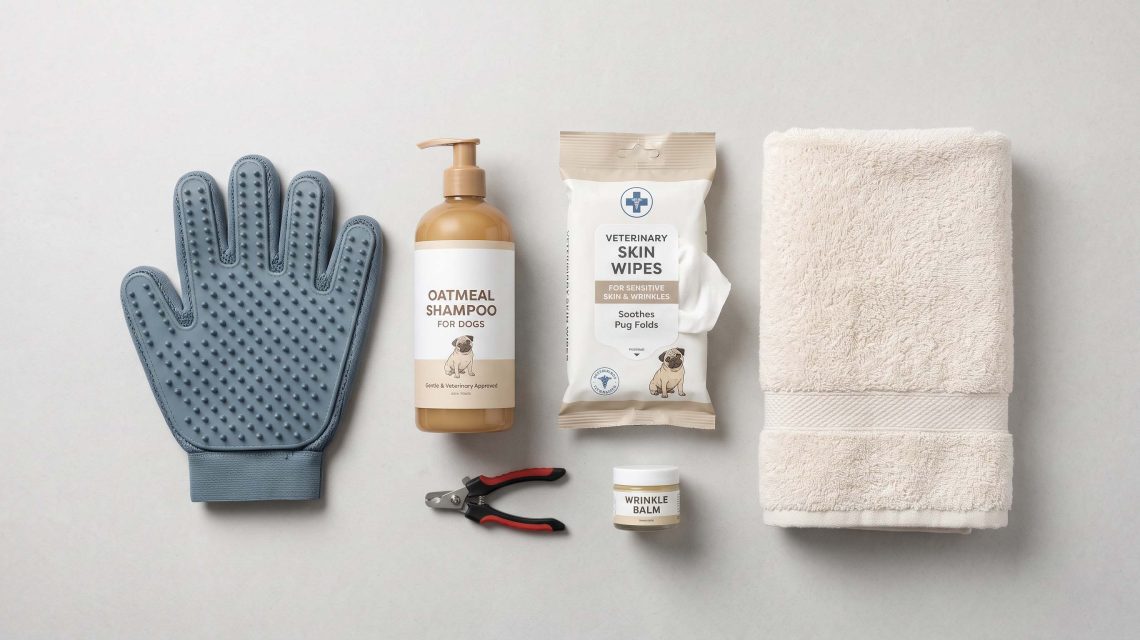
 Animal Zoid Editorial Team
If you run your hand along your Pug’s back and pull away a thick strip of fur, it can look alarming. In most cases, though, a Pug shedding in clumps down the spine is experiencing normal heavy shedding of its double coat, especially during spring or autumn. Loose undercoat gathers along the back when you stroke or brush it, making it appear as a dense tuft or strip.
However, clumped shedding with bald patches, red or raw skin, odor, itching, crusting, or a sudden change from your Pug’s normal pattern can signal a medical problem. Fleas, allergies, bacterial or yeast infections, demodicosis, seborrhea, and hormonal conditions such as hypothyroidism can all affect the coat and skin.
Quick Answer
Pugs often shed heavily because many have a dense double coat: a soft undercoat beneath a short outer coat. During seasonal coat changes, loose undercoat can come away in noticeable clumps, particularly along the back where brushing or stroking gathers loose hairs together.
If the skin underneath looks normal and your Pug is not itchy, painful, or losing fur in bald patches, the clumping is usually manageable with regular grooming. If you see redness, odor, scabs, hairless spots, or sudden excessive shedding, schedule a veterinary visit.
Why Pugs Shed So Much
Pugs have a short, fine, glossy coat, and many have a dense undercoat beneath the outer coat. They shed throughout the year and often shed more heavily during seasonal transitions.
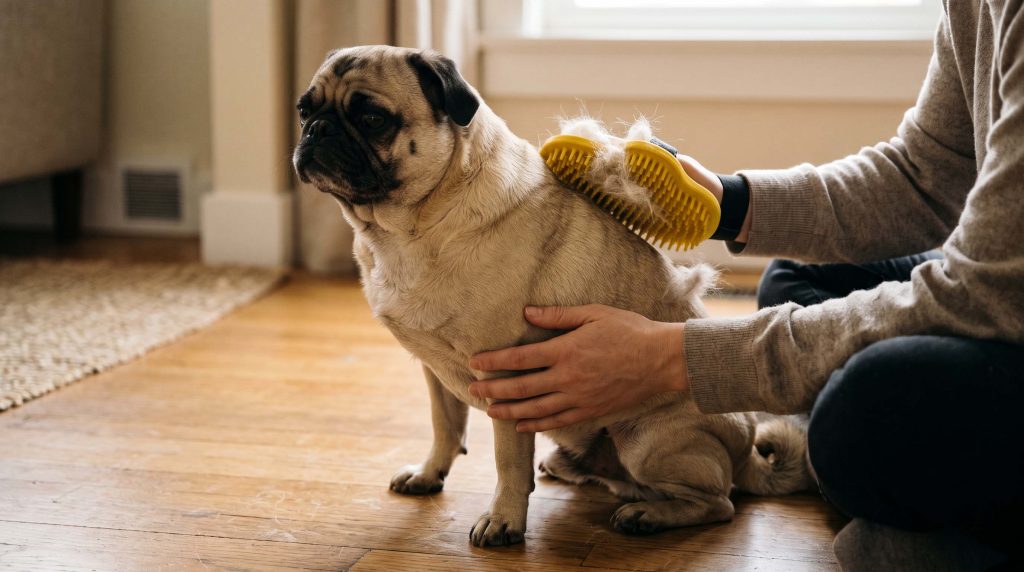
The spine is a common place to notice loose fur because the coat lies flat and a hand, rubber curry mitt, or brush naturally collects loose hairs into a line. That does not mean the spine has a special shedding disorder.
Why Fur Comes Away in Clumps
A clump does not automatically mean damaged follicles. It usually means several loose hairs were already ready to shed and were gathered together by:
- Brushing or stroking
- Rubbing against bedding, furniture, or carpet
- Rolling on the floor
- Moisture, debris, or natural oils on the coat
- Seasonal shedding of the undercoat
If the fur releases easily but the skin beneath looks healthy, regular brushing is usually enough. During a seasonal coat blow, short daily brushing sessions can be more comfortable than one long session.
The Pug’s Trace: What It Is—and Is Not
Many fawn Pugs have a darker dorsal stripe called the trace, running from the back of the head toward the tail. Breed standards describe the trace as a black line from the occiput to the tail.
The trace is a coat-color marking. There is no reliable evidence that trace hairs are structurally different in a way that makes them shed in synchronized clumps. Do not use the trace to diagnose a shedding problem.
Tail Folds: A Real Pug Concern
Pugs with tight corkscrew tails can have a tail pocket—a fold of skin beneath or around the tail. These folds can trap moisture, debris, and oils, making the area prone to bacterial or yeast infections.aaha+1
Tail-fold dermatitis can cause odor, redness, discharge, discomfort, scooting, and hair loss near the tail base. It is a veterinary skin issue, not a normal “sebum dam” that causes shedding along the entire spine.aaha+1
If your Pug has a tail pocket, keep it clean and thoroughly dry using a veterinarian-approved method. Seek veterinary care if the area stays red, smelly, moist, painful, or repeatedly infected.aaha
Normal Shedding vs. Medical Concern
| Feature | Likely normal shedding | Needs veterinary attention |
|---|---|---|
| Fur release | Loose tufts during brushing or petting | Fur falls out in patches or leaves bald spots |
| Skin underneath | Normal color and texture | Red, raw, scaly, crusted, greasy, or painful |
| Itching | Minimal | Scratching, biting, licking, or discomfort |
| Odor | Normal coat smell | Strong, yeasty, or foul odor |
| Timing | Heavier during seasonal coat changes | Sudden, persistent, or worsening |
| Pattern | Spread across the coat | Localized patches, symmetrical thinning, or tail-base involvement |
Hypothyroidism, demodicosis, allergies, bacterial or yeast infections, and seborrhea can all affect a dog’s coat and skin. A veterinarian may recommend skin cytology, skin scraping, fungal testing, allergy assessment, or thyroid testing depending on the signs.
How to Manage Normal Pug Shedding
Brush regularly
Use a rubber curry mitt, soft bristle brush, or undercoat tool two to four times per week. During heavy shedding, short daily sessions are easier than one long session.
Brush in the direction of hair growth and work in small sections. Do not scrub one area repeatedly or pull at tangles.
Bathe only when needed
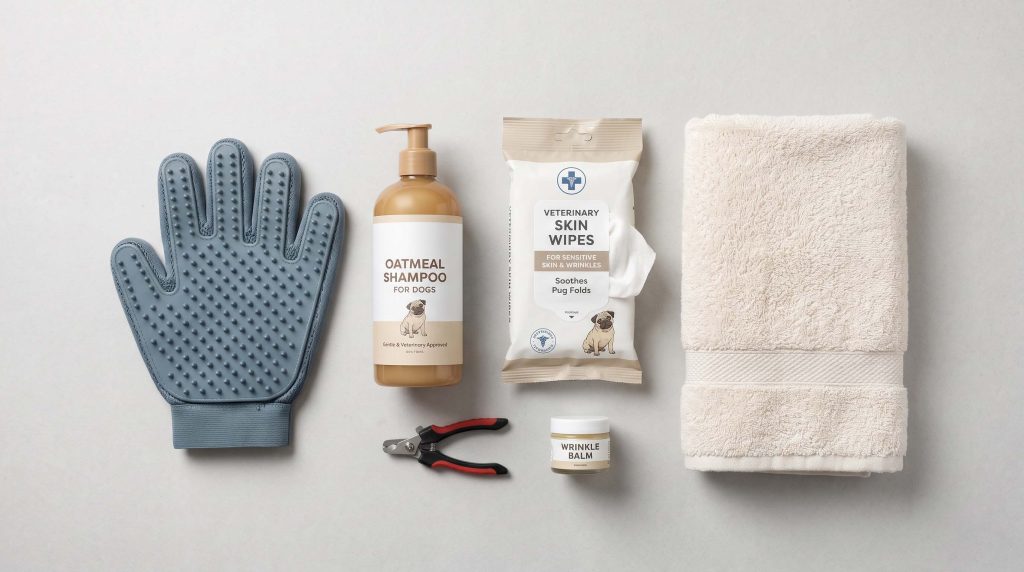
Use a dog-specific shampoo when your Pug is dirty or as advised by your veterinarian or groomer. Over-bathing can irritate the skin and is not a reliable way to stop shedding.
Check the tail area
If your Pug has a tail pocket, gently clean and dry it as directed by your veterinarian. Do not force wipes deep into a sore or inflamed fold.aaha
Do not shave the spine
Shaving does not prevent shedding and is not a treatment for coat problems. It can leave the skin more exposed to irritation and sun.
When to See a Veterinarian
Contact your veterinarian if your Pug has:
- Bald patches or sudden hair loss
- Red, raw, crusted, or painful skin
- A strong odor or discharge
- Persistent itching or scratching
- Fleas or flea dirt
- A tail fold that is red, moist, smelly, or painful
- Shedding that changes suddenly or does not match the seasonal pattern
A veterinarian can distinguish normal shedding from infection, parasites, allergies, hormonal disease, or other skin conditions.
For general preventive care, Animalzoid’s guides on essential daily dog care and dog health care explain how grooming, nutrition, exercise, and routine vet visits support overall health.pdsa.org
FAQ
Is it normal for a Pug to shed in clumps?
Yes, especially during seasonal shedding. Pugs are heavy shedders, and loose undercoat can gather into tufts along the back when brushed or stroked.
Why does the fur come from the spine specifically?
The back is where loose undercoat is easy to gather with a hand or brush. It does not prove that the spine itself has a special shedding disorder.
Does the tail curl cause spine shedding?
A tight tail can create a tail pocket that traps moisture and debris. That can cause tail-base skin problems, but it is not a proven cause of clump shedding along the whole spine.aaha+1
Should I use cornstarch on my Pug’s back?
Avoid home remedies unless your veterinarian recommends them. Cornstarch can trap moisture in folds and is not a treatment for abnormal shedding or skin disease.
When is clumping a medical problem?
When it comes with bald spots, redness, odor, itching, crusting, pain, or a sudden change from your Pug’s normal shedding pattern.
Conclusion
Pug spine clumping is usually a sign of heavy double-coat shedding—not a unique “trace-stripe,” muscle-reflex, or sebum-dam disorder. Regular brushing, flea prevention, skin checks, and proper care of facial and tail folds are the practical approach.
If the skin looks abnormal or the shedding pattern changes suddenly, skip home theories and have a veterinarian examine your Pug.
