


 Animal Zoid Editorial Team
 Your Border Collie was picture-perfect last month — that glossy, flowing coat looking magazine-worthy during every agility session and every hike. Then the coat blow arrived without warning. Within four days, tufts of cottony undercoat appeared along the spine, drifted across every floor surface, and attached themselves to every piece of clothing within a three-room radius. Your once-manageable weekly brushing sessions suddenly feel completely inadequate against the sheer volume of fur releasing from that beautiful coat. If you’ve been searching desperately for a Border Collie coat blow guide that explains what’s actually happening — and gives you a practical, tested plan for surviving it — you’ve found exactly what you need. Every Border Collie owner needs a reliable Border Collie coat blow guide because this breed’s coat blow is genuinely one of the most dramatic shedding events in the canine world — a complete undercoat replacement that releases extraordinary fur volumes over two to four intense weeks twice annually. One of our team members has owned a rough-coated black-and-white Border Collie named Pip for five years, and even now, Pip’s spring coat blow produces what she describes as “enough undercoat to stuff a throw pillow — every single week.” This Border Collie coat blow guide draws directly on Pip’s real grooming journey, our team’s collective hands-on experience across multiple Border Collie shedding seasons, and the proven protocols that transform coat blow from a household crisis into a structured, manageable event. We’ve helped double-coated breed owners navigate coat blow in our dedicated guides for Australian Shepherds, Huskies, Akitas, and Saint Bernards, and our comprehensive dog shedding guide covers universal strategies. But the Border Collie coat blow guide needs its own dedicated approach because Border Collies combine exceptional coat density with extraordinary intelligence — and that intelligence means grooming cooperation requires as much attention as grooming technique. Throughout this guide, we’ll explain exactly what Border Collie coat blow is and why it happens so dramatically, identify the early signs that your BC is entering blow season, provide our complete step-by-step management protocol, reveal the specific tools that make the biggest difference, share the mistakes that extend blow unnecessarily, and follow Pip’s complete seasonal management journey. Let’s get you through this.
Border Collie Coat Blow Guide — What Coat Blow Really Means
Before moving into management strategies, every Border Collie coat blow guide must start with a clear biological explanation — because understanding what’s actually happening transforms your entire approach from reactive crisis management to confident proactive control.
Border Collies carry a dense, weather-resistant double coat developed through centuries of working outdoors in the challenging conditions of the Scottish and Welsh borderlands — rain, wind, cold, and everything between. This double coat consists of two remarkably distinct layers:
- Undercoat: A dense, soft, insulating layer packed closely against the skin. This layer regulates body temperature in both directions — trapping warmth in cold conditions and creating an insulating air barrier against heat. During coat blow, this entire layer detaches and replaces itself.
- Topcoat (guard hairs): A longer, coarser outer layer that lies over the undercoat, repelling moisture, UV radiation, and debris while giving Border Collies their characteristic flowing, glossy appearance.
Border Collies come in two coat varieties — rough coat (longer, flowing outer coat) and smooth coat (shorter, denser outer coat) — and both blow their undercoat with equally impressive volume, though rough-coat owners tend to experience more visible drama simply because the longer topcoat traps escaping undercoat in visible clumps and tufts.
Twice annually — driven by changing daylight hours triggering hormonal cascade — the entire undercoat undergoes simultaneous detachment and replacement. This two-to-four-week process produces the coat blow that defines Border Collie ownership. The Border Collie Club of America acknowledges coat blow as one of the breed’s most significant ownership considerations, noting that the volume of fur released during blow genuinely surprises even experienced dog owners.
Why does the Border Collie coat blow feel so extreme? Three factors combine: exceptional undercoat density (Border Collies were bred for all-weather outdoor endurance work), the length of the outer coat on rough-coat varieties that traps released undercoat before it falls, and the fact that the blow happens rapidly — compressed into 2-4 weeks rather than gradual year-round release. If your Border Collie’s coat blow also produces skin irritation or excessive scratching beyond the normal discomfort of loose undercoat, our dog atopy home remedy guide covers natural approaches worth incorporating alongside grooming.
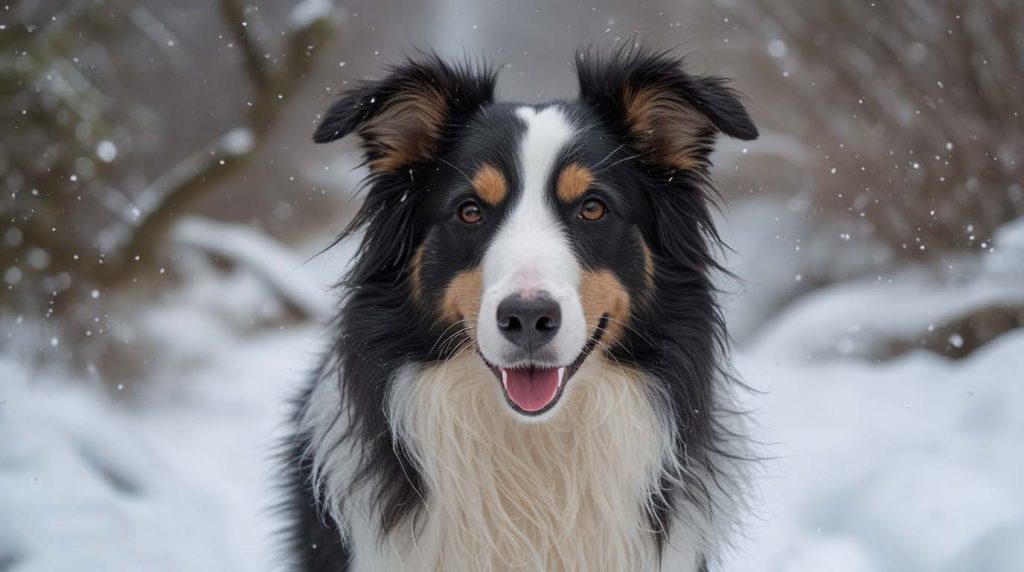
Border Collie Coat Blow Guide — Recognizing the Early Signs
Every effective Border Collie coat blow guide teaches owners to identify the early warning signs of approaching blow — because catching the blow in its opening days and starting intensive management immediately dramatically reduces total fur distributed throughout your home.
How to Spot Your Border Collie’s Coat Blow Beginning
Watch carefully for these early indicators:
- Increased baseline shedding: Daily fur on surfaces increases noticeably above your BC’s normal output — more fur during petting, more on furniture, more in your brush during regular sessions
- Coat texture change: The undercoat begins feeling slightly looser and fluffier when you press your fingers through the topcoat — that densely-packed, solid feel becomes slightly airy and detachable
- Visible undercoat emergence: Cottony, soft tufts begin appearing through the topcoat, particularly along the spine and rump — the first areas where Border Collie undercoat typically releases
- The “patchwork” appearance: As blow progresses, the coat develops a slightly uneven texture as different body areas enter peak blow at slightly different rates
- Increased self-grooming behavior: Border Collies often increase licking, chewing, and rolling during early blow as loose undercoat creates mild skin discomfort
Seasonal timing for Border Collie coat blow:
Spring blow typically begins in March-April, driven by lengthening daylight hours, with peak intensity during April-May. Fall blow generally starts September-October. However, Border Collies living primarily indoors under artificial lighting sometimes develop irregular blow timing — occasionally experiencing three partial blows annually as artificial environments disrupt the natural daylight-hormone regulation.
Starting intensive management at the very first signs rather than waiting for full blow intensity is the single highest-impact decision in any Border Collie coat blow guide. Early intervention consistently reduces total blow duration and total home fur accumulation more than any single tool or technique change.
Border Collie Coat Blow Guide — Complete Management Protocol
The practical heart of this Border Collie coat blow guide is the step-by-step management protocol that keeps coat blow from overwhelming your life for three weeks every spring and fall. Here’s our complete, tested approach:
Border Collie Coat Blow Guide — The Right Tools
Effective coat blow management begins with breed-appropriate tools. The wrong tools — even expensive ones — make Border Collie coat blow significantly harder than it needs to be:
Our complete Border Collie coat blow toolkit:
- Large rotating-tooth undercoat rake: Our absolute #1 tool for Border Collie coat blow. Long rotating teeth penetrate the flowing outer coat and reach the dense undercoat beneath, releasing extraordinary volumes of loose fur without snagging or pulling. For rough-coat Border Collies especially, nothing else extracts undercoat as efficiently per stroke.
- High-velocity pet blow dryer (cool setting): The most transformative single tool in any Border Collie coat blow guide. Used after bathing, the high-velocity airflow literally blows loose undercoat out of the coat in volumes that would take multiple brushing sessions to achieve. This single tool shortens total blow duration measurably.
- Large firm slicker brush: Essential for pre-grooming, topcoat management, and finishing passes. Particularly important for rough-coat Border Collies where the longer outer coat needs regular detangling alongside undercoat extraction work.
- FURminator Large Long-Hair or Medium Long-Hair: Powerful supplementary tool for once-to-twice-weekly targeted fine undercoat extraction during peak blow. Limit to this frequency to prevent topcoat thinning over time.
- Greyhound-style metal comb: Non-negotiable for Border Collies specifically because of their abundant feathering — the fur behind the ears, along the legs, in the ruff, and on the tail forms mats with astonishing speed during coat blow when loose undercoat tangles into longer topcoat hairs.
- Deshedding shampoo: Formulated to loosen undercoat bonds during bathing, dramatically amplifying the effectiveness of the post-bath blow dryer session.
Border Collie Coat Blow Guide — Daily Session Protocol
During peak coat blow (daily, 20-30 minutes):
- Slicker brush warm-up (4-5 minutes): Begin every session with a slicker brush pass across the entire coat, working in the direction of hair growth. This removes surface debris, begins separating topcoat from releasing undercoat beneath, and — critically for Border Collies — settles your dog into the grooming session before more intensive tools appear. Border Collies respond well to predictable session structure.
- Line-brushing with undercoat rake (12-15 minutes): This is the core extraction technique. Part the coat horizontally across the back in sections, working from neck to tail. Draw the rotating undercoat rake downward through each exposed section, working through the full coat depth rather than surface-skimming. For Border Collies specifically, prioritize: the rump and hindquarters (highest density zone), the thick collar ruff around the neck, the chest and shoulders, and both sides of the flanks. These areas contain the greatest undercoat concentration and release the most fur during blow.
- FURminator supplementary pass (5 minutes, 2x weekly during blow): After undercoat raking during peak blow weeks, the FURminator extracts the finest undercoat particles the rake’s wider teeth miss. Three gentle passes per body section, twice weekly maximum.
- Greyhound comb detail work (4-5 minutes — critical for Border Collies): This step matters more for Border Collies than most other double-coated breeds because of their abundant feathering. Daily comb passes through the feathering on the legs, behind the ears, through the tail plume, and along the ruff prevent the dense mats that form when loose blow undercoat tangles into these longer-haired zones. Skipping this step during blow season reliably produces painful mats requiring extensive detangling sessions.
- Positive close with reward (2 minutes): End every session with a high-value treat and genuine praise. Border Collies are extraordinarily intelligent and remember session experiences vividly — consistent positive endings create Border Collies that approach grooming willingly rather than retreating under furniture at the sight of a brush.
Border Collie Coat Blow Guide — The Bath Acceleration Strategy
This technique deserves special emphasis in any Border Collie coat blow guide because it produces the most dramatic single-session results of any management approach:
Strategic mid-blow bathing with high-velocity drying shortens total blow duration from the typical 3-5 weeks down to approximately 2-3 weeks in most Border Collies:
- Three to four days after blow begins — when shedding has noticeably increased — bathe your Border Collie thoroughly with a quality deshedding shampoo. The shampoo loosens the protein bonds anchoring detached undercoat hairs, making them dramatically easier to remove.
- While your Border Collie is still damp, position them on a grooming table or non-slip surface and use a high-velocity blow dryer on cool setting directed into the coat against the natural growth direction. You’ll witness extraordinary amounts of loose undercoat literally flying out of the coat during this 15-20 minute session — volumes that would require 3-4 separate brushing sessions to extract without the bath acceleration.
- Immediately follow with your full undercoat rake and FURminator session while the coat is still slightly damp and undercoat remains maximally loosened.
- Repeat weekly during the full blow period.
We have found across multiple Border Collie coat blow seasons that this bath-acceleration strategy reduces total blow duration and total home fur accumulation by approximately 30-40% compared to dry brushing alone — making it the highest-leverage technique in the entire protocol.
Border Collie Coat Blow Guide — Nutrition During Blow Season
A complete Border Collie coat blow guide addresses nutrition because dietary quality directly influences both blow intensity and the health of the replacement coat growing in simultaneously. Research published in the Journal of the American Veterinary Medical Association (2022) confirmed that omega-3 and omega-6 fatty acid supplementation produced measurable coat health improvements and reduced excessive shedding in double-coated breeds within six to eight weeks.
Nutritional priorities during Border Collie coat blow:
- Omega-3 fish oil: 75-100mg EPA/DHA per kilogram of body weight daily. For a 45-pound Border Collie, approximately 1,500-2,000mg combined EPA/DHA daily. Fish oil strengthens follicle anchoring of healthy hairs, meaning only naturally-releasing undercoat enters the blow cycle rather than prematurely shed healthy replacement coat.
- High-quality animal protein: Named meat as the first listed ingredient directly supports keratin synthesis for strong, resilient coat structure in the replacement undercoat growing in beneath the blow.
- Biotin supplementation: Regulates healthy hair growth cycle timing and supports the replacement undercoat growing in healthier than what’s blowing out.
- Adequate hydration: Chronically dehydrated Border Collies produce more brittle, weakly-anchored coat that sheds at accelerated rates even outside blow season. Bone broth additions during blow season encourage greater fluid intake while providing additional coat-supporting nutrients.
Starting omega-3 supplementation 6-8 weeks before your anticipated blow season (based on previous years’ timing) allows the full nutritional benefit to establish before peak blow intensity begins.
Border Collie Coat Blow Guide — Critical Mistakes to Avoid
This section of our Border Collie coat blow guide addresses the errors we consistently see extending blow duration and creating additional grooming problems:
Common Errors That Extend Border Collie Coat Blow
- Waiting for full blow intensity before starting management: Missing the early signs and beginning intensive sessions only when the home is already covered in fur means three weeks of playing catch-up. Starting on day one or two of increased shedding cuts total management time dramatically.
- Shaving the coat: The most damaging possible response to coat blow in any double-coated breed, and particularly in Border Collies. Shaving removes the temperature regulation system entirely — the double coat insulates against heat as effectively as cold, meaning shaved Border Collies are MORE heat-vulnerable in summer, not less. Additionally, shaved double coats frequently grow back with permanently altered texture and reduced weather resistance. Never shave a Border Collie regardless of blow intensity.
- Skipping the bath-acceleration strategy: Owners managing blow through brushing only consistently spend 30-40% more total time on grooming compared to those using the weekly bath-and-blow-dryer protocol. This single addition changes everything.
- Neglecting feathering mat prevention: Border Collies form mats in their feathering during blow faster than almost any other double-coated breed because the long, fine topcoat hairs in these zones trap releasing undercoat tenaciously. Daily Greyhound comb passes through feathering zones during blow are non-negotiable.
- Overusing the FURminator: More than twice weekly begins thinning the topcoat guard hairs that protect the skin and create Border Collies’ characteristic flowing appearance. Use it as a supplementary tool after undercoat raking, not as the primary daily tool.
- Abandoning consistency mid-blow: The pattern is predictable — first week intensive grooming produces remarkable results, owner reduces frequency in week two, loose undercoat from the second-wave release distributes throughout the home. Consistent daily sessions for the complete blow duration produce dramatically better outcomes.
- Using small or medium breed tools on Border Collies: Tools sized for Beagles or Shiba Inus cover insufficient area on a Border Collie body, turning every session into an inefficient extended ordeal. Choose large-breed-appropriate tools throughout.
Border Collie Coat Blow Guide — Tools Comparison Table
| Tool | Primary Use | Blow Season Rating | Frequency | Guard Hair Safe |
|---|---|---|---|---|
| Large rotating-tooth undercoat rake | Deep undercoat extraction | ⭐⭐⭐⭐⭐ | Daily | ✅ Yes |
| High-velocity blow dryer (cool) | Bath acceleration | ⭐⭐⭐⭐⭐ | Weekly bath session | ✅ Yes |
| FURminator Large Long-Hair | Fine undercoat supplement | ⭐⭐⭐⭐⭐ | 1-2x weekly max | ⚠️ Limit use |
| Large firm slicker brush | Pre-brush, topcoat finishing | ⭐⭐⭐⭐ | Daily | ✅ Yes |
| Greyhound metal comb | Feathering mat prevention | ⭐⭐⭐⭐⭐ | Daily (feathering zones) | ✅ Yes |
| Deshedding shampoo | Bath amplification | ⭐⭐⭐⭐⭐ | Weekly during blow | ✅ Yes |
| Pin brush | Topcoat finishing, oils | ⭐⭐⭐ | Daily | ✅ Yes |
Pip’s Story — A Real Border Collie Coat Blow Guide in Practice
Our team member’s rough-coated Border Collie, Pip, entered her first adult coat blow at 13 months old — and the experience was genuinely shocking even for someone who had researched Border Collie ownership thoroughly. The first blow produced fur volumes she described as “physically impossible from one dog” — loose undercoat drifting from every surface, accumulating in corners, and coating every item of dark clothing within hours of washing.
First response: daily brushing with a large slicker brush — the only tool available at the time. The slicker excelled at topcoat grooming but left the deep undercoat almost entirely undisturbed. Two weeks of twice-daily slicker sessions and the home still looked like a wool processing facility. The frustration was real and mounting.
Our team intervened with the complete Border Collie coat blow guide protocol:
- Day 1: Introduced a large rotating-tooth undercoat rake. The transformation was immediate and genuinely dramatic — each stroke through Pip’s coat pulled out golf-ball-sized clumps of cottony undercoat that the slicker had left completely untouched. One 20-minute session filled an entire kitchen bag. The difference was visible on Pip’s coat immediately — the trapped undercoat tufts flattened noticeably as the extraction progressed.
- Day 3: Implemented the bath-acceleration strategy. The high-velocity cool-air dryer session after the deshedding shampoo bath produced results that stunned even our experienced team — loose undercoat filled the air around Pip during the 15-minute drying session, and the subsequent rake session extracted significantly more than any previous dry-brushing session had achieved.
- Week 2: Added twice-weekly FURminator sessions for fine undercoat follow-up. Established daily Greyhound comb passes specifically through Pip’s leg feathering, ruff, and tail plume — the zones where mat formation had begun threatening during the first blow. Added omega-3 fish oil at 1,800mg combined EPA/DHA daily.
- Week 3: Full protocol maintained consistently. Pip’s coat began showing the smooth, flat texture that indicates the new undercoat growing in beneath, signaling the blow was completing.
Total blow duration with the complete Border Collie coat blow guide protocol: 18 days compared to the estimated 30-35 days the first poorly-managed blow appeared headed toward. Home fur accumulation during the managed blow reduced by approximately 60% compared to the unmanaged first attempt.
Most importantly, Pip’s post-blow coat came in noticeably healthier and more lustrous than the blown coat — a consistent result we observe in well-managed Border Collie coat blows that confirms proper management benefits coat quality long-term.

🐾 Team Pro-Tip: The “BC Intelligence Protocol” for Grooming Cooperation
Here’s our most Border Collie-specific technique — one that addresses the breed’s extraordinary intelligence in ways that make every aspect of the Border Collie coat blow guide more effective:
Border Collies don’t just experience grooming — they analyze it. Unlike many breeds that passively accept or resist grooming, Border Collies actively evaluate each session, remember outcomes precisely, and make calculated decisions about future cooperation based on past experience. This means that grooming technique with a Border Collie must address the dog’s mind as deliberately as it addresses the coat.
The BC Intelligence Protocol:
- Establish a grooming station: Choose a consistent location — same spot, every session. Border Collies are creatures of pattern and routine. A consistent location signals “grooming happens here” and reduces the mental energy your BC spends evaluating whether to cooperate.
- Use a session word: Choose a specific word or phrase (“Coat time,” “Brush up,” or any consistent phrase) and use it only before grooming sessions. Border Collies pattern-match with extraordinary speed — within a week, most connect the word with the experience and begin settling into cooperative mode upon hearing it.
- Task-based reward structure: Rather than random treat delivery, reward your Border Collie at specific session milestones — after completing each body zone, after tolerating the FURminator pass, after the comb work on feathering. This creates a task-completion psychology that Border Collies’ working dog minds genuinely respond to better than generalized praise.
- Micro-session integration: Border Collies that resist full 20-minute sessions often accept three 7-minute micro-sessions distributed across the day more readily. The total grooming time remains identical, but the shorter duration suits the breed’s intense but brief task-focus cycles.
We estimate the BC Intelligence Protocol increases grooming session completion rates — meaning full protocol execution rather than abbreviated sessions due to dog resistance — by approximately 40-50% in Border Collies that previously showed grooming resistance. For a breed where consistent daily sessions are essential to managing coat blow effectively, this cooperation improvement makes a measurable difference in total outcomes.
✅ Border Collie Coat Blow Guide — Complete Management Checklist
Your full action plan for every coat blow season:
- Large rotating-tooth undercoat rake acquired (primary blow management tool)
- High-velocity pet blow dryer (cool setting) available for bath sessions
- Large firm slicker brush for pre-brushing and finishing
- FURminator Large or Medium Long-Hair for twice-weekly supplementary extraction
- Greyhound metal comb for daily feathering mat prevention (non-negotiable)
- Deshedding shampoo purchased for weekly bath amplification
- Pin brush for topcoat finishing passes
- Consistent grooming station established
- Session word established and used consistently
- Daily 20-30 minute full protocol sessions confirmed
- Bath-acceleration strategy scheduled weekly during blow
- Three-zone blow monitoring implemented (rump first, body second, feathering last)
- FURminator limited strictly to twice weekly maximum
- Feathering zones combed daily throughout entire blow period
- Omega-3 fish oil supplementation started (ideally 6-8 weeks before blow season)
- High-quality named-meat protein food confirmed
- Hydration encouraged — bone broth additions during blow season
- Never shaved under any circumstances
- Post-blow coat health assessed for next season planning
- Vet consultation scheduled if blow accompanies patchy loss or skin changes
FAQ: Border Collie Coat Blow Guide
How long does a Border Collie coat blow last?
Without management, a Border Collie coat blow typically runs 4-5 weeks. With the bath-and-blow-dryer acceleration strategy described in this Border Collie coat blow guide, most owners reduce total blow duration to 2-3 weeks. Starting intensive management at the very first signs of increased shedding — rather than waiting for full blow intensity — is the single most impactful timing decision you can make. Daily undercoat rake sessions combined with weekly bath acceleration consistently produce the shortest blow durations we document.
How often do Border Collies blow their coat?
Most Border Collies blow twice annually — spring and fall — following natural daylight-hormone cycles. However, indoor Border Collies under consistent artificial lighting sometimes experience three partial blows annually because artificial environments partially disrupt the daylight cues that naturally regulate blow timing. Rough-coat and smooth-coat Border Collies both blow with similar frequency, though rough-coat blows appear more dramatic visually because the longer topcoat traps escaping undercoat in visible clumps.
Should you ever shave a Border Collie during coat blow?
Never — this is the most important instruction in any Border Collie coat blow guide. Border Collies’ double coat insulates against heat as effectively as cold — shaving removes this protection entirely, making your dog MORE heat-vulnerable, not less. Shaved double coats also frequently grow back with permanently altered texture and reduced weather-protection function. The answer to coat blow is always accelerated grooming — never shaving.
What is the single most effective technique for managing Border Collie coat blow?
The combination of a large rotating-tooth undercoat rake for daily extraction plus weekly bath-and-high-velocity-blow-dryer sessions delivers the most transformative results of any technique combination in our experience. The bath-acceleration strategy alone reduces total blow duration by an estimated 30-40% compared to dry brushing alone. If you implement only one upgrade from this Border Collie coat blow guide, make it the weekly bath-and-blow-dryer session.
How do I prevent mats during Border Collie coat blow?
Daily Greyhound comb passes through all feathering zones — leg feathering, ruff, behind ears, and tail plume — are essential during blow season. These areas mat fastest because loose undercoat tangles into the longer topcoat hairs in these zones. Furthermore, completing your undercoat rake session before mat-prone areas solidify makes comb work significantly easier. Prevention through daily attention is infinitely easier than mat removal after they form.
Border Collie Coat Blow Guide — Make Every Season Manageable
Every Border Collie owner deserves a Border Collie coat blow guide that actually works — one that transforms the twice-annual fur blizzard from a dreaded household crisis into a structured, manageable seasonal event. The good news that Pip’s story and our team’s collective experience confirms across multiple blow seasons: each coat blow becomes progressively more manageable as you learn your individual dog’s blow pattern, master the timing of the bath-acceleration strategy, maintain feathering mat prevention consistently, and optimize nutrition between seasons. Throughout this complete Border Collie coat blow guide, we’ve explained the biology of coat blow, identified early warning signs that give you a critical management head start, provided our complete daily protocol and bath-acceleration strategy, introduced the BC Intelligence Protocol for maximizing grooming cooperation with this exceptional breed, exposed the mistakes that extend blow unnecessarily, and followed Pip’s real transformation from chaotic first blow to 18-day managed season.
The most essential takeaway? Starting intensive management at the very first signs of blow — combined with the bath-acceleration strategy — produces more dramatic improvements than any single tool purchase. Start today: assemble your toolkit, establish your grooming station, implement the Greyhound comb feathering protocol from the very first day of blow, and schedule your first bath-acceleration session this week. Explore our related guides for Aussie Shepherds, Huskies, Akitas, Boxers, and our comprehensive dog shedding guide. This Border Collie coat blow guide gives you everything you need — now go make this blow season your best-managed one yet! 🐾
