

 Animal Zoid Editorial Team
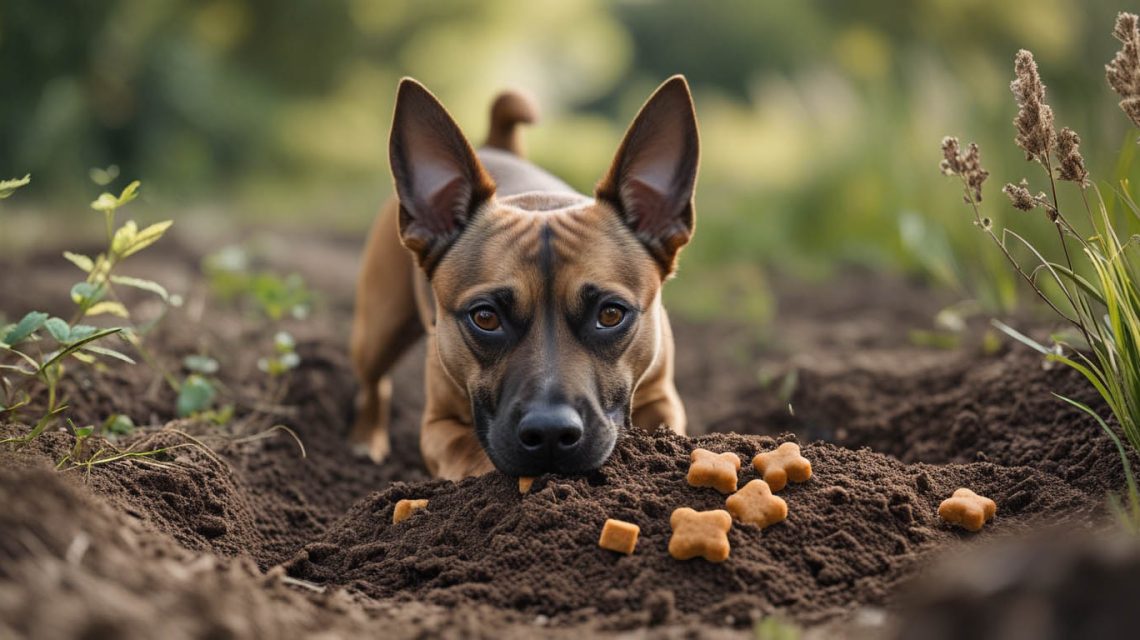
 Why do dogs bury their treats? Dogs bury treats primarily because of powerful survival instincts inherited from their wild ancestors who cached surplus food underground to preserve it for leaner times. If you’ve ever handed your dog a bone only to watch them immediately carry it outside and dig a hole in your freshly landscaped garden, you’ve witnessed ancient wolf behavior playing out in your backyard. Thousands of pet owners across the United States search for answers to why do dogs bury their treats every month—and the science behind this quirky habit turns out to be genuinely fascinating.
In this guide, I’ll unpack the evolutionary roots of treat burying, reveal which breeds do it most, explain when the behavior signals a problem, and share practical strategies for managing your backyard excavation artist.
The Evolutionary Answer to Why Do Dogs Bury Their Treats
Understanding your dog’s ancestry provides the most fundamental explanation for this behavior. Treat burying isn’t random weirdness—it’s a sophisticated survival strategy refined over thousands of years.
Ancient Wolf Caching Explains Why Do Dogs Bury Their Treats
Wolves—your dog’s direct ancestors—developed a behavior scientists call “caching.” After a successful hunt, wolves who couldn’t consume an entire kill immediately buried the surplus underground. The cool soil naturally preserved meat longer, while the earth’s scent helped mask the food from competing predators and scavengers.
According to animal behavior research highlighted by the American Kennel Club, this caching instinct proved so critical for survival that it became deeply embedded in canine DNA. Wolves who cached food effectively survived harsh winters and periods between successful hunts. Those who didn’t cache? They simply didn’t survive to pass their genes forward.
Here’s the thing—your modern Golden Retriever or Beagle carries this exact same genetic programming despite never needing to hunt or worry about their next meal. Evolution works on timescales of thousands of years, and a few centuries of domestic feeding hasn’t even begun to erase instincts built over millennia.
The Surplus Instinct Behind Why Do Dogs Bury Their Treats
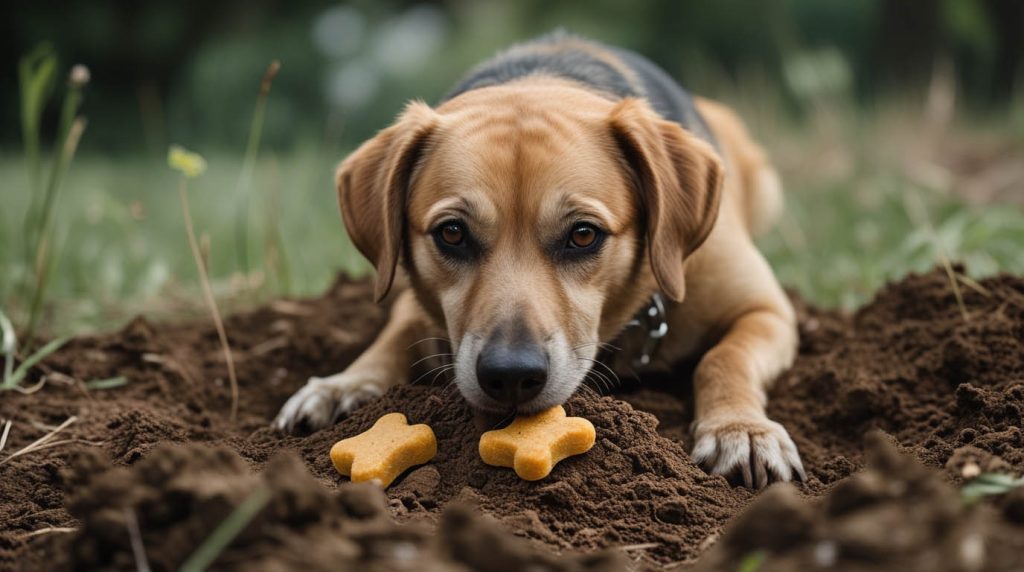
Beyond ancestral programming, a simpler trigger activates the burying response: surplus. When your dog receives more food or treats than they can consume immediately, their brain automatically activates the “save it for later” protocol.
I’ve found that this explains a common pattern owners notice—dogs rarely bury their regular kibble but frequently bury high-value treats like bones, bully sticks, and special chews. The perceived value of the item directly influences the strength of the caching instinct. The more valuable the treat, the more urgently your dog’s brain demands preservation.
Think of it like this: you probably wouldn’t hide a bag of plain rice in your closet, but you might stash an expensive bottle of wine somewhere safe. Your dog operates on the same principle—just with dirtier methods.
Why Do Dogs Bury Their Treats Instead of Eating Them?
This specific question puzzles owners constantly. Your dog clearly loves the treat—so why not just eat it right now?
Delayed Gratification and Why Do Dogs Bury Their Treats
Surprisingly, some dogs genuinely practice a form of delayed gratification. The act of burying a treat creates a sense of security and satisfaction independent from actually consuming it. Dopamine—the brain’s pleasure chemical—surges during the burying ritual itself, rewarding the behavior regardless of whether your dog ever retrieves the treat.
Additionally, some treats are simply too large for immediate consumption. Oversized bones, whole bully sticks, and large rawhide chews overwhelm your dog’s ability to finish them in one sitting. Rather than leaving the surplus exposed and vulnerable, instinct drives them underground for safekeeping.
In my experience, dogs who receive appropriately sized treats that they can finish in one session bury far less frequently than dogs receiving oversized items. This simple observation provides one of the easiest management strategies available.
Which Breeds Most Commonly Demonstrate Why Do Dogs Bury Their Treats
While every dog carries the caching instinct, certain breeds express it far more intensely than others. Breeding history and original working purpose significantly influence how strongly the burying drive manifests.
Hunting and Working Breeds: Champions of Burying Treats
| Breed | Burying Tendency | Why |
|---|---|---|
| Dachshunds | Very High | Bred specifically for digging and burrowing |
| Terriers (all types) | Very High | Hunting heritage with strong prey-drive instincts |
| Beagles | High | Scent-driven hunters with resource-preservation instincts |
| Basset Hounds | High | Tracking breeds with strong caching drives |
| Huskies/Malamutes | High | Northern breeds adapted to food scarcity |
| Golden Retrievers | Moderate | Retrieving instinct blends with mild caching |
| Toy breeds | Low | Companion breeding reduced working instincts |
Dachshunds deserve special mention because they were literally engineered to dig. Their elongated bodies and paddle-shaped paws evolved specifically for burrowing into badger dens—making them perhaps the most enthusiastic treat buriers in the entire canine world. If you own a Dachshund and wonder why do dogs bury their treats so obsessively, the answer is essentially: because your dog was purpose-built for exactly this activity.
For more breed-specific behavioral insights, our guide on why does my dog hide food explores the broader food-preservation instinct across different dog types.
Why Do Dogs Bury Their Treats Indoors Too?
Not every dog has yard access—and plenty of indoor dogs still exhibit burying behavior. Instead of actual dirt, indoor dogs improvise creatively.
Indoor Caching: A Modern Version of Why Dogs Bury Their Treats
Indoor dogs frequently “bury” treats by:
- Pushing them under couch cushions or pillows
- Tucking them beneath blankets or bedding
- Hiding them behind furniture or in corners
- Stashing them inside shoes, laundry baskets, or toy bins
- Covering them with towels or clothing
The behavior looks different from outdoor burying, but the underlying instinct remains identical. Your dog seeks enclosed, concealed spaces that mimic the underground dens their ancestors used. Soft materials like blankets and cushions serve as the indoor equivalent of soil—something to cover and conceal the treasure.
You might even notice your dog performing the signature “nose push” motion—using their snout to push imaginary dirt over the hidden treat, even on a hardwood floor where nothing actually covers it. This ritualistic motion confirms the behavior is purely instinctive rather than learned. For related indoor behavioral patterns, our article on essential first-year puppy care tips addresses establishing household boundaries early.
Why Do Dogs Bury Their Treats More Around Other Pets?
Competition dramatically amplifies treat burying behavior. Multi-pet households create the exact resource-competition dynamic that originally drove caching evolution in wild canines.
Competition Anxiety and Why Do Dogs Bury Their Treats
When other animals live in your home, your dog’s brain perceives every treat as potentially at risk. Even if your other pet has never stolen a single treat, the mere possibility of competition triggers heightened preservation instincts.
I’ve found that dogs in multi-pet households bury treats approximately 3–4 times more frequently than single-dog household pets. The pattern intensifies particularly when dogs receive treats simultaneously—watching another animal receive a valuable item activates competitive caching almost immediately.
Simple solution: Distribute treats in separate rooms with doors closed between pets. This eliminates visual competition and significantly reduces urgency-driven burying. For broader multi-pet feeding strategies, our article on why do dogs beg for human food covers resource management techniques for busy households.
Why Do Dogs Bury Their Treats and Then Forget About Them?
This paradox frustrates owners who discover fossilized chews months later under the patio furniture. Your dog carefully buried the treat—then apparently forgot it existed entirely.
The explanation is beautifully simple: the burying instinct and the retrieval instinct operate independently. Your dog’s brain rewards the act of caching itself through dopamine release—mission accomplished, security achieved. Meanwhile, regular meals completely satisfy their caloric needs, removing any genuine hunger motivation to return and retrieve the cached item.
Research in animal cognition confirms that domestic dogs demonstrate significantly weaker retrieval behavior compared to their wild counterparts. Wolves cached AND retrieved food because survival demanded it. Your well-fed dog only executes half the program because the survival pressure that powered retrieval simply doesn’t exist anymore.
💡 Practical Tip: Check your dog’s common hiding spots weekly. Buried treats attract insects, develop mold, and create unsanitary conditions—especially during warm summer months. A quick weekly sweep prevents health hazards and keeps your yard (and couch) clean.
How to Manage When Dogs Bury Their Treats Excessively
Understanding why do dogs bury their treats gives you perspective, but practical management keeps your home and yard intact.
Strategies to Reduce Excessive Treat Burying
- Right-size your treats — Offer treats your dog can finish in one sitting, eliminating surplus that triggers caching
- Supervise high-value chews — Give bones and bully sticks during designated chew sessions, then put them away when your dog walks away
- Reduce treat frequency — Fewer total treats means fewer opportunities for burying behavior
- Designate a digging zone — If your dog insists on burying outdoors, create a designated sandbox or digging area to protect your landscaping
- Provide mental enrichment — Puzzle feeders and interactive toys redirect the preservation instinct into appropriate outlets
- Feed measured portions — Overfeeding creates surplus that activates caching automatically
- Separate pets during treat time — Eliminate competitive pressure that intensifies burying urgency
Our guide on best dog foods for overall health helps you determine proper portion sizes that reduce surplus-driven behaviors including treat burying. Additionally, our article on why do dogs eat so fast addresses related food anxiety behaviors that often accompany excessive burying patterns.
When to Worry About Why Do Dogs Bury Their Treats
Most treat burying is completely harmless and natural. However, certain patterns warrant professional attention.
Consult your veterinarian or behaviorist if:
- Burying intensity increases suddenly without obvious environmental changes
- Your dog becomes aggressive when anyone approaches buried items
- Burying accompanies appetite changes, weight loss, or food refusal
- The behavior escalates into destructive digging that damages property significantly
- Your dog appears genuinely distressed or anxious during the burying process
- Senior dogs suddenly begin burying when they never did before (possible cognitive decline)
Sudden behavioral changes in senior dogs sometimes indicate canine cognitive dysfunction syndrome—similar to dementia in humans—which alters established habits and creates new compulsive behaviors. Our article on how often should you take your dog to the vet covers wellness checkup schedules that help detect cognitive changes early.
Frequently Asked Questions
Why do dogs bury their treats but not their regular food?
Regular kibble holds relatively low perceived value compared to special treats, bones, and chews. The caching instinct activates proportionally to how valuable your dog considers the item. High-value treats trigger strong preservation responses while everyday kibble rarely does.
Why do dogs bury their treats in my bed specifically?
Your bed carries your concentrated scent, which your dog associates with maximum safety and comfort. Burying a valued treat near your scent combines resource preservation with emotional security—placing their treasure in the safest location they know.
Do puppies bury treats more than adult dogs?
Puppies typically begin showing burying behavior between 4–8 months as their instinctual drives fully develop. However, adult dogs generally bury more consistently because their caching instinct has fully matured and their preferences for specific hiding spots have solidified over time.
Why do dogs bury their treats and then dig them up immediately?
Some dogs bury and retrieve treats within minutes as a form of play and mental stimulation rather than genuine preservation. The digging-burying-retrieving cycle itself provides entertainment and satisfies their instinctual drive simultaneously.
Can I train my dog to stop burying treats entirely?
You can significantly reduce burying through management strategies—right-sized treats, supervised chew sessions, and environmental modifications. However, completely eliminating a deep-rooted instinct is nearly impossible and arguably unnecessary. Managing the behavior works far better than attempting to suppress it entirely.
Conclusion
So why do dogs bury their treats? The behavior traces directly to powerful survival instincts inherited from wild ancestors who cached surplus food underground to survive lean periods. Your dog’s brain still carries this ancient programming, activating automatically whenever they receive high-value items exceeding their immediate consumption capacity. Competition from other pets, oversized treats, and instinctive security-seeking amplify the behavior further—creating the backyard excavation projects and couch-cushion treasure hunts that dog owners everywhere recognize.
The reassuring truth? Treat burying is overwhelmingly normal, harmless, and deeply natural. Your dog isn’t broken, anxious, or misbehaving—they’re simply following genetic instructions thousands of years old. Managing the behavior through right-sized treats, supervised chew sessions, separated feeding, and designated digging areas keeps your home intact while respecting your dog’s instinctual needs.
Take action this week: Evaluate the treats you currently give your dog. If they’re too large to finish in one sitting, switch to smaller, single-session options and observe whether burying frequency decreases. Create a designated outdoor digging zone using a small sandbox filled with loose soil. And perform a quick sweep of your dog’s favorite hiding spots to clear out any forgotten, fossilized treasures lurking under your furniture. Your garden, your couch, and your sanity will all thank you enormously. 🐾
