


 Animal Zoid Editorial Team
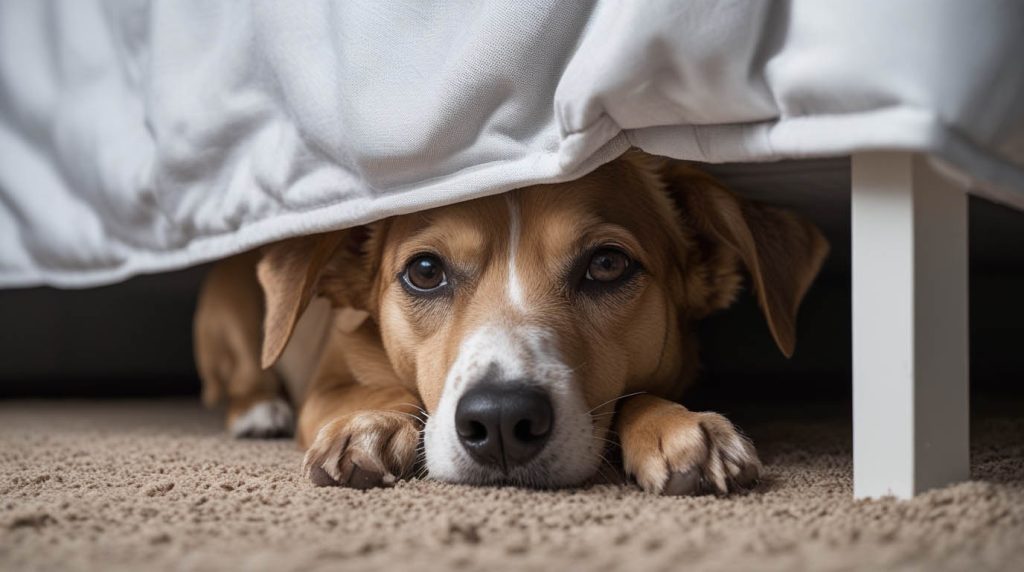
 You’re not the only one wondering “why do dogs hide under beds?” Most dogs crawl under beds because it feels safe, dark, and quiet, but they can also do it when they’re stressed, scared, or in pain. The key is figuring out whether this hiding is a normal “den” habit or a sign that something is wrong.
Let’s break down the most common reasons, what to watch for, and what you can do to help your dog.
What “Why Do Dogs Hide Under Beds” Really Means
Before you can answer why do dogs hide under beds, you have to look at the bigger picture of what your dog does there.
Ask yourself:
- Do they relax and fall asleep, or do they tremble and stare?
- Do they go there only during storms or visitors, or all the time?
- Have they always done this, or is it new?
For many dogs, under the bed is simply a den. The American Kennel Club explains that a lot of dogs naturally seek out small, enclosed spots when they want to rest.
However, when hiding becomes intense, constant, or suddenly starts out of nowhere, why do dogs hide under beds shifts from “quirk” to “possible warning sign.”
Common Reasons Why Do Dogs Hide Under Beds
Why Do Dogs Hide Under Beds for Comfort and Den Instinct?
Dogs are descended from animals that slept in dens and burrows. That instinct never went away.
Under your bed, your dog gets:
- A solid “roof” and walls on three sides
- A space that smells like you
- Protection from drafts and bright light
If your dog seems calm under there—maybe they let out a big sigh and go right to sleep—then why do dogs hide under beds probably has a simple answer: “because it’s the coziest, safest spot in the house.”
Why Do Dogs Hide Under Beds When They’re Scared or Anxious?
Many dog owners notice their pets dive under the bed during:
- Thunderstorms or fireworks
- Vacuuming or loud construction
- Big family gatherings or rowdy kids
The ASPCA notes that fearful dogs often seek out hiding spots when overwhelmed or unsure.
In those moments, why do dogs hide under beds is really:
“I’m scared; I can’t control what’s happening, and I need a safe hole to ride it out.”
If your dog bolts under the bed whenever something stressful happens, then anxiety or fear is playing a big role.
Why Do Dogs Hide Under Beds Because of Pain or Illness?
Here’s the one that deserves special attention. In the wild, sick or injured animals often hide to avoid drawing attention to themselves.
So, why do dogs hide under beds when they feel unwell?
- Pain makes them more cautious and reserved.
- Illness can drain energy and increase the desire to be alone.
- Some dogs hide after surgery or during flare‑ups of chronic conditions.
Red flags to watch for:
- Hiding more than usual, not just at night
- Limping, stiffness, or trouble getting up
- Changes in eating, drinking, or bathroom habits
- Whining, panting, or changes in breathing when not hot
The VCA Animal Hospitals list “hiding or seeking seclusion” as a potential sign of illness.
In that case, “why do dogs hide under beds” might be your first clue that a vet visit is due.
How to Respond When You Wonder Why Do Dogs Hide Under Beds
Once you’ve noticed this behavior, you can deal with why do dogs hide under beds in a calm, step‑by‑step way.
Step-by-Step Plan for Why Do Dogs Hide Under Beds
- Observe before reacting
- Note when your dog goes under the bed and how they look.
- Is it only during storms, or randomly in the middle of a normal day?
- Check for patterns
- Did something in the house change—new baby, new pet, new furniture?
- Did the hiding start after a scary event (fireworks, a fight at the dog park, a move)?
- Gently coax, don’t drag
- If you need them out, use treats and a soft voice.
- Avoid grabbing or yanking them; that can make the bed feel even more like a “must‑protect” zone.
- Call your vet if you see red flags
- Sudden, unexplained hiding
- Physical signs of pain or sickness
- Behavior changes in a senior dog (might hint at cognitive decline)
I’ve found that when owners write down a few days of behavior—when, how long, what else was happening—they get much better answers from their vet about why do dogs hide under beds in that specific case.
Common Mistakes With Why Do Dogs Hide Under Beds
A couple of innocent mistakes can make things worse:
- Punishing or scolding
Yelling at a scared dog under the bed just layers more fear on top. That often makes them hide more, not less. - Ignoring a new pattern
Many people shrug off new hiding as “being dramatic.” But when a dog who never hid suddenly spends hours under the bed, it’s time to take note.
Instead, treat why do dogs hide under beds like a question your dog is asking you: “Is everything okay? Am I okay?” Then respond by checking both their body and their environment.
Best Practices and Tools for Why Do Dogs Hide Under Beds
You can make your dog’s world feel safer, with or without under‑bed access.
Creating Better Safe Spaces
If you’re okay with hiding but want a cleaner solution than under the bed, you can:
- Set up a covered crate or kennel with blankets over the top.
- Use a hooded dog bed or pup tent in a quieter room.
- Add one or two favorite toys and a piece of clothing that smells like you.
Over time, these can become your dog’s go‑to dens, and you won’t be constantly reaching under furniture.
For related reading, you might like:
Calming Aids and Professional Help
If fear or anxiety drives why do dogs hide under beds, consider:
- White noise machines to buffer scary sounds
- Adaptil (dog appeasing pheromone) diffusers or collars
- Structured desensitization and counter‑conditioning with a qualified trainer
- In serious cases, behavior medication prescribed by your vet
The AVMA’s resources on behavior emphasize that anxiety is a welfare issue, not just a quirk to “tough out.”
Real-Life Examples: Why Do Dogs Hide Under Beds in Practice?
Many dog owners notice their pets hide under beds before guests arrive. One family I know had a shy rescue dog, Luna, who disappeared under their daughter’s bed every time the doorbell rang. At first they thought it was stubbornness, but when they paired greeting visitors with treats and gave Luna a covered crate in a quieter room, she eventually started choosing the crate instead of the cramped bed frame.
Another owner had an older Lab who never hid—until arthritis set in and stairs became painful. Suddenly, he began sleeping half the day under the closest downstairs bed. That “why do dogs hide under beds” moment prompted an exam, and with pain meds and ramps, he slowly went back to his usual napping spots.
These little stories show how the same behavior can mean very different things depending on the dog.

FAQ: Quick Answers About Why Do Dogs Hide Under Beds
Q1: Why do dogs hide under beds during storms?
Because it’s dark, enclosed, and muffles sound, under‑bed space feels safer from thunder and flashes. It’s a classic fear response.
Q2: Why do dogs hide under beds instead of their crate?
They may find the bed area cooler, cozier, or closer to you. Or the crate might not feel as safe yet. You can work on making the crate more appealing.
Q3: Is it bad if my dog hides under my bed all the time?
Constant hiding suggests fear, stress, or illness. It’s worth a vet visit and possibly a behavior consult to understand what’s driving it.
Q4: Why do small dogs hide under beds more than big dogs?
Small dogs can physically fit more easily, and many also feel more vulnerable, so they often seek tight “burrows.”
Q5: How do I stop my dog from hiding under the bed?
Block access gently (storage bins, low boxes), create a better safe space, and address any fear or pain that’s making them want to hide.
Conclusion: Understanding Why Do Dogs Hide Under Beds
At first, “why do dogs hide under beds” sounds like a cute social media question. But when you look closer, it often reveals something meaningful about how your dog feels in your home. Sometimes it’s nothing more than a love of dark, snug dens. Other times, it’s fear of noise, changes, or visitors. And occasionally, it’s your warning sign that pain or illness is brewing beneath the surface.
Your job isn’t to panic or to rip them out from under the bed—it’s to listen. Watch when and how they hide, check for other changes, and bring your observations to your veterinarian if anything seems off. Then, build a world where your dog has safe, comfortable spaces and doesn’t need to vanish when life gets loud.
If you’re ready to learn even more about your dog’s quirks, explore related topics like why dogs sleep under beds or night time pacing. The more you understand these small behaviors, the stronger and more trusting your bond will become.
