

 Animal Zoid Editorial Team
 Treating Separation Anxiety in Dogs: Your Step-by-Step Guide to a Calm, Confident Pet
The silence of your departure is shattered by a howl. You come home to claw marks on the door and a dog trembling with distress. This is the heart-wrenching reality of life with a dog who suffers from separation anxiety. If you’re here, you’re not just looking for a quick fix; you’re seeking a real plan for treating separation anxiety in dogs. You’re ready to bring peace back to your home and, more importantly, to your best friend’s mind.
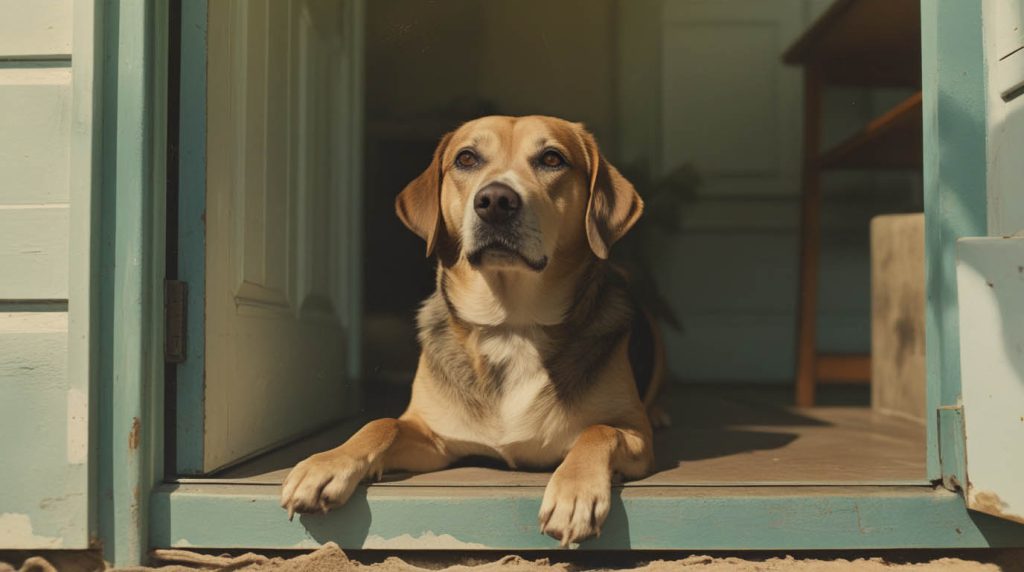
Let’s follow the journey of a dog owner named Sarah and her rescue, a sweet but terrified terrier mix named Benji. Every time Sarah left, Benji would panic, destroying blinds to look out the window and barking until his voice was hoarse. Sarah knew this wasn’t bad behavior; it was a cry for help. Her commitment to treating separation anxiety in dogs became her top priority.
This guide will provide you with the same proven, step-by-step process that Sarah used. We will delve into what separation anxiety truly is, the gold-standard methods for treating it, the common mistakes to avoid, and the role of professional help. This is your definitive roadmap for treating separation anxiety in dogs.
What Is Separation Anxiety? More Than Just Sadness
First, it is absolutely essential to understand what you’re up against. Treating separation anxiety in dogs begins with recognizing that it is not a training issue or a spiteful act. It is a genuine panic disorder, akin to a human having a panic attack, that is triggered by the dog being left alone.
The American Veterinary Medical Association (AVMA) clearly defines this as a clinical condition. Your dog is not “getting back at you” for leaving; they are experiencing overwhelming fear. The signs, which occur only when you are gone, include:
- Destructive behavior, especially at exits like doors and windows.
- Persistent howling, barking, or whining.
- Inappropriate urination or defecation.
- Frantic escape attempts from a room or crate.
- Excessive drooling or panting.
The Foundation: Why Management Is the First Step in Treating Separation Anxiety in Dogs
Here’s the most critical—and often most difficult—first step: you must temporarily stop leaving your dog alone for longer than they can handle. Right now, that might be zero seconds.
Every time your dog has a full-blown panic attack, it reinforces the neural pathways of that fear, making the problem worse. This is why management is the non-negotiable starting point for treating separation anxiety in dogs.
This might mean:
- Hiring a pet sitter or using doggy daycare.
- Working from home or adjusting your schedule.
- Asking friends, family, or neighbors for help.
Remember, this is a temporary measure that creates the safe space needed for the real training to begin.
The Gold Standard: Behavior Modification for Treating Separation Anxiety in Dogs
This is the core of your treatment plan. You are going to slowly and systematically change your dog’s emotional response to being alone. This technique is called Desensitization and Counter-Conditioning (DSCC).
Step 1: Desensitization to Pre-Departure Cues
Your dog has learned that certain actions predict your departure and trigger their anxiety. These are “pre-departure cues.”
- Identify the Cues: Make a list. Is it putting on your shoes? Grabbing your keys? Picking up your purse?
- Make Them Meaningless: Start performing these cues randomly throughout the day without leaving. Jingle your keys and then sit down to watch TV. Put on your coat and then go to the kitchen for a snack. This teaches your dog that these cues no longer predict the scary event of you leaving.
Step 2: Counter-Conditioning with Gradual Absences
This is where you pair your absence with something amazing, usually a super high-value treat or food puzzle.
Let’s use Sarah’s plan for Benji as our guide for treating separation anxiety in dogs:
- Start with Micro-Absences: Sarah started by just touching the doorknob. Benji stayed calm, so she gave him a tiny piece of boiled chicken. She progressed to turning the knob, opening the door an inch, and stepping out for one single second.
- Go Slow: The key is to go so slowly that the dog never panics. Her goal was to always return while Benji was still calm.
- The Pet Camera is Your Best Friend: Sarah used a pet camera to monitor Benji’s body language. This allowed her to see the exact moment he started to get anxious (e.g., stopping his chewing, looking at the door) and return before panic set in. This is a non-negotiable tool for treating separation anxiety in dogs.
The Role of a Veterinarian in Treating Separation Anxiety in Dogs
You are not alone in this. Your veterinarian is a crucial member of your team.
- Rule Out Medical Issues: Your vet will ensure there isn’t a physical reason for the behavior.
- Discuss Medication: For moderate to severe cases, medication is often a game-changing part of treating separation anxiety in dogs.
Medication as a Tool, Not a Crutch
Let’s be very clear: medication does not “cure” anxiety. Its purpose is to lower the dog’s panic to a level where their brain is capable of learning from your behavior modification. It’s the scaffolding that allows you to do the real repair work.
Common medications your vet might discuss include:
- Fluoxetine (Reconcile/Prozac): A daily SSRI that helps to stabilize mood by increasing serotonin. It can take 4-8 weeks to become fully effective.
- Clomipramine (Clomicalm): A daily TCA that is FDA-approved for treating separation anxiety in dogs.
- Trazodone: A situational medication that can be used for predictable absences or during the initial loading period of a daily med.
Common Mistakes to Avoid When Treating Separation Anxiety in Dogs
Your progress can be derailed by a few common pitfalls.
| The Mistake | Why It’s Wrong | The Better Approach |
|---|---|---|
| Using a Crate | For most dogs with true separation anxiety, a crate becomes a panic-inducing trap, leading to injury. | Use a dog-proofed room with a baby gate. A crate is only an option if the dog already loves it and shows no signs of confinement phobia. |
| Getting Another Dog | The anxiety is about being separated from you, not just being alone. A second dog rarely helps and can sometimes even learn the anxious behaviors. | Focus on building your current dog’s confidence and independence. |
| Punishment | Punishing a dog for anxious behavior is like scolding someone for having a panic attack. It will only increase their fear and damage your bond. | Ignore the old mess and focus on management and training to prevent future incidents. |
A Case Study: Sarah and Benji’s Success
Sarah’s journey in treating separation anxiety in dogs took six months of dedicated work.
- Months 1-2: She worked with a Certified Separation Anxiety Trainer (CSAT) online. She never left Benji alone. They focused on DSCC, slowly working up to 5-minute absences. Her vet started Benji on Fluoxetine.
- Months 3-4: The medication had taken full effect, and the training started to “stick.” Benji was less reactive to her departure cues. They reached 30 minutes of calm absence.
- Months 5-6: They had a breakthrough, reaching 2 hours. Benji would work on his special “goodbye” food puzzle and then settle down for a nap. The barking and destruction completely stopped.
FAQ: Your Questions on Treating Separation Anxiety in Dogs
Q: How long does treating separation anxiety in dogs take?
A: There is no set timeline. It is a process of “baby steps.” Mild cases might see significant improvement in a few months. Severe, long-standing cases can take a year or more of consistent, dedicated training.
Q: Can I treat separation anxiety on my own?
A: While possible for very mild cases, it is highly recommended to work with a professional. A Certified Separation Anxiety Trainer (CSAT), a veterinary behaviorist (DACVB), or a certified positive reinforcement trainer can provide a structured plan and invaluable support.
Q: Will my dog ever be “cured”?
A: The goal of treating separation anxiety in dogs is management, not necessarily a “cure.” The goal is to reduce the anxiety to a point where it no longer negatively impacts the dog’s quality of life and they can be left alone comfortably for a reasonable period.
Q: What’s the difference between separation anxiety and boredom?
A: Boredom destruction is usually random, while separation anxiety destruction is focused on escape routes (doors, windows). A bored dog might be happy to see you; an anxious dog will be frantic. A pet camera is the best way to tell the difference.
Conclusion: A Journey of Patience and Partnership
Treating separation anxiety in dogs is a marathon, not a sprint. It is a profound commitment to your dog’s mental health, requiring patience, consistency, and a deep well of compassion. As we’ve seen, the path to success is a multi-faceted one, built on a foundation of smart management and science-backed behavior modification, and often supported by a partnership with your veterinarian.
Remember Sarah and Benji. Their success wasn’t a miracle; it was the result of a dedicated, step-by-step process. By understanding that Benji’s behavior was a symptom of panic, not a choice, Sarah was able to approach the problem with the empathy and structure needed to heal his fear. You can achieve this same success. The journey will be challenging, but a calm, confident dog is the ultimate reward.
Are you ready to take the first step in treating your dog’s separation anxiety? Your journey begins with a commitment to management. Today, make a plan to ensure your dog is not left alone to panic. From there, schedule a consultation with your veterinarian or a certified trainer. This first, crucial step is the start of a new, peaceful chapter for you and your best friend.

 Treating Separation Anxiety In Dogs: Guide