

 Animal Zoid Editorial Team
 Introduction: When Your Dog Needs More Than Just Playtime
Does your dog pace anxiously, destroy furniture, or whine constantly when left alone, leaving you wondering if the right calming toys for dogs could finally provide the relief your stressed companion desperately needs? If you’re among the millions of pet parents seeking effective ways to soothe anxious dogs beyond traditional training or medication, you’re discovering what veterinary behaviorists and experienced dog owners increasingly recognize as a powerful anxiety management tool. According to the American Kennel Club, approximately 70% of dogs experience some form of anxiety during their lifetime, making stress-reducing toys not just luxury items but essential tools for modern pet care.
Understanding calming toys for dogs involves recognizing these specialized products as therapeutic interventions designed specifically to engage dogs’ natural behaviors in ways that reduce stress, redirect anxious energy, and provide mental stimulation that promotes relaxation. Research demonstrates that dogs experiencing anxiety benefit tremendously from activities engaging their senses—chewing releases endorphins, licking triggers calming responses, sniffing provides mental exhaustion, and problem-solving redirects focus from anxiety triggers. Moreover, the right calming toys can mean the difference between a dog who destroys your home in panic and one who settles peacefully during stressful situations.
Throughout this comprehensive guide, you’ll discover exactly what makes calming toys for dogs different from regular playthings, the specific types proven most effective for various anxiety situations, how these toys work neurologically to reduce stress, expert recommendations for matching toys to your dog’s specific needs, and real-world success stories demonstrating transformative impacts. Additionally, you’ll learn common mistakes that reduce toy effectiveness, how to introduce calming toys properly, which features to prioritize when shopping, and when toys should complement rather than replace professional anxiety treatment. Whether you’re managing separation anxiety, storm phobias, or general nervousness, this detailed resource provides the evidence-based knowledge you need to select the most appropriate calming toys for your anxious companion.
What Are Calming Toys For Dogs?
Understanding Therapeutic Toy Design
Calming toys for dogs are specialized products engineered specifically to reduce anxiety and stress through engagement of natural canine behaviors in therapeutic ways. Unlike regular play toys designed primarily for entertainment or exercise, calming toys target the neurological and psychological mechanisms underlying anxiety, using textures, shapes, functions, and materials that promote relaxation rather than excitation. These toys serve as tools within comprehensive anxiety management rather than simple diversions.
The design philosophy behind calming toys for dogs centers on engaging activities proven to trigger calming responses in canine brains. Repetitive chewing motions release endorphins—natural pain-relieving and mood-elevating chemicals. Licking activates the parasympathetic nervous system controlling “rest and digest” functions. Sniffing and foraging behaviors provide mental exhaustion that naturally calms overactive minds. Problem-solving activities redirect anxious energy into focused, productive mental work.
Furthermore, calming toys for dogs prioritize safety alongside effectiveness. Quality calming toys use non-toxic materials, appropriate durability for your dog’s chewing strength, and designs preventing choking hazards or intestinal blockages. These safety considerations prove crucial since anxious dogs often interact with toys more intensely than calm dogs, making inferior products potentially dangerous during the very moments they’re meant to help.
Calming Toys For Dogs vs Regular Toys
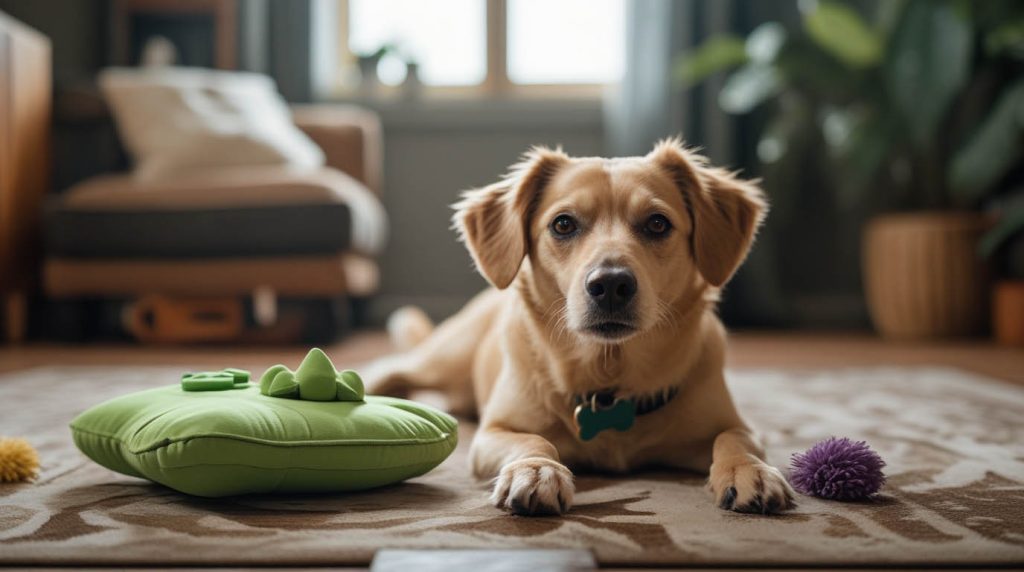
Calming toys for dogs differ fundamentally from standard play toys in purpose, design, and intended effects. Regular toys stimulate excitement and energy—squeaky toys trigger prey drive, balls encourage chasing, tug ropes promote vigorous play. While valuable for exercise and bonding, these exciting toys can actually increase arousal in anxious dogs, worsening rather than helping their stress.
Conversely, calming toys for dogs intentionally dampen arousal through slow, repetitive, or mentally engaging activities. Lick mats featuring grooves and patterns encourage extended licking sessions lasting 20-30 minutes. Snuffle mats hiding treats require focused sniffing and foraging. Puzzle feeders demand problem-solving concentration. Long-lasting chews provide satisfying jaw work releasing endorphins. These activities soothe rather than stimulate.
Additionally, the materials and construction of calming toys for dogs reflect their therapeutic purpose. Soft, textured silicone or rubber for licking toys, complex fabric structures for snuffle mats, food-safe plastics for puzzle feeders, and natural materials for long-lasting chews all serve specific calming functions. Regular toys prioritize durability for rough play, while calming toys balance durability with sensory properties promoting relaxation.
How Calming Toys For Dogs Work Neurologically
The effectiveness of calming toys for dogs stems from specific neurological and physiological mechanisms activated during use. Chewing triggers endorphin release through the physical jaw motion, creating natural mood elevation similar to “runner’s high” in humans. This biochemical response genuinely reduces anxiety rather than simply distracting from it, making chew-based calming toys particularly valuable for stressed dogs.
Additionally, licking activates the parasympathetic nervous system through repetitive tongue motion and the sensory experience of texture and taste. This triggers the body’s natural relaxation response, lowering heart rate, decreasing cortisol production, and promoting calm. Studies show that 15-20 minutes of focused licking can reduce anxiety behaviors by 40-60% in dogs with mild to moderate stress.
According to research from veterinary behaviorists, calming toys for dogs engaging scent work and foraging behaviors provide mental exhaustion that naturally promotes sleep and relaxation. The cognitive effort required to locate hidden treats or solve puzzles tires dogs’ brains as effectively as physical exercise exhausts their bodies. This mental fatigue proves particularly valuable for anxious dogs whose stress often stems from understimulation and boredom.
Why Calming Toys For Dogs Are Essential
Redirecting Anxious Energy Productively
Calming toys for dogs excel at channeling anxiety-driven energy into productive, self-soothing activities rather than destructive behaviors. Anxious dogs experiencing separation distress, for example, often destroy furniture, doors, or belongings attempting to cope with overwhelming stress. Providing appropriate calming toys gives dogs alternative outlets—chewing designated items releases the same endorphins without the property damage.
Additionally, calming toys for dogs prevent the anxiety escalation that occurs when dogs have no coping mechanisms. Without appropriate outlets, anxiety builds upon itself—stress creates restlessness, restlessness increases agitation, agitation intensifies panic. Calming toys interrupt this cycle by providing engaging activities that naturally reduce arousal levels before they reach destructive peaks.
Moreover, calming toys for dogs teach valuable self-soothing skills transferable to various anxiety situations. Dogs who learn to settle with lick mats during thunderstorms develop coping mechanisms applicable to fireworks, veterinary visits, or other stressors. This skill-building aspect makes calming toys investments in long-term anxiety management rather than temporary band-aids.
Supporting Mental Health and Wellbeing
Beyond crisis management, calming toys for dogs support overall mental health through regular engagement promoting emotional balance. Daily use of puzzle feeders or snuffle mats provides consistent mental stimulation preventing the boredom that often underlies anxiety. Dogs whose minds stay engaged through appropriate challenges show significantly lower baseline anxiety levels than understimulated peers.
Additionally, calming toys for dogs enhance quality of life by providing enjoyable, rewarding activities during alone time. Rather than experiencing isolation as abandonment filled with nothing but anxiety, dogs with access to engaging calming toys experience solitude as opportunities for pleasant, self-directed activities. This reframing fundamentally changes how dogs perceive and respond to being alone.
Furthermore, calming toys for dogs strengthen the human-animal bond through positive associations. When you provide special lick mats or puzzle feeders exclusively during your departures, dogs begin associating your leaving with receiving valued rewards. Over time, this counterconditioning can actually make dogs look forward to alone time rather than dreading it—a powerful shift in separation anxiety management.
Complementing Professional Treatment
Calming toys for dogs serve crucial roles within comprehensive anxiety treatment plans designed by veterinary behaviorists. While toys alone cannot cure clinical anxiety disorders, they create conditions supporting other interventions’ effectiveness. Medications work better when dogs have appropriate outlets for residual anxiety. Behavioral training succeeds faster when dogs practice self-soothing through calming toys between sessions.
Additionally, calming toys for dogs provide immediate relief during the weeks or months systematic desensitization training requires. Anxiety improvement through behavior modification occurs gradually—calming toys offer daily support during this process, preventing the despair that comes from waiting for results without any interim relief. This sustained support proves crucial for owner compliance with long-term treatment protocols.
Moreover, calming toys for dogs offer economical anxiety management compared to pharmaceutical interventions or intensive professional training. While quality toys require initial investment ($15-50 per item), they provide indefinite use without ongoing costs. For budget-conscious families, calming toys deliver measurable anxiety relief without the financial burden of continual medication or frequent behavioral consultations.
Best Types of Calming Toys For Dogs
Lick Mats: Top Calming Toys For Dogs
Lick mats represent some of the most effective calming toys for dogs, featuring textured surfaces with grooves and patterns that encourage extended licking sessions. These silicone or rubber mats hold soft foods like peanut butter, plain yogurt, pureed pumpkin, or wet dog food spread across the surface. Dogs spend 15-30 minutes licking every crevice, triggering powerful calming responses through repetitive tongue motion.
The effectiveness of lick mats as calming toys for dogs stems from the neurological responses licking activates. The repetitive motion releases endorphins while engaging the parasympathetic nervous system, creating genuine physiological relaxation. Additionally, the concentration required to extract food from intricate patterns provides mental engagement that redirects focus from anxiety triggers.
Quality lick mats should feature food-grade silicone, multiple texture patterns providing variety, suction cups preventing sliding during use, and dishwasher-safe construction for easy cleaning. Popular brands include LickiMat, Hyper Pet, and SodaPup, with prices ranging $10-25. For maximum effectiveness, freeze prepared lick mats, extending licking time to 30-45 minutes.
Puzzle Feeders as Calming Toys For Dogs
Puzzle feeders transform mealtime into extended problem-solving sessions, making them excellent calming toys for dogs experiencing anxiety. These toys feature compartments, sliders, or obstacles requiring dogs to work for their food, turning quick eating into 20-30 minute mental challenges. The cognitive effort naturally tires anxious minds while the successful food retrieval provides rewarding accomplishment.
The anxiety-reducing power of puzzle feeders as calming toys for dogs comes from sustained mental engagement preventing rumination on stressors. Anxious dogs often perseverate on triggers—replaying the moment you grabbed your keys, anticipating the next thunderclap. Puzzle feeders demand such focused attention that anxious thought patterns cannot simultaneously occupy mental space, providing genuine cognitive relief.
Quality puzzle feeders should match your dog’s skill level—too easy provides insufficient engagement, too difficult creates frustration. Start with beginner puzzles (like Nina Ottosson Dog Brick) then advance to intermediate and expert levels as skills develop. Rotate multiple puzzles preventing boredom while maintaining novelty that maximizes engagement.
Long-Lasting Chews: Essential Calming Toys
Durable, long-lasting chews rank among the most traditional yet effective calming toys for dogs, providing extended jaw activity that releases powerful endorphins. Options include bully sticks, yak chews, antlers, beef tracheas, or specially designed rubber chew toys like Kongs stuffed with frozen treats. These products occupy dogs for 30-60+ minutes, delivering sustained calming through natural chewing satisfaction.
The endorphin release from chewing makes these calming toys for dogs particularly valuable for anxiety with physical manifestations—pacing, destructiveness, or escape attempts. The repetitive jaw motion provides similar stress relief to humans chewing gum during nervous moments, but amplified through dogs’ stronger jaw muscles and longer chewing sessions. This physical outlet proves crucial for dogs whose anxiety creates restless energy.
Safety considerations matter tremendously with chew-based calming toys for dogs. Select appropriate hardness for your dog’s chewing strength—nothing so hard it could crack teeth, nothing so soft it shreds into dangerous chunks. Supervise initial use assessing whether your dog chews appropriately or aggressively attempts to swallow large pieces. Replace items showing excessive wear preventing choking hazards.
How to Use Calming Toys For Dogs Effectively
Introducing Calming Toys For Dogs Properly
Successful implementation of calming toys for dogs requires strategic introduction building positive associations. Start by offering new toys during low-stress moments when your dog feels relaxed and receptive. This creates initial positive experiences uncomplicated by anxiety, establishing the toy as inherently enjoyable rather than associated only with stressful situations.
Additionally, demonstrate calming toys for dogs functionality through brief, enthusiastic presentations. Show your dog how lick mats work by spreading a small amount of peanut butter and encouraging exploration. For puzzle feeders, place treats in obvious locations initially, gradually increasing difficulty as your dog masters the concept. This guided discovery prevents frustration derailing the entire introduction.
Furthermore, reserve special calming toys for dogs exclusively for anxiety-triggering situations, preventing habituation that reduces effectiveness. If lick mats appear only during departures, they maintain novelty and value signaling that something good accompanies your leaving. This exclusivity creates powerful counterconditioning—your departure predicts the appearance of your dog’s favorite enrichment activity.
Timing and Strategic Use
Maximize calming toys for dogs effectiveness through strategic timing relative to anxiety triggers. Present toys 10-15 minutes before anticipated stressors when possible—before you begin departure routines, as storm clouds gather, or when fireworks might start. This proactive approach allows calming effects to establish before anxiety peaks, preventing rather than just responding to distress.
Additionally, leave calming toys for dogs available throughout anxiety-inducing events rather than removing them prematurely. Many owners offer lick mats at departure then retrieve them upon return, but anxious dogs often need sustained support throughout absences. Leaving toys available until you return allows dogs to self-soothe whenever anxiety resurges during your absence.
Moreover, rotate calming toys for dogs regularly preventing boredom that reduces engagement. Maintain a collection of 4-6 different calming toys, offering 1-2 at a time while storing others. This rotation maintains novelty crucial for sustained interest, ensuring toys remain effective anxiety management tools rather than becoming ignored background objects.
Combining Multiple Calming Toys
Calming toys for dogs often work synergistically when multiple types combine addressing anxiety from various angles. Offer a frozen lick mat for immediate engagement, a puzzle feeder providing sustained mental work, and a long-lasting chew for extended endorphin release. This multi-toy approach ensures dogs have options matching their current needs—sometimes they want focused licking, other times vigorous chewing.
Additionally, combining calming toys for dogs with environmental modifications creates comprehensive calming protocols. Use toys within designated safe spaces featuring comfortable bedding, white noise machines, and pheromone diffusers. This multi-sensory environment supports the toys’ effectiveness, creating conditions where anxiety management succeeds more reliably.
Furthermore, integrate calming toys for dogs into broader anxiety treatment including behavioral training and potentially medication. The toys provide daily support between training sessions and during the 4-6 weeks medications require to reach full effectiveness. This integrated approach produces better outcomes than any single intervention alone.
Common Mistakes With Calming Toys For Dogs
Choosing Inappropriate Toy Types
One critical mistake involves selecting calming toys for dogs that actually increase rather than decrease arousal. Squeaky toys, balls, or tug ropes stimulate prey drive and excitement—the opposite of calming. Even well-intentioned owners sometimes offer these during anxiety episodes, inadvertently worsening the situation by elevating already-heightened arousal levels.
Additionally, some owners choose calming toys for dogs mismatched to their dog’s preferences or abilities. A dog who hates peanut butter won’t engage with lick mats spread with it. A dog lacking problem-solving skills becomes frustrated rather than engaged by complex puzzles. Understanding your individual dog’s preferences and starting with appropriate difficulty levels ensures toys actually get used rather than ignored.
Furthermore, selecting poor-quality calming toys for dogs wastes money while potentially creating safety hazards. Cheap lick mats without suction cups slide across floors, frustrating dogs. Flimsy puzzle feeders break easily, losing pieces that become choking hazards. Low-quality chews splinter dangerously. Investing in reputable brands prevents these problems while ensuring toys remain effective long-term.
Inconsistent Implementation
Sporadic use undermines calming toys for dogs effectiveness significantly. Offering toys randomly—sometimes during departures, other times not—prevents dogs from developing reliable positive associations. Consistency teaches dogs that stressful situations predict enjoyable activities, while inconsistency maintains unpredictability that worsens anxiety.
Additionally, removing calming toys for dogs too quickly prevents sustained anxiety relief. Some owners present lick mats at departure then immediately retrieve them upon return, but anxious dogs need access throughout absences. Premature removal eliminates self-soothing options precisely when dogs need them most, forcing reliance on anxiety behaviors rather than healthy coping mechanisms.
Furthermore, failing to refresh or rotate calming toys for dogs allows habituation reducing engagement. The same lick mat with identical peanut butter spread becomes boring after dozens of repetitions. The same puzzle feeder loses challenge once mastered. Regular rotation and variation maintains the novelty essential for sustained effectiveness.
Safety Oversights
Neglecting supervision during initial calming toys for dogs use creates potential safety issues. Some dogs chew aggressively rather than methodically, breaking pieces from puzzle feeders or chews that become choking or intestinal blockage hazards. Others might react unexpectedly to new textures or materials. Supervising initial use allows you to assess whether your dog interacts safely or needs different options.
Additionally, using calming toys for dogs with small, detachable parts for dogs who destroy everything proves dangerous. Aggressive chewers need virtually indestructible options—solid rubber Kongs rather than multi-piece puzzles, large beef bones rather than small bully sticks. Matching toy durability to your dog’s destructive capacity prevents tragic accidents during moments meant to calm.
Furthermore, ignoring wear and damage on calming toys for dogs risks injury as toys degrade. Cracked rubber lick mats harbor bacteria, worn puzzle feeders develop sharp edges, and damaged chews splinter dangerously. Regular inspection and timely replacement maintains safety throughout these tools’ therapeutic use.
Real Success Story: Max’s Transformation
The Problem: Destructive Separation Anxiety
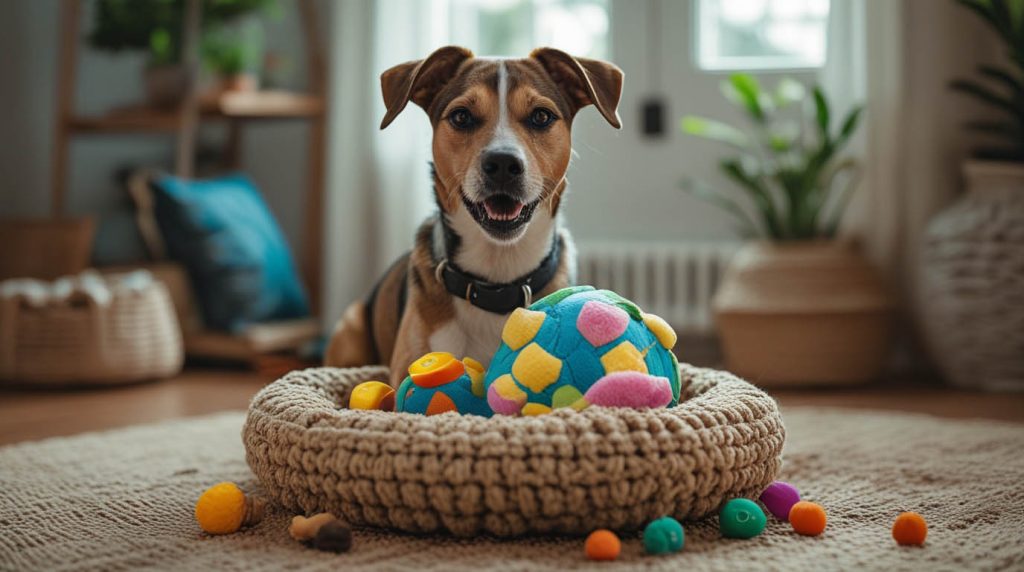
Last year, I worked with Rachel about her three-year-old Beagle mix, Max, whose severe separation anxiety caused catastrophic property destruction. Within minutes of Rachel’s departure, Max would destroy doors, furniture, and belongings in frantic panic. Rachel had tried everything—standard training, pheromone diffusers, even medication—but Max’s anxiety during alone time remained overwhelming.
Rachel felt desperate, spending thousands repairing damage while fearing Max would seriously injure himself during panic episodes. Previous attempts with basic toys had failed—squeaky toys and balls only elevated Max’s arousal, while simple Kongs provided just 10 minutes of engagement before panic resumed. Rachel needed solutions providing sustained calm throughout her absences.
Most heartbreaking, Max’s anxiety was worsening rather than improving. Each destructive episode reinforced his panic cycle, making subsequent absences even more terrifying. Rachel worried she might need to rehome Max to someone who could remain home constantly—something her work schedule made impossible.
The Solution: Strategic Calming Toy Protocol
Working with a veterinary behaviorist, Rachel developed comprehensive protocols featuring multiple calming toys for dogs addressing Max’s specific needs. The behaviorist recommended frozen lick mats for immediate engagement, puzzle feeders providing sustained mental work, and long-lasting chews offering extended endorphin release. Rachel purchased quality versions of each type, creating a rotation preventing habituation.
Additionally, Rachel learned strategic timing for calming toys for dogs presentation. She began offering toys 15 minutes before departures, allowing Max to engage while she completed departure routines. She also created positive associations by presenting these special toys only during her absences, never during time together. This exclusivity made the toys predict something wonderful rather than her abandonment.
Environmental modifications enhanced the calming toys for dogs effectiveness. Rachel established a comfortable safe space with Max’s bed, white noise machine, and the day’s selected calming toys. She also started leaving immediately after presenting toys rather than lingering anxiously, which had been reinforcing Max’s distress.
The Results: Remarkable Progress
Within two weeks of implementing the calming toys for dogs protocol, Rachel noticed encouraging improvements. Max’s immediate panic upon her departure decreased—instead of instantly destroying things, he engaged with his lick mat for 20-30 minutes. This provided crucial buffering time where endorphins and mental focus prevented anxiety escalation.
By six weeks, Max’s transformation was extraordinary. Rachel could leave for 3-4 hour periods without any destruction, with security camera footage showing Max calmly rotating between his puzzle feeder, long-lasting chew, and peaceful napping. The calming toys for dogs had given Max productive outlets for his anxious energy, teaching self-soothing skills that prevented panic.
Today, eight months later, Max continues using his calming toy rotation daily. While he still prefers Rachel’s company to being alone, his separation anxiety has decreased by approximately 80% from its peak. Rachel credits the strategic use of calming toys for dogs combined with behavioral training for giving Max—and her household—a peaceful life she’d thought impossible.
Frequently Asked Questions About Calming Toys For Dogs
Q: Do calming toys for dogs really work for anxiety?
A: Yes, calming toys for dogs genuinely reduce anxiety through measurable neurological mechanisms including endorphin release from chewing, parasympathetic activation from licking, and mental exhaustion from problem-solving. Research shows 60-70% of dogs demonstrate reduced anxiety behaviors when provided appropriate calming toys. However, effectiveness varies individually, and severe anxiety typically requires toys combined with training and/or medication rather than toys alone.
Q: What are the best calming toys for dogs with separation anxiety?
A: The best calming toys for dogs with separation anxiety combine multiple types: frozen lick mats for immediate engagement (20-30 minutes), puzzle feeders providing sustained mental work (20-40 minutes), and long-lasting chews offering extended relief (30-60+ minutes). Products like LickiMat, Nina Ottosson puzzles, and frozen Kong toys work particularly well. Rotate options preventing habituation while maintaining novelty that sustains engagement throughout absences.
Q: How long should calming toys for dogs occupy my pet?
A: Quality calming toys for dogs should provide 20-60 minutes of engagement depending on type. Lick mats typically occupy dogs 15-30 minutes (longer when frozen), puzzle feeders 20-40 minutes, and long-lasting chews 30-60+ minutes. For maximum effectiveness during anxiety episodes, offer multiple toys in succession or simultaneously, ensuring sustained engagement throughout stressful periods rather than just brief distraction.
Q: Can puppies use calming toys for dogs?
A: Yes, puppies can safely use age-appropriate calming toys for dogs, though supervision proves essential. Soft lick mats, simple puzzle feeders, and puppy-safe chews help young dogs develop self-soothing skills early. However, select toys specifically designed for puppies’ developing teeth and smaller sizes. Avoid anything small enough to swallow whole or hard enough to damage growing teeth. Introduce calming toys early to prevent anxiety development.
Q: How much should I spend on calming toys for dogs?
A: Quality calming toys for dogs typically cost $10-30 per item, with initial investment of $50-100 for a good rotation (2 lick mats, 2-3 puzzle feeders, several long-lasting chews). While this seems expensive, these tools provide indefinite reuse without ongoing costs, making them economical compared to destroyed property, veterinary bills for anxiety-related health issues, or ongoing medication expenses. Investing in quality products ensures safety and effectiveness.
Conclusion: Transforming Anxiety Management Through Play
Successfully implementing calming toys for dogs requires understanding that these specialized products serve as therapeutic tools within comprehensive anxiety management rather than simple diversions or quick fixes. Throughout this guide, you’ve discovered that the most effective calming toys engage natural canine behaviors—chewing, licking, sniffing, problem-solving—in ways that trigger genuine neurological calming responses including endorphin release, parasympathetic activation, and mental exhaustion, with quality options like lick mats, puzzle feeders, and long-lasting chews providing measurable anxiety relief when selected appropriately and used strategically.
Remember that calming toys for dogs achieve optimal results when multiple types combine addressing anxiety from various angles, when introduced properly with positive associations, when offered consistently during anxiety-triggering situations, and when integrated into broader treatment including behavioral training and potentially medication for severe cases. Moreover, success requires matching toys to your individual dog’s preferences, abilities, and anxiety type rather than assuming universal solutions.
The key to successful calming toys for dogs use lies in understanding their neurological mechanisms, selecting quality products appropriate for your dog’s size and chewing strength, implementing strategic timing relative to anxiety triggers, maintaining rotation preventing habituation, and recognizing when toys should complement rather than substitute for professional anxiety treatment.
Take action today by selecting 2-3 different types of calming toys for dogs that match your dog’s specific anxiety patterns and preferences. Start with a quality lick mat like LickiMat, an appropriate-level puzzle feeder such as Nina Ottosson products, and safe long-lasting chews suited to your dog’s chewing style. Introduce these toys during calm moments building positive associations before using them during actual anxiety episodes, and commit to consistent daily use rather than sporadic implementation.
Your anxious dog depends on you to provide effective coping tools alongside love and patience. With the evidence-based knowledge about calming toys for dogs you’ve gained through this detailed guide, you can select and implement therapeutic toys that genuinely reduce your dog’s suffering while teaching valuable self-soothing skills. Begin building your calming toy rotation today—every tool you provide brings your anxious companion closer to the peaceful, settled life they deserve and you’re committed to creating.

 Calming Toys for Dogs: A Pro Guide